
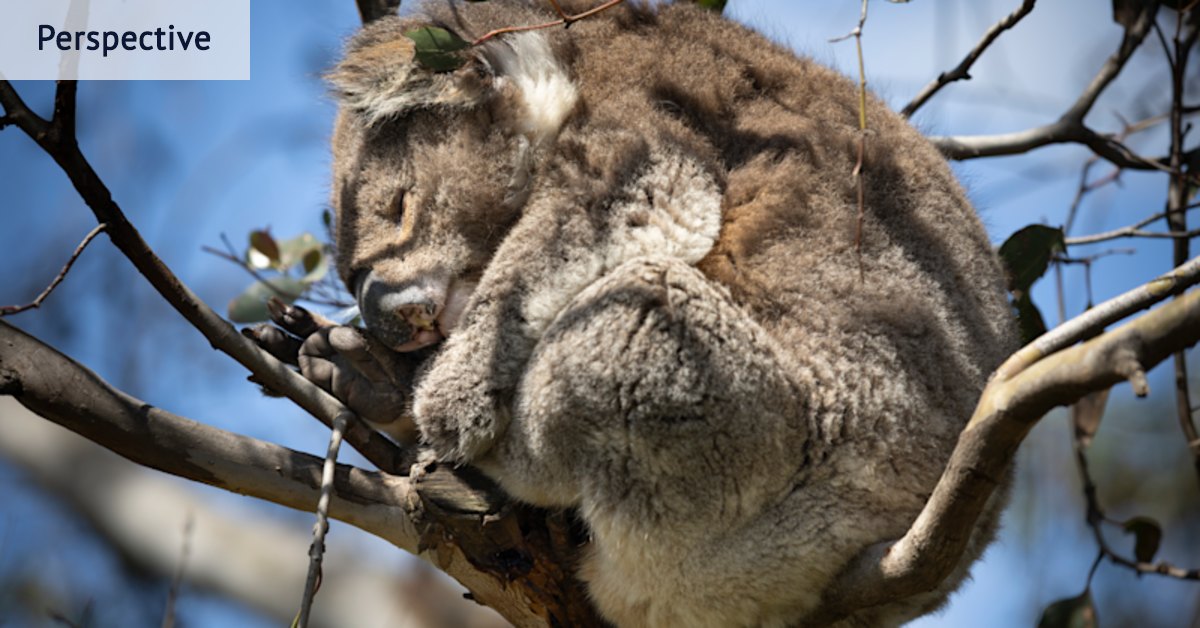
But moving koalas, particularly stressed animals from vulnerable populations, has proved to be dangerous.
Why not just relocate them?
The history of translocating koalas into new habitats goes back more than a century, but results have been mixed.
In 2017, renowned wildlife ecologist Peter Menkhorst reviewed seven projects to translocate koalas, which had taken place between 1983 and 2012.
Menkhorst’s analysis found deaths among translocated koalas were common.
Koalas relocated to the Ballarat region in a program between 1997 and 1999 suffered mortality rates of 24 per cent, while 15 per cent of koalas translocated from Kangaroo Island to the lower south-east of the South Australia mainland in 1997-98 died.
While koalas look sturdy, a range of factors can impact whether they will adapt to a new habitat.
Associate Professor Desley Whisson, a terrestrial wildlife ecologist from Deakin University who has worked on koala management plans for about two decades, said koalas accustomed to manna gum or swamp gum can adapt to new eucalypt species, but it could tax their systems.
“It’s just one additional stress you’re putting on them,” she said.
“If you can keep the release habitat with the same type of trees, I think it just reduces the amount of stress. Ultimately, whether an animal lives or dies is going to depend on how many things it has to deal with.”
Underscoring this point was a relocation Victorian authorities attempted at two sites in Mt Eccles in 2002. Taken to one area dominated by river red gums, 95 per cent of translocated koalas died. At another site, containing mixed forest, just 14 per cent died.
Taken to one area dominated by river red gums, 95 per cent of translocated koalas died.
Menkhorst – who helped develop a contraception program for koalas in Victoria over a 30-year career with Arthur Rylah – is blunt about the prospects of translocation for French Island koalas.
Koalas can suffer “koala stress syndrome”, which leads to dehydration, loss of appetite and muscle mass, and can kill them. Any koalas that are “nutritionally compromised” – as the French Island koalas almost certainly are, he said – were less likely to survive.
“The problem with translocation is that there are no more places in Victoria with good koala habitat that don’t have koalas in them,” he said.
“It can be done, but you have to be very careful and knowledgeable about selecting good koala habitat … if you put them into the wrong place, it’s a disaster, and if you get a burst of bad weather while you’re doing it, it can also go very badly.”
Loading
Koala Alliance member Michelle Thomas has a different view. Thomas, who has made six trips to French Island recently in a one-woman fact-finding mission, said she had been unable to find evidence of mass casualties.
“Every time I go out there, I can’t find any sick or dying koalas,” she said. “I’m just not finding what they’re saying is out there.”
Whisson said the koala suffering reported by locals appeared to be concentrated on private property and roadside verges, rather than the national park that covers about two-thirds of the island.
“I think you just have to look at the photos … koalas have decimated the trees,” she said.
“I do accept that in probably many places on the island koalas aren’t suffering, but certainly on some areas they are, and that’s where that action is needed very quickly.”
What about shipping over fresh foliage?
Some readers have proposed shipping foliage to French Island, to give koalas an emergency source of food.
“It’s really labour-intensive,” Whisson said.
“When you’re talking about maybe thousands of koalas that you’ve then got to feed, and you’re dealing with an island where you’ve then got to get [food] from the mainland to the island as well, you’re talking a massive effort, and that needs to be a sustained effort, and it would be a daily thing. So I don’t know that that’s logistically possible.”
What are the other options?
Fertility control programs are generally considered the most successful way to manage koala populations so they don’t build up to locally unsustainable levels.
However, they’re not cheap. Government figures reveal that intensive translocation programs over a 22-year period between 1996 and 2018 were “conservatively estimated” at costing more than $4 million. Meanwhile, a two-week program conducting health checks, fertility control, and translocating some koalas in 2018 cost $120,000.
The Victorian government has allocated $600,000 to koala management across the entire state over the next two years.