
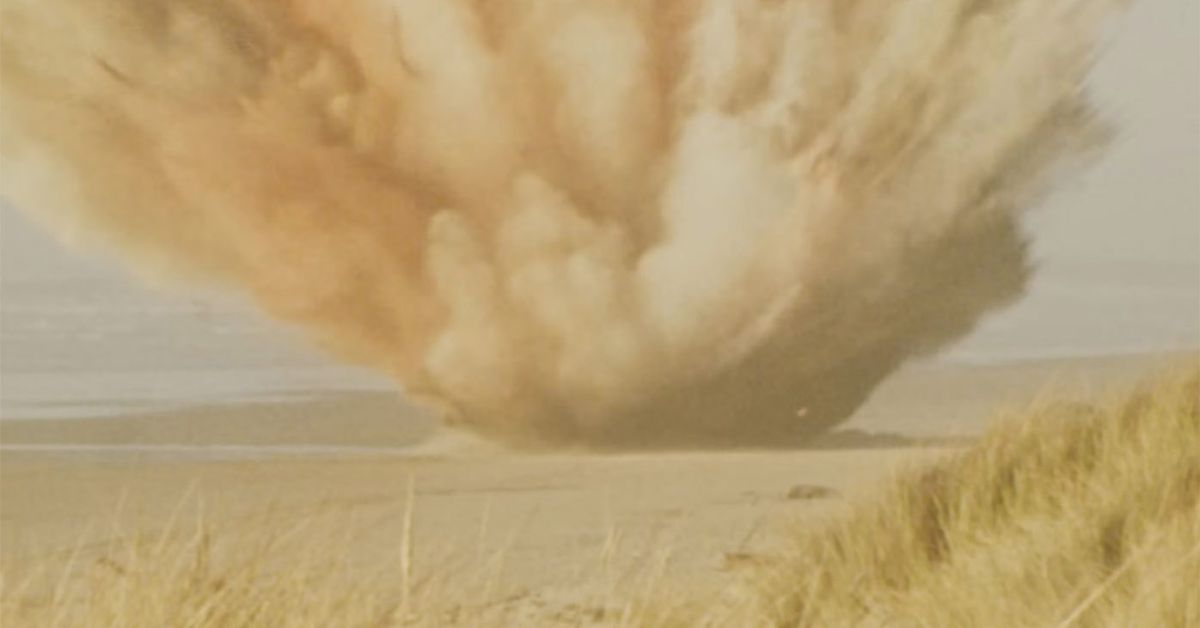
Eager to clear a popular beach in the US of a beached sperm whale, local authorities hatched upon a dramatic solution on November 12, 1970.
The 14m sperm whale was too heavy and in too difficult a spot to drag back into the ocean or away to higher ground to be diassembled.
So the decision was made to dynamite the dead animal.
 The whale was too big to be easily moved. (KATU)
The Oregon Highway Division, the law enforcement body with jurisdiction over the beach, packed 450kg of dynamite underneath the whale.
The thinking was that by blowing it to smithereens, it would create bite-size pieces for eager seagulls and hungry crabs.
The Highway Patrol ignored warnings from a local military veteran that 450kg was way too much dynamite.
Instead he argued that about 4kg would be enough.
 The blast was far more powerful than expected. (KATU)
But they didn’t take his advice, and at 3.45pm, the dynamite was detonated.
The explosion was enormous, and those who had come to watch the spectacle half a kilometre away were instead bombarded with chunks of airborne blubber.
“The humour of the entire situation suddenly gave way to a run for survival as huge chunks of whale blubber fell everywhere,” journalist Paul Linnman said in his television report.
Cars were completely destroyed, including one which had been bought just days earlier by an explosives expert.
And after the blast, there were still massive parts of the whale that remained intact.
 Falling blubber destroyed parked cars up to 500m away. (KATU)
Furthermore, the seabirds that it was hoped would eat the remains instead were frightened off by the blast.
The story of the exploding whale entered local folklore in Oregon, but entered the wider zeitgeist decades later.
Video of the exploding whale became one of the first viral videos after it was uploaded in the early 2000s.
It is now the recommended policy of the Oregon State Parks Department to bury all whale carcasses.