
Low weight, high power, long range – choose two. That’s yet another play on Keith Bontrager’s famous ‘Strong, light, cheap – pick two’ – a defining consumer-facing catchphrase for bike buyers. When you are choosing your first, or next e-MTB it’s worth asking yourself a few questions before you start browsing, and those questions will depend on your level of experience, the terrain you wish to cover, how long you tend to ride in one stint and many other factors that will give variable answers based on whether you have ridden mountain bikes before. In this e-MTB Guide we’ll explain everything you need to know to get shopping.
So, first of all, after many years of reviewing electric mountain bikes, here’s our personal advice for beginners or those returning to mountain biking after a long absence, who may be interested and curious due to the advancement of pedal-assist systems.
Both new e-MTB riders and mountain bikers of old returning to the scene will notice right away that most e-MTBs are heavier than they may be used to and the geometries have changed quite a lot over the past 20 years too, becoming generally longer, slacker and more capable at speed. There have been wheel size changes, from a sweet spot of 26-inches in size, now up to 27.5 and 29-inches in size. Sometimes you’ll get one of each, laid out in a ‘mullet’ setup, which simply means the rear wheel is smaller than the front, something that aids your handling on tricky terrain.
It’s certainly worth knowing up front whether you need a hardtail (no rear suspension), or a full suspension e-MTB before you go browsing.
A hardtail will be much better at efficiently covering longer distances regardless of the battery size and it will have a less aggressive geometry, plus quite often nowadays there will be other capabilities built in, like a rear rack for carrying pannier bags. This broad appeal makes a hardtail mountain bike a fair choice if you intend to go on cross country rides, occasionally take shortcuts or canal paths, or even sometimes commute the scenic route. A hardtail is less useful when you intend to take on steep descents, or lively trails with technical features.
A full suspension e-MTB can deliver various things, all depending on the length of the suspension travel. A shorter travel full suspension bike in the region of 120mm to 140mm will be best suited to anything from cross country through to amateur level trail riding, though modern geometries do allow a lot of forgiveness if you want to push bikes further. Anything from 140mm through 160mm will begin to unlock the ability to take on bike park features of larger sizes and hit rock gardens with a bit of speed, as well as opening up the ability to tackle steeper descents. Naturally, anything with even longer travel will open up big mountain adventure and much larger bike park features.
In recent years, electric gravel bikes have become a very popular choice for those who have previously been more inclined to ride on the roads, but now prefer to explore off road. We’ll not cover gravel bikes here as, strictly speaking, they are not mountain bikes, but some do offer similar capability to cross country mountain bikes, just with much slimmer tyres prompting where you may ride them, hence the name gravel bikes.
It’s not uncommon in the UK for people to buy hardtail mountain bikes to do everything from the commute through to leisure and recreation. There’s nothing wrong with that, so long as you don’t start using bikes that are not meant to be ridden on technical terrain or jumped too aggressively. Naturally, mountain bikes are not the ideal commuting machines, but they will do the job, especially if you choose a round profile and slim 2-inch or so tyre.
If you want versatility and balance, consider that some electric mountain bikes can be ridden with the battery out entirely, meaning they’ll be lighter and can prioritise your exercise needs, albeit you’ll get plenty with the assist turned on too. Then there are range extenders, which can be another great backup option if you are unsure if you’ll max out your battery on any given ride. These can be carried separately or on the bike, adding range at a moment’s notice.
We highly recommend keeping up a maintenance schedule as electric mountain bikes are some of the most abused e-bikes on account of the varied terrain they cover and the higher speeds they can be ridden off road. Regularly check for damage on key components and wear on parts like chains and cassettes which may have held grit and muck.
If you are ready to browse, Cycling Electric has several buyer’s guides addressing the mountain bike space.
E-MTB Guide: Considerations on range, weight, power and price
There are a few universal truths when you buy any electric bike. It is worth bearing in mind that a larger battery means added weight, and often price. If you are not used to handling a heavier bike and do not feel you either have the strength, or perhaps you want to balance bike agility with range then a mid-tier battery of around 400 to 500Wh may suffice. This is also a great idea if your daily range is limited to a few hours riding, or if your most frequented territory is not regularly steep to climb.
Quite honestly, it’s increasingly rare during our e-MTB reviews to run out of battery and that is in part down to efficiency gains, but more often down to mature use of the power output. When you’ve been riding e-MTBs for a while, you become less inclined to sit in the top-tier assist levels, as most people do when they first experience the power of pedal-assist. Quite often, over the course of long rides, you get no further, nor faster, by parking in turbo, so tour or another mid-range setting works well. Better still, if your e-MTB drive systems offer it, you can park the assistance in automatic, which preserves both the battery and the power output until it’s really needed, as decided by onboard sensors that measure torque, incline and speed.
Knowing how the motor deploys its power is useful. At any given moment, the motor will not be able to carry you past 15.5mph in speed, but how you get to that point varies. Stamp on the pedals when you really need the help and most motors will respond by driving up toward their peak power outputs, delivering the upper end of the available torque to help you drive up a steep incline. These high peak power deliveries are time-limited and designed to help you when you most need the maximum power output, so they will not deliver this high output continuously over a long ride; this is so that motors meet legislative guidelines.
So, why do so many e-MTBs increasingly come with 800Wh batteries as standard? Well, for a long time, range was a primary concern for consumers and heavier enthusiast users who are riding all day at bike parks would be more inclined to burn through battery supply by reclimbing repeatedly to the top of runs. Often this is done on turbo in order to ensure your energy is preserved for a fresh downhill run when fatigue is the enemy of concentration.
There will be trade-offs that come at various price points. There are, of course, many electric mountain bikes that now have both a large battery and a carbon fibre frame, as well as a very powerful motor. The Amflow PL Carbon is a great example of this and it hits a surprisingly low price in the context of the metrics on show, but very typically, a carbon frame and large battery do not equal a cheap e-bike.
For many of us, choosing an aluminium frame with a smaller battery will offer some of the same benefits of high expenditure on carbon with a big battery, especially considering that range extenders are a great backup option. Range may be a little compromised overall, but otherwise you may find a surprisingly capable bike for several thousand pounds less.
E-MTBs: understanding your options
The big mountain choice: Big battery, higher weight, maximum power
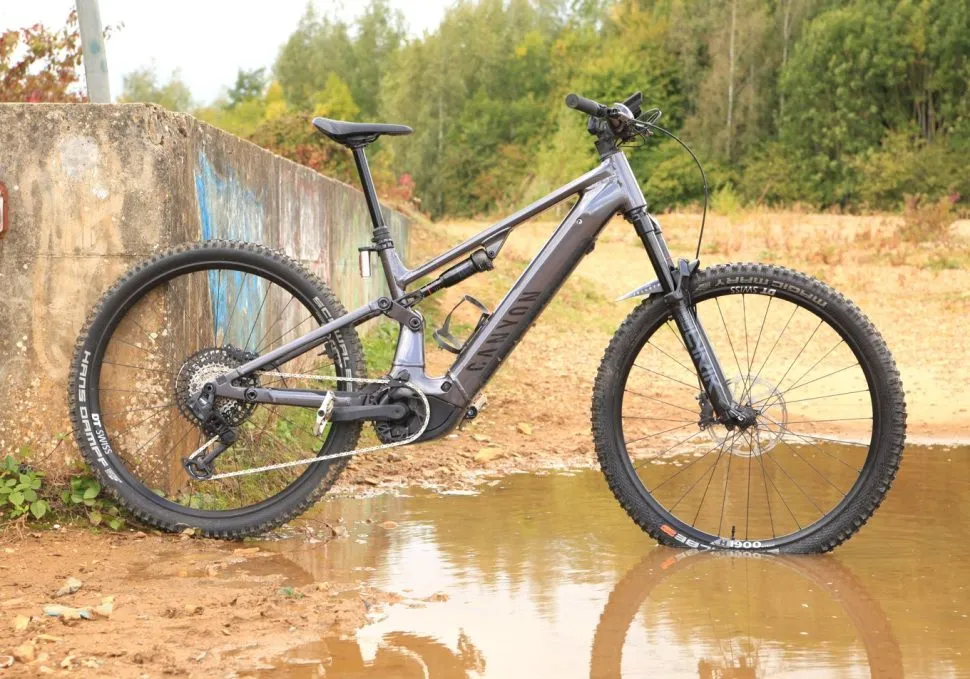
Built for those who are experienced bike handlers and who often take on technical, steep terrain, an e-MTB like the Canyon Neuron: ON platform is well-matched to mountain terrain and bike parks with red and black runs prevalent. A bike like this will have a longer suspension travel, a geometry that handles competently at speed and on steeper downhill segments.
Your main downside, if you’re so inclined, is that a mountain bike built this way will carry the most weight, which can affect how it handles if you are not confident at speed or in the air. Where gravity is doing a lot of the work, experienced riders will know how to move the extra bulk, but for beginners and amateur riders this kind of bike is often too much to handle.
Often called ‘Full Fat’ e-MTBs, these models will often feature the most powerful drive systems, many able to deliver enough torque to make ascending as fun as descending. They enable you to ride up and over rooty sections, even up some rock gardens if you’re brave and skilled enough. Expect peak power outputs of 750W, or more and torque of at least 75Nm from many e-MTB mid-motors.
The purist’s choice: Low power, mid battery, low weight
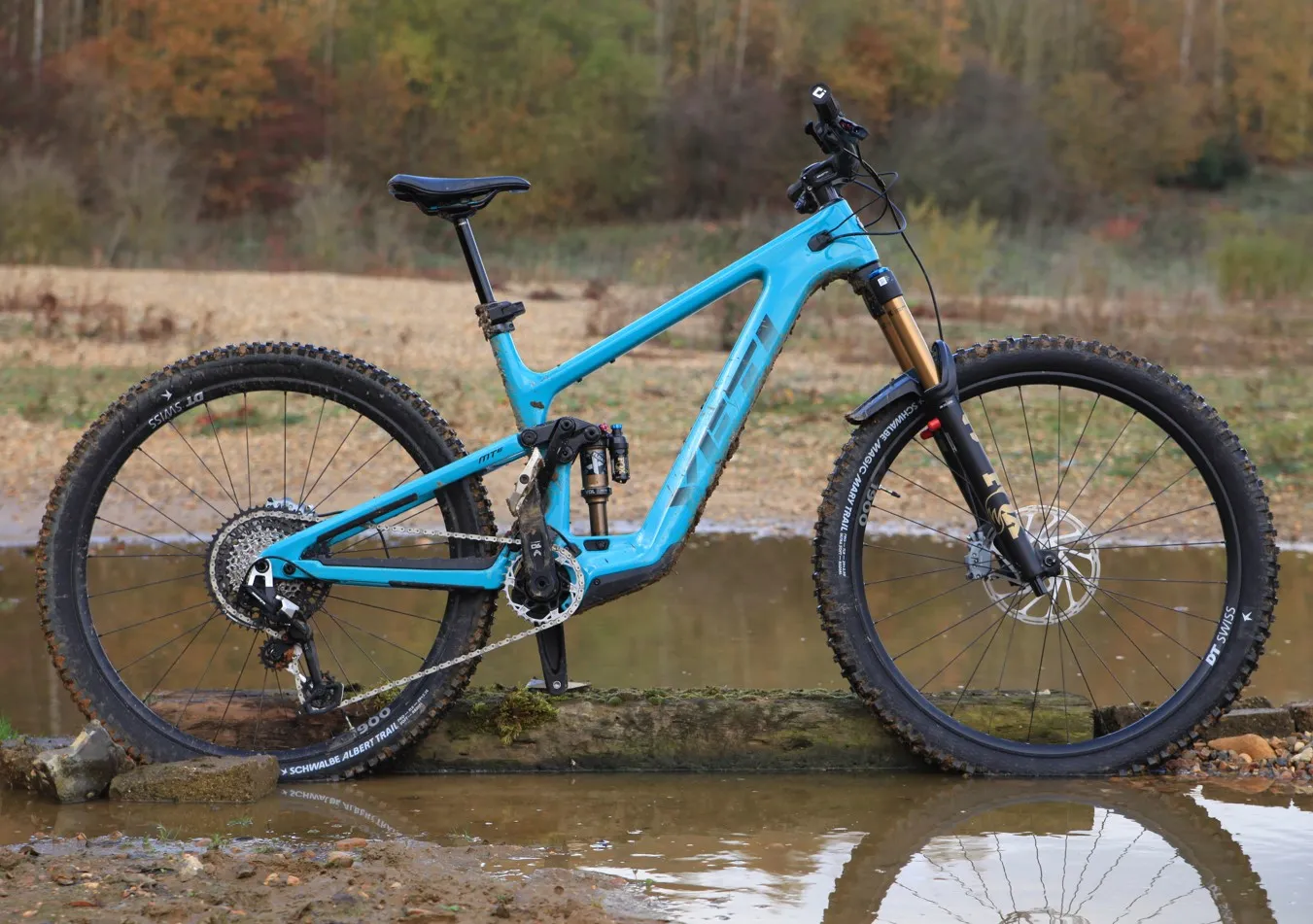
If you want to feel immediately comfortable on an electric mountain bike then compromising on range and peak power output can sometimes be worthwhile in order to get the bike weight down, but retain a tailwind that helps propel you only when you need it.
The Yeti full suspension build shown above is soon to feature among our e-bike reviews. This is a fine example of a bike that prioritises handling and playful characteristics over brute force. This is achieved by deploying one of the smallest and lightest mid-motors available, TQ’s HPR60, and a 580Wh battery inside a carbon fibre frame, which still delivers great range, but achieves this by focusing on efficient usage of the available power. The power peak tops out at 350W and 65Nm, which may feel enough if you’ve not yet ridden a punchier e-MTB, but will feel light on the assist if you’ve ridden chunkier drive systems.
The casual but capable
 Dennis Stratmann
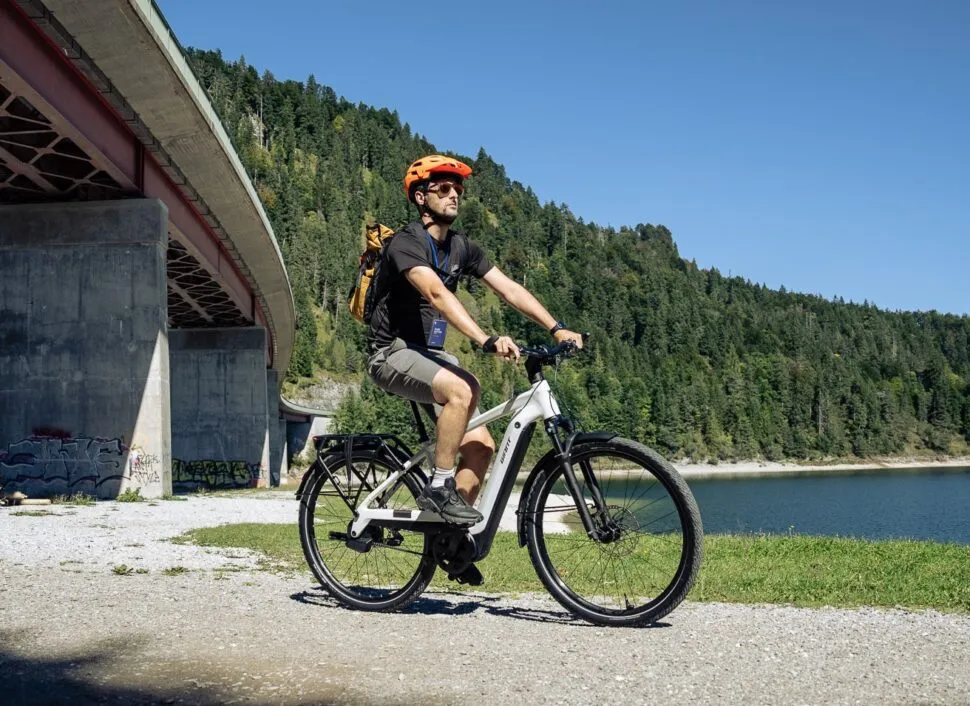
Straddling the junction between a hardtail mountain bike and something that’s well-matched for trekking and touring purposes, a new generation of hyper-capable hardtails with a strong equipment deck are emerging.
Giant’s Explore E+ platform is a fine example of a bike that is built for long-duration, multi-purpose riding, generating from one spec sheet everything from cargo carrying capability, to vehicle detection radars that feed to your dashboard information on traffic approaching you from behind.
These bikes are built to be super efficient at covering ground, delivering a round profile tyre that has enough grip for heavy canal path and cross country use, as well as gearing arrangements that have both a wide range and, quite often, the ability to change gear while stopped, which is a big plus point for combining off road and city riding.
The geometry here will be more upright and thus comfortable over longer distances, while there won’t be any great focus on weight because the riding intent is casual and rarely likely to be seeking adrenaline over comfort.
Related Articles
The continent crossing e-MTB
A relatively recent bit of marketing lingo from the bike industry has been to take the automotive term ‘SUV’ and apply it to go anywhere, do anything, carry lots type e-bikes. We have a buyer’s guide to the best e-bike ‘SUVs’ we have tried right here.
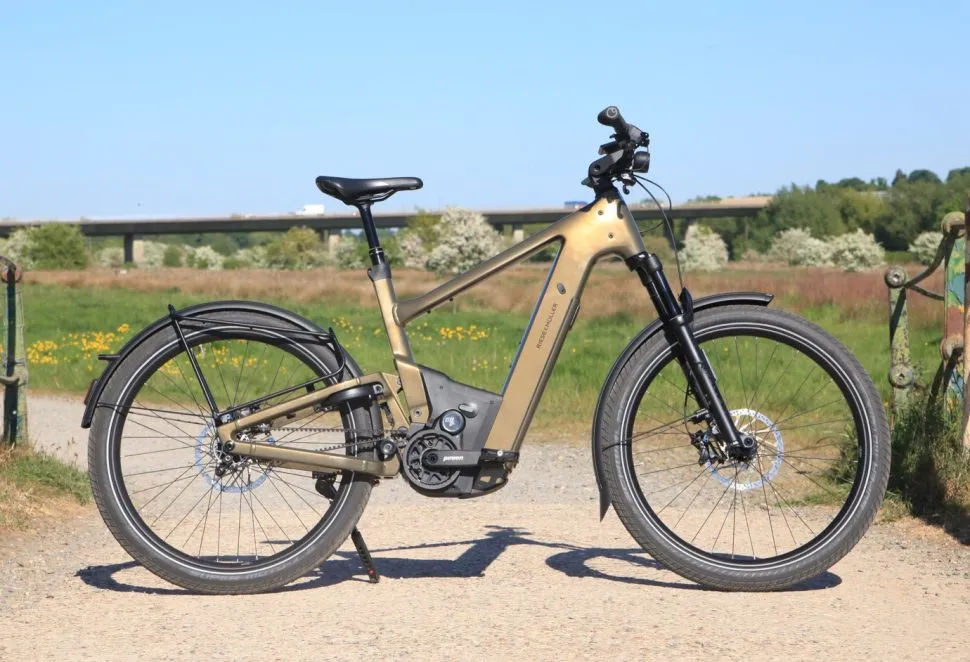
Now a bike like the Riese and Muller Delite5 GT Pinion doesn’t come cheap, but it is an investment piece. A bike like this, or indeed the cheaper recently tested Orbea Muga, will be excellent for long-distance rides with purpose, such as camping trips outside of the car. In the case of the former, a motor and gearbox unit combined means you really needn’t be worried at all about bike maintenance, which could be of big appeal if you’re worried about being forced off the road on a long tour for a mechanical issue.
These SUV-style e-bikes will very often have high-load capacity rear racks, enabling you to take your life with you, plus very efficient drive systems that make the most out of the battery, thus automatic settings are not uncommon on your display.
The agile hardtail e-MTB
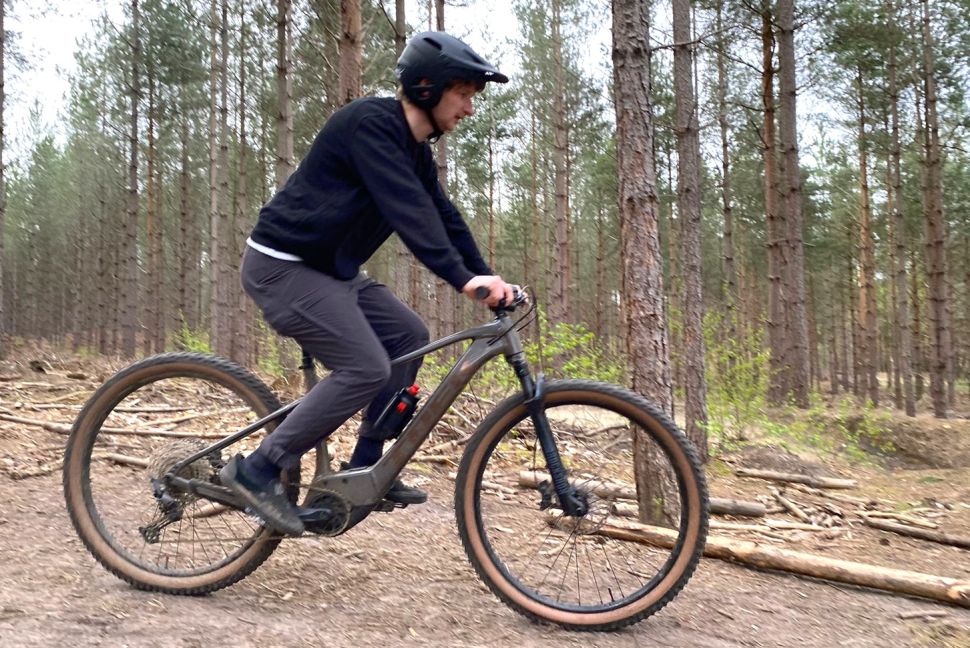
Hardtail mountain bikes with longer, slacker angles are great for singletrack trails, forest exploration and even some bike park routes with smooth trails. Many riders who are returning to mountain biking will find these bikes the most fun and appropriate for their nostalgia to flare up and the dopamine of cycling to return. They are easy to handle, agile, have just about enough suspension to be forgiving if you do suddenly hit a patch of roots and they’re a bit easier to pop a wheelie on too!
Bikes like Trek’s Marlin+ are best-sellers for a reason. They are efficient movers, with fairly good-sized batteries, but not overweight and thus easy for most people to handle and more than powerful enough to enjoy forest climbs, rather than sweat them out.
This kind of bike taps out on capability if you are hitting steeper downhill terrain, especially if those segments include jumps and drops, though on flatter, fast, flowing sections a hardtail jump bike may excel here.
For most of us in the UK, this is all the bike we’ll ever need for casual rides with friends and family across diverse terrain. If you wish to cover longer distances, range extenders are very often easily fitted into the wide-open, two-triangle frames.
The off road cargo bike
 Geoff Waugh
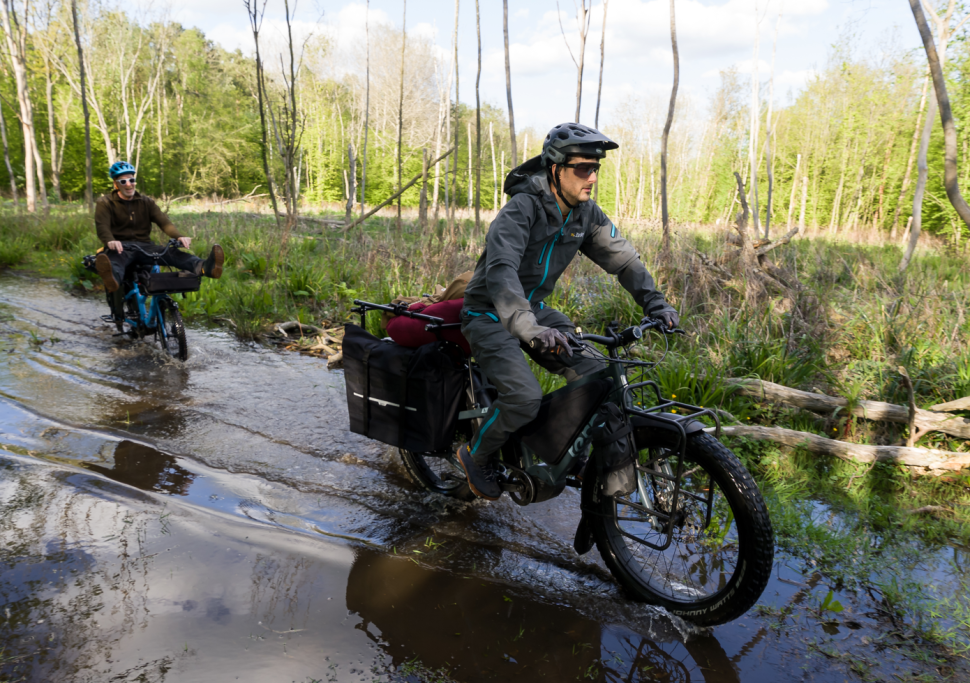
The wild card, courtesy mostly of Tern and its Orox. Other bikes like this do exist, but for the time being, this is the model that has inspired the most creative deep country journeys. As far as we know, it is unbeaten in its load capacity as far as off-road bikes go and its longtail style setup means you can carry a pair of child seats, or loads of cargo.
This kind of bike is not designed to be ridden fast, but can be ridden on soft terrain like beaches or marshland, much thanks to enormous fat tyres that spread the weight over a large area. They will have a high torque motor, which will be able to help you drive through this loose terrain and over rooty terrain smoothly. This is the kind of bike mountain rescuers would dream of, basically.