
Feral pig populations are spreading across Australia faster than ever, threatening fragile ecosystems, and a coordinated national response is urgently needed, Australia’s leading expert has warned. Their numbers have exploded in some areas, reaching levels not seen in years.
Worryingly, the pigs are now expanding into new regions where they were previously not a major issue.
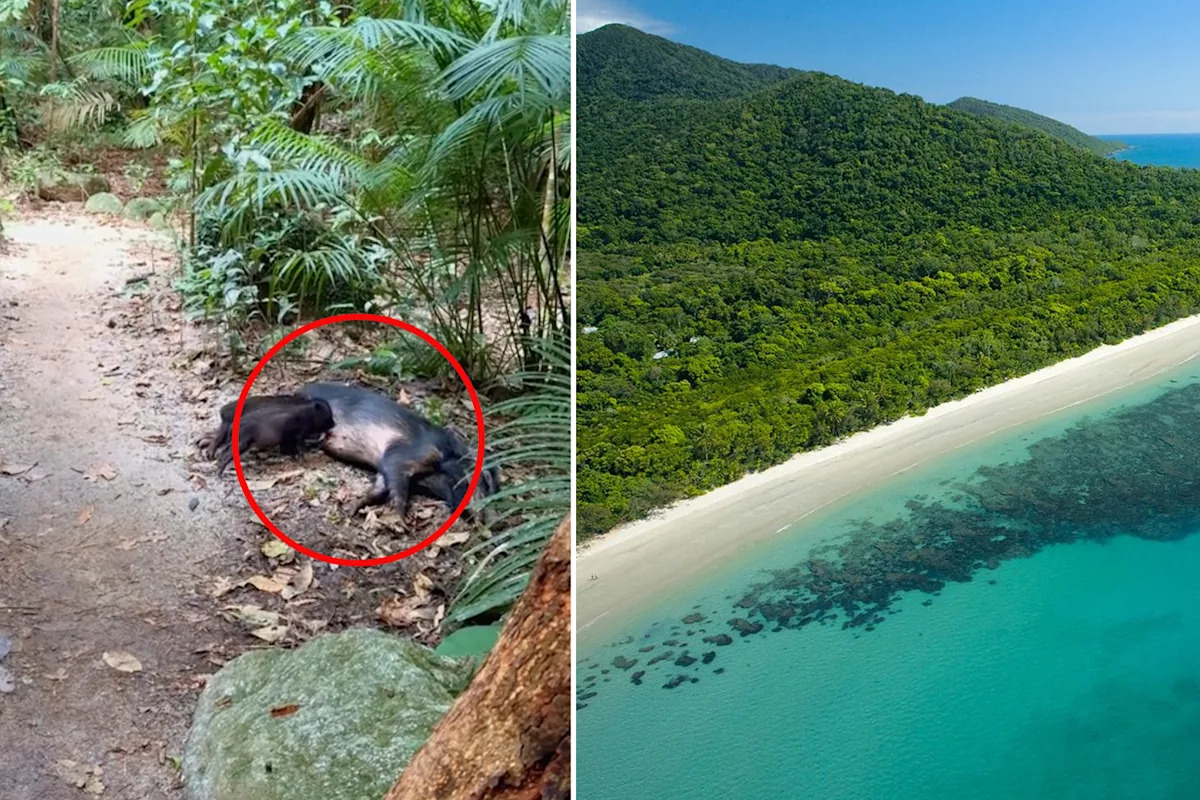
The warning comes after viral footage showed a sow and her piglets feeding in the Daintree Rainforest — one of the country’s most iconic and sensitive wilderness areas.
While pigs have long been in the region, the video circulating online shocked Australians, highlighting just how far these destructive animals are sprawling across the forest.
Dr Heather Channon is Australia’s first National Feral Pig Management Coordinator, leading the implementation of the National Feral Pig Action Plan.
With a PhD and a background in agricultural science, she is now responsible for orchestrating collaborative, science‑based efforts across land managers, governments and communities to reduce the significant ecological, agricultural and biosecurity threats posed by feral pigs in Australia.
In an interview with Yahoo News, Dr Channon explained that not only is the species tearing through the Daintree at potentially unprecedented rates, but their true impact is virtually impossible to determine due to how difficult it is to monitor their movements through the dense environment.
“We do know that feral pigs can cause significant damage in rainforests,” she said. “And that can be by destroying native vegetation through their rooting, wallowing behaviours, and that will then contaminate the waterways and cause erosion and sedimentation.
“By doing that, they disturb the understory of the rainforest, and that can affect soil structure.”
Have you been impacted by exploding feral pig populations? Contact joe.attanasio@yahooinc.com
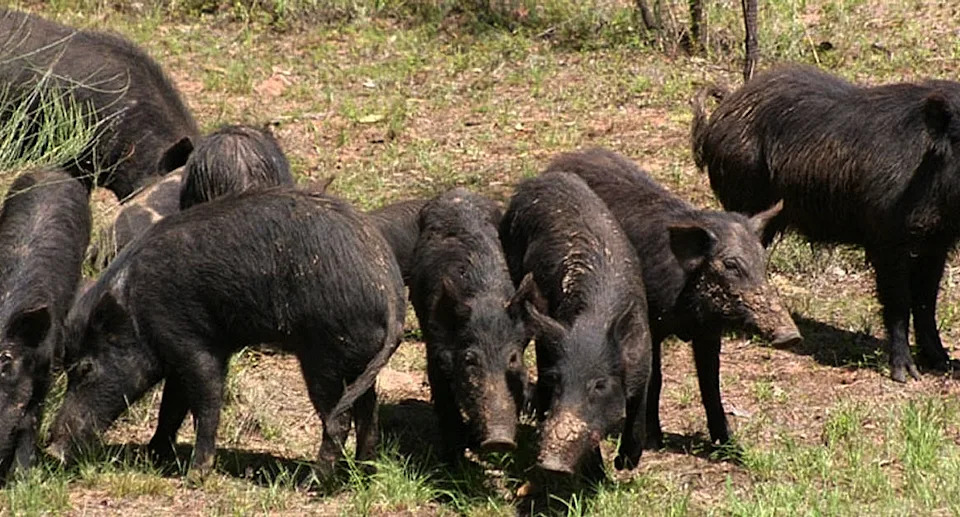
Feral pigs are found across almost half of the entire Australian continent. Source: PIRSA
True extent of feral pig population remains unknown
Dr Channon said that pigs also prey on native animals, as well as virtually anything they can find. “They will eat cassowary eggs and potentially, small juvenile cassowaries and other small animals, reptiles and amphibians,” she said.
In recent years, it’s believed feral pig populations in Queensland have exploded. According to the Australian Bureau of Agricultural and Resource Economics and Sciences (ABARES), the annual cost to Australia’s agricultural sector from feral pigs, including management expenditure and residual production losses, is estimated at more than A$156 million.
“We don’t have actual population information,” Dr Channon said. “But what we do know is that over the last five years of favourable weather and seasonal conditions, populations of feral pigs across Australia and in Queensland will have grown because of the plentiful water and food that’s available for them.”
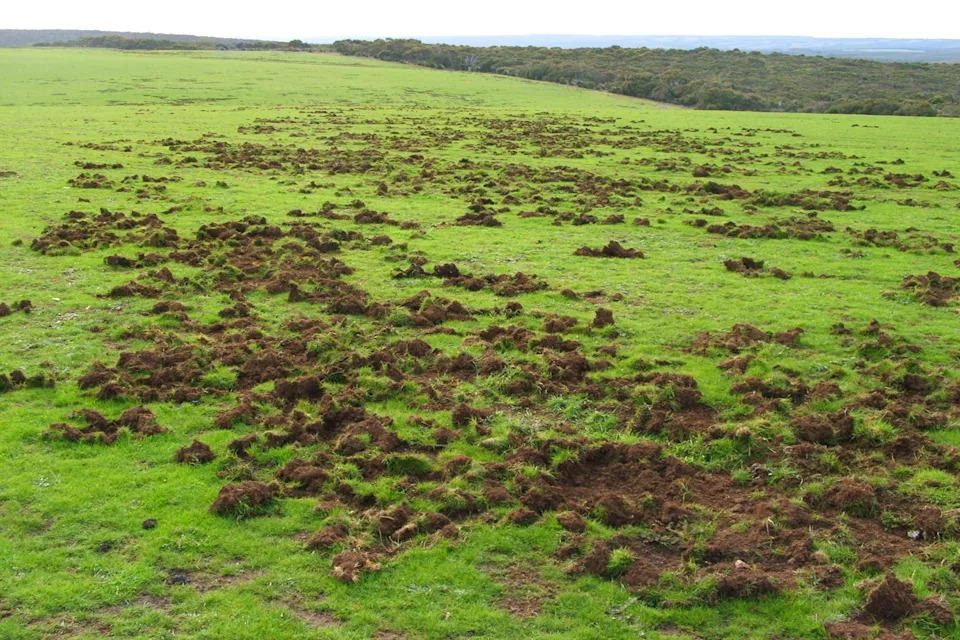
Feral pigs destroy natural landscapes, prey on native wildlife, and breed extremely quickly. Source: South Australian Government
Population management in dense areas like the Daintree remains one of the “trickiest” problems in the fight against their growing threat.
“Because of the available food source, it’s actually very challenging to even bring them into traps, and it takes a long time to encourage them in,” Dr Channon said.
“In areas like the Daintree, it’ll be more about tracking and strategic ground shooting. It’s just difficult to get access, even trying to find them by flying out and using thermal imaging.
“Other available methods include baiting, aerial shooting, trapping and exclusion fencing. But even if you’re flying a drone or helicopter… it’s really hard because of the canopy cover, you can’t see through.”
How can Australia fight back?
Dr Channon said Australia’s feral pig response needs stronger coordination, better data, and longer-term commitment.
She said her team is preparing a report for the federal agriculture department on reducing agricultural impacts, with key recommendations focused on “strategic coordination” and “area-wide management” to ensure landholders work together rather than in isolation.
She said more support is needed for communication between private and public land managers so control efforts can be better timed and more effective.
Dr Channon also highlighted the need for improved data collection, economic analysis tools and long-term funding to replace short-term projects.
“Effective feral pig management is all about people,” she said. “It’s about how we work together, use all the available tools consistently, and stay engaged for the long haul, because the solutions will take time to deliver.
“And we really need to remove at least 70 per cent of the population annually just to prevent the rapid recovery.”
Feral pigs now roam across 45 per cent of Australia’s land mass, causing widespread environmental and agricultural damage.
They were originally introduced by European settlers in the 1800s for food and hunting, and have since spread rapidly across the continent.
But some positive signs are emerging. Feral pigs have been virtually eliminated from Kangaroo Island, with no confirmed sightings or piglets born since September, 2022. This marks a major success for Australia’s eradication efforts.
Love Australia’s weird and wonderful environment? 🐊🦘😳 Get our new newsletter showcasing the week’s best stories.
