
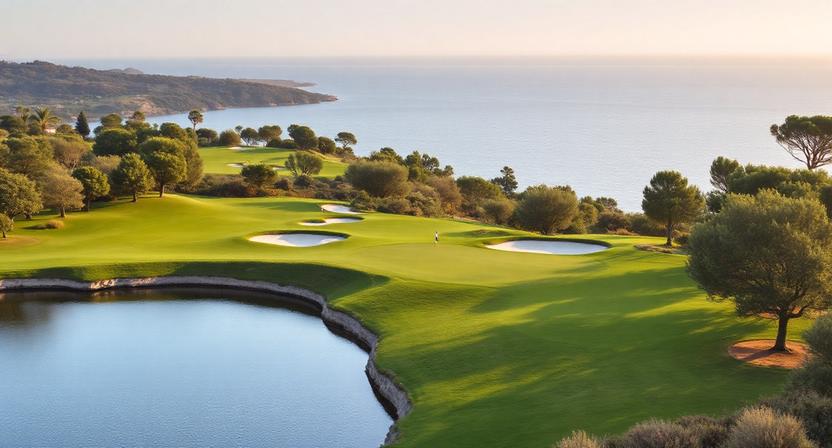
Home » SPORTS TOURISM » Portugal Witness its Golf Industry Driving New Economic Growth, Real Estate Development and Sports Tourism
Published on
November 15, 2025

The golf industry in Portugal is one of the leading economic drivers and the most important sector in the nation’s sports tourism. A recent study, led by economists João B. Duarte and Pedro Brinca, underlines the wide-ranging benefits of the sport-even beyond the courses themselves, from the real estate to the creation of employment and tourism development. Golf has already become an integral link between economic development and sports tourism in Portugal.
Golf’s Economic Impact: Job Creation and Value Generation
Over the last decade, Portugal’s golf sector has made a substantial contribution to the country’s economy, with a total production of €760.5 million and a Gross Value Added (GVA) of €407.9 million. The sector also generated €70.2 million in tax revenue from VAT and IRS, while wage payments accounted for €143.5 million. One of the most notable aspects of the golf industry’s contribution is its role in creating full-time jobs. On average, the sector generates 810 jobs annually, providing stable employment across a variety of industries, including construction, real estate, tourism, and sports services.
In addition to job creation, the golf industry’s far-reaching effects extend to sports tourism, which has become a pivotal segment in the Portuguese tourism sector. As a result, Portugal has solidified itself as a prime destination for golf tourism, attracting international visitors who not only come to play but also to enjoy the country’s world-class facilities, cultural attractions, and outdoor lifestyle.
Golf’s Influence on Residential Tourism and Real Estate
The golf industry plays a crucial role in shaping Portugal’s residential tourism and real estate markets. The sector represents 12% of total construction in tourist accommodations and resorts, including properties directly linked to golf courses. It also accounts for 12% of sales brokerage and 24% of resale brokerage, further emphasizing its growing significance in the real estate landscape. With 9,266 golf course accommodation units counted in Portugal by 2024, and 2,595 of them licensed over the last ten years, the impact of golf on residential tourism is undeniable.
New investments in golf-related real estate have amounted to €270.29 million, and the brokerage of golf property sales and resales has generated €58.76 million. The demand for properties located near or within golf course developments has skyrocketed, as these areas continue to attract international buyers and investors. Notably, properties with direct views of or located within golf courses have seen a 20% increase in property values, which further positions Portugal as a highly attractive location for residential investment and a destination for sports tourism.
Real Estate Premiums and Golf Tourism’s Role in Sports Travel
The real estate premium associated with golf courses is a key factor driving investment in Portugal’s property market. Properties located within or near golf developments have an average 19% higher value compared to properties located outside these areas. The premium effect is especially strong for properties with direct views of golf courses, making these locations prime for luxury sports tourism investments. Golf courses, thus, play an essential role in attracting sports tourists who are not only looking to play but also to enjoy a luxurious living environment.
The increase in real estate value is an important indicator of the growing demand for sports tourism in Portugal. As golf tourism continues to expand, high-end tourists are seeking accommodations that offer a complete sports and leisure experience. Golf resorts, often complete with luxury amenities, attract affluent travelers who view golf as an essential part of their vacation experience, further enhancing the growth of sports tourism.
Strategic Role of Golf in Portugal’s Sports Tourism Landscape
The study confirms that golf is a strategic sector for Portugal, with structural impacts that extend beyond traditional tourism to include sports tourism, construction, and residential investments. João B. Duarte, one of the study’s coordinators, highlights that golf is not only a recreational activity but an economic asset capable of creating significant value and job opportunities. Golf is one of the pillars of Portugal’s sports tourism, a sector that draws visitors from around the globe looking to experience top-tier golf courses and sporting events.
The increase in sports tourism driven by golf is part of a broader trend in Portugal’s growing appeal as a destination for active vacations. Whether for an elite golfing experience or to participate in international golf events, tourists are flocking to Portugal to enjoy its top-quality golf courses, stunning natural beauty, and rich cultural experiences. This makes golf an integral part of Portugal’s international competitiveness, positioning the country as a leading destination for both leisure and sports tourism.
The Role of Golf in Promoting Quality Sports Tourism
Golf has helped shape Portugal’s tourism strategy, attracting a growing number of international visitors who come not only to experience luxury accommodations but also to engage in high-quality sports tourism. Portugal’s golf courses host an increasing number of international tournaments, such as those organized by the European Tour, which further bolsters the country’s reputation as a leading sports tourism destination. The combination of world-class golf, luxurious resorts, and Portugal’s rich cultural heritage creates an immersive experience for sports tourists who wish to combine active travel with cultural exploration.
The golf tourism market in Portugal is increasingly catering to tourists seeking premium experiences. For these tourists, golf is not merely a game but an essential part of a lifestyle that combines sports, relaxation, and luxury. This growing sports tourism market is a driving force in Portugal’s economic growth, contributing significantly to the hospitality sector, real estate, and the tourism industry as a whole.
Golf as a Catalyst for Growth in Portugal’s Economy and Sports Tourism
The results of this study confirm the decisive role the golf industry plays as an economic driver and for sports tourism in Portugal. Golf has a broader impact that goes beyond the course itself to include real estate, tourism, and job creation. The sector indeed keeps growing as a strategic asset to Portugal, improving its reputation as a quality destination for sport tourism and attracting large foreign investment.
Beautiful courses, robust real estate premiums, and sports tourism on the rise make Portugal well-positioned to take advantage of the rising demand for active tourism. The golf sector thus plays a fundamental role in the continued success of the country as a premium tourist and investor destination, featuring in its international competitiveness and economic prosperity.
