
In a cavernous conference hall at the edge of the Dubai desert, a retired military officer fronting the Australia pavilion will offer “the key credibility of being in uniform” for defence companies spruiking their wares.
“A unique advantage in attracting and engaging with visiting military delegations,” is how briefing notes, shared by the head of Team Defence Australia, describes it.
Starting Monday, the Dubai International airshow is a self-described “showcase [for] cutting-edge military aircraft and air defence technologies”.
And Team Defence Australia holds a prime slice of real estate, a pavilion in the middle row at the weapons fair, where more than 35 Australian companies will be represented.
There may be a reason for this prominent location.
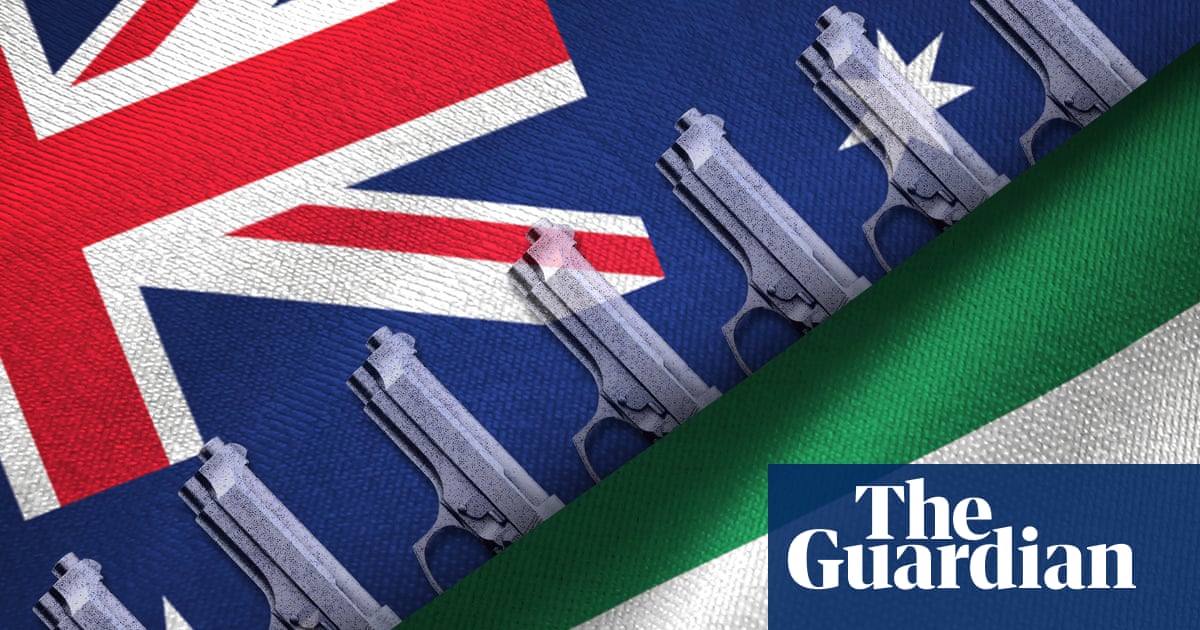
The United Arab Emirates is, by far, Australia’s biggest weapons export market, with nearly $300m in arms and ammunition being shipped there in the past five years.
Amid the slogans and sales tactics, there will probably be things left unsaid at this airshow.
In Australia, parliamentarians, human rights organisations and religious groups are demanding a suspension of defence exports to the UAE, citing consistent reports to UN investigators that it has armed a militia accused of genocide.
Sign up: AU Breaking News email
Sudan’s Rapid Support Forces (RSF) paramilitary is accused of a campaign of mass killings, rape and torture that has intensified with the capture of the city of El Fasher last month, in the famine-ridden Darfur region.
Thousands are believed to have been killed. Despite a communications blackout, the reported scale of the killings are supported by satellite images that have captured bodies on the ground and widespread discoloration of the ground, reddened by blood.
A camp for Sudanese who fled El Fasher after the city fell to the Rapid Support Forces. Photograph: AFP/Getty Images
The RSF – formerly allied to, but now fighting against, the Sudanese government – has sourced “sophisticated weaponry” from the UAE via Chad and Libya, according to recent UN expert reports, using those weapons to slaughter non-Arab Sudanese.
UN investigating supply of arms in Sudan
Over the past five years, Australia exported $288m in arms and ammunition to the UAE, according to government figures, with a massive increase from 2019. But Australian export data has no detail on what weapons have been supplied to the UAE and in what quantity.
What is clear is that the UAE is – by far – the largest export market for Australian defence companies.
Separate figures from the UN Comtrade database show the UAE has received “arms and ammunition, parts and accessories” valued at USD$197m from Australia over the past five years.
The UN figures also suggest Australia has been the UAE’s fourth-largest supplier of weapons over that same five-year period.
But there is mounting evidence the UAE is arming the RSF, largely in exchange for gold. An estimated 90% of Sudan’s gold – worth about USD$13.4bn – is smuggled illegally out of the country, dwarfing the legitimate trade: most of it goes to the UAE.
A UN panel of experts detailed in April a heavy rotation of cargo planes flying out of the UAE, reportedly carrying weapons, ammunition and medical equipment to the RSF via Chad.
The UAE has denied any involvement in trafficking weapons, insisting its flights were humanitarian missions, carrying supplies for a field hospital, sewing machines, and Qu’rans.
But British-made target systems and armoured personnel carrier engines have been recovered from combat sites in Sudan. Bulgaria has also said weapons it supplied to the UAE were re-exported without permission.
The UAE military itself has previously been accused of war crimes and violating arms embargos – including in Yemen and Libya. The UAE denies the allegations.
Government supports expanded defence sales
Despite concerns from human rights groups, the Australian government believes the defence relationship with the UAE can be expanded further.
In a note to defence companies last month, Austrade said the “UAE’s extensive and ongoing defence procurement program represents real opportunities for Australian suppliers”.
The government has covered costs for dozens of companies to showcase their products “face-to-face with the UAE ministry of defence” in Dubai.
“At least one retired senior ADF officer will be on hand to lead the delegation,” a government briefing paper says.
“They offer advice and support well as the key credibility of being in uniform.”
The Green senator David Shoebridge told the Guardian the Australian government had been green-lighting weapons sales to the UAE for the past five years “at an astonishing scale”, with almost no transparency.
“When you start selling weapons to regimes like the UAE, what do you think is going to happen? Those weapons are going to end up in some of the bloodiest conflicts in the world.
“We know the UAE has been sending arms to the RSF in Sudan. The public has had zero assurances from the Albanese Government that Australian weapons are not being used and abused in places like Darfur.”
This month, religious group Quakers Australia wrote to the foreign minister, Penny Wong, arguing Australia could not be confident – because of the opacity of its arms export regime – that Australian-made weapons were not being diverted to armed groups elsewhere.
The Medical Association for the Prevention of War, along with other civil society organisations, have also called for an urgent parliamentary review of Australia’s arms exports, arguing the current export regime lacks accountability.
Human Rights Watch (HRW) said Australia had an obligation under international law to ensure its military trade did not contribute to human rights abuses.
“But Australia doesn’t have laws on the books that require it to monitor where and how these exports are used once exported,” said the HRW’s Australia director, Daniela Gavshon.
‘Impossible’ to prove weapons haven’t been used in Sudan
A spokesperson for the Australian defence department said it had “a rigorous and transparent export controls framework that is consistent with international obligations”.
The spokesperson said Australian law addressed “a range of issues including foreign policy, human rights, national security, regional security and Australia’s international obligations including the Arms Trade Treaty”. Laws also came into effect last year to provide greater oversight over the transfer of “controlled goods” to foreign entities.
Defence did not answer questions on if and how arms were monitored once exported to the UAE.
The Australian government has condemned the atrocities in Sudan and urged a three-month “humanitarian truce”. Wong was a signatory to a joint statement from 27 countries, which said they are “gravely alarmed by the reports of systematic and ongoing violence against civilians”.
The embassy of the United Arab Emirates did not respond to questions.
Philipp Kastner, senior lecturer in international law at the University of Western Australia, told the Guardian that while confirming Australian-made weapons have been re-exported to Sudan was difficult, “I would say that it is impossible to confirm the contrary: that these weapons have definitely not been used in Sudan.”
Kastner argued weapons do not bring peace. “It may be an increasingly lucrative business for Australian companies, but we should ask ourselves, as a society, if it is really through the manufacturing of weapons that we want to increase our wealth.”
Quick GuideContact us about this storyShow
The best public interest journalism relies on first-hand accounts from people in the know.
If you have something to share on this subject, you can contact us confidentially using the following methods.
Secure Messaging in the Guardian app
The Guardian app has a tool to send tips about stories. Messages are end to end encrypted and concealed within the routine activity that every Guardian mobile app performs. This prevents an observer from knowing that you are communicating with us at all, let alone what is being said.
If you don’t already have the Guardian app, download it (iOS/Android) and go to the menu. Select ‘Secure Messaging’.
SecureDrop, instant messengers, email, telephone and post
If you can safely use the Tor network without being observed or monitored, you can send messages and documents to the Guardian via our SecureDrop platform.
Finally, our guide at theguardian.com/tips lists several ways to contact us securely, and discusses the pros and cons of each.
Illustration: Guardian Design / Rich Cousins
Thank you for your feedback.