
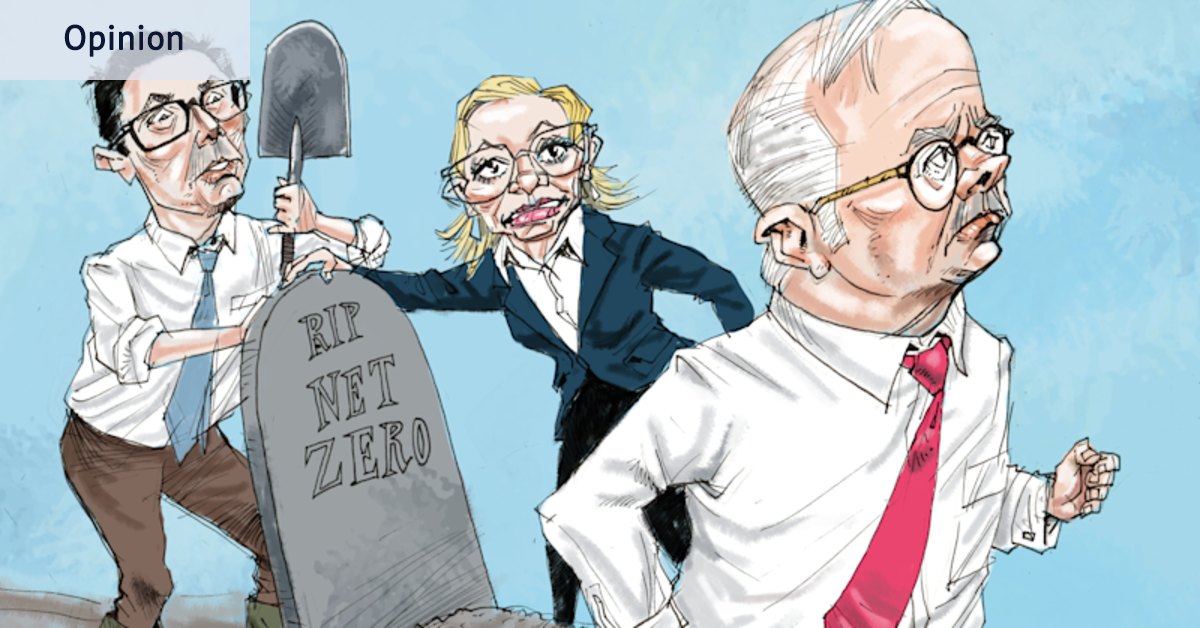
The stage 3 tax cuts, then? Breaking promises isn’t an easy sell, though a tax cut for everyone probably is. Most clearly, Labor won last term’s argument on housing. But when else? Setting climate targets was delayed until after the election, meaning it didn’t have to win that argument during the campaign. It chose not to fight on gambling or nature laws. It gave in to the Coalition on various immigration debates.
Loading
As I write in the 100th Quarterly Essay, out today, this aversion to conflict is a hallmark of the Albanese government. Often, it has been deliberate strategy. Arguably, it has worked so far. The downside, though, is that we don’t know much about Labor’s advocacy skills. Also, those advocacy skills are probably rusty. To put this another way: if this government has succeeded politically so far by avoiding fights, then an opposition that forces it to fight will test its mettle.
The second risk of the Coalition’s climate chaos is a quieter one, but potentially more deadly. Two months ago, Labor president Wayne Swan declared that what kept him awake at night was the thought that the moment “you believe you’ve mastered politics is when it masters you”. Complacency, he said, was “the handmaiden of decline”.
And so the other danger is that Labor never feels pushed by the Coalition; and, as a result, it is not as good a government as voters expect. And this is a particular problem because other sources of pressure are not immediately obvious.
You might think the Labor caucus would have more to say – except that so far it hasn’t. Interestingly, in replies to the last Quarterly Essay by Marian Wilkinson – also published today – former Labor frontbencher Peter Garrett writes damningly of Labor’s “expansion of fossil-fuel schemes” despite its plans and “good intentions” on emissions and “the handsomest of majorities”. Cabinet, he writes, “oversees the grossest tax inequity imaginable, while caucus and relevant committees are mute, the formerly progressive ‘Left’ nowhere to be seen”.
Loading
He’s not the only one. Recently, former Labor senator Doug Cameron said the party’s Left faction had been “defanged”. A week ago, the ABC’s Steve Cannane reported that Labor MPs wanting stronger action on gambling ads were remaining silent “both publicly and inside … caucus”.
It’s worth recalling that during his prime ministership, Albanese has often looked strongest in times of pressure – during the stage 3 tax cuts debate and at the beginning of this year, facing worrying polls and an approaching election.
Prime ministers tend to like it when their opposition is down and when their MPs are resolutely behind them. But – as is true of all of us – just because they like something doesn’t mean it’s good for them.
Sean Kelly is a regular columnist and a former adviser to Julia Gillard and Kevin Rudd. He is the author of Quarterly Essay 100, The Good Fight: What Does Labor Stand For?, published today. He will discuss his essay with this masthead’s political editor, Peter Hartcher, at Red Mill, Rozelle, Sydney, on Thursday at 7pm.