
The government has hit back at “false” claims that “misrepresent” Active Travel England’s latest road safety guidance, that after a weekend of press headlines claiming UK roads are to be made narrower to prevent motorists overtaking cyclists.
The Telegraph newspaper suggested the policy was “part of Labour’s war on motorists”, while the Daily Mail also said it would “stop drivers overtaking cyclists” as part of the “latest war on motorists”. Likewise, The Sun said plans to “shrink” roads “so cars can no longer overtake cyclists” had prompted “fears of traffic jams and conflict”, while the Daily Express led with the “war on drivers explodes”.
However, a Department for Transport spokesperson called the claims “false” and said they “misrepresent the guidance” from Active Travel England which was published earlier this month and highlighted “critical safety issues” on English roads, described as street layout issues which are associated with an increased risk of collisions for people walking, wheeling or cycling.
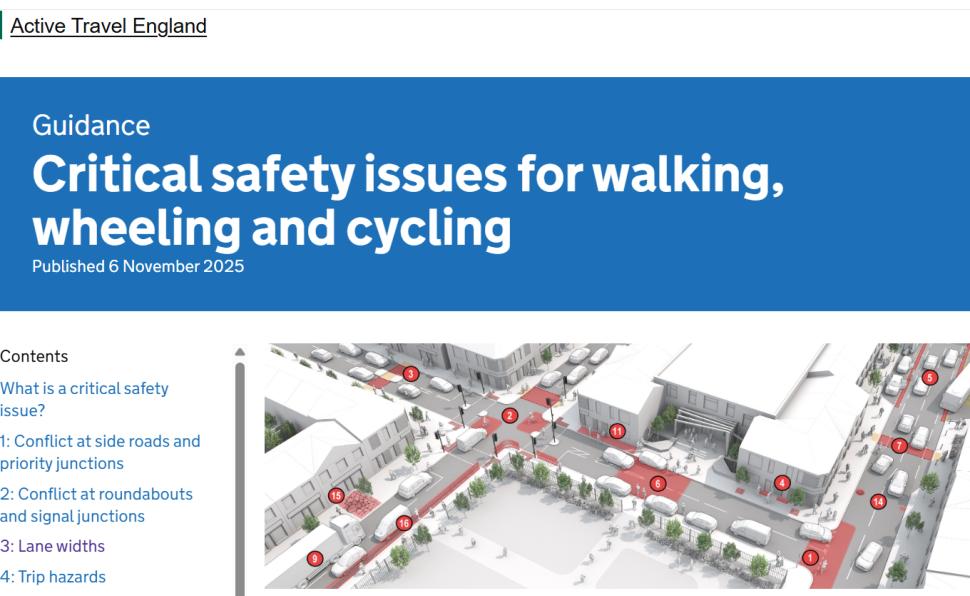 Active Travel England latest road safety guidance November 2025 (credit: Active Travel England)
Active Travel England has warned about 16 of these common design features and “explains each of the issues with illustrations and provides links to relevant guidance and key evidence”.
The uproar has stemmed from the third of the 16, titled ‘lane widths’, which points out evidence suggests the width of a lane can have an impact on how motorists overtake cyclists and the risk of collision experienced by those travelling by bike.
Pointing out that when traffic lanes are narrower than 3.25m wide it “is usually clear to motorists that there is not enough space to safely overtake cyclists”, the guidance suggests that lane widths between 3.25m and 3.9m can see motorists trying to overtake “when there is not enough space, therefore increasing the risk of ‘shunt’ or ‘clip’ collisions”.
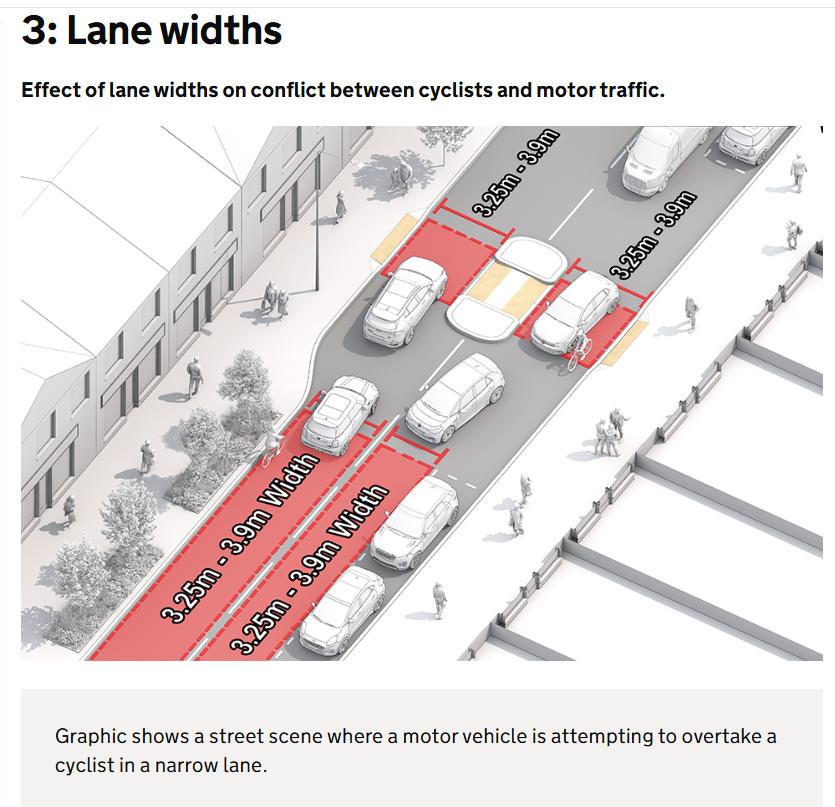 Active Travel England latest road safety guidance November 2025 (credit: Active Travel England)
Citing relevant academic research, Active Travel England concluded “to resolve this issue” it would “recommend that lanes between 3.25m and 3.9m are avoided”.
The guidance continues: “Where there are two opposing 3.65m lanes, a 3.25m lane and a 4.05m lane would resolve this issue, as would removing the centre line. This issue is commonly caused by the introduction of pedestrian refuge islands. In this case more formal crossings such as zebras or puffins may resolve the issue as they may not require the island.”
Responding to the outrage in the media and from driving groups, the Department for Transport clarified that “there has never been legally binding standards for road widths – and that remains the case”. They also reiterated the point that the specific dimensions of lanes, where widths are between 3.2m and 3.9m, could cause safety issues for cyclists and drivers due to the lack of space to overtake safely.
“The government is absolutely on the side of drivers, focusing on making journeys safer and smoother, and saving motorists’ money,” a spokesperson added, Transport Secretary Heidi Alexander having also denied claims of a so-called ‘war on motorists’.
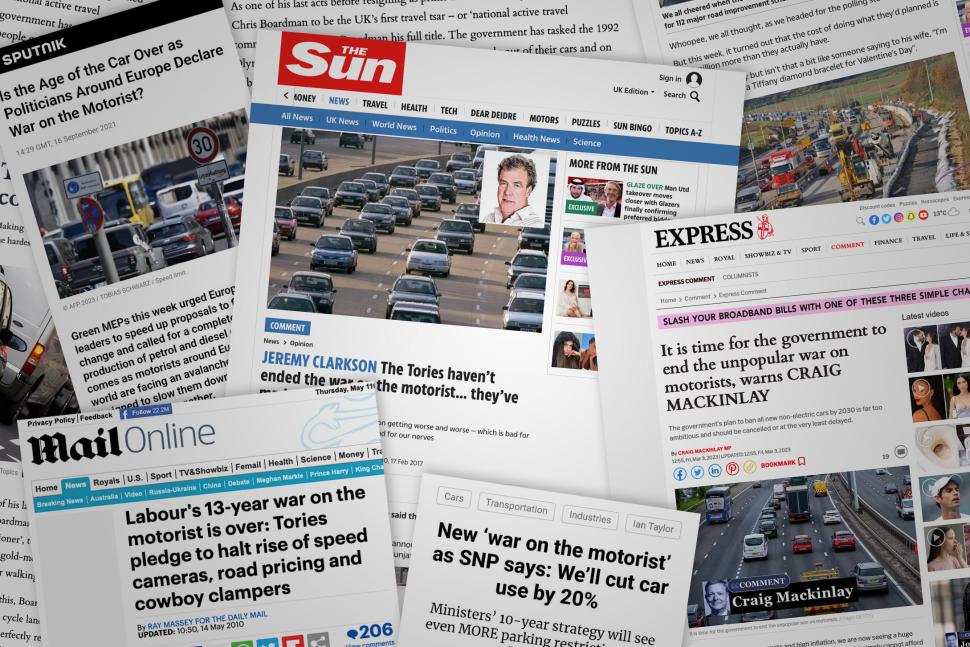 The War On The Motorist May 2023 (credit: road.cc)
> ‘The War on the Motorist’ deconstructed — looking at the truth behind the myths
“Over the past year alone, we invested an extra £500m – enough to fill seven million potholes – to help local authorities maintain their local road networks, committed £1bn to repair bridges, flyovers and tunnels, and given the green light to over 30 road schemes to improve journeys across the country.”
The press coverage this weekend included comments condemning the guidance from various figures from motoring organisations.
Brian Gregory, policy director at the Alliance of British Drivers, claimed to the Daily Mail that “the whole idea is just to make driving unpleasant instead of trying to get everybody to co-operate and work together to use roads safely”.
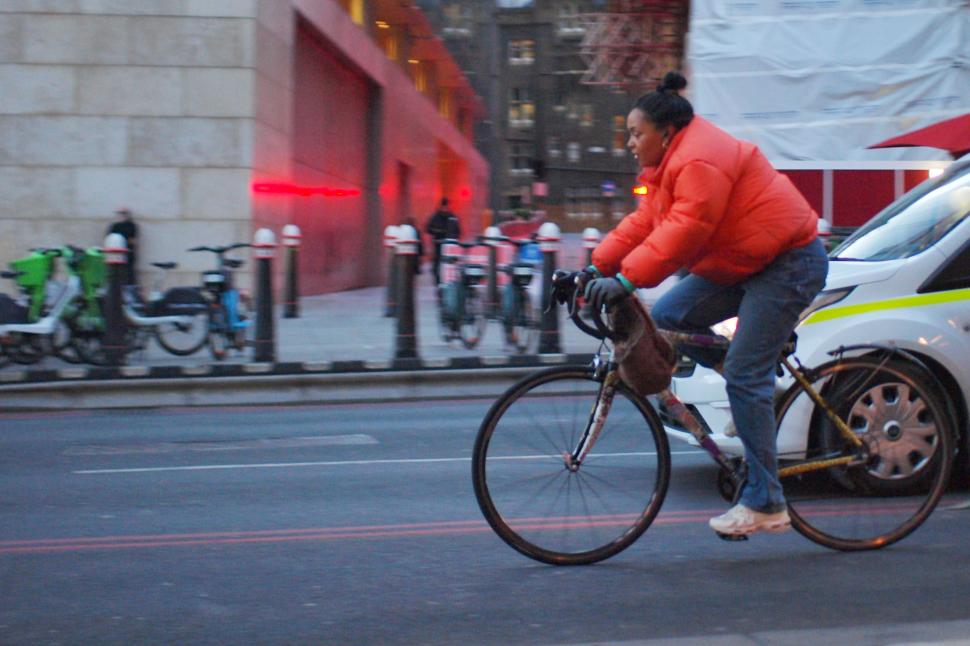 Female cyclist in London wearing a red coat on a steel road bike (credit: Simon MacMichael)
“It’s all about penalising motorists. It’s completely stupid,” he said.
Likewise, AA president Edmund King suggested it would be “impossible and impractical to change the widths of all our roads, which have evolved since Roman times”, something the Department for Transport has made very clear is not on the agenda and presumably demonstrates the way the guidance has, in the government’s words, been “misrepresented”.
“This is not America where wider modern highways and more space means it would be possible to radically change road layouts,” King said. “UK roads will always require a degree of give and take which can’t just be ironed out by regulations.”
While lane widths have attracted most attention, the Active Travel England guidance also raised concerns with certain roundabout and junction designs, as well as painted cycle lanes installed in ‘dooring’ zones, and poorly maintained surfaces that put cyclists in danger.
“A critical safety issue is defined as a street layout or condition that is associated with an increased risk of collisions for people walking, wheeling or cycling,” Active Travel England stated.
“Active Travel England’s route check tool identifies 16 critical safety issues for walking, wheeling and cycling. This guidance explains each of the issues with illustrations and provides links to relevant guidance and key evidence. You can use this guidance with the route check tool to identify and remove these risks.
“This will help reduce the risks of collisions for people walking, wheeling or cycling. The recommendation to focus on identifying and removing critical issues was introduced nationally in Local Transport Note 1/20 for cycling and regionally through approaches such as London’s Healthy Streets check and Greater Manchester’s Streets for All check.”