
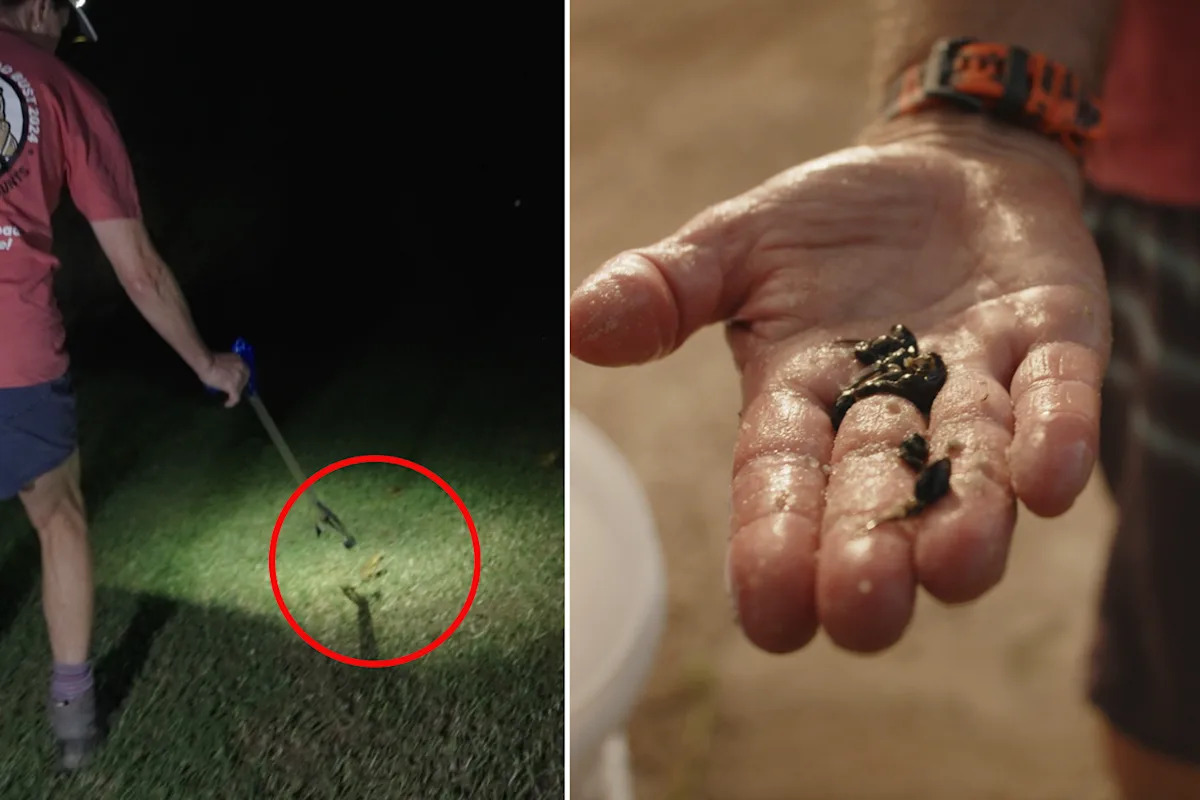
As cane toad containment efforts intensify, with the toxic species soon set to spread further into previously unaffected areas, a conservation group says it has recorded real success in stripping them from select ecosystems.
Watergum Community, the not-for-profit behind Australia’s annual Great Cane Toad Bust, is now appealing for support from the public as it gears up for another major removal push in two months’ time.
The event will run from January 17 to 25, and the group hopes to achieve similar success in 2026, after removing an astounding 199,231 cane toads in a week in Queensland and northern Western Australia earlier this year.
It comes as a landmark report revealed this month that, within 10 to 20 years, cane toads are expected to spill further across WA, into fragile ecosystems such as the Pilbara. When that happens, some 25 native species will be at “serious” risk, according to the study published in Scientific Reports.
The research also found that without strong containment measures, cane toads could occupy as much as 75 per cent of the Pilbara within the next 30 years. Aware of the imminent threat, Watergum said it’s already got crews stationed at Kununurra — an area of WA where cane toads were recently established.
Speaking to Yahoo News, a spokesperson for Watergum said removal efforts are having real, noticeable results on ecosystems. “Research has shown that a single coordinated bust can remove up to 47 per cent of a local toad population in just one night,” they said.
“We hear from our community members who have been consistently removing cane toads from their backyards that they’ve noticed a decline in populations and can hear native frogs calling again.
“Community control is a short-term solution that manages local populations and gives time for research projects working on long-term solutions.”
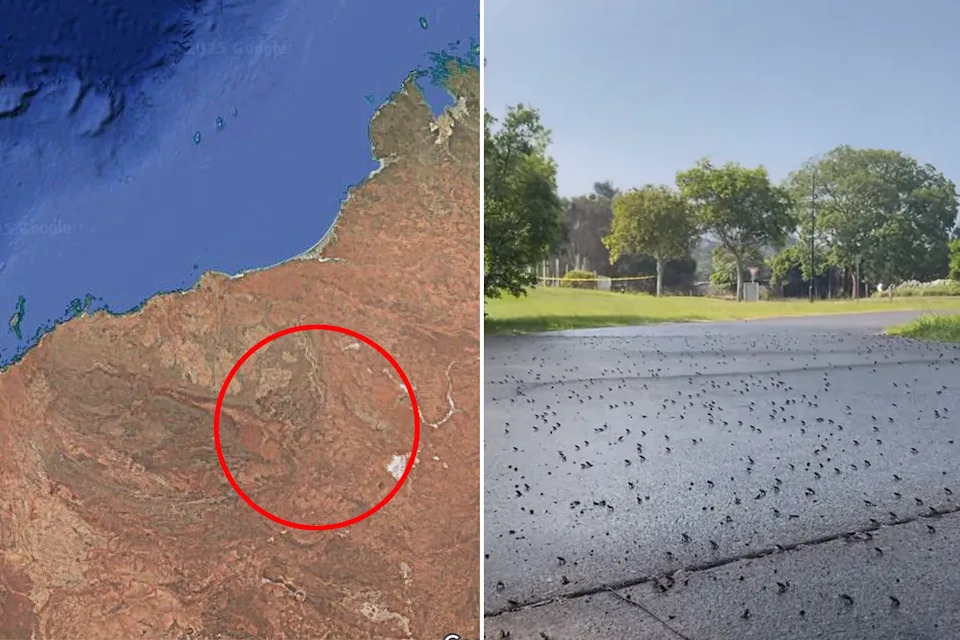
Cane toads, already widespread across Australia’s north and northeast, threaten to soon invade WA’s Pilbara region. Source: Google/Facebook/Aleta Saville
Professor Ben Phillips is from Curtin’s School of Molecular and Life Sciences and co-authored the landmark study on WA.
He said it is “certain” cane toads will soon arrive “if we do nothing” to stop them in their tracks.
“There are no containment programs in place,” Professor Phillips warned. “The area between Broome and Port Hedland is the only feasible place to stop the toad invasion. We need to have the containment zone in place by the time they arrive in this area.”
How does the cane toad tadpole trap work?
Watergum says a key factor in its success has been its Cane Toad Tadpole Trap and Lure, a world-first, pesticide-free technology that targets toads at their most vulnerable stage.
The system uses a natural pheromone to exploit cane toad tadpoles‘ instinct to cannibalise newly laid eggs, drawing them into traps before they can mature. The lure is made from all-natural compounds, is safe for waterways, and is selective enough that native frog tadpoles aren’t affected
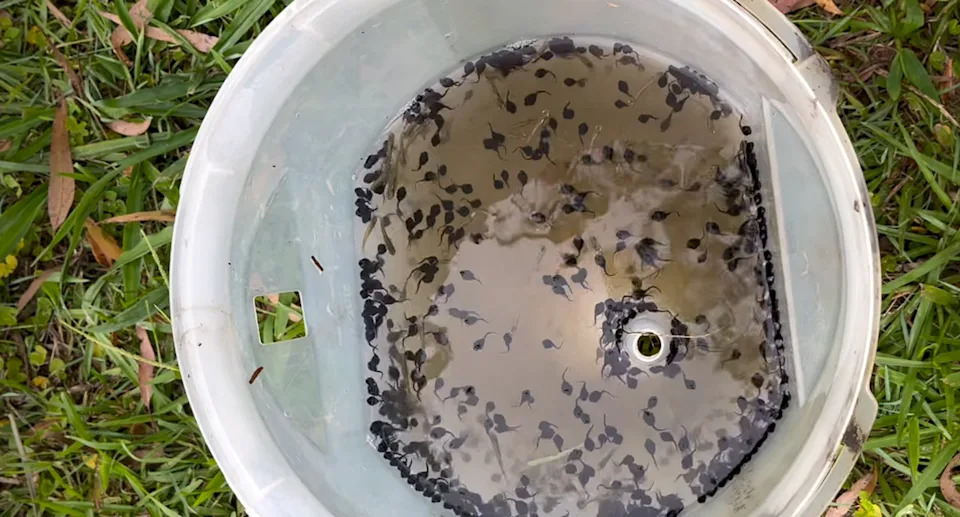
The Watergum cane toad tadpole trap helps kill the invasive species before they become a larger issue. Source: Facebook
According to Watergum, the trap and lure work by leveraging their “natural cannibalistic behaviour”. The critters are instinctively drawn to eat one another as a means to reduce competition and seek nutrients.
This attraction is driven by a specific pheromone released by the eggs, which is the active ingredient in the lure. When the trap is placed, the lure emits the pheromone. Once they are trapped, they can be humanely and safely disposed of.
How did cane toads get to Australia?
Cane toads were initially introduced to Australia in the 1930s as a solution to the grey-backed beetle problem impacting the sugar cane industry in north Queensland. Unfortunately, they thrived on Australian shores and are now estimated to be over 200 million strong.
Commonly thought of as a problem in Queensland, the pests have now spread across Queensland into the Northern Territory, Western Australia and the northeast coast of New South Wales.
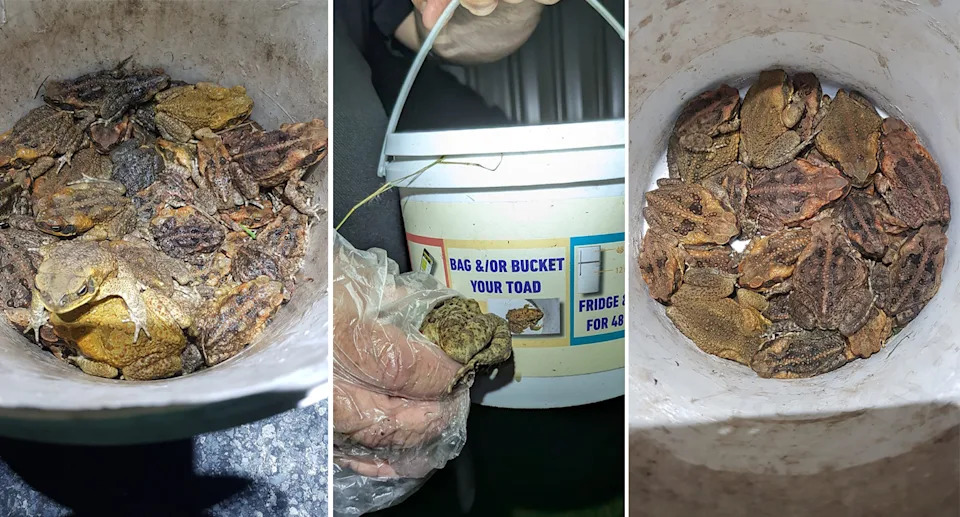
There are estimated to be some 200 million cane toads in Australia. Source: Facebook/Maclean Noticeboard
While cane toads can breed throughout the entire year, they are generally more active at night during the warmer months of the year. They are prolific breeders, with female cane toads producing up to 35,000 eggs, sometimes twice a year.
The invasive pest is typically found in northern parts of the country, but each year the toads spread further south at a rate of up to 50km per year. The toads are highly toxic and kill native predators that try to eat them, and also compete with native wildlife for food.
They can severely disrupt ecological communities by killing native predators such as freshwater turtles, eels, goannas, snakes and mammals like quolls and dunnarts by poisoning them.
How to spot cane toad tadpoles
Cane toad tadpoles can be easily confused with native frog species, so it’s important to ensure that they are correctly identified.
While most native frog tadpoles are brown or grey, cane toads are black. They feature a short, thin tail with eyes positioned towards the top of the head and have visible nostrils.
Love Australia’s weird and wonderful environment? 🐊🦘😳 Get our new newsletter showcasing the week’s best stories.
