
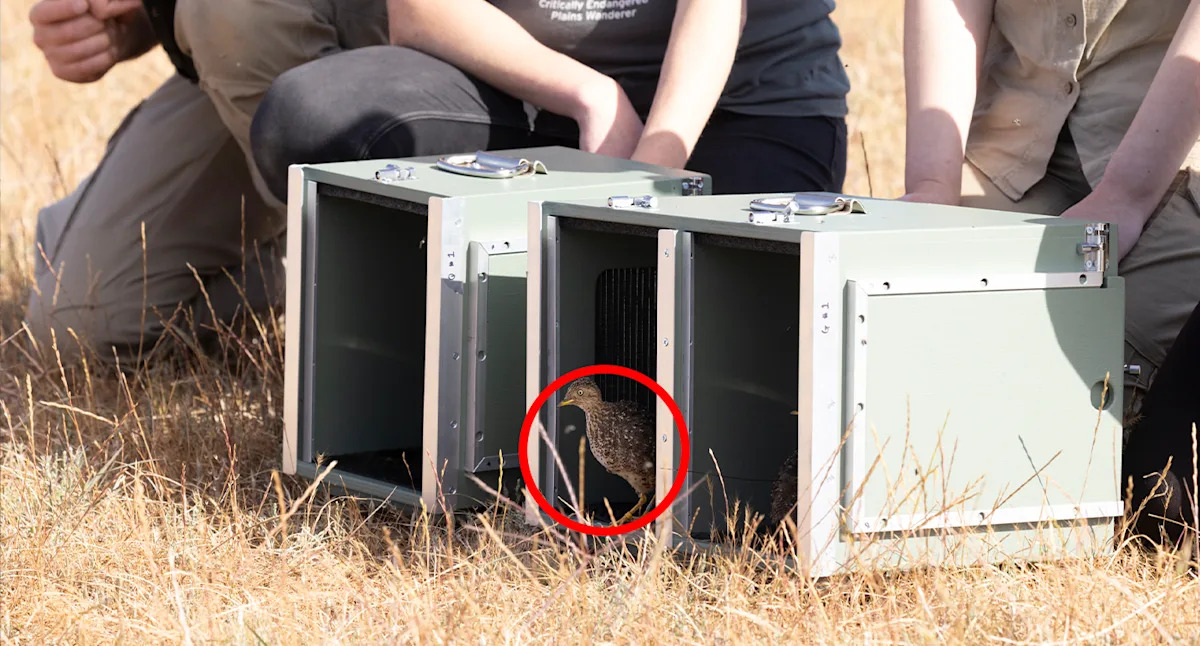
Just before sunset, scientists released some of the world’s rarest birds across three paddocks in northern Victoria, allowing them to warm themselves and take cover. Because plains wanderers camouflage so well, all seven immediately vanished into tufts of dense grassland.
Chris Hartnett, the conservation projects manager at Zoos Victoria, felt the weight of the moment as these birds, captive-bred under her watch, were released into the wild without the protection they’d once enjoyed.
“It’s all been a bit of a blur… You’re watching them come out of their box and you just want the very best of them,” she told Yahoo News.
The ancient bird species is the lone survivor in the family Pedionomidae and genus Pedionomus. And it has several unusual behaviours, including a preference not to fly when chased or attacked.
Do you have a story? Contact newsroomau@yahoonews.com
Rather than release an equal number of males and females into the environment, the zoo chose instead to release only males. That’s because of another interesting quirk — females are polyandrous, meaning they attract a harem of males.
“It’s an evolutionary tactic in an environment that can be tough to survive in. If females can produce lots of eggs with different males, they can have a high reproductive output,” Hartnett explained.
“In a lot of other species, you’ll have a polygynous system where the males will mate with multiple females, but the plains wanderers have turned that on its head.”
It’s hoped the sudden presence of the males will attract females into unoccupied paddocks that suit their needs, and they’ll establish their own new territory.
Then, in the right conditions, she might mate with three or four males over a season. After each mating, the males are left to incubate the eggs.
Related: Inside zoo’s radical plan to recover seven of Australia’s rarest creatures
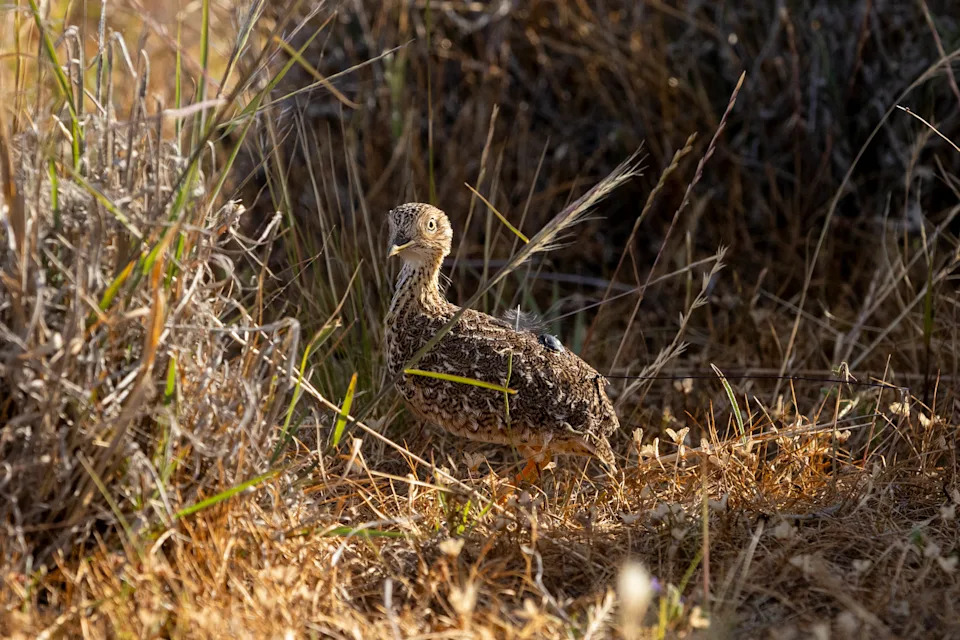
The plains wanderer has no other closely related living relatives. Source: Zoos Victoria
Perfect storm of threats leads to rapid decline of plains wanderers
Once widespread from Queensland, through NSW and down to South Australia and Victoria, this quail-sized species is now listed as critically endangered, and as few as 1,000 survive in the wild.
Captive breeding to help restore the species began at Taronga Conservation Society in NSW back in 2015 after the species was listed as critically endangered.
Werribee Zoo in Victoria then joined the program in 2017, raising around 60 chicks, the majority of which survived until adulthood.
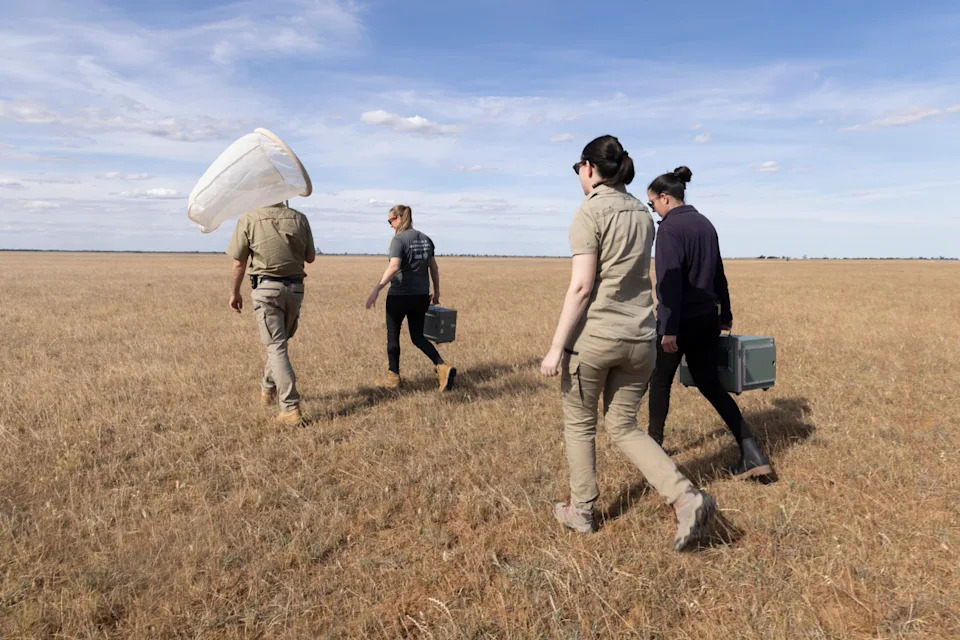
Less than one per cent of the species’ natural habitat survives in Victoria, but it has adapted in some places to well-managed pasture. Source: Zoos Victoria
The species is naturally preyed upon by eagles and hawks, but since colonisation, threats have dramatically increased, resulting in an 85 per cent decline in just the last few decades.
In Victoria, less than 1 per cent of the plains wanderer’s original grassland range remains, with the majority converted for agriculture or bulldozed for housing developments.
Like the Victorian grassland earless dragon, which the zoo is also breeding, some have adapted well to paddocks used for well-managed grazing, because livestock keeps the weeds and other introduced grass species low.
But similar to the bush stone-curlew, the plains wanderer’s best defence is to simply lie flat on the ground and hope to remain camouflaged. And this tactic, which evolved over thousands of years, has proved no match for the enhanced sensory skills of foxes and cats, which were introduced by European settlers, which can simply sniff them out and eat them.
On top of this, as the climate changes, bushfires and drought pose an increased threat to their habitat.
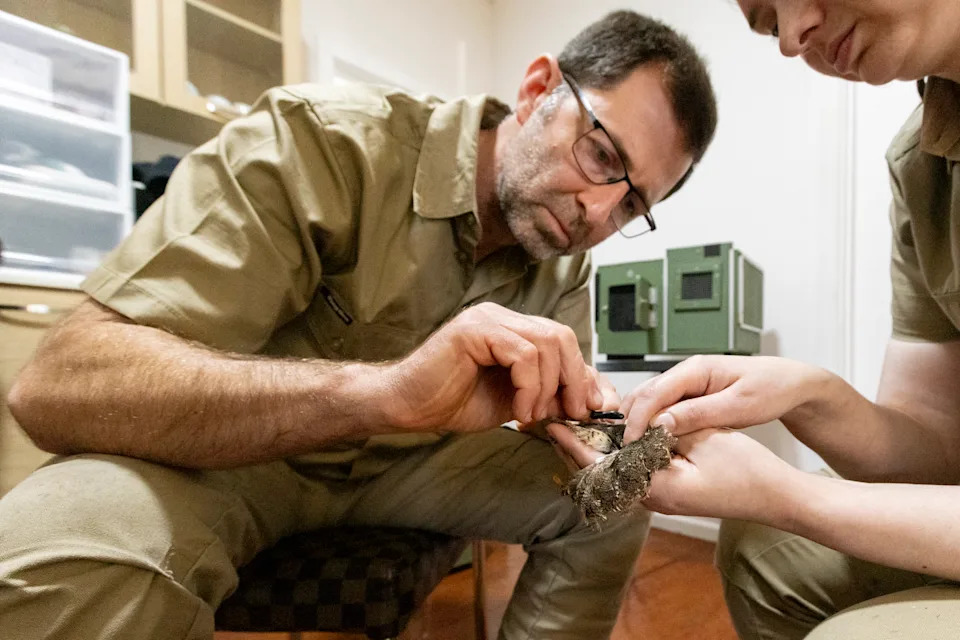
Only male birds were released to draw females into new territory. Source: Zoos Victoria
The release of the plains wanderers was on the lands of the Barapa Barapa. The CEO of the Barapa, Deborah Webster, noted the importance of the act because her people have cared for the region for over 60,000 years.
“To see these little birds return to Country is a reminder that all of the work being done to heal Country, helps prevent these precious plants and animals from disappearing,” she said.
Love Australia’s weird and wonderful environment? 🐊🦘😳 Get our new newsletter showcasing the week’s best stories.
