
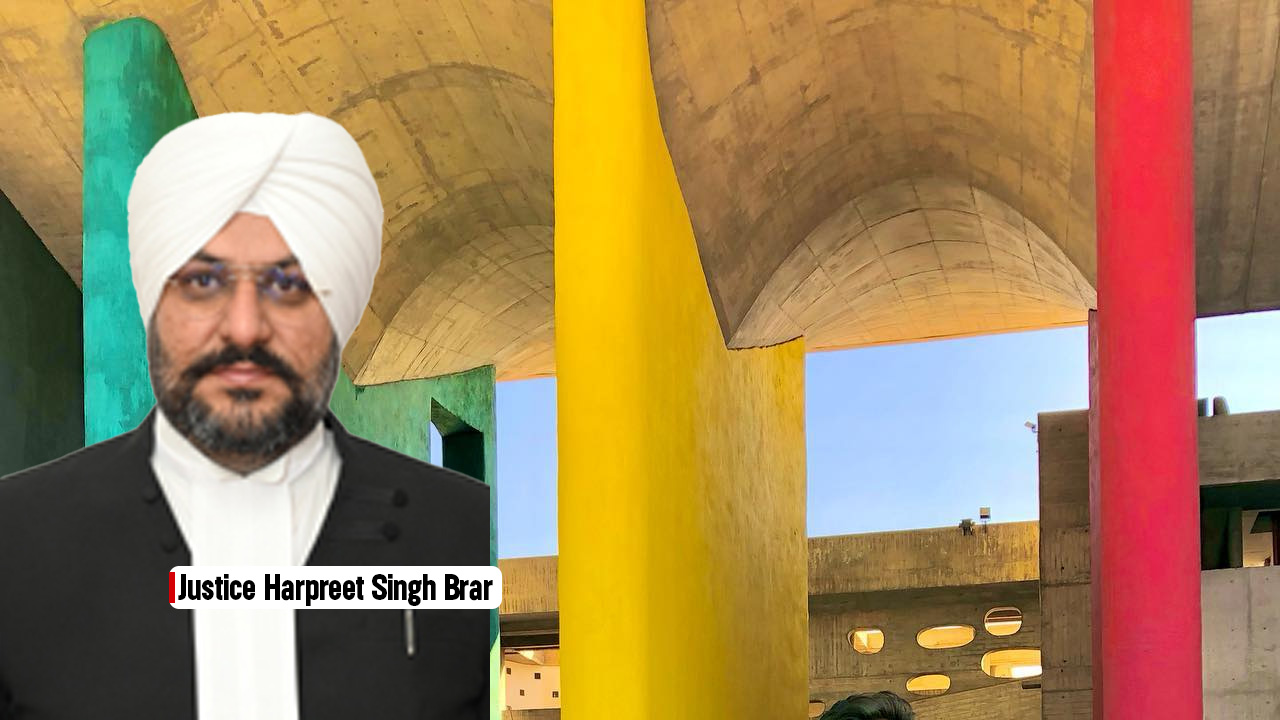
Observing that the five-decades old case “reveals a saga of administrative apathy and a persistent struggle for rightful dues”, the Punjab & Haryana High Court directed the concerned Principal Secretary of Haryana, to personally examine the veracity of the widow’s pensionary benefit claims within two months and ensure that all lawful due to her are released “forthwith”.
Justice Harpreet Singh Brar said, “the case paints a disheartening and distressing picture of administrative apathy compounded by the petitioner’s advanced age, deteriorating health, and lack of effective legal assistance. An aged widow, already burdened by grief and financial hardship, is being made to suffer further because of systemic indifference and procedural neglect. Such situations highlight the unfortunate reality that those most in need of justice often find themselves most helpless in securing it. Left with no alternative, the petitioner was compelled to approach this Court once more, clinging to the faint hope that her plea would finally be heard.”
The Court pointed what is particularly distressing is that, “throughout her prolonged ordeal, the poor widow was kept completely uninformed about any decision regarding her claim.”
Adding to her torment, the Dakshin Haryana Bijli Vitran Nigam (DHBVN) in its RTI reply, stated that the information sought could not be furnished as the matter was “very old” and no record was available with the office. Further, the Respondents, in their written statement, brought a completely new twist to the factual matrix by asserting that the petitioner’s deceased husband was not covered under the GPF/Pension Scheme of the Board, it added.
The petition, was filed by 80-year-old widow to release all pensionary benefits to the petitioner from the date of her husband’s death on 05.01.1974. The petitioner’s husband, Late Maha Singh, was appointed Lineman-II in 1955 and died in harness while working as a Sub-Station Officer under the Haryana State Electricity Board (HSEB).
According to the petitioner, despite repeated representations, she received only an ex-gratia payment of ₹6,026, while all other retiral benefits—including family pension, gratuity and leave salary—remained unpaid.
She asserted that departmental correspondence since the late 1980s showed that her husband’s service book was forwarded, that he was allotted GPF Account No, and that GPF deductions were made, yet her dues were never released.
Her earlier writ petition was disposed of in 2005 with a direction to pass a speaking order. However, according to the petitioner, the matter continued to languish without any effective decision.
The Court noted the petitioner’s assertion that she is an illiterate widow who, after her son separated from her in 2007 and after suffering paralysis in 2015, was unable to pursue her case. On filing RTI applications in 2022, she was informed by DHBVNL that the record was “very old” and unavailable, compelling her to approach the High Court again.
The respondents argued that all retiral benefits had already been released— including ex-gratia, gratuity, leave salary arrears and pay difference—citing departmental communications from 1975, 1989 and 2005. They contended that the deceased was a member of the EPF Scheme since 1962 and opted for the Family Pension Fund (FPF) in 1971, and thus was not covered under the GPF/Pension Scheme of the Board.
Although a GPF account had been opened, they maintained that GPF deductions were ceased upon the deceased’s representation in 1972, confirming EPF membership as the governing scheme.
After hearing the submissions, the Court found it “curious” that all departmental communications placed on record supported the petitioner’s claim and questioned how a GPF account could have been allotted if the petitioner’s husband was not covered under the Board’s GPF/Pension Scheme. It also noted that respondents had not specifically rebutted the documents relied upon by the petitioner and had filed only short replies.
Constitutional Duty To Protect the Most Vulnerable
Emphasising the judiciary’s obligation towards marginalized individuals, the Court observed:
“This Court is of the considered opinion that Constitutional Courts bear a sacred obligation to uphold fundamental rights and to ensure that the constitutional vision extends its reach to the most vulnerable sections of society. Within this constitutional scheme, the role of the judiciary in safeguarding and providing relief to the voiceless, the marginalized, and those dwelling at the lowest rungs of the social and economic order assumes utmost importance.”
Social Justice-Very Foundation Of Democracy
The bench said, “the Preamble solemnly enshrines the ideals of justice, social, economic, and political as the guiding promise to every citizen. Constitutional morality, therefore, demands that institutions act in a manner that honours human dignity and equality. Social justice is not a peripheral ideal but the very foundation of democracy, and the judiciary stands as the vigilant custodian of this commitment.”
It added that, “When individuals from marginalized backgrounds lack the resources or the voice to vindicate their rights, it becomes the duty of the constitutional courts to ensure that those rights do not remain merely theoretical or illusory.”
The principle of constitutional compassion, grounded in human dignity, empathy, and the upliftment of the oppressed has guided this approach. Extending relief to a voiceless 80 year old widow and securing her rights is thus not a matter of judicial discretion or benevolence, rather it is a constitutional imperative anchored in the Preamble and Articles 14, 19, and 21 of the Constitution, said the judge.
Consequently, the Court directed the Principal Secretary or Administrative incharge, Electricity department, Government of Haryana to personally examine the veracity of the petitioner’s claims within a period of two months from the date of receipt of a certified copy of this order and to ensure that all lawful benefits due to the petitioner are released to her forthwith.
Mr. R.K. Hooda, Advocate for the petitioner.
Mr. Piyush Khanna, AAG, Haryana.
Ms. Sehaj Sandhawalia, Advocate for respondents No.3 to 5. Mr. Lokesh Chander Aggarwal, Advocate for respondent No.7.
Title: Laxmi Devi v. State of Haryana and others