
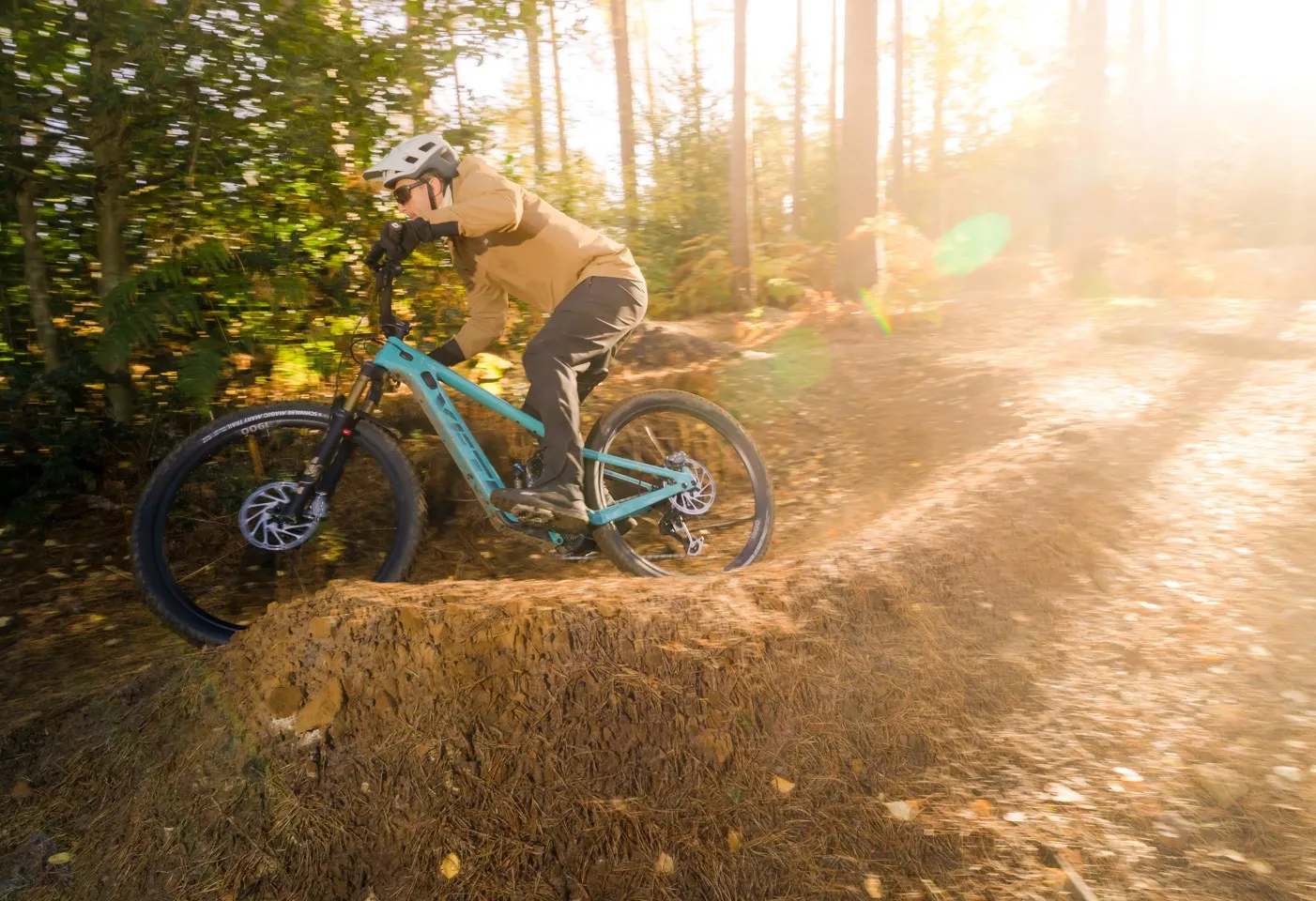
Despite being 20 years deep in the bike industry, I had never ridden a Yeti, so when an opportunity to review the flagship MTe e-MTB came up it was impossible to say no.
This is a label that definitely falls into the cult classic, not best seller mythology. Yeti is one of those brands that seems to have immense loyalty among its followers on account of its artisan approach to bike design, so it is by no means a production powerhouse like a Specialized or Trek.
Whether or not that matters really depends on how the bike handles, how its spec sheet stacks up against the buying might of larger volume brands and the level of innovation on show. Given that many major manufacturers aren’t being shy about releasing eye-watering priced e-MTBs of late, the Yeti stands out as an interesting option that takes a drastically different approach on many fronts. If there’s one thing that stands out from this Yeti MTe review right away, it’s that this bike really doesn’t ride like an e-bike, nor really look like one in the overtly obvious way many do.
If you’re already browsing with a view to buying and want to check out some other e-MTB reviews after the Yeti MTe, then Cycling Electric has this guide to the best full suspension electric mountain bikes.
Yeti MTe review: The headline details
 Geoff Waugh
£9,499 | View Offer
Pros
Agile, playful and responsive
Doesn’t feel like an e-bike (which you’ll either love or hate)
Great descent control
Uncompromising design and spec
A purist mountain biker will love this approach
Reliable and tuneable Fox suspension (160mm F/R)
Easier to handle in the air on account of light weight
I was a fan of the geometry (which is flip chip adjustable to open up 27.5/29er setups and four settings)
Battery is larger than the weight suggests at 580Wh
Range extender compatible
Super quiet operation
SRAM Maven brakes have decent control and bite
Cons
An investment piece at dream bike pricing
If you’ve ridden other mid motors the power feels notably lower (though this is somewhat intentional)
Battery-powered dropper won’t please everyone
TQ app is a little light on features
Battery is best charged on bike as removal requires tools
Hill starts can be tricky
Frame can collect mud
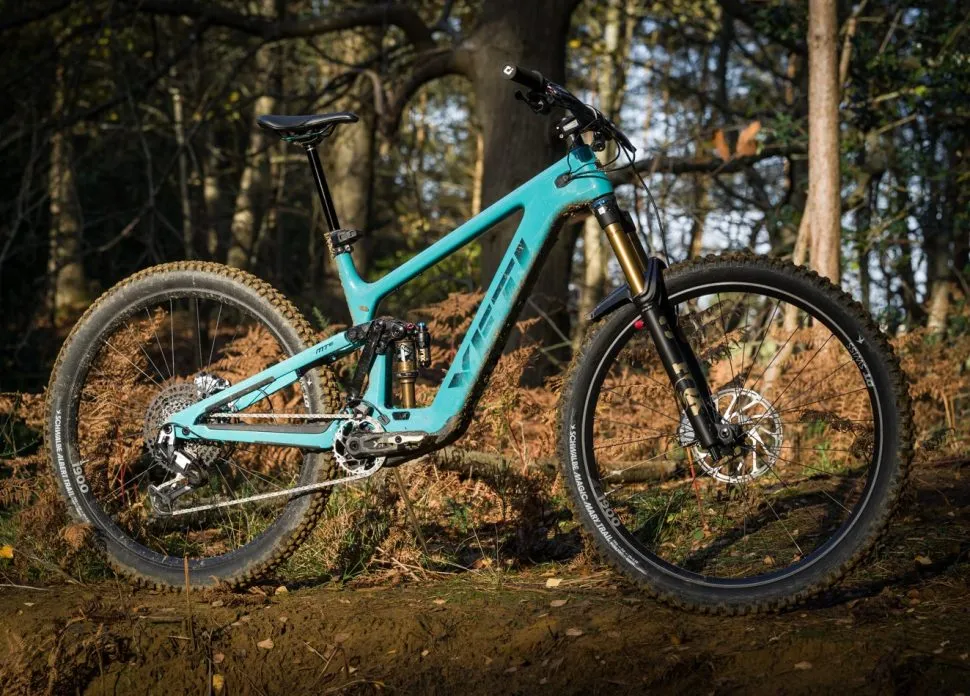
Specifications
Stated weight: Approx 20.1kg
Stated range: Estimated 100km
Frame material: Carbon
Motor: TQ HPR60, 60Nm
Battery: TQ 580Wh
Drivetrain: SRAM Eagle 90 12-speed (Cable on this spec, wireless on top spec)
Brakes: SRAM Maven, 200mm rotors
Saddle: WTB Solano, chromoly rail
Tyres: Schwalbe Trail Pro 29″
Suspension: Fox Performance 36 fork, 160mm / Fox Performance Float X shock, 160mm, Sixfinity linkage
Included accessories:
Geometry
Head tube angle 64°
Seat tube angle 77°
Chainstay – 449mm (all)
Wheelbase – Small 1213mm through 1303mm XL
635mm stack height (L)
480mm reach (L)
Spec offerings
Top: Yeti MTe T4 XX
Middle: Yeti MTe T3 X0
Entry: Yeti C2 Eagle 90
 Geoff Waugh
Who is this e-MTB for?
I would be very surprised if this were an e-MTB that sold to a first-time rider. In all likelihood, if you’re browsing the Yeti catalogue while looking for your next electric mountain bike then you’ve been a mountain biker in the past. I’d bet less on current e-MTB riders pivoting from a presently owned model to this bike for reasons that I’ll go on to explain in detail, but to summarise quickly, this is very much a purist option. It’s not full power, nor is it an uphill battering ram as many now are. And that’s okay.
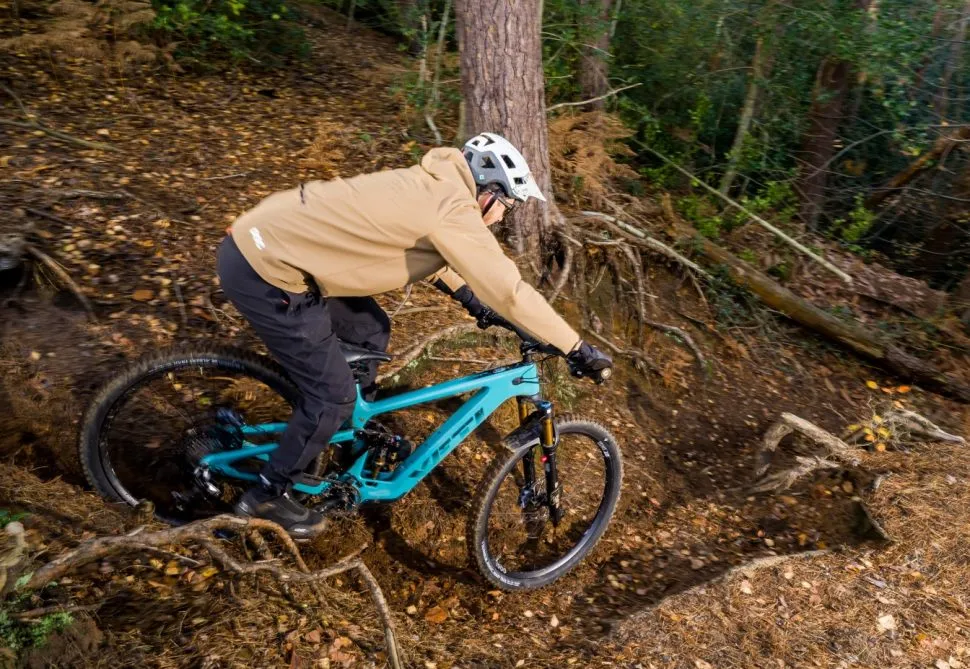
With its 160mm front and rear travel the Yeti MTe platform is expertly capable on mixed terrain with enough travel for bike parks, steeper downhills and technical trail riding. It’s able to be adapted to suit your riding style too, with a flip chip capable of delivering four configurations on geometry and opening up the possibility to run a ‘mullet’ setup with a 27.5 rear and 29-inch front wheel. At delivery you’ll get a pair of 29er wheels, which in the case of this model are DT Swiss E1900s, with an aluminium rim, while the range topper instead upgrades to carbon.
A final point that’s hard to avoid. This is an investment piece e-MTB. a bike for life, unless you also own a yacht that needs one too. Yep, for most of us this price point will be out of reach and, needless to say, that makes this YETI MTe review a task of balance. On paper, cheaper, more capable e-MTBs certainly exist, but if you believe that bikes have a unique heart and soul, then perhaps you’ll read on to discover why this build is a bit special.
Related Articles
 Geoff Waugh
A closer look at the proposition
The spec sheet on Yeti’s MTe is very deliberate. It was clear to me from the first ride that the brand has diverged from the trend for intense power levels and bigger batteries, instead wishing to create as close to the feeling of a top-end mountain bike as possible without underselling the fact that this is still an e-MTB and one that can compete at the top end, albeit for different reasons.
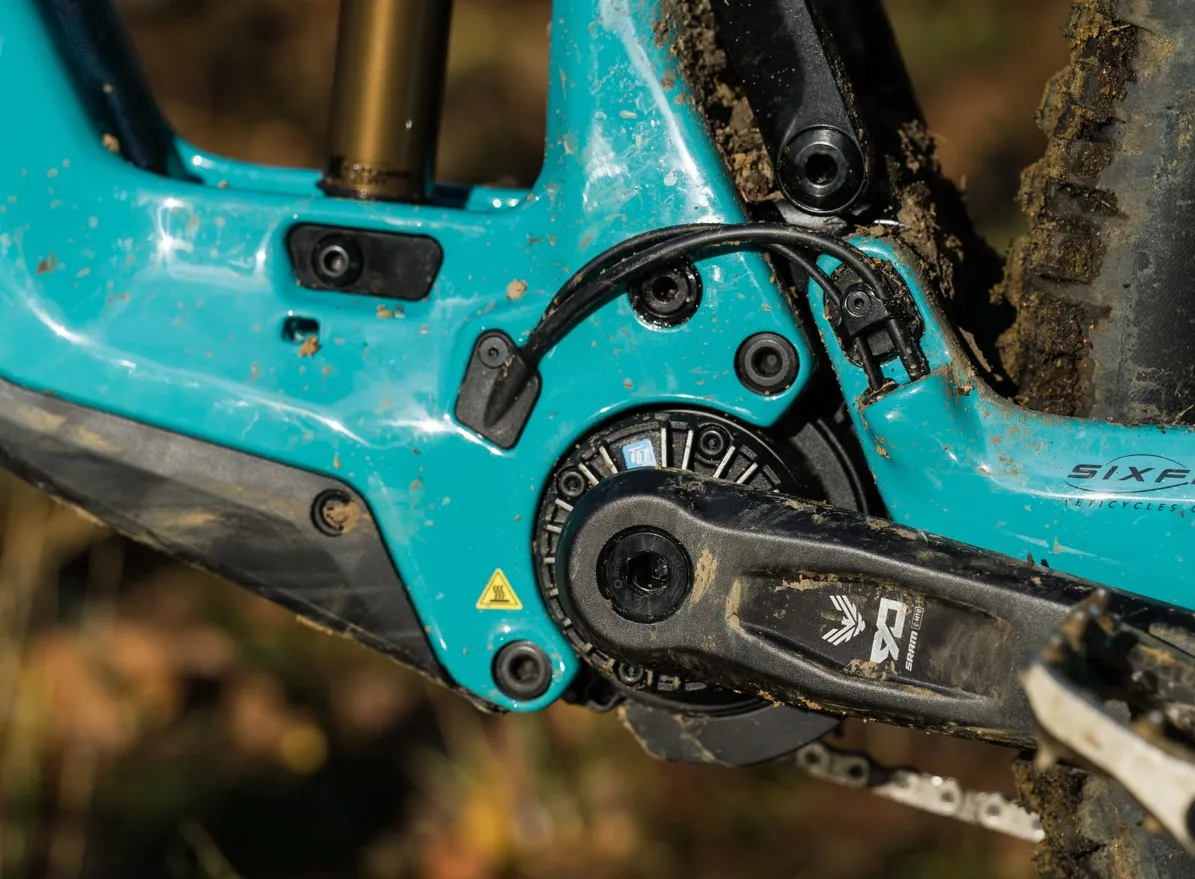
That means a lightweight carbon frame is the foundation and within that is TQ’s latest motor, the HPR60, which is 20% more powerful than its predecessor and has a further 50 watts on its peak power, however the torque still peaks at 60Nm, which is about half that of the comparatively bonkers output from DJI’s Avinox, for example. The upshot of this is that the motor isn’t asking as much of the battery, so the range return is improved, leading me to be very happy with the 580Wh inside the frame. This battery is removable, but not without some tools, so you’ll probably charge the bike as a whole.
This motor is incredibly compact and light, which has handed Yeti’s designers the ability to take all of its learnings from decades of MTB creation and not have to adapt the geometries and clean lines too much. The entire motor is about the same size as a tin of beans, so it really doesn’t influence things much more than a traditional bottom bracket shell compared, say, against a Bosch motor (though they too are getting smaller). This design freedom means that Yeti has really been able to drill down on the ride characteristics of this bike and, as such, the frame is optimised to be really comfortable at hammering down descents.
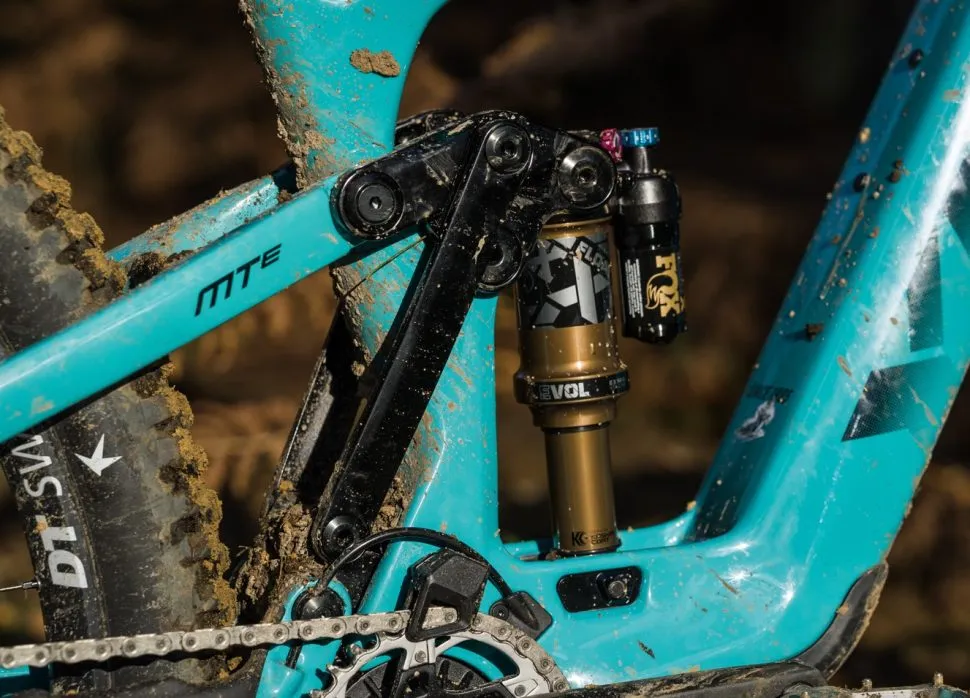
You’ll notice quickly that the suspension setup is a little different than many competitor’s and this is a showcase of the Sixfinity linkage, which is able to offer adjustable progression rates to best suit your riding style and shock setup. It’s here that you can really dial in whether you want the bike to be setup for serious big hit downhill, or whether you prefer a balanced setup that adds pedalling efficiency and enhanced hill climbing ability. The latter might be favourable to many on account of the weaker motor input and the fact that the UK’s terrain is hardly West coast USA.
How the Yeti MTe handles
 Geoff Waugh
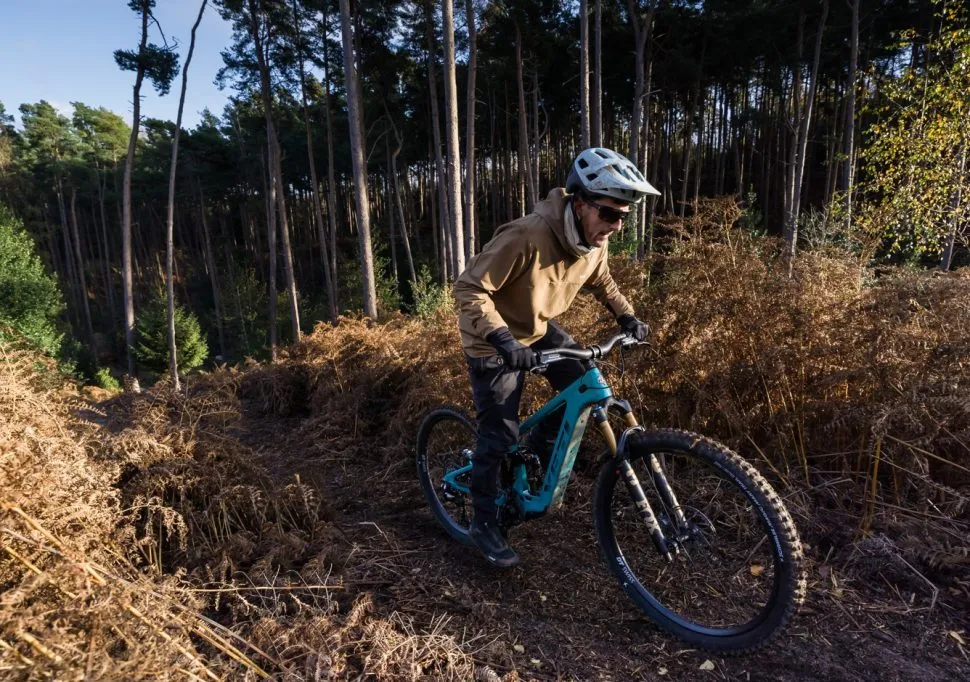
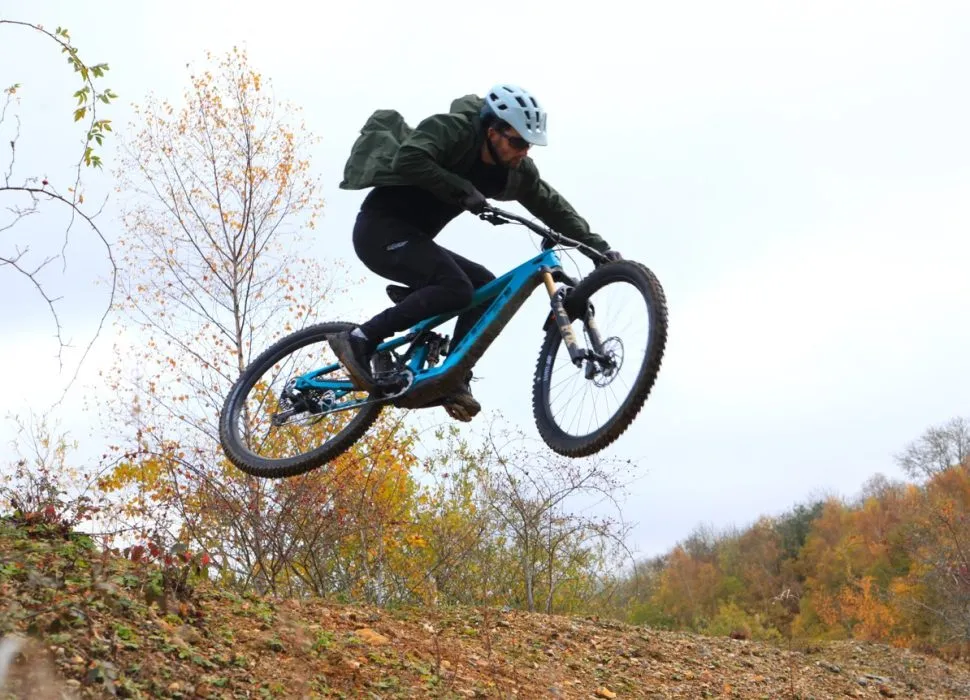
I rode a real mixed bag of terrain on the Yeti MTe, culminating in a freak crash on a set of jumps that I’m pretty sure I was to blame for and thus drew to a close this review period.
Yet while I was upright and above the wheels this was one of the more enjoyable experiences riding off road this year. I straddled the boundary of dry but leaf covered ground into the winter muck, so I’ve been able to get a really goo feel for the bike in various conditions. In the latter conditions, I did notice that the Yeti has a few places that capture and store mud, so that’s something to be aware of if you typically ride through British winter.
As I’ve mentioned, there was something quite joyful about riding the Yeti that isn’t reflected as well in other e-MTBs I have tried and that is largely how easy it is to feel like you are riding a mountain bike. The first level of assist is only barely noticeable, but it’s a nice way to coast along and not lose momentum when you suddenly get caught off balance. By mode three you have amplified the motor’s assistance, but it’s not driving the experience and it certainly doesn’t define the ride.
Truth be told, because I am now well used to riding much more powerful motors, I did park in the third of the three power modes for longer periods, just to enhance my flow through very twisty segments of trail where power out of sharp turns can be useful.
Doing this didn’t seem to drain the battery especially fast, and after about four hours riding, I had only cleared about 45% of the battery, despite the higher assist deployment. If you’re worried about range (I wasn’t), then you have the option to bolt on a range extender at the bottle cage mounts. These are higher up the downtube than on some competitors’ e-MTBs, which is less desirable in terms of lowering the centre of gravity of a bike. As I say though, I think you’ll only need the extender if you’re riding all weekend long on a charge, or are spending a lot of your day climbing.
That leads me into where this bike’s limits lie when climbing, because needless to say there are some and those were thrown into sharp focus on a day where I rode this and Megamo’s Reason side-by-side, doing the same loose dirt climb (pictured above). Here, the hill starts with the TQ motor were not particularly easy, there just wasn’t the upfront peak of power that the DJI is so shameless about. So you do have to give that little bit more pedal power from the word go and be very sure you’re in the appropriate gear to get going. There is no covering a bad gear choice with motor power here… which you should try to avoid anyway if you like to keep your chains intact.
Once you are moving the motor provides a very natural, and silent, support that isn’t going to drive you up the hill by itself, but so long as you are putting in pedal strokes in the right gear then you’ll ascend 10% climbs with relative ease.
The caveat to that is that you might be lesser able to retain that momentum versus other modern e-MTB motors if you are somebody who enjoys ‘uphill flow’ – that is to say you actively go looking for challenging climbs to pick your way up with roots and rocks. It would be possible, if you were skilled, but where a Bosch or DJI motor encourages it, here you need to be a bit more sensible.
By the way, check out the image below for the location of the flip chip – the black rectangle beneath the shock head – it’s here that you dial in the bike’s basic characteristic.
 Geoff Waugh
Yeti MTe C2 review: The spec sheet
The C2 build is pretty impressive, even if it’s not yet the top spec model. It makes compromises, but very small ones like cable instead of wireless shifting and aluminium instead of carbon rims. Sure, you might save a little more weight, but the C2 spec has already done the legwork of weight reduction to a happy medium. Anyhow, I actually prefer cable shifting to wireless and this e-MTB already has one extra battery to dock on its electronic dropper seatpost.
Needless to say the spec is sophisticated. There’s 12-speed SRAM Eagle gearing, which offers a nice range on which to back up those hill climbs and which shifts pretty well even with some load on the chain.
The Fox Performance 36 Factory fork was smooth, delivering enough travel for bigger hits and confidence at speed when pointing down steeper slopes, plus there’s a good usable range of damping. This added up to a really nice controlled feeling on the descents, which paired with the high control of SRAM’s Maven brakes, made picking down steep terrain not only comfortable but enjoyable, all without too many nerves.
It’s worth stating that this is why you buy a bike like this, so I place more weight on the fun on downhills, than on how fast I can climb up for another run. Quality, not quantity, but sometimes both.
I particularly liked that when I first rolled the Yeti MTe out of its box that I was supplied a bottle of Stans fluid, giving an option to go tubeless right away. I would personally do so, though for the purposes of this review didn’t have the time in the workshop.
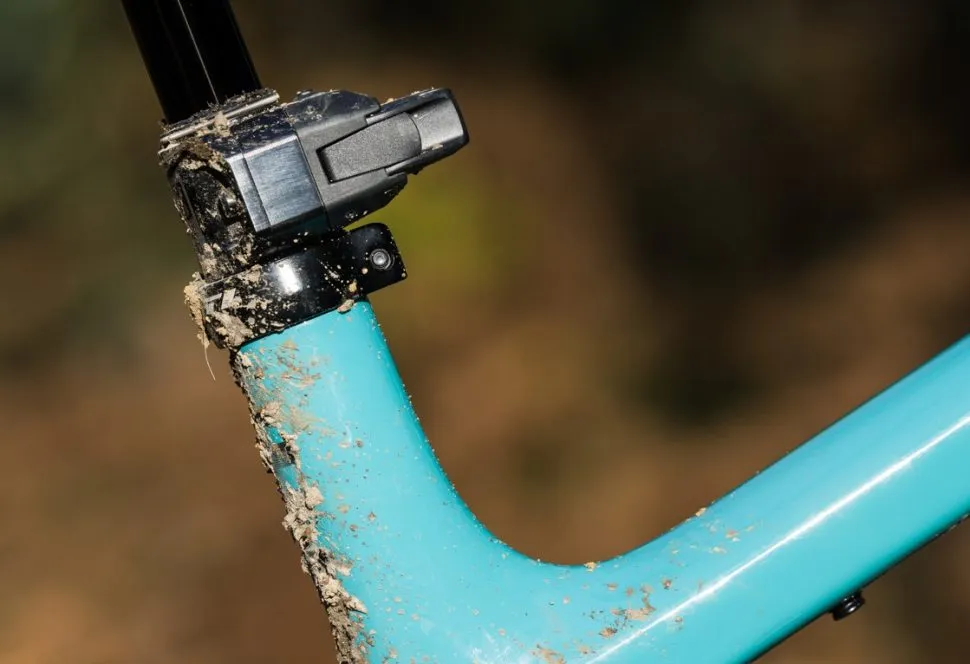
A slightly standout design quirk that doesn’t gel with the otherwise ultra-refined aesthetic is the SRAM Reverb battery, which clips into the base of the seatpost as it would had you selected the top spec wireless gearing (it’s the same battery). To my taste, I could very happily not have this component be electronic, but that’s not to say that it didn’t work well; it was flawless. I just don’t like having to remember to charge things.
 Geoff Waugh
Conclusions
I really enjoyed having this bike. It took me back to a simple enjoyment of mountain biking and reminded me of how good we have it nowadays. It provides a perfect counter argument to the power, power, power dialogue that has gripped the bike world and, to my mind, pours water on the argument we need high peaks and torque outputs. Sure, this might be the lower boundary of what a modern e-MTB should offer, but between the TQ HPR60 offering and say, a Bosch Performance Line CX, I think we have a pretty awesome range around which to consolidate before focusing on other things.
That’s kind of what Yeti has done here. It’s diverged from the crowd and done its own thing and, as a result, it has really nailed the important part – the bike itself. As far as enjoyment of the parts that matter go, this is about as much fun as I’ve had on a bike in 2026. The Yeti MTe nails the descents, handles well in the air, tracks where you want it to on technical terrain and has just about enough power available to make stamping on the pedals out of bermed corners a competitive experience to others.
I am always going to struggle to get around e-bikes that sell at this price. This, sadly, isn’t anywhere close to mine, nor most people’s economics, shy of paying for it on finance. That’s okay, every five to ten years you might decide to go overboard and treat yourself to ‘the one’; and this is worthy of that status. Enjoying the ride means riding more often, which begins to justify the high price.
Competition worth your consideration
Amflow PL
 Geoff Waugh
£8,999 | View offer
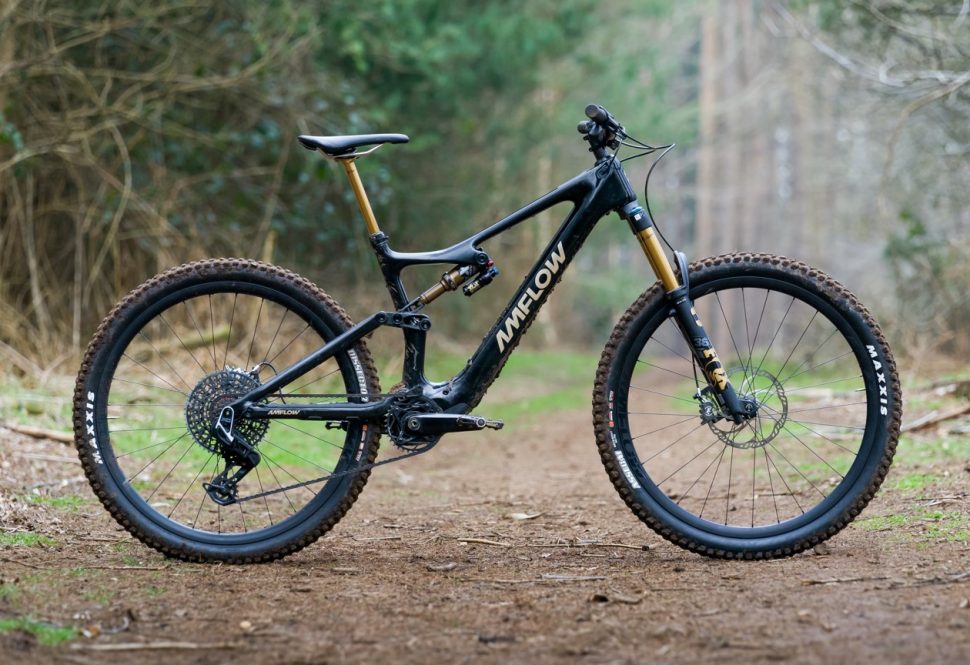
Another bike to go for a very manageable overall weight, albeit with a slightly shorter travel is the DJI Avinox driven Amflow PL carbon, an electric mountain bike that shook the market with its brute force power from its relatively small motor.
Catch our Amflow PL review here.
Megamo Reason
Price range TBC (AL 07 – £4,999)
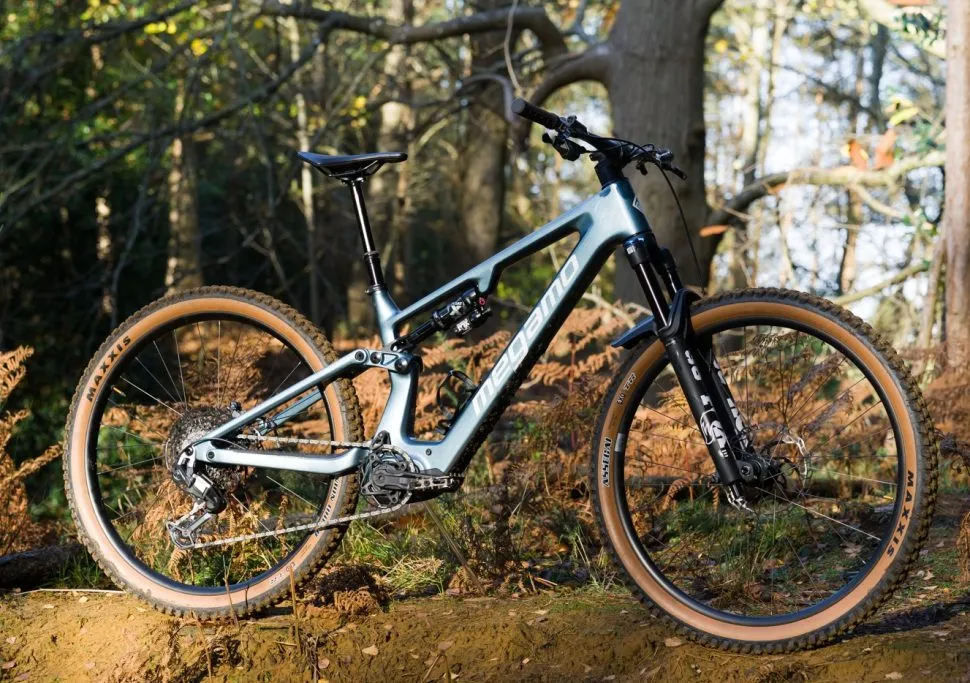
Another bike to offer a flip chip in its frame to help you refine the geometry to your taste is Megamo’s Reason. If you’ve not yet heard of this brand they’re just about landing in the UK for the first time, but come backed by a large Spanish manufacturing base. Once again, this is a DJI Avinox driven bike, so very powerful and with a similar 160mm suspension travel capability.
We will have a full review of the Megamo Reason shortly, so stay tuned!