
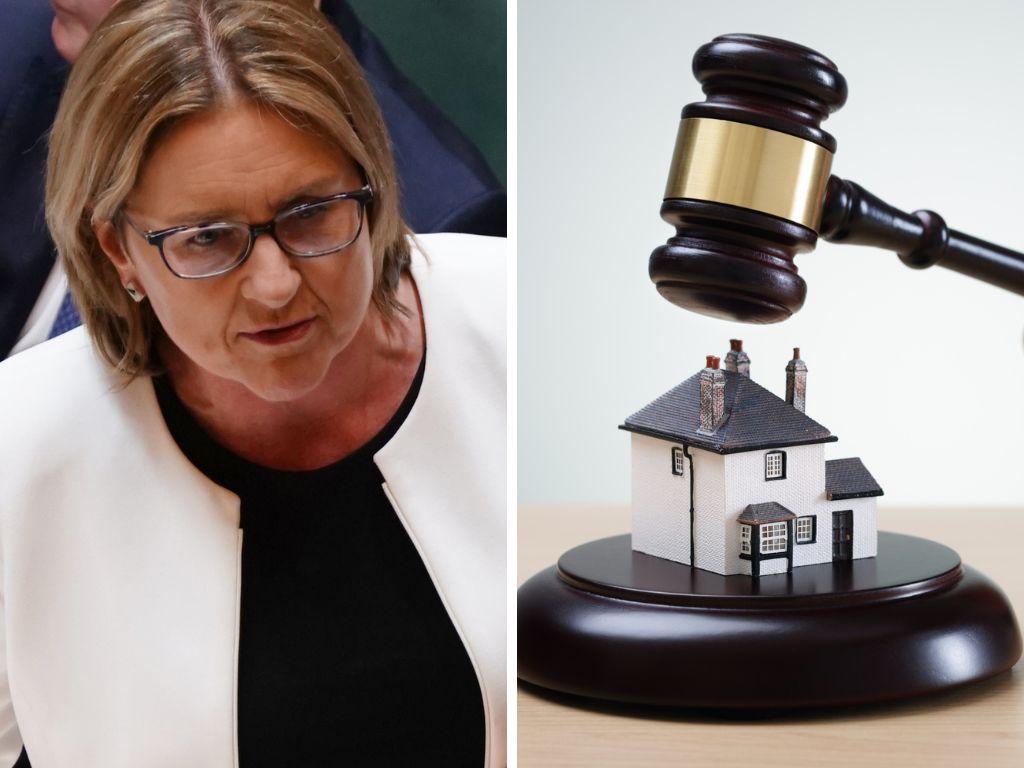

Victorians will no longer face going to auctions blind to the homesellers desired price.
Victorian homeowners will be banned from putting their homes under the hammer unless they disclose their reserve price ahead of the auction under a new government policy.
Consumer Affairs minister Nick Staikos announced the tweak to underquoting laws this morning, but it is understood legislation will not be put to the parliament until May next year.
The key proposal is to require home sellers to disclose their reserve seven days before a home is auctioned, giving homebuyers a chance to confirm a property is within their budget and not being underquoted with enough time to carry out due dilligence before bidding.
RELATED: Major real estate reform revealed to combat Victoria underquoting
2025: The Melbourne suburbs where underquoting will surge this spring
Consumer Affairs Victoria cracks down on dodgy comparable sales
While it has sparked a mixed response from the industry, real estate agencies and buyer’s advocates and long-time fighters of underquoting are unified in saying the proposal will not end underquoting.
The government’s plan was a core suggestion from the Underquoting and Integrity of Auctions Forum covered by the Herald Sun in 2023, and has been called for over a period of decades by elder statesmen of the real estate industry as a solution to underquoting.
Despite the extra workload, Consumer Affairs Minister Nick Staikos was unable to commit any new resources to the already stretched Consumer Affairs Victoria’s underquoting taskforce for enforcement.
He said the new laws would only apply to auctions and fixed sale dates.
Mr Staikos assured buyers that the reserve price would be “very, very clear” to consumers.
Asked why the government had landed on seven days, he said it gave both vendors and buyers an appropriate amount of time.
Victorian Premier Jacinta Allan and Nick Staikos, Minister for Consumer Affairs, expect to bring the legislation to parliament in 2026. Picture: NewsWire / Andrew Henshaw.
“A property sales campaign is typically four weeks so it means that vendors have a few weeks to properly assess the level of interest in their property, and seven days is a good amount of time for prospective buyers to make a final decision on whether they continue to pursue this property, on whether they decide to invest in a building inspection,” he said.
Premier Jacinta Allan said her government was sending a “very clear message” to real estate agents.
“I want an auction system that makes it fairer and more transparent,” she said.
“We know that the current way that reserve prices are said is not fair.”
Opposition leader Jess Wilson said while she supported more transparency the government was simply “tweaking around the edges”.
“(This will) do nothing to actually tackle the unaffordable nature of housing in the state,” she said.
Victoria is known as Australia’s auction capital with more than 1000 auctions typically held each week during the busy spring selling period.
“We know that when a new home is built, over 40 per cent of the cost of that is taxes, fees and charges at the hands of the Labor government.
“This is what is driving up property prices and making it impossible, particularly for first home buyers.”
Greens MP Gab de Vietri claimed credit for the move as she welcomed the reforms.
“It is a testament to the Greens power,” she said.
“We take the good ideas, we put them on the table, and it’s great when Labor snaps them up.”
New Real Estate Institute of Victoria president Toby Balazs said he strongly denounced any form of unlawful underquoting and the Institute was committed to an effective, sector-wide solution.
However, an REIV statement cautioned the government over an “overly narrow and reactive approach”, and indicated they had a working group in place to tackle the issue.
According to the Real Estate Institute of Victoria, almost a third of complaints made to the Consumer Affairs Victoria’s underquoting taskforce are lodged by real estate agents.
“We have been developing suitable solutions that strike the right balance between greater price transparency and protecting a vendor’s right to achieve the best possible price,” Mr Balazs said.
“We look forward to publishing the Strategic Working Group’s recommendations. Informed by extensive stakeholder input, the Group’s report will aim to guide the more nuanced regulatory response required to give buyers increased price transparency without compromising vendor rights.”
He said the REIV was aiming to finalise their proposal, which would take in other forms of sale including private treaty, in the next few weeks — and would have it completed ahead of Christmas.
“In its current form, I don’t think it is workable,” Mr Balazs said.
While not finalised, one of the considerations the Working Group is reviewing is requiring the home’s reserve price to be within the advertised price range three days ahead of auction.
This would not confirm the exact figure, and gives vendors some wiggle room, and would also fit within existing legislation that enforces auction rules around unconditional sales including the removal of a right for buyers to cool off and pull away from a sale, that is available when purchasing via private treaty.
Later in the day, Mr Staikos hit out at the REIV saying they had backpeddled from an earlier perspective supporting reserve price disclosure.
“It’s disappointing REIV has changed their position and won’t support this nation leading reform which is all about making buying a home fairer for families and young Victorians,” Mr he said.
“We’ll continue to work with the industry to make the housing market fairer and more transparent.”
The Institute also noted that close to a third of complaints to Consumer Affairs’ underquoting task force were coming from real estate agents, showing that they agents were committed to changing standards.
Their statement also indicated that they support price transparency, but described today’s government announcement as a “disproportionate response” and warned it risked “disadvantaging vendors”.
Victorian Opposition leader Jess Wilson said the changes would not do anything to tackle the unaffordable nature of housing in the state. Picture:NewsWire/Ian Currie.
The REIV convened a discussion of disclosing vendor reserves in 2023, headed by former president Robyn Waters, but rejected the concept.
However, at the time of the 2023 forum senior agents from across Victoria did support the concept.
They included Terry Sparks, Garry Nash, John Spragg and Rosemary Jamonts.
The 2023 forum also called for the naming and shaming of agents caught underquoting.
Long-time underquoting battler Keatings Real Estate’s John Keating convened the 2023 forum and said the inevitable had happened, but that there was still some ground to cover.
“It’s obviously a huge breakthrough for transparency and thinking from the regulatory authorities, but it’s still not going to stop people from being underquoted for the first three weeks of the campaign,” Mr Keating said.
“There’s no need for it to be delayed until one week before the campaign.”
Woodend real estate agent John Keating has been fighting against underquoting, and advocating reserve price disclosure since 1984.
The agent first began disclosing his vendor’s reserves ahead of auctions in 1984 and has sought the change since then.
“It’s a very good, big first step — but it won’t stop agents underquoting for the first three weeks of the campaign and people will still be duped and waste their time,” Mr Keating said.
“We have won a battle, btu we haven’t yet won the war.”
David Morrell has fought against underquoting for 25 years and said the government plan was “the biggest change since they outlawed dummy bidding”.
“The people that will be happy are the public,” Mr Morrell said.
“The only people who will be ducking and weaving are agents.
“But it’s still not going to stop underquoting.”
Mr Morrell noted there were other sales methods available to agents that could largely mimic an auction, but would in theory avoid the need to follow the new rules.
Buyer’s advocate David Morrell has also spent 25 years trying to end underquoting in Victoria. Picture: David Geraghty.
Property Investment Professionals of Australia chair and prominent Melbourne Buyer’s advocate Cate Bakos said it would be the biggest reform she had ever seen.
“That means buyers who are in doubt about the real vendor expectations will be better able to conduct their due diligence in that last week,” Ms Bakos said.
“The other thing it might do is generate some sales prior to auction.”
While she did not believe it would turn Victorians off of auctions, she also did not believe it would stop homes surging to unexpected highs.
”The reserve doesn’t dictate the selling price; in a hot market, the vendor can be justifiably optimistic of getting more,” Ms Bakos said.
“We will always see homes sell above reserves, so I don’t think it will extinguish auction activity or take away Melbourne’s crown as the nation’s auction capital. But it will be a game changer.”
Buyer’s agent and president of the Real Estate Buyers Agents Association of Australia Cate Bakos has seen a lot of Sydney resident buying real estate in Melbourne. NSW real estate.
However, while she said vendors should have a right to receive market feedback before setting a reserve, she did warn that a week may not be a lot of time for the average buyer to undertake due diligence on a home unless they had access to sophisticated networks of professionals to assist them.
The chief executive of Victoria’s biggest real estate firm and biggest auction group, Ray White, said he was against the idea entirely.
Domenic Belfiore, whose firm conducts upwards of 10,000 auctions a year, said the government’s plan was “reckless” and was risking driving owners to setting their reserve too high in the hopes of negotiating a better price — but scaring off buyers and selling for less.
This could lead to less stamp duty for the government.
“I think we will see homes sell for less,” Mr Belfiore said.
“If the government’s stamp duty revenue is recued, will the government look to introduce new taxes elsewhere to bpick up the short fall?
“This creates so many more questions, rather than fixing the problem.”
He also warned that in many instances homes were being sold amid a messy divorce where parties wouldn’t agree to a reserve just to spite their partner — and the only way to sell the home was to hold the auction and show them what homebuyers were willing to pay.
“And it’s bad for buyers, as we will see less properties sold at auction — and that’s the most transparent way to buy a home,” Mr Belfiore said.
Jellis Craig chief executive Andrew McCann said the government’s announcement was “ill conceived and ill considered” and that his agency supported the REIV’s position that the state should work with the industry to get a more holistic plan in place.
“There is absolutely industry appetite to address the underquoting issue, and create a more transparent environment for buyers and serllers to work within,” Mr McCann said.
“But I don’t think mandating a reserve price seven days out from the auction does anyting to improve the situation.”
Real estate professionals both for and agaisnt mandatory reserve disclosures do not believe it will be the end of underquoting in Victoria.
He said Jellis Craig was Victoria’s second biggest real estate agency, with approximately 70 per cent of their 10,000 annual sales using the auction method.
Mr McCann said while they wanted to support buyers, the government’s proposal risked pushing vendors to sell via private sale if they wanted to better gauge feedback from the market before selling.
He added that this would be a worse outcome for Victorian homebuyers, as auctions remained the most transparent way to buy a home where they could see their competition.
“And does it solve the issue of underquoting? I don’t think it does in any way, shape or form,” Mr McCann said.
However Barry Plant head of growth Mark Lynch this morning said “I absolutely love it”.
“I think the current rules and current legislation around quoting prtoperties has failed right across the board and it hasn’t worked,” Mr Lynch said.
“If anything it would be great to see one set of rules for everyone where buyers have true transparency.”
The idea of disclosing auction reserves has been around in Victoria since the 1980s.
Barry Plant are Victoria’s third biggest agency and he said they had previously considered disclosing reserves as a sales tactic, but not proceded as they feared it would be used against them by other agencies if their results did not continue to perform.
Mr Lynch said he could certainly empathise with homebuyers who had watched homes advertised for $500,000-$550,000 get passed in at the top of the range and be relisted for $595,000. Something he said usually happened when a vendor went rogue with their expectations.
However, he noted that homes would continue to exceed their reserves at auction when multiple buyers wanted them.
“Every Saturday, there will be a few home sellers that win Tattslotto,” Mr Lynch said.
Nelson Alexander sales director Nick West said his firm often had to sell homes during relationship breakdowns and other difficult circumstances such as financial issues, where things could change within the last week before an auction.
“Most vendors don’t have a reserve, because a lot can change in the last week. In fact, the last week of your campaign is when most things can change,” Mr West said.
“But what I do encourage is that agents communicate with an owner based on the feedback we have interest in your range, and is that in line with your expectations, and if your expectations are higher, we need to reflect that in the quote range and how we communicate with the buyers.”
He added that both buyers and sellers needed to be aware it was possible home prices for even similar properties on the same street could vary just a few weeks apart due to differing numbers of buyers being active, and other factors.
Infolio Property Advisors buyers agent Lauren Staley earlier this year warned underquoting would be a major problem in 2025, but said the government’s newe plan was removing homesellers’ rights.
Infolio Property Advisors managing director Lauren Staley believes the proposed reserve price disclosure laws will “add more headaches to real estate”.
“It effectively asks sellers to reveal their hand while buyers aren’t required to show theirs,” Ms Staley said.
“Buyers don’t disclose their budgets, leaving agents and vendors to interpret interest in
good faith. Mandating early reserve disclosure only widens this imbalance.”
She warned that the new laws would just “add more headaches to real estate” which she said was already “overtaxed and over regulated”.
Earlier this month the Victorian government announced changes to comparable sale selection, which would make it harder for agents to promote inaccurate price guides by requiring they follow a more detailed checklist when selecting homes for this purpose.
In theory it should help address underquoting in private treaty sales.
However, agents and buyer’s advocates remain critical of the change, indicating that it will be too difficult for the government to enforce in a widespread manner.
– Additional reporting by Carly Douglas.
Sign up to the Herald Sun Weekly Real Estate Update. Click here to get the latest Victorian property market news delivered direct to your inbox.
MORE: 2025: Victorian homebuyers warned unquoting is on the rise by property experts
2023: Real estate underquoting: Fines spike amid crackdown on dodgy Victorian agents
2023: Call to name and shame, disclose reserves in bid to finally nail underquoting