

 Courtesy of Chaos
Share
Or
https://www.archdaily.com/1035931/the-role-of-responsible-ai-in-transforming-architectural-practices-and-design
The conversation around AI in architecture has shifted from hype to application. Architects and designers now want to understand how the intelligent use of AI-powered tools can drive innovation and create a competitive advantage. Yet, as curiosity and optimism grow, firms also face concerns about the ethical and legal questions surrounding AI adoption.
In the coming years, the role of AI in architecture is expected to evolve—transforming the industry, reshaping workflows, and fundamentally changing the practice of design. As the future unfolds, human insight and creativity will increasingly be complemented by machine efficiency. AI will take on repetitive, data-heavy tasks, allowing architects to focus on conceptual thinking, client engagement, and design storytelling. However, as AI becomes an increasingly trusted creative companion, the industry must confront the challenges that come with it.
 Courtesy of ChaosAI raises legitimate concerns about privacy, copyright, and bias
Nearly 30% of architects surveyed for The State of AI in Architecture report expressed concerns about the use of AI in their profession. While 75% believe AI has the power to meaningfully drive innovation, nearly 80% also agree that the industry needs clear ethical guidelines and regulations to ensure these tools don’t place architects in difficult ethical or legal situations.
 Courtesy of Chaos
At the forefront of the conversation around AI in architecture is a pressing concern: intellectual property. When AI tools are trained on copyrighted materials, or when their outputs unintentionally resemble another architect’s work, questions of authorship and originality arise. Without transparency into how training data is sourced, it becomes difficult to ensure that what’s created is truly one’s own. Likewise, bias in AI systems can privilege Western design norms, often overlooking local aesthetics and the cultural or functional nuances that make architecture meaningful across regions.
 Courtesy of Chaos
As a counterbalance to these concerns—and as regulatory frameworks and ethical expectations evolve—forward-thinking architects are embracing the principles of responsible AI, using it to enhance creativity and efficiency without compromising authorship or control. By relying on responsible AI, they can innovate with confidence while staying clear of ethical and legal pitfalls.
Responsible AI drives innovation without compromise
Chaos is committed to the responsible use of AI in design, ensuring that innovation is guided by transparency, fairness, and respect for creativity. By developing human-centric AI tools that prioritize clear data practices and embrace diverse design perspectives, Chaos empowers architects to explore new possibilities with confidence that their work is both original and ethically grounded. Responsible AI isn’t just a safeguard—it’s the foundation for a more inclusive, trustworthy, and inspired future of design.
As AI continues to mature, responsible use will define the next decade of architectural practice. Tools that integrate ethical and transparent AI processes demonstrate that innovation doesn’t have to come at the expense of integrity. For architects who continue to experiment, refine, and embrace responsible AI tools, the future looks bright—not one of replacement, but of innovative collaboration.
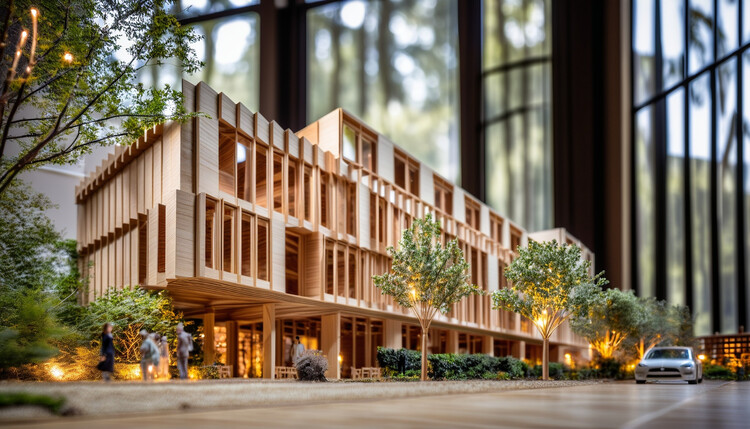 Courtesy of Chaos
Discover how Chaos is shaping the future of ethical AI in architecture with AI tools you can trust. Download the latest Chaos white paper, AI in Architecture: Trends, Hidden Risks, & What Comes Next, for an inside look at how AI is being applied in real-world practice and what’s on the horizon.