
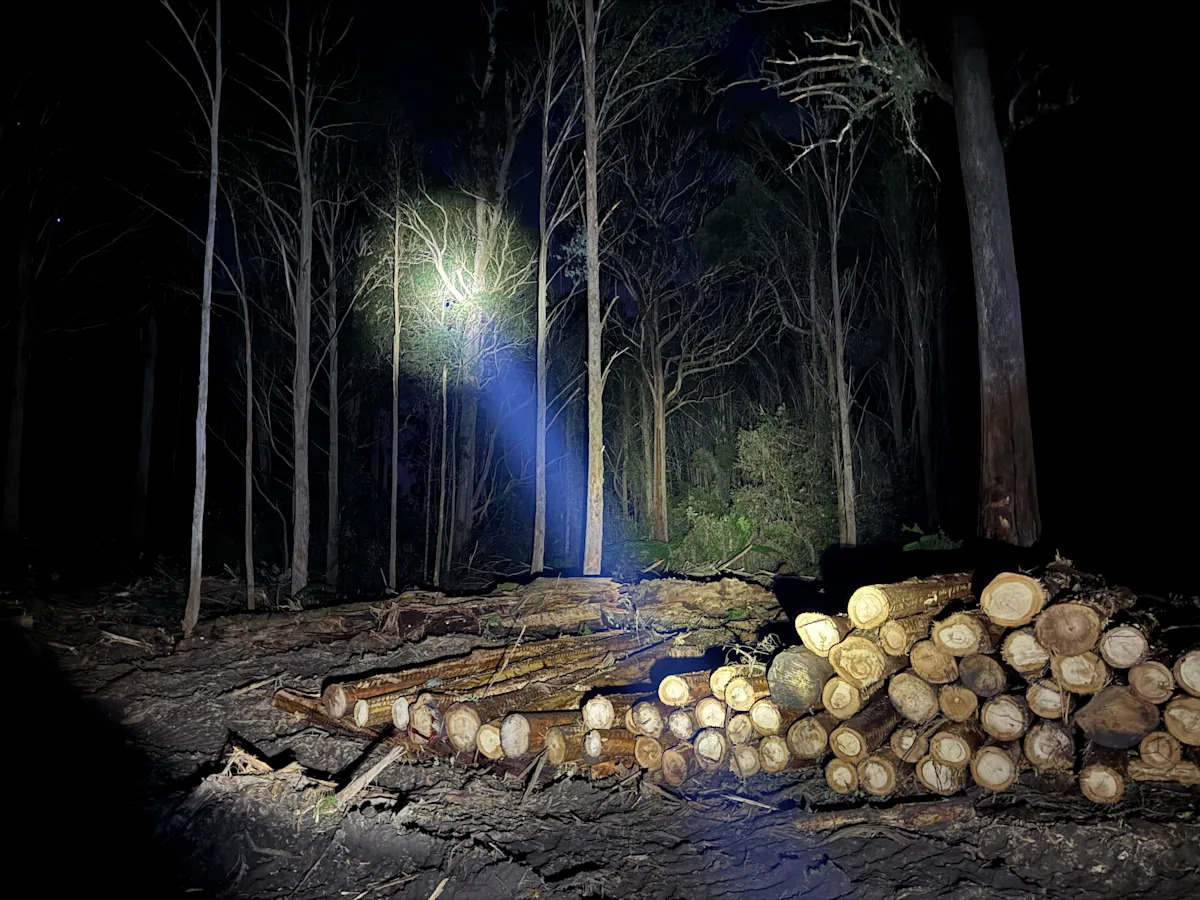
A late-night discovery in thick bushland has sparked fears that a little-known animal could come into conflict with industry. Surveyors have documented land freshly cleared for roadworks near a small population of greater gliders, a fluffy species around the size of a koala.
Ewingar State Forest is just two hours west of bustling Byron Bay, but few people venture into its thick bushland unless they’re searching for wildlife or cutting down trees.
Large swathes of the region have been previously harvested for timber or burned by bushfires, and the towering eucalypts that remain are considered to be important for food and shelter.
Valarie Thompson from the Northern Rivers Endangered Gliders Project (NREGP) warns clearing more habitat could be a “death sentence” for the gliders that have survived.
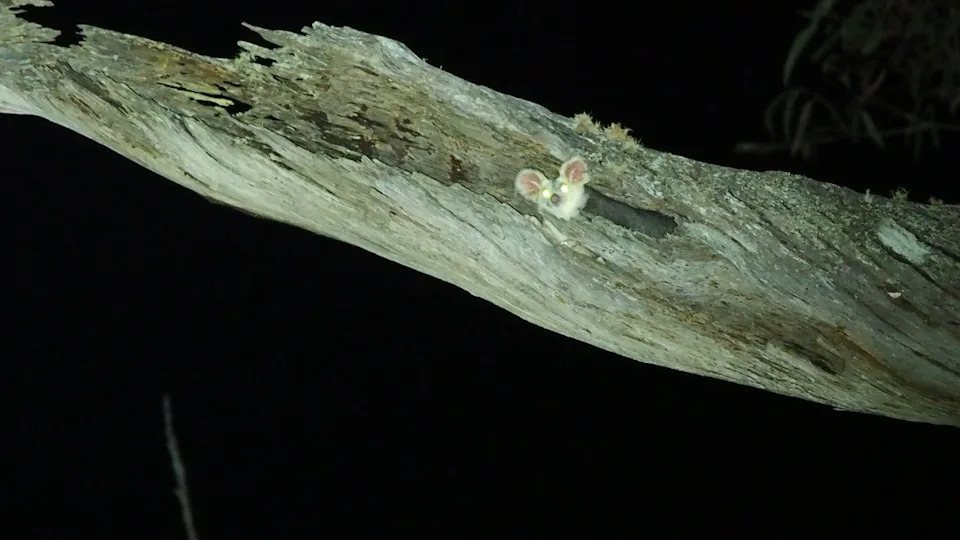
A greater glider inside a den at Ewingar State Forest, photographed by volunteers. The Greater Glider Project
Century-old trees critical to greater gliders
Hollows in trees do not start forming until a tree reaches around 100 years of age, and they are used by greater gliders as dens.
Successfully verifying a hollow is lived in by a greater glider usually requires entering the forest at night, when the nocturnal species is active, and seeing it in use.
Although the Forestry Corporation, a business owned by the NSW Government, surveys forests for gliders before they begin work, in line with state regulations, NREGP isn’t confident in the business’s ability to locate their dens before trees are felled.
The group’s volunteers have documented the dens of 20 greater gliders since July at the edges of a 1,236-hectare compartment of Ewingar, but a 2024 survey of the same area by Forestry Corporation found just three.
NREGP’s Jessica Sommers has called for an emergency pause on logging in areas of Ewingar State Forest where the gliders live.
“Greater gliders are very particular about where they sleep and nest,” she said.
“Once you take their habitat away, they die, so logging this forest is a really permanent end to these creatures. It’s quite heartbreaking.”
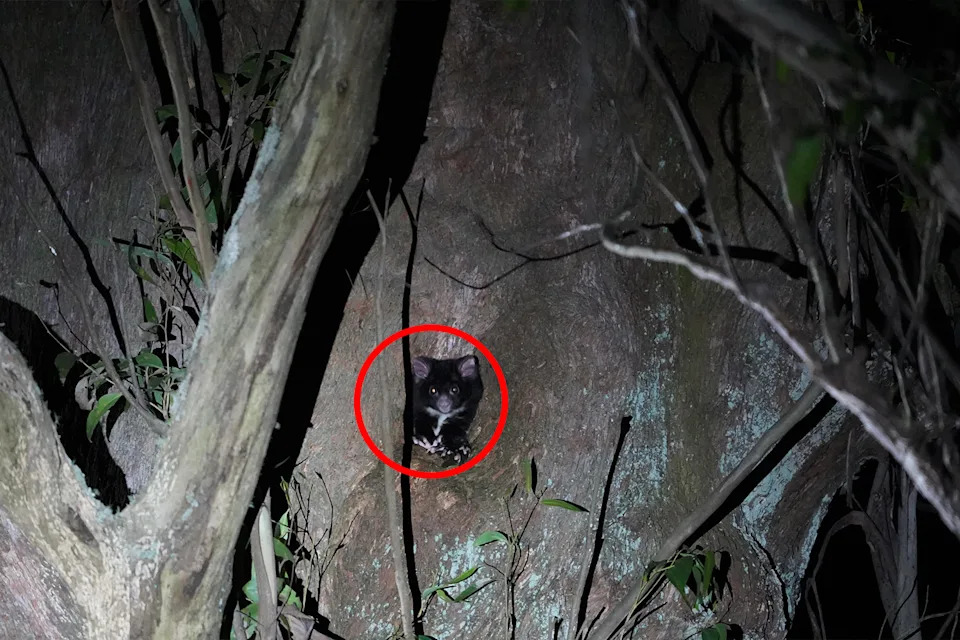
This greater glider was photographed inside a den at Glenbog State Forest in NSW. Source: Wilderness Australia
International environment group releases new glider data
NREGP’s concerns about the state’s greater glider surveys are shared by World Wide Fund for Nature-Australia (WWF-Australia), a critic of Forestry Corporation’s activities in the species’ habitat.
It released data on Friday, highlighting discrepancies between monitoring by conservation volunteers versus Forestry Corporation contractors.
Across seven state forests in NSW, Forestry Corporation found 42 den trees while volunteers found 918, which is more than 20 times as many.
Identifying these hollows is important because, under state regulations, a 50-metre radius logging exclusion zone must be set up around them.
Sightings of greater gliders moving along branches are also recorded, but they are less significant because they only prompt 25 metres of protection.
The adequacy of both is disputed, with research funded by WWF-Australia indicating a minimum of 80 metres is required.
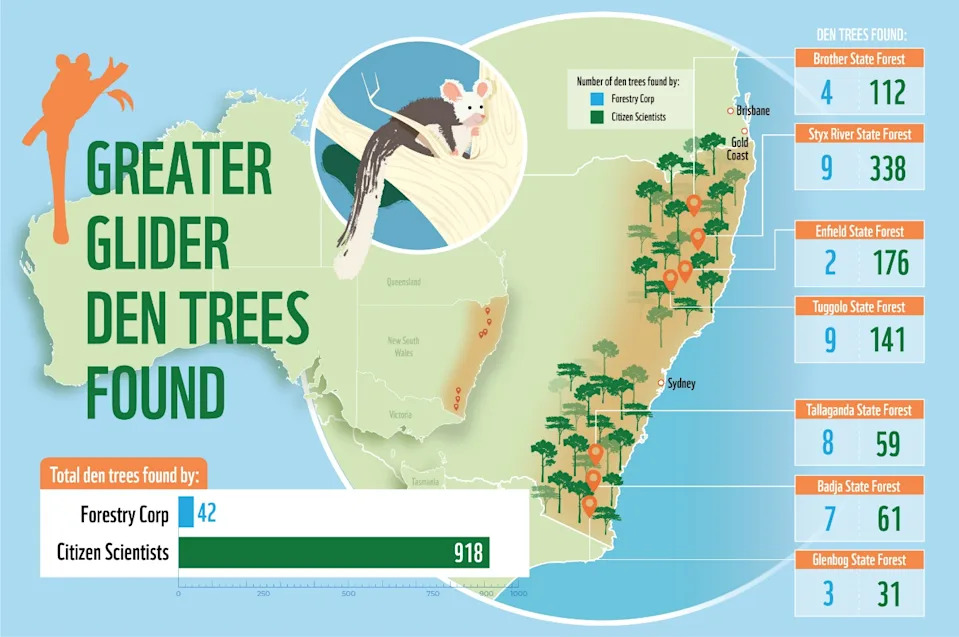
WWF-Australia has released data indicating volunteer surveys of forests have found significantly more greater glider dens than Forestry Corporation. Source: WWF-Australia
Forestry Corporation told Yahoo News it had made a total of 600 greater glider sightings and den identifications across the seven state parks in question, Brother, Styx, Enfield, Tuggolo, Tallaganda, Badja and Glenbog.
“Forestry Corporation has protected over 16,000 Greater Glider trees and hollow-bearing trees since January 2024,” it said.
But Dr Kita Ashman, a conservation scientist at WWF-Australia, has described the Forestry Corporation’s efforts to monitor for greater gliders as an “epic failure” and called for the scrapping of federal regulations that allow state governments to log threatened species’ habitat.
“It’s time to close deforestation loopholes, provide stronger upfront protections for nature, establish an independent environmental regulator, and safeguard nature against climate change,” she said.
Government company completes ‘detailed’ plans before logging
Responding to questions about Ewingar State Forest, Forestry Corporation said it spends months completing “detailed” planning and surveys before it begins harvesting a forest in line with regulations.
“[There are] specific conditions to protect greater glider habitat across the landscape by limiting operations to a proportion of the forested area and retaining large numbers of trees for glider habitat and food sources… Forestry Corporation is operating in line with these strict regulations,” it said.
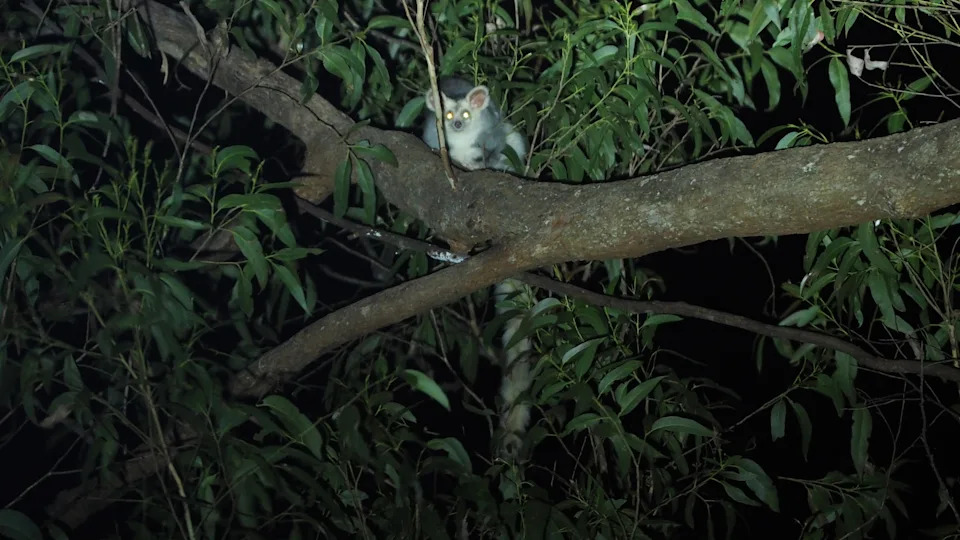
Greater gliders can vary in colour. This animal was photographed by volunteers surveying Ewingar State Forest this year. Source: The Endangered Gliders Project
It confirmed roadworks in the forest were undertaken for multiple reasons, including timber harvesting, forest management, and community access.
Although it hasn’t released a date to start operations in this area, it confirmed harvesting is underway elsewhere in the forest.
“Ewingar State Forest has been harvested and regrown in the past and the area currently being harvested will be regrown again, once operations are complete,” it said.
Greater glider feud escalates in remote forest
Few Australians are familiar with greater gliders, a large marsupial, which can jump between trees and weigh up to 1,700 grams.
Although they’re listed as endangered, when it comes to their protection, many conservationists don’t believe they receive the same special treatment as koalas by state governments.
Around 165km south at Styx River State Forest, one volunteer glider surveyer locked himself onto timber harvesting machinery to express “frustration” at the destruction of greater glider habitat.
“I am putting myself on the line because I just can’t stand by and watch endangered species habitat being destroyed,” Micah Weekes said in a statement.
Susie Russel from the North East Forest Alliance said the system designed to protect greater gliders is not working.
“Time is running out to find more of their homes. The machines are not just knocking at the door, they are smashing it to smithereens,” she said.
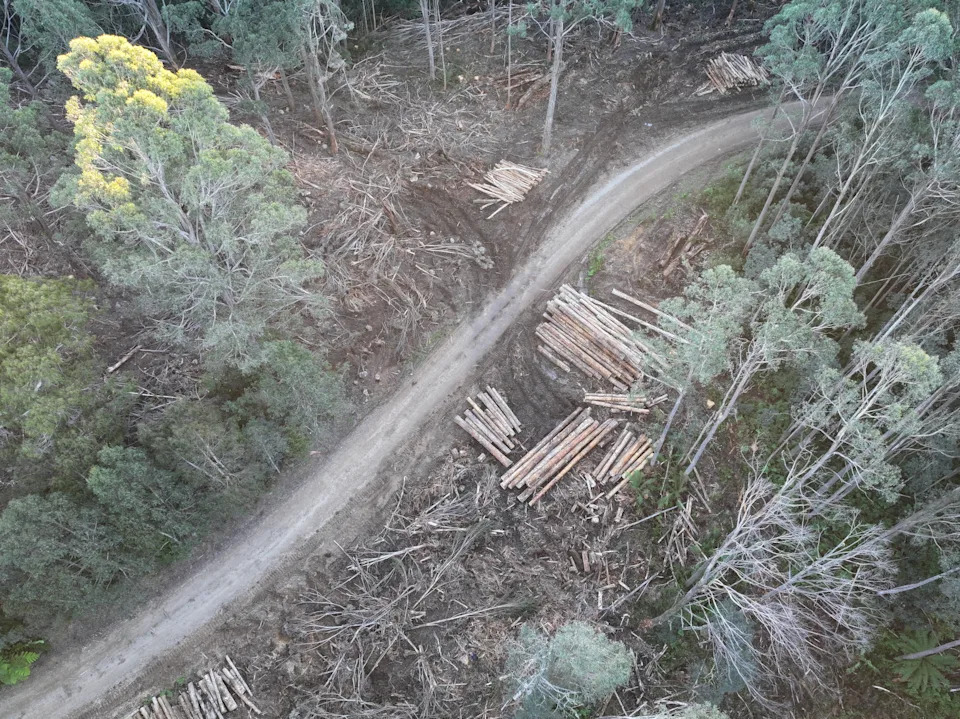
Forestry Corporation claims its methods ensure forests can be successfully harvested and regrown for years. Conservation groups say the practice harms biodiversity. Source: Wilderness Australia
Love Australia’s weird and wonderful environment? 🐊🦘😳 Get our new newsletter showcasing the week’s best stories.
