
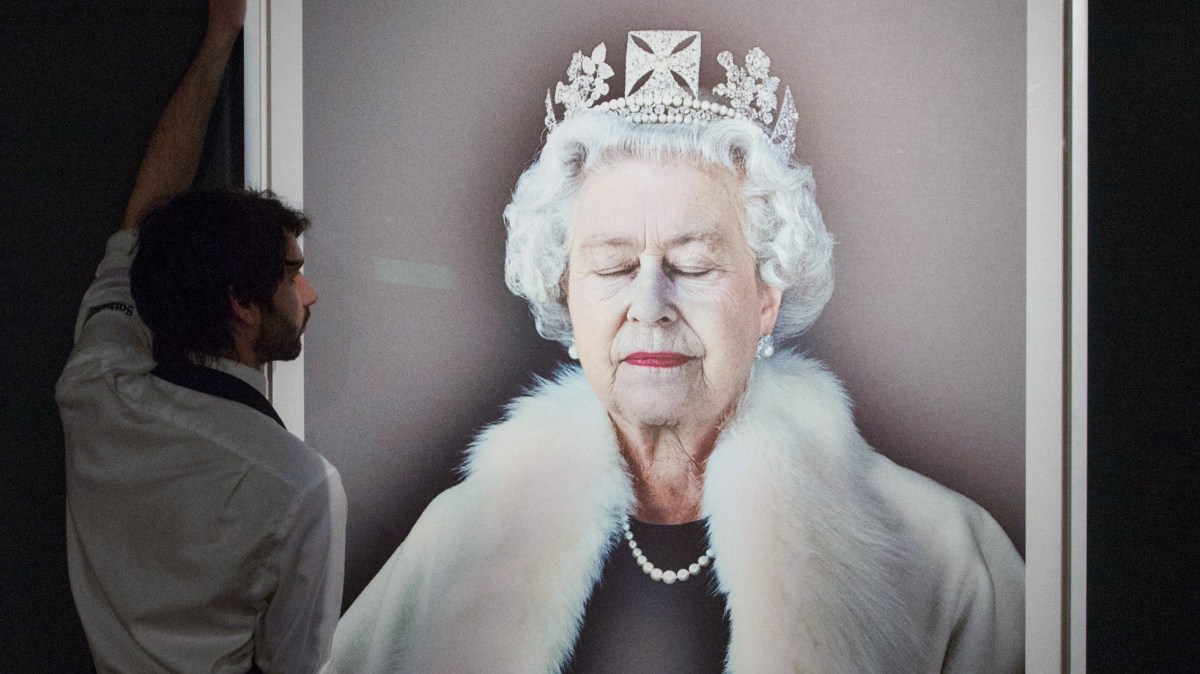
Money-spinning portraits of the late Queen are at the centre of a legal battle after one of their creators accused the other of whitewashing his creative involvement and then creating “distasteful” variations.
The two holographic portraits were created from sittings with Queen Elizabeth II at Buckingham Palace two decades ago by, according to court documents, the contemporary artists Robert Munday and Chris Levine.
Equanimity is described as the first ever holographic portrait — a three-dimensional image — of the Queen, and Lightness of Being is described as a “subtle subversion” of royal portraiture by showing the monarch with her eyes closed. Prints of the artworks are held by the National Portrait Gallery and the Royal Collection.
According to legal papers seen by The Times, however, Munday has accused Levine of a breach of their contract over the portrait commission and infringing his moral rights by failing to give him due credit for the creation.
He also claims Levine is responsible for “distasteful” distortions of the “dignified” original works with the use of “lurid” and “garish” colours in subsequent versions, including the application of luminous pink lipstick to the Queen.
Levine recently settled a case with the Jersey Heritage Trust, which had commissioned Equanimity to celebrate the island’s 800-year allegiance to the crown, after it accused him of failing to give it its 20 per cent commission on nearly £4 million of sales of the portraits since 2017.
It was alleged that he sold nearly 300 copies of the portraits during this period. The details of the settlement are confidential.

Chris Levine with the two artworks in 2015
SAM MELLISH/GETTY IMAGES
In the new claim lodged at the High Court this month, Munday accused Levine of breaching their contract over the commission, which decreed that in any promotion of the artworks they should be presented as an equal collaboration between the two.
The claim outlines various instances of Levine allegedly advertising the portraits as his own work in galleries, auction houses and on his own website and social media accounts.
Levine said that he rejected the claim “in its entirety”.
“Mr Munday was engaged by me as a technical subcontractor as one of my team, to build the camera system and assist in production. He was not an artistic partner or co-author in any way,” Levine said in a statement.
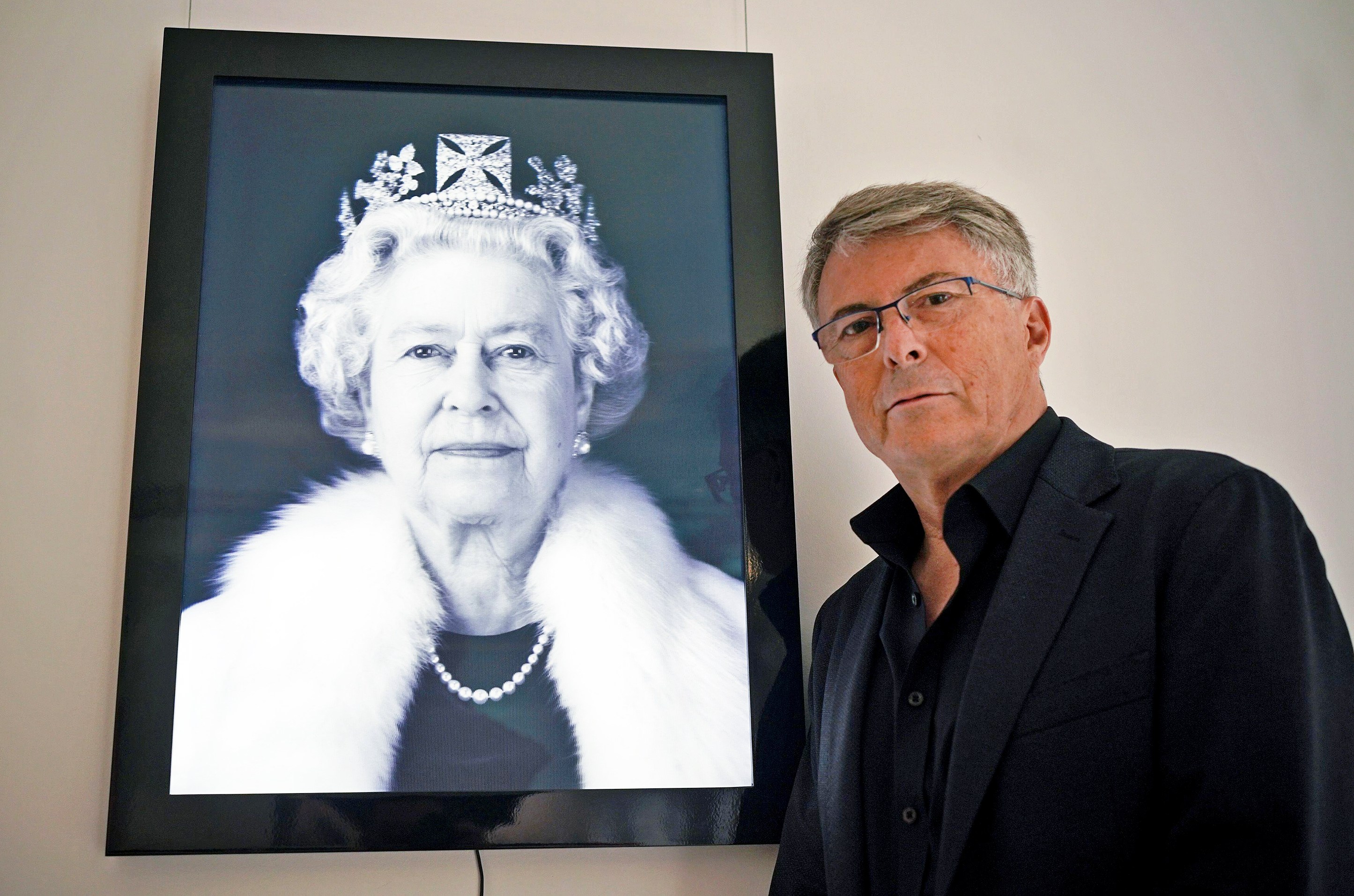
Rob Munday with Equanimity in 2022
ALAMY
“This is an ongoing attempt to rewrite history and the motives are obvious. Any claim on my rights will be fiercely defended. This is my art. Facts don’t change 20 years later because the work became iconic,” he said.
A spokesman for Levine said that he denied the 2005 contract “has the legal effect that Mr Munday suggests it does”.
• King Charles and Jonathan Yeo: the making of a viral portrait
The two portraits are among the most recognisable from the reign of the Queen, who is, according to the National Portrait Gallery, the most portrayed individual in history. She is thought to have sat for about 150 portraits. The National Portrait Gallery has 976 photographic and painted images of her in its collection alone.
The original holographic artwork, Equanimity, was hailed as groundbreaking upon its creation and the most high-tech portrait the Queen had ever been involved in. Reportedly, however, the Queen thought it made her look “like an old woman lost in a wood”.

Equanimity, on display at Bonhams auction house in London, 2022
WIKTOR SZYMANOWICZ/ANADOLU AGENCY/GETTY IMAGES
Munday has rejected Levine’s claim that he was not an “artistic partner”, describing himself as a “contemporary artist working predominantly in the field of holography and lenticular imaging”. He ran the world’s first creative holography course at the Royal College of Art in the 1980s.
Although the creation of holograms is a highly technical process, they have been described by cultural institutions as an artistic medium. The National Portrait Gallery describes both Munday and Levine as “artist and producer”.
• The best exhibitions in London and the UK to book for November 2025
On his website, Levine described himself as a contemporary artist whose practice encompasses installation, photography, performance, fashion, music and design.
The claim lodged at the High Court this month outlines how Equanimity was created through holography, which, put simply, involves using light sources such as lasers to create interference patterns that produce a 3D holographic image.
About 10,000 images were taken during the two sittings with the Queen in Buckingham Palace’s Yellow Drawing Room in late 2003 and early 2004.
Munday said he had then created a “large-format rainbow holographic stereogram”, and later “a lenticular stereogram”. This was then developed by Levine.
Munday alleges that Levine later “derived” Lightness of Being in 2007 from a photograph taken at the 2004 Buckingham Palace sitting by someone who was assisting with Munday’s lighting and was “behind and in line with” his own camera.
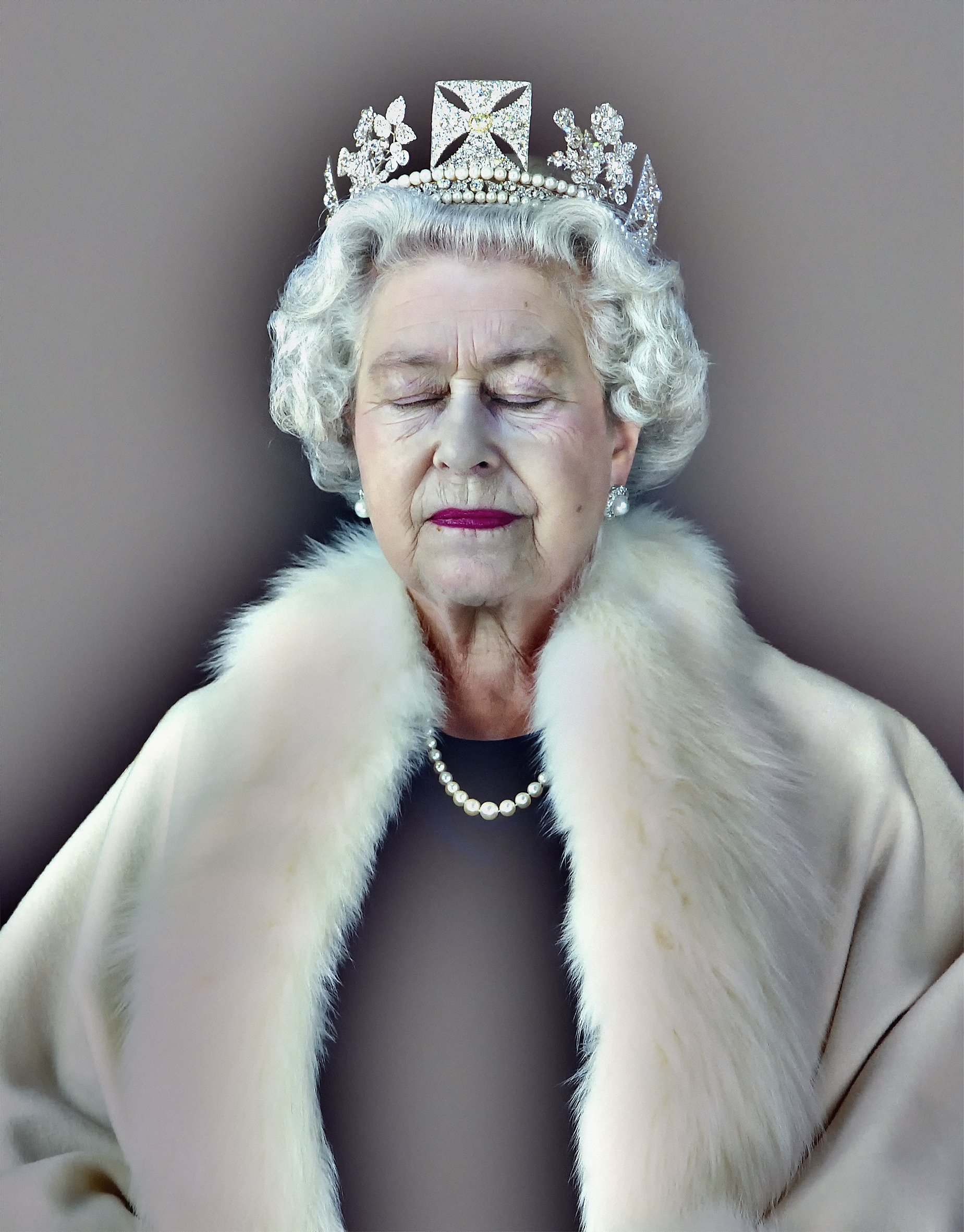
Queen Elizabeth II (Lightness of Being), 2008
He claims Levine had then deployed Photoshop to process this image and argues that he is still its joint author as he “contributed at least the aspects of intellectual creation”.
Munday said the “worst decision” of his life had been to accept legal advice, after the Jersey Heritage Trust commission, that he should transfer copyright of Equanimity to the trust because it was “fair”.
• ‘When I left, she’d blow kisses’ — the last artist to paint Margaret Thatcher
He said he had only done so “on the grounds that Chris Levine had done or was going to do” the same.
Levine said in his statement: “I am the sole owner of all the copyright to this body of work. Jersey Heritage, who commissioned the portraiture, have publicly confirmed that I was the sole commissioned artist. Mr Munday was engaged by me as a technical subcontractor as one of my team, to build the camera system and assist in production. He was not an artistic partner or co-author in any way.”