

Listen to this article
Estimated 6 minutes
The audio version of this article is generated by text-to-speech, a technology based on artificial intelligence.
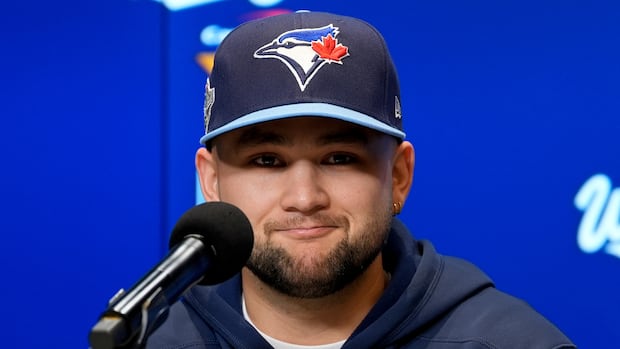
Both the Blue Jays and their fans want to see Bo Bichette in a Toronto uniform next season, as the ballclub tries to run it back all the way to the World Series.
But nothing is guaranteed, as Bichette — a career Blue Jay to this point — has declined a qualifying offer from Toronto to become a free agent, meaning he is no longer under contract and is eligible to sign with other teams.
Baseball players wait years to reach free agency, and their decisions can be consequential for teams and emotional for fans.
And with cases involving homegrown stars like Bichette, the stakes can be even higher, because teams face heightened pressure to keep these top performers on the payroll.
Here’s a look back at how the Blue Jays and some past stars from the Toronto system have navigated the basepaths when free agency was looming — including when a repeat run at a World Series was on the horizon.
Vladimir Guerrero Jr.
The Montreal-born Guerrero grew up in the Dominican Republic and signed a contract with the Blue Jays as an international free agent when he was a teenager, in 2015.
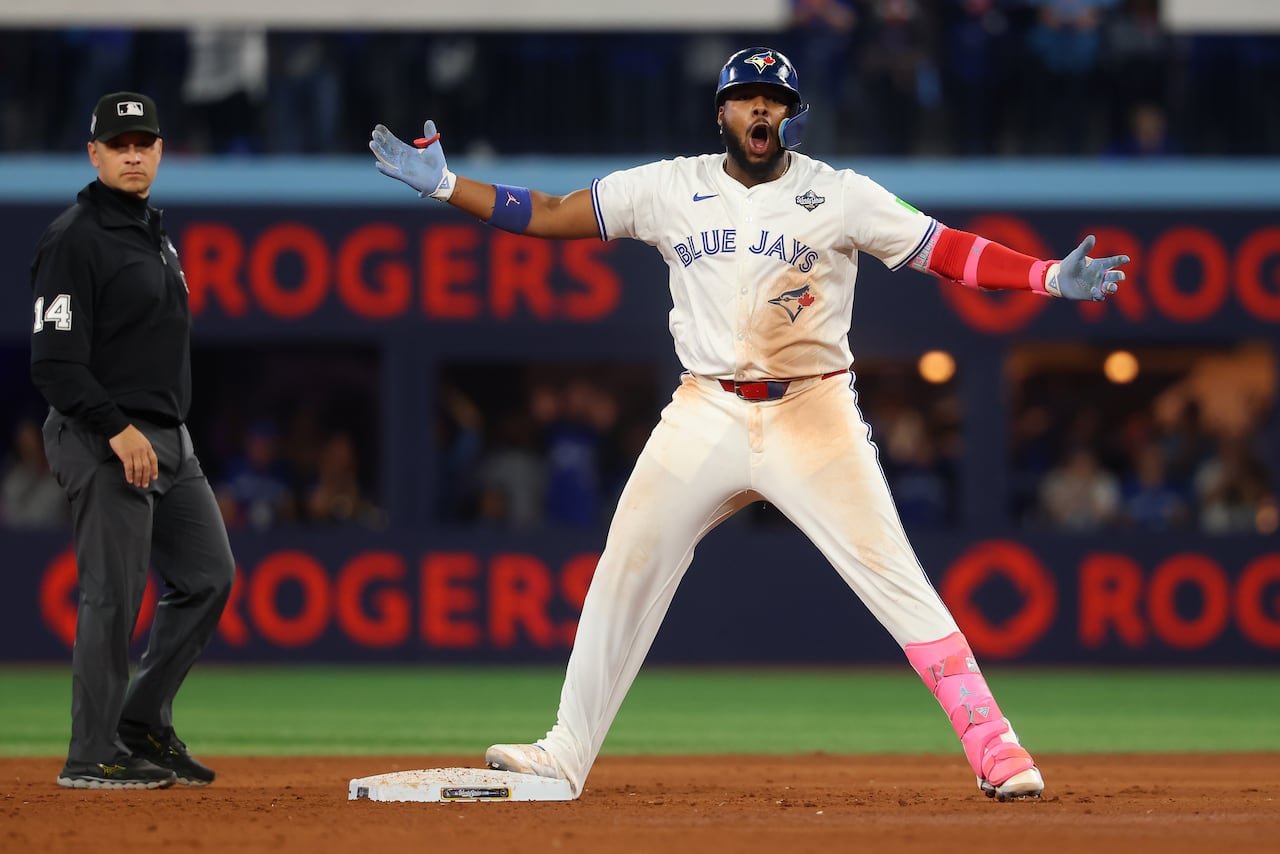 Vladimir Guerrero Jr. celebrates after hitting a double during the 11th inning of Game 7 of the World Series. Guerrero, who’s spent his entire career with Toronto, signed a 14-year contract extension with the Jays in April. (Gregory Shamus/Getty Images)
He got to the big leagues in 2019, and within a few years, became a bona fide superstar.
Guerrero is now a five-time All-Star, won the home run derby in 2023 and has made the All-MLB team three times. He also took home this year’s ALCS MVP trophy and won the inaugural MLB entertainer of the year award.
Guerrero could have become a free agent this winter, meaning Toronto would have had to compete for his services on the open market — as is the case with Bichette at the moment.
But Guerrero agreed to a 14-year, $500-million US contract extension in the spring, eliminating the risk of him leaving.
Roy Halladay
Halladay, a first-round Toronto draft pick in 1995, had an amazing 12-year career with the Blue Jays that included a Cy Young Award and six All-Star selections.
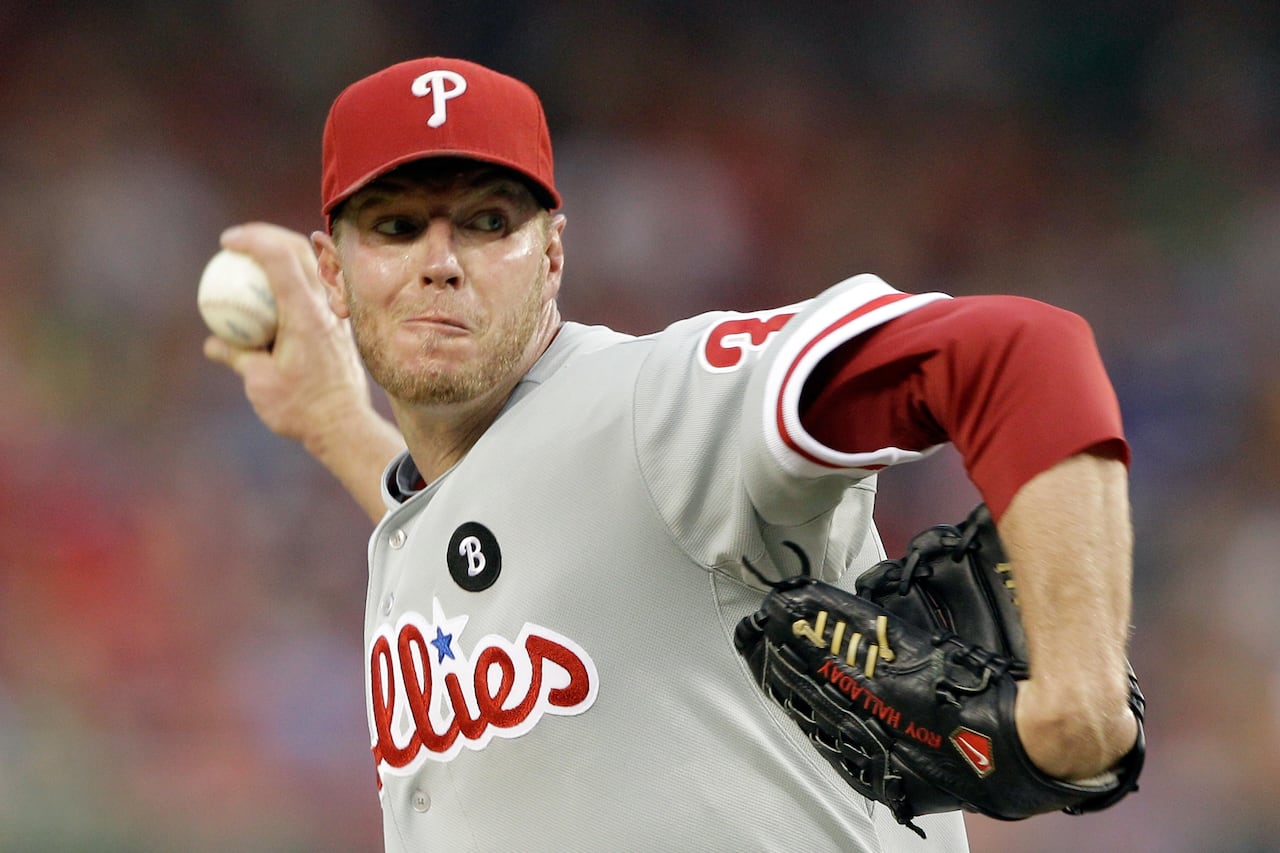 Roy Halladay spent 12 seasons in the majors as a Blue Jay, but eventually moved to the Philadelphia Phillies for the final four seasons of his career. (Rob Carr/Getty Images)
But Halladay’s success came at a time when Toronto was smack in the middle of a two-decade long playoff drought, which always left the intense competitor on the outside looking in when the post-season rolled around.
Eventually, it became clear that Halladay wanted a change and was unlikely to re-sign with Toronto as a free agent.
While he was still under contract, the pitcher was moved to the Philadelphia Phillies via a complex trade involving four teams, after the 2009 season. He soon signed a three-year, $60 million US extension with his new ballclub.
Halladay went on to win another Cy Young with the Phillies, and to play in the post-season on two occasions — something he never got to do as a Blue Jay.
He was killed when his small plane crashed into the Gulf of Mexico in 2017, and when he was posthumously elected to the Hall of Fame two years later, his family decided there would be no logo on his plaque because both the Jays and the Phillies had meant a lot to him.
Vernon Wells
Wells was the Blue Jays’ first-round pick in 1997 and developed into the team’s starting centre-fielder as of the 2002 season.
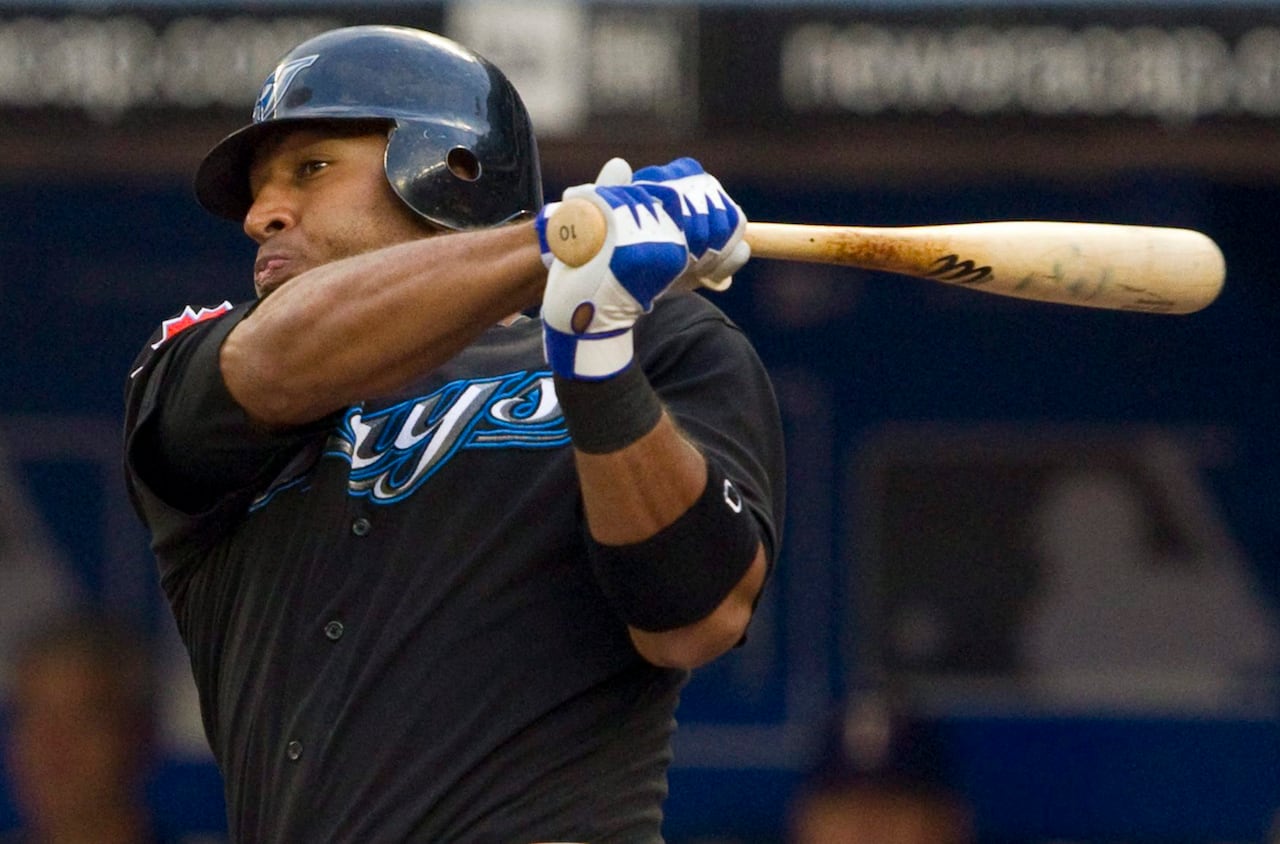 The Blue Jays signed Vernon Wells to a seven-year, $126-million US contract in December 2006. But he was moved to the Anaheim Angels a few years later and eventually finished his MLB career as a New York Yankee. (Darren Calabrese/The Canadian Press)
In December 2006, Wells signed a seven-year, $126-million US deal to stick with Toronto. (The deal came after a mid-summer media report claimed he was not going to re-sign with the Jays.)
By the time that contract wrapped, however, Wells was on his third major league team, as Toronto traded him to the Anaheim Angels (now the Los Angeles Angels) ahead of the 2011 season.
Wells played two seasons with the Angels before moving on to New York for the final season of his career.
Like Halladay, Wells longed for a chance to take the field in a playoff game. But it didn’t happen for him in Anaheim or New York.
Carlos Delgado
Delgado got to the majors in 1993, but only played two regular-season games with the Toronto squad that won the World Series and didn’t make the playoff roster.
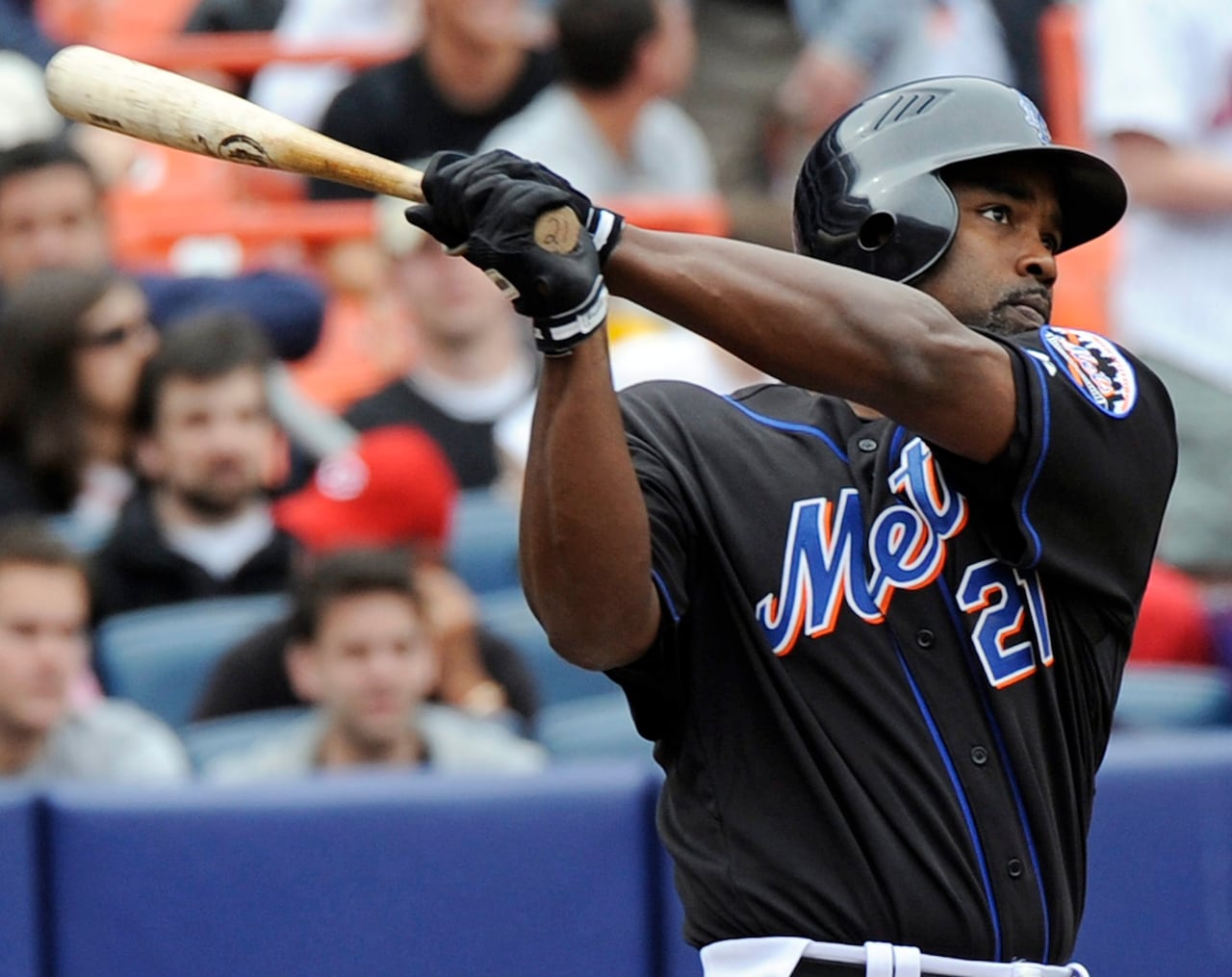 Carlos Delgado played for the Blue Jays from the mid-90s through the 2004 season. He then played briefly for the Florida Marlins, before playing with the New York Mets for a handful of seasons at the end of his career. (Bill Kostroun/The Associated Press)
But from 1994 through 2004, Delgado became the team’s marquee slugger, slamming 336 home runs for Toronto — a record no Blue Jay has since surpassed.
The Jays managed to prevent Delgado’s entry into free agency through a series of contract extensions and perks — including a no-trade clause and the right to demand a trade.
When Delgado finally hit free agency, he signed a four-year, $52 million US deal to play for the Florida Marlins (now the Miami Marlins).
But he ended up playing for the New York Mets the following season, after a trade by the cost-cutting Marlins.
In New York, Delgado got his one and only shot at post-season action: In 2006, he hit .351, slammed four home runs and drove in 11 runs during the playoffs. But the Mets fell short of reaching the World Series.
Jimmy Key
Key, a left-handed pitcher, was Toronto’s third-round draft pick in 1982.
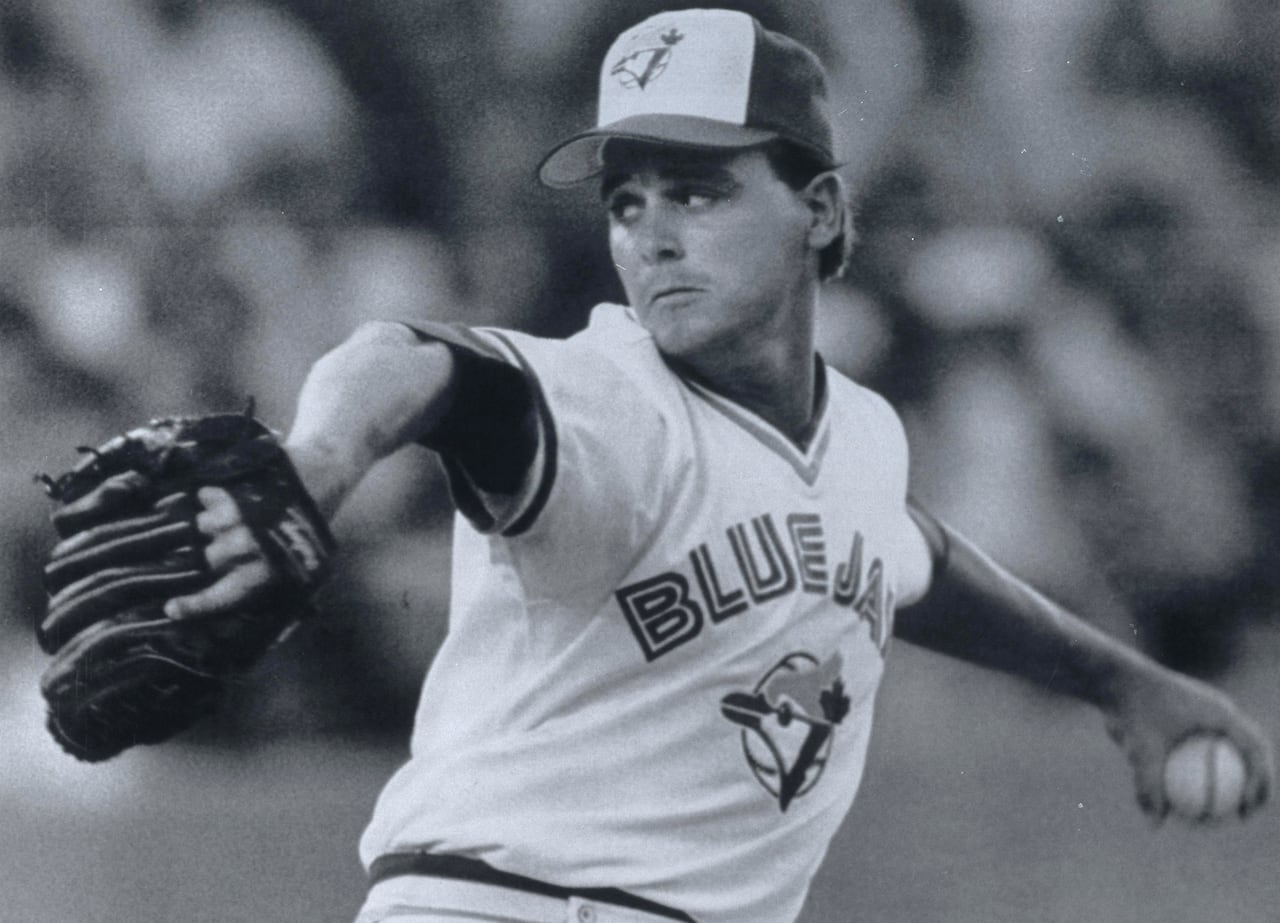 Pitcher Jimmy Key winds up for a pitch during a game on June 6, 1985, against the Detroit Tigers. Key was a member of the Toronto Blue Jays from 1984 to 1992. He then became a free agent and signed with the New York Yankees. (Gary Hershorn/Reuters)
He became a full-time starter in 1985, the first time Toronto made the playoffs, and he stayed with the team through its inaugural World Series run in 1992.
Yet mere weeks after the title victory, there were signs Key was keeping his options open after nine seasons with Toronto.
“Jimmy wants to be on a team that’s dedicated to winning,” his agent and wife, Cindy Key, told the Toronto Star on Dec. 1, 1992.
“As far as Toronto is concerned, he wants to see who’s coming back before he makes a decision.”
Key ended up signing a four-year, $17-million US deal with the New York Yankees.
And while the Jays went on to win the 1993 World Series without him, Key collected a second ring when the Yankees won in 1996.