
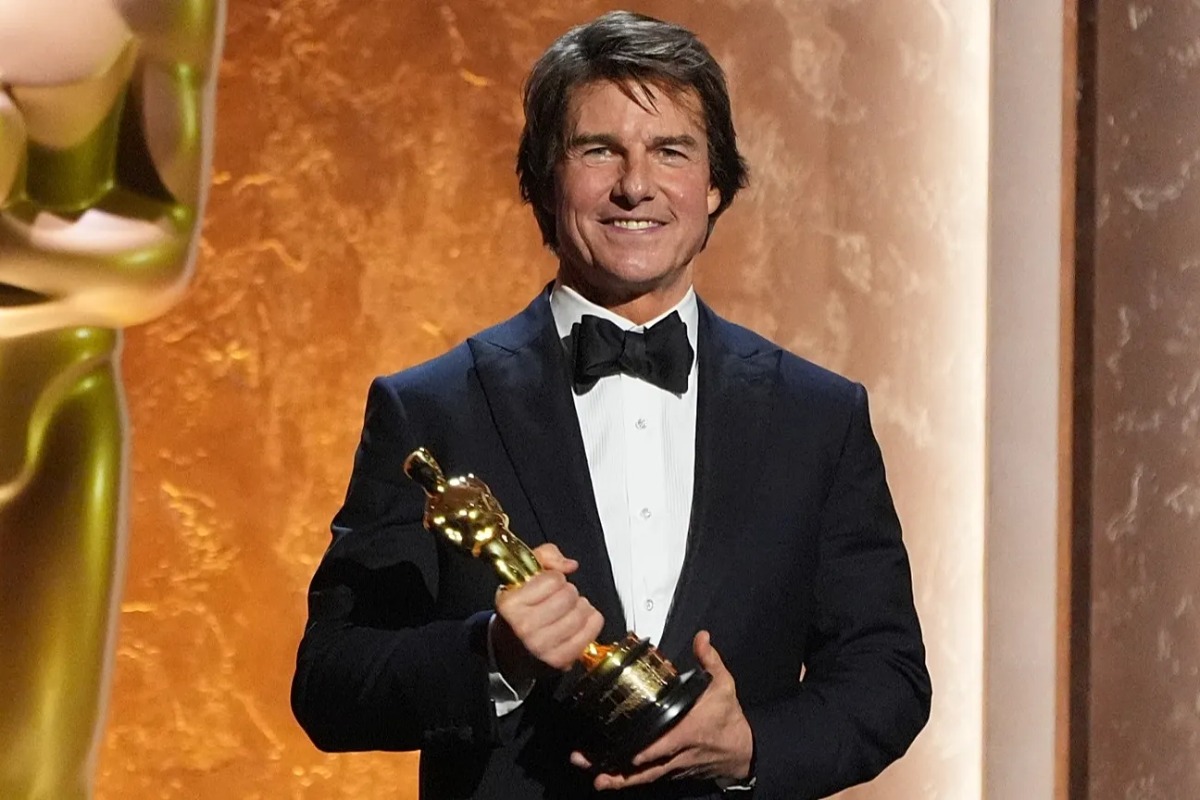
He finally has an Oscar on his shelf; he didn’t need it to own the ceremony. What is it about Tom Cruise that turns the Academy’s most uncertain nights into his stage?
Tom Cruise has finally picked up an Oscar, the honorary kind handed out at the Governors Awards, and the moment lands with the weight of a career that has repeatedly steadied Hollywood in uneasy times. Two decades ago he opened the 74th Academy Awards in the shadow of September 11 with words shaped by Cameron Crowe, setting a tone the industry badly needed. That stretch also saw him navigate a very public split from Nicole Kidman while headlining Mission: Impossible 2 and Vanilla Sky as she dazzled in Moulin Rouge. The arc from then to now is less a comeback than a reminder of how firmly his presence keeps the ceremony in his orbit.
A long-awaited Oscar moment for Tom Cruise
Tom Cruise, a name synonymous with Hollywood stardom, is widely seen as overdue for the coveted golden statuette, at least in honorary form. A future salute at the Governors Awards would simply codify what filmmakers and audiences have long recognized: a lifetime of singular contributions to popular cinema. Even without a competitive win, his presence has defined multiple Academy seasons, prompting a broader look at why his dominance continues to resonate.
Revisiting his pivotal moment at the 74th Oscars
To understand why Cruise signifies something larger than individual accolades, return to the 74th Academy Awards in 2002, a ceremony staged only months after the September 11 attacks. Chosen to open the broadcast, he delivered a measured, heartfelt address written by Cameron Crowe that resonated with viewers amid national uncertainty. His words celebrated resilience and the unifying force of cinema, a moment that quietly cemented his place in Oscars history.
The early 2000s: a personal and professional crossroads
That same period brought intense scrutiny of his private life following a public divorce from Nicole Kidman. Kidman would soon win Best Actress for The Hours in 2003, after dazzling audiences with Moulin Rouge in 2001. Professionally, Cruise was unshaken. He had just come off Mission: Impossible 2 and Vanilla Sky, proving a rare ability to anchor both kinetic action and emotionally charged drama, and consolidating his command of the early 2000s box office.
Why Cruise’s presence remains unshakable
Cruise continues to captivate with a blend of craft and spectacle, from death-defying set pieces in the Mission: Impossible series to a triumphant return with Top Gun: Maverick. His films consistently set the standard for large-scale entertainment while nurturing a deep bond with global audiences. That sustained excellence is a key reason many expect the Academy to honor him, a recognition of how he balances commercial power with cultural significance.
Legacy beyond the awards
The case for an honorary Oscar is ultimately about more than hardware. It acknowledges a career that has helped define modern moviegoing, whether through a galvanizing speech at a critical moment in 2002 or through films that bring audiences together across generations. Cruise’s story is one of enduring brilliance, a reminder that influence and longevity can be as meaningful as trophies themselves.