
Unlock the Editor’s Digest for free
Roula Khalaf, Editor of the FT, selects her favourite stories in this weekly newsletter.
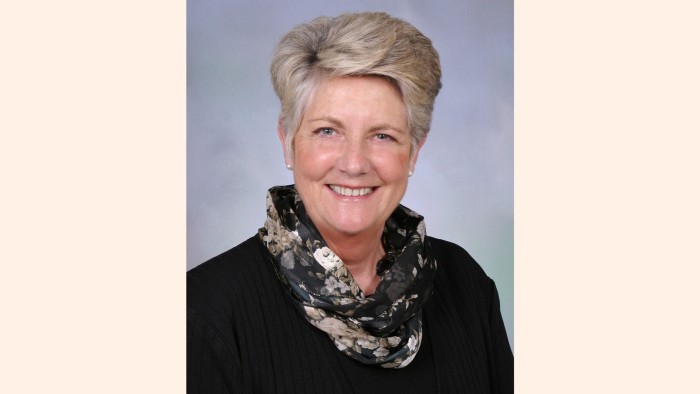
When Sharon Camp, the pioneer in sexual and reproductive health, accepted a job in Pennsylvania far from her beloved home in rural Maryland, she was so determined to avoid having to up sticks that she obtained her pilot’s licence so she could commute from a nearby airport.
“That was indicative of how she approached a challenge,” said close colleague Jonathan Wittenberg after Camp’s death at 81. “She was going to find a way to get done what she needed to get done, obstacles be damned.”
It was a quality notably on display in the signal achievement of her life: establishing a company to develop a “morning after” contraceptive pill available in the US — ensuring rich and poor women alike could retrospectively avert the risk of an unwanted pregnancy.
The eldest of three sisters, Camp was born in 1943 and grew up on a navy base in the Mojave Desert, relishing the freedom to roam on horseback across the parched landscape. Her father — “smartest person I ever knew” — was a rocket scientist, while her mother, despite being almost entirely blind, was an accomplished hostess. “I was her eyes,” Camp told Maryland state senator Cheryl Kagan in an interview last year.
Grit and resolve were evident from early in her academic career. She recalled to Kagan the casual sexism of an era in which “very few women had both a family and a career, and I decided I really wanted the career”. But when, during her senior year at Pomona College in California, she approached one of her professors to request a recommendation for graduate school, he refused, telling her she would be taking a place from a young man. He told her: “You’ll just get married and have children and waste your degree.”
Undeterred, she was accepted at Johns Hopkins where she took first a master’s, and then a doctorate in international relations. Her new status, she recalled, “made all the difference in the world” to the way she was perceived: “old men had to call me Dr Camp”.
 Guttmacher Institute co-president and CEO Jonathan Wittenberg with his predecessor Sharon Camp, who he said had a determination to get things done, ‘obstacles be damned’ © Bethany Michaela/Guttmacher Institute
After completing her education, she entered the world of population policy and lobbying, and from 1975 to 1993 held a senior role at Population Action International, which works to advance sexual and reproductive health and rights. But in 1997 she felt impelled to move from the more rarefied realm of policy to frontline action. Private doctors regularly prescribed contraceptive pills to wealthier women who wished to avoid pregnancy after unprotected, unplanned or unwanted sex, although it had never been approved for this purpose. But, except in some cases of rape, poorer women generally struggled to access the treatment.
Alexander Sanger, a former president of Planned Parenthood of New York City (PPNYC) who knew Camp well, says she regarded it as an issue of basic health equity: “Sharon saw there was a divide between the healthcare that well-to-do women got versus what poorer women got.” The remedy, Camp believed, was for a pill to be sanctified by the Food and Drug Administration as an emergency contraceptive. However, big pharmaceutical companies “wouldn’t touch it with a barge pole”, she later recalled.
Her solution was to set up Women’s Capital Corporation, financed entirely by non-profits, to develop and market it — an extraordinary undertaking for someone unversed in the commercial world. Following the success of Plan B, as the product was named, in 2004 the company was sold to Barr Pharmaceuticals and the pill has since been approved for over-the-counter sale in the US.
The previous year she had become president and chief executive of the Guttmacher Institute, a research and policy organisation whose personnel she proudly described as “scholar-activists”. Wittenberg, current co-president and CEO, who worked alongside Camp until her retirement in 2013, remembers a woman “who really exuded gravitas” and wielded huge influence in political and policy circles but was also a gentle and supportive mentor, determined to nurture the next generation in her field.
She helped to build a business case for investment in sexual and reproductive health around the world, contributing to “a big infusion of funding” for family planning services, he said. Domestically, she fought to secure the contraceptive coverage guarantee in the Affordable Care Act. After the Supreme Court ruled in 2022 that there was no constitutional right to abortion, she saw some states roll back protections, a situation that she had hoped to see reversed in her lifetime.
But entering her eighties, she described herself as “very content”. Her only remaining goal? “To try and stay useful, because I think when we stop feeling useful, we go downhill.”