

What really matters to material standards of living in the long run is productivity – the economy’s output from its labour and capital. It’s easy to see why people think AI will do wonders for productivity one day, but it’s equally clear that we’re not there yet.
Loading
A recent article in the Reserve Bank’s Bulletin provides convincing evidence that suggests many Australian businesses are very much in the phase of figuring how they might use AI, rather than implementing detailed plans.
The article, by economists Joel Fernando, Kate McLoughlin and Ravi Ratnayake, is based on insights from a survey of more than 100 medium to large businesses that the RBA speaks to in its liaison program.
It found that while firms expect AI investments will make a meaningful difference in the future, many businesses’ adoption of AI today is still in its early, or even experimental, stages.
Nearly 40 per cent of firms said they had “minimal” adoption of AI tools, and in these cases, it was typically in the form of “digital assistants” such as Microsoft Copilot or ChatGPT. These are AI tools that can summarise your emails or help with research (often with dubious regard for facts), but they don’t look like productivity game-changers.

The RBA’s survey found adoption of AI by Australian firms was “piecemeal”. Often it included staff using ChatGPT.Credit: Reuters
Some of the firms surveyed said they were using AI more heavily, but these were generally larger businesses, and the economists said that for most firms “adoption has been shallow to date”.
“Overall, many surveyed firms indicated that their adoption of AI tools to date has been relatively piecemeal, with adoption often being employee-led rather than employer-led,” the RBA economists said.
But what about the fears of an AI “jobpocalypse”?
The RBA data doesn’t reflect the wider labour market, and of course, the effect of AI will change from job to job. Even so, the survey and other evidence suggest AI has had a pretty modest impact on staffing so far. Firms surveyed said “most” workers displaced by technology (including AI) had been moved to other jobs in the same employer, though the businesses expected a more “disruptive” impact from AI in the future.
About half the surveyed firms expected AI would lead to a “slight” reduction in their total staff over the next three years, due to factors such as natural attrition, hiring fewer new workers, redundancies, or a combination of all three.
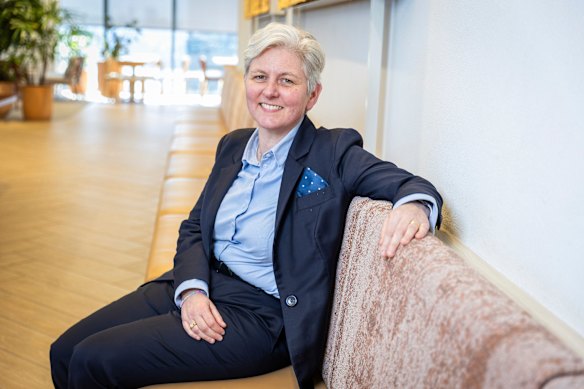
Westpac chief economist is asked more about AI than her view on interest rates.Credit: Renee Nowytarger
Many workers are rightly concerned about the risk of AI to their jobs – no least in industries such as mine, the media – and these findings don’t put those fears to bed. But they do suggest any dramatic changes are still some way off.
It’s also one thing for companies to say they plan to cut costs thanks to new technology, but another to do it without creating a gap in their operations. The Commonwealth Bank infamously said it was cutting 45 jobs earlier this year because the roles were being replaced with AI-powered chatbots, only to later backflip.
The wider economic point is that big technological changes in the past have created new jobs and businesses, as well as wiping some out. That may well happen with AI-related changes, too, but no one knows for sure and it’s likely to be debated for years to come.
And that’s another over-arching theme in the RBA research: companies are just very uncertain about the potential use cases for AI, whether they’ll have enough skilled staff, the potential cost, or how it will be regulated.
Might AI usher in a new era of rapid productivity growth, reversing a long-running slump? Maybe, but chances are it won’t happen quickly.
This uncertainty matters because if AI is really going to transform our economies, businesses are going to have to make major changes to how they operate.
Those who are convinced that AI is the next big thing have compared it with some of the biggest technological changes in modern history, such as the invention of the steam engine, electrification, the rise of automobiles or the internet.
Maybe they’re right – but economists also know that these changes did not happen quickly.
Loading
Moving to electricity, for example, required factories to be overhauled, not to mention infrastructure such as power lines.
Or, in a more recent example, it took years for the gain in productivity from computers to be evident. As economist Robert Solow, a Nobel Prize winner, famously said in 1987: “You can see the computer age everywhere but in the productivity statistics.”
To get big productivity gains from AI, companies will have to re-examine all their processes and staffing to see how AI could transform their businesses. That takes time, it costs money and it’s likely to require a lot of re-training of staff and potentially hiring more people.
Even though it’s early days, there’s clearly a huge amount of interest in AI in the business world.
The fact bosses of big companies constantly tell the market about their AI plans tells us many businesses are indeed planning how they can make the most of the technology.
Westpac chief economist Luci Ellis says businesses she speaks to have moved beyond “experimenting” – indeed she’s asked more about AI than she is about her view on interest rates. While Ellis thinks the productivity benefits of AI will appear more quickly than the time it took for computers and the internet to appear in the productivity statistics, it will still take a while. “We’re talking two or three years, not three weeks,” she says.
Might AI usher in a new era of rapid productivity growth, reversing a long-running slump? Maybe, but chances are it won’t happen quickly.
One thing we can be more confident about is that we won’t get a productivity surge from ChatGPT summarising emails for us. The changes will have to be a lot more profound than that.