
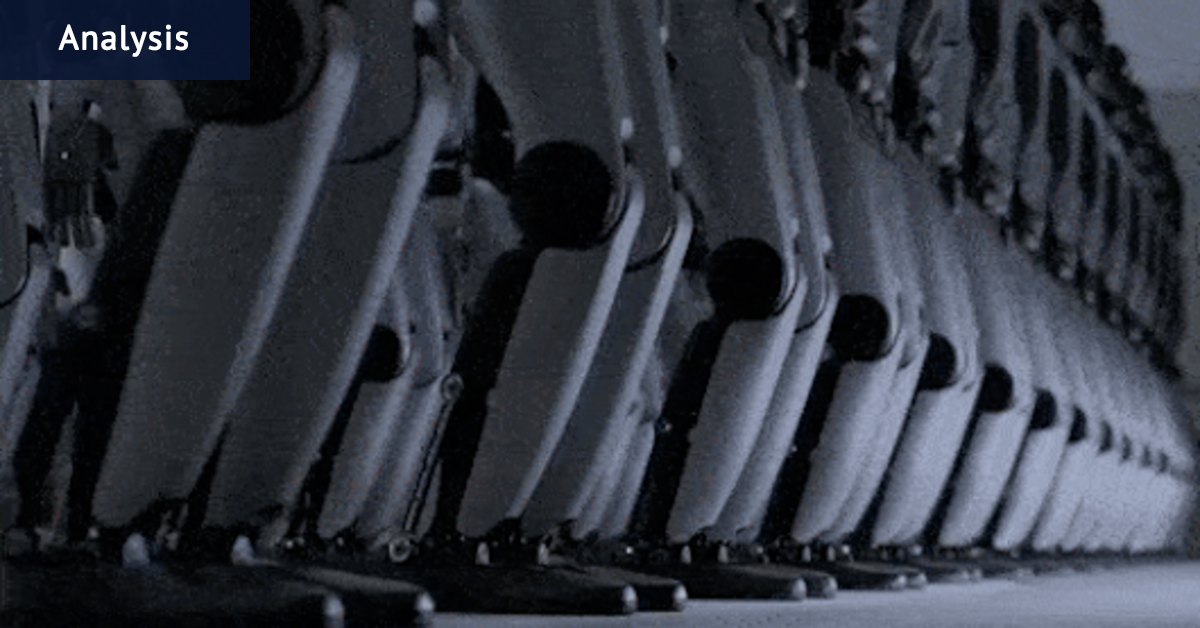
Most companies involved in humanoid robotics, including Tesla, are nowhere near shipping off robots to work autonomously. Public demonstrations are limited to moving and walking in highly controlled conditions, robots that are tethered or harnessed, or robots that are piloted remotely by humans.
Simply being able to get up, walk to a spot and complete a manual task, though simple for a human, is astronomically complex for a robot, and not really a reflection of the technology’s current capabilities. As was demonstrated by a much-hyped Russian robot this month when it stumbled drunkenly and fell on its face, seconds after being publicly unveiled.
Toby Walsh, scientia professor of artificial intelligence at the University of NSW, said there were very few sensible applications for person-shaped robots, and factory work was not among them.
“Humanoid robots are a terrible form factor. It’s incredibly hard to get a robot to walk,” he said.
“First of all, putting wheels on a robot is much better. Much easier to make them move around. Also, the human hand? Opposable thumbs? Really difficult to engineer. There are much easier ways to build things if you break away from having to make them in the shape of humans.”
In fact, there are already successful robot-staffed factories. The robots just aren’t tottering around on two legs. They’re doing the welding and painting in car manufacturing with their articulating arms. Or they’re gliding around the floor moving massive stacks of product at the Amazon fulfilment centre in Sydney. They’re in facilities designed for robots. Imagine how much longer it would take for a humanoid robot to do either of those jobs, in a space designed for humans.
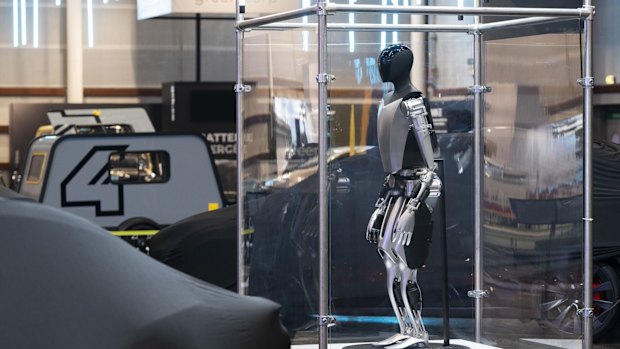
Elon Musk has suggested Tesla’s Optimus robots could do everything from manual labour to following criminals to stop them re-offending.Credit: Bloomberg
Walsh said he was pleased to see robotics companies receive funding, but that he worried human-shaped robots were a distraction from projects that would be ultimately more useful.
“There are going to be lots of ways we can take humans out of the equation physically. And equally, robots may help us advance the intelligence of AI. Physical AI is an exciting and potentially transformative step that we’re going to make,” he said.
“But none of that requires humanoids.”
So why are robotics companies so determined to build human-shaped robots, and pour billions of dollars into making them walk and work like people?
Loading
The answer is that, like a depressing amount of recent technological innovation, humanoid robots aren’t built for optimal productivity or any kind of benefit to society in general. They’re built to attract investment money. Just like with virtual reality and artificial intelligence, tech companies are pulling from popular science fiction as a shortcut to making their products seem capable and worthwhile.
Humans are designed to accept that human-like qualities are exceptional. When we’re shown an AI model that can put sentences together, it’s easy for us to believe it’s intelligent and can make reliable decisions. When we see a robot walking on two legs, it’s easy for us to believe it’s physically capable and can work. Of course, neither is necessarily true.
Walsh said that in the future, worker robots would come in all shapes and sizes to fulfil specialised tasks, and would only be human-shaped if absolutely necessary.
“You’ll find humanoid robots when you go to the shopping centre, if it’s something that’s designed to interact with humans,” he said.
“The humanoid form is there not because it’s functional, but because it’s appealing.”
Get news and reviews on technology, gadgets and gaming in our Technology newsletter every Friday. Sign up here.