
 Article InformationAuthor, Ruth CleggRole, Health and Wellbeing reporter
one hour wey don pass
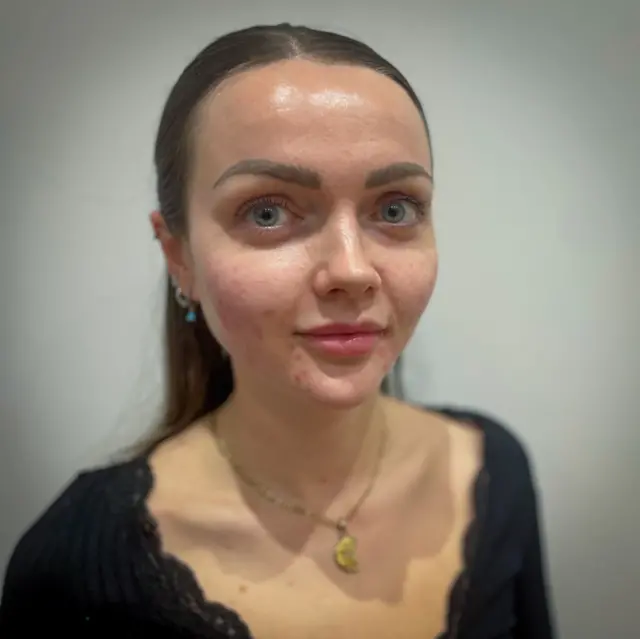
Abby lie down for one large, black padded chair for one small aesthetics clinic for south Manchester.
She shake as dem insert small cannula for inside her cheek.
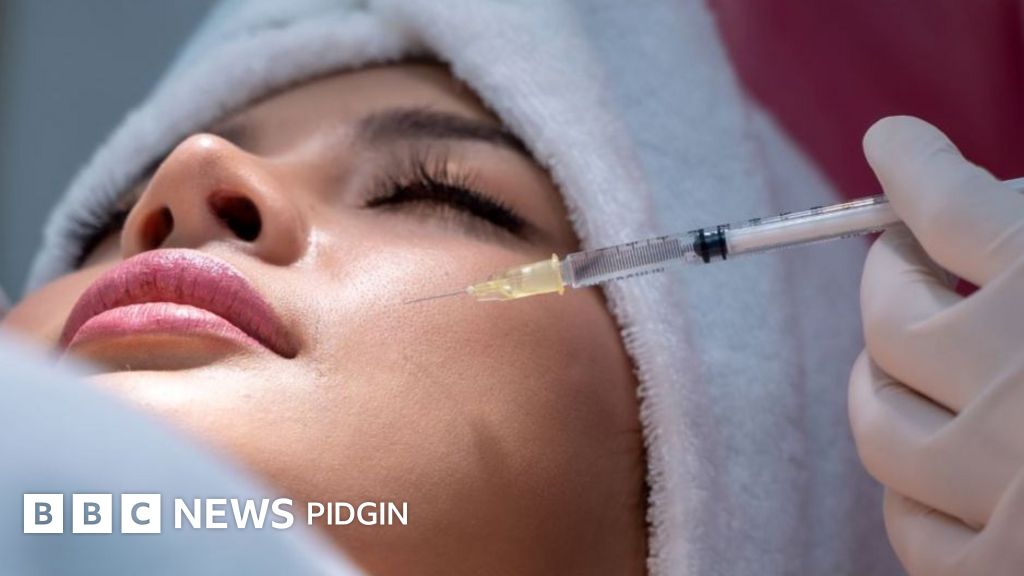
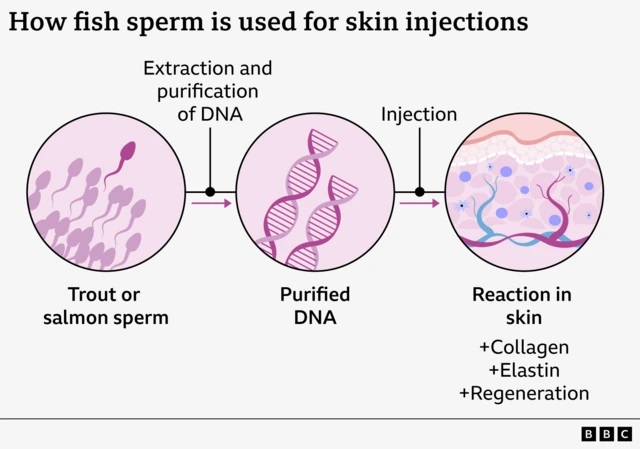
29-year-old Abby no dey receive pure dose of trout sperm. Dem dey inject di lower part of her face wit tiny fragments of DNA, wey dey known as polynucleotides wey dem extract from either trout or salmon sperm.
Why? Well, interestingly, our DNA dey pretty similar to dat of a fish.
So, di hope na say Abby body no go only welcome these tiny strands of fish DNA, her skin cells go spring into action, and produce more collagen and elastin, two proteins wey dey vital for maintaining di structural integrity of our skin.
For Abby, di aim na to freshen her skin, keep am healthy, and hopefully, treat di acne she don live wit for many years by reducing scarring and redness.
“I just wan target dos problem areas,” she explain.
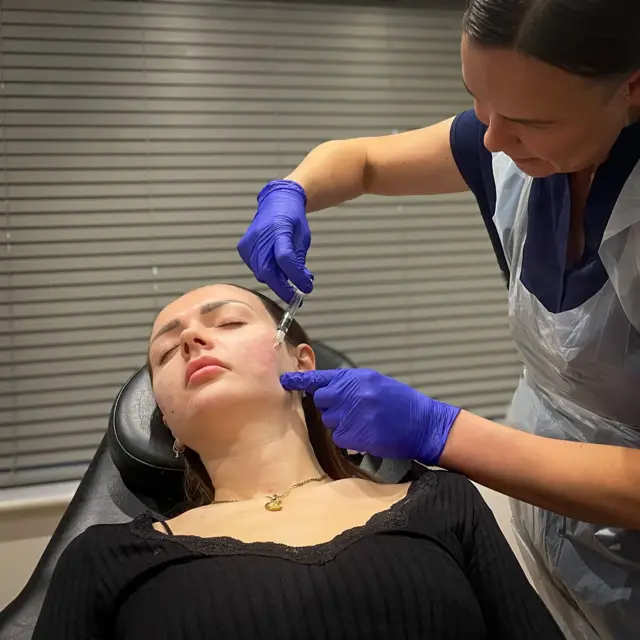 Wetin we call dis foto, Abby dey receive injections for her lower face to help rejuvenate her skin and tackle “problem areas”
Pipo don begin hype Polynucleotides as di next big skincare “miracle” and e dey rapidly gain popularity afta some celebrities preach openly about dia “salmon sperm facials”.
Earlier dis year, Charli XCX tell her nine million Instagram followers say she feel like say di days of “fillers don dey kind of ova now” and explain say na polynucleotides be di new thing na, dem be “like deep vitamins”.
Kim and Khloe Kardashian reportedly also na big fans.
Wen dem ask Jennifer Aniston about her skincare routine on one recent episode of Jimmy Kimmel Live, she reply say: “Don’t I have beautiful salmon skin?”

Wia dis foto come from, EPA-EFE/REX/Shutterstock
Wetin we call dis foto, Charli XCX tok say she use polynucleotides wey dey like injectable vitamins for di skin
So, despite dia fishy beginnings, polynucleotides dey transform skincare?
“We dey get a Benjamin Button moment,” Suzanne Mansfield, wey dey work for aesthetics company Dermafocus, tell me.
Dat na reference to di 2008 film The Curious Case of Benjamin Button, wia Brad Pitt play di role of one man wey dey age backwards. By di time e dey im later years, im skin be like baby bumbum.
While such an effect dey highly unlikely and go probably be a tad disconcerting, Ms Mansfield tok say polynucleotides dey clear di way wen e come to regenerative skincare.
One small but growing body of research and clinical trials suggest say injecting polynucleotides fit rejuvenate skin, e no go only make di skin dey healthier but e go potentially reduce fine lines, wrinkles and scars.
“All we dey do, as we dey use am for di aesthetics industry,” she tok, “na to enhance something di body already dey do. Dat na why these dey so special.”
But e dey very expensive.
One single session of polynucleotide injections fit cost anywhere from £200 to £500 – and e dey recommended to get three of these ova several weeks.
Afta dat, di clinics go advise you di need to top up every six to nine months to maintain di look.
Back at di clinic, Abby treatment don almost finish.
“Na just one area left,” Helena Dunk, di aesthetic nurse practitioner wey get di clinic, Skin HD, reassure her.
She tok say polynucleotides don massively increase in popularity ova di past 18 months.
“Half my clients dey really notice huge difference – their skin feel more hydrated, healthier, younger – while di other half no dey see dat kain big change. But dia skin dey feel tighter and fresher.”
Dem don already inject under Abby eyes as part of one three-course treatment for di clinic – and she’ dey really pleased wit di results.
She don collect pleny tiny injections of polynucleotides, wey dey “pretty painful procedure”, but she say e help reduce di dark circles under her eyes.
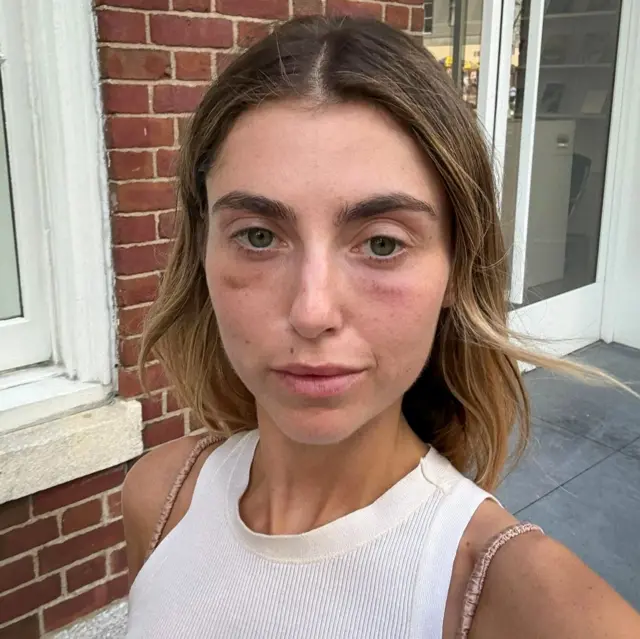
Wia dis foto come from, Charlotte Bickley
Wetin we call dis foto, Charlotte tok say she dey left wit black rings under her eyes afta dem inject her wit polynucleotides bifor her wedding
While a growing number of studies consider am safe and effective treatment, e still dey relatively new and some experts don warn say di hype fit outpace di science.
Consultant dermatologist Dr John Pagliaro, wey base for Brisbane, Australia, tok say while dem know say nucleotides dey play ogbonge role for di body – na dem be di building blocks of our DNA for a start – e question weda “injecting salmon DNA, wey dem cut into little pieces” into our faces go worl well like our own nucleotides.
“We no get good, strong data,” e tok. “As a medical specialist, I go wan see at least a few more years of big, credible studies swey show safety and efficacy bifor I begin dey use am for my practice. We no dey there just yet.”
Charlotte Bickley describe her journey into di world of polynucleotides as “salmon-gate”.
Di 31-year-old from New York bin get di treatment last year as part of her “wedding glow up”, shortly bifor she marry.
But Charlotte bin end up wit skin infection, inflammation and darker rings under her eyes dan bifor she go for di treatment.
“I bin get di complete opposite of wetin I want,” she tok. “I bin trust dat doctor, but e leave me damaged.”
Charlotte believe say di doctor inject too deeply under her eyes, wey cause negative reaction. Sides effects fit dey – like redness, swelling and bruising but these na just temporary effects.
For some cases, pipo fit get allergic reaction, or, if polynucleotides no dey injected properly, e fit pose longer term risks, like skin pigmentation and infections.
Dem dey use Polynucleotides well well across di UK. Dem dey registered as medical devices wit di Medicines Health and Regulatory Authority (MHRA) but dem no dey regulated like medicines.
Dem no dey approved by di UK equivalent for US, di Food and Drug Administration (FDA).
“I just dey think, ‘Why I do am?'” Charlotte tok. “Wen something go wrong on my face I dey hyperfixate on am.”
She pay thousands in medical bills to try correct di situation, but afta 10 months, some scarring still dey under her eyes.
“I no go ever inject salmon DNA into my face again,” Charlotte tok, “ever.”
Ashton Collins, director of Save Face, one organisation wey dey campaign for beta regulation of di cosmetic industry and wey dey operate one government-approved register of clinics for UK, tok say polynucleotides dey generally considered a safe treatment wen na medically-trained professional administer am, and if di brand of polynucleotides wey dem use na from a reputable company.
“But, no we dey see different products wey dem neva test well-wel dey enta di market, dat na di concern,” she tok.
Dr Sophie Shotter, president of di British College of Aesthetic Medicine, agree.
“Sake of lack of regulation, anybody fit use products wey dem neva test thoroughly. Na real issue.”
For her opinion, polynucleotides dey effective?
“I get dem on my shelf, for my toolbox. I dey offer dem to clients wey want natural look and wan potentially invest long-term,” Dr Shotter tok.
“Polynucleotides as a treatment no be di cure. Plenty oda treatments dey out there wey fit do similar things, and get more data behind dem.”
E no get any one treatment wey go work for everyone, she add.
“We all respond differently to different things, and dat no always dey predictable.”