
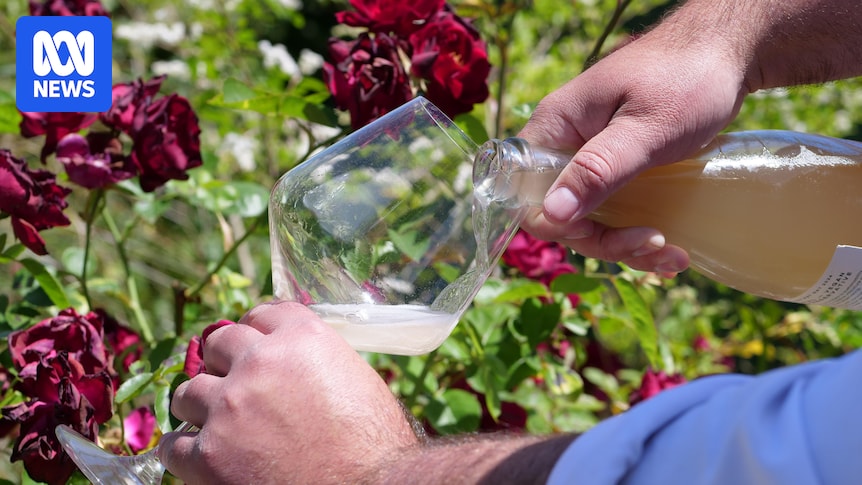
In Canowindra in central-west NSW, winemaker Sam Statham has noticed a trend that has nothing to do with price or palate.
The co-owner of Rosnay Organic Farm said there was a distinct move towards environmentally conscious wine consumption.
“I’m definitely seeing young people interested in organic wine … young people with little young families,” Mr Statham said.
“I think that’s probably hit them like a truck, the realisation that the next generation is coming through and they’ve got to do the best they can for them.”
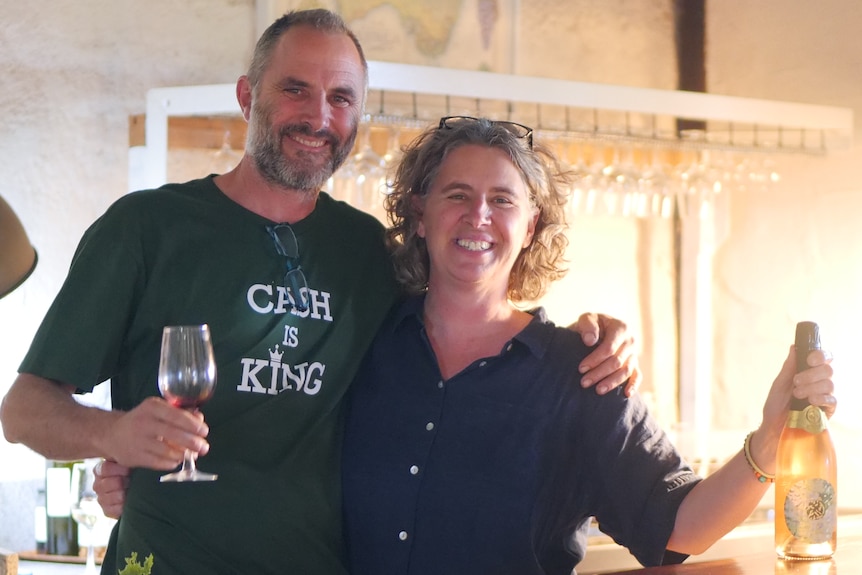
Sam and Simone Statham in their cellar door at Rosnay Organics, Canowindra. (ABC Central West: Emily Middleton)
According to data group IWSR, which monitors beverage trends across the globe, organic wine consumption in Australia grew by 60 per cent between 2020 and 2024.
In the same timeframe, national total wine declined by 15 per cent, meaning organic wine accounted for 4 per cent of all wine consumed in Australia in 2024.
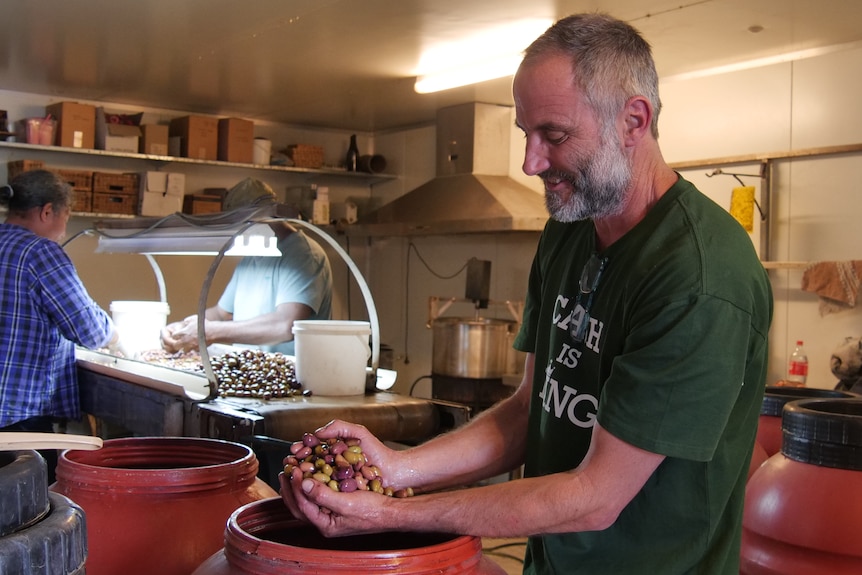
Rosnay Organics, which also grows olives, has been certified organic since 1998. (ABC Central West: Emily Middleton)
Anthony Saliba, a professor of psychology at Charles Sturt University and has been researching consumer behaviour for 25 years.
He said millennial and gen Z customers had a greater awareness of environmental and ethical practices.
“You’ve got newer, younger mindsets and practices, so some of the winemakers are just wanting to try these things out a bit more,” Professor Saliba said.
He said less heavy wines, with a lower alcohol content, such as pétillant naturel (pét nat), were attractive to younger consumers.
“One of the stickier factors around choice for younger people is lower alcohol and lighter styles.”
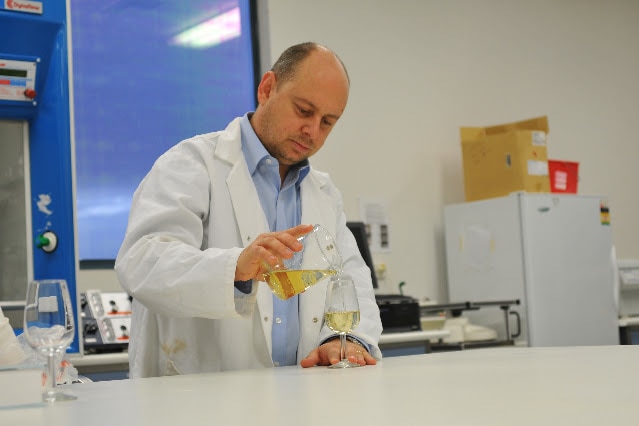
Anthony Saliba says younger consumers tend to be more aware of environmental factors. (Supplied: Anthony Saliba)
Sustainable winemaking
Sustainability is another key factor in the choices made by customers, according to research organisation Wine Australia, which found 62 per cent of wine drinkers had a “high connection to sustainability”.
NSW Wine Industry Association executive officer Matthew Jessop said the trend towards organic wine was good news for the state.
“If you look across all of our regions, there are lots of organic producers but there are also lots of people that are farming their properties regeneratively or biodynamically, being good to the earth,” he said.
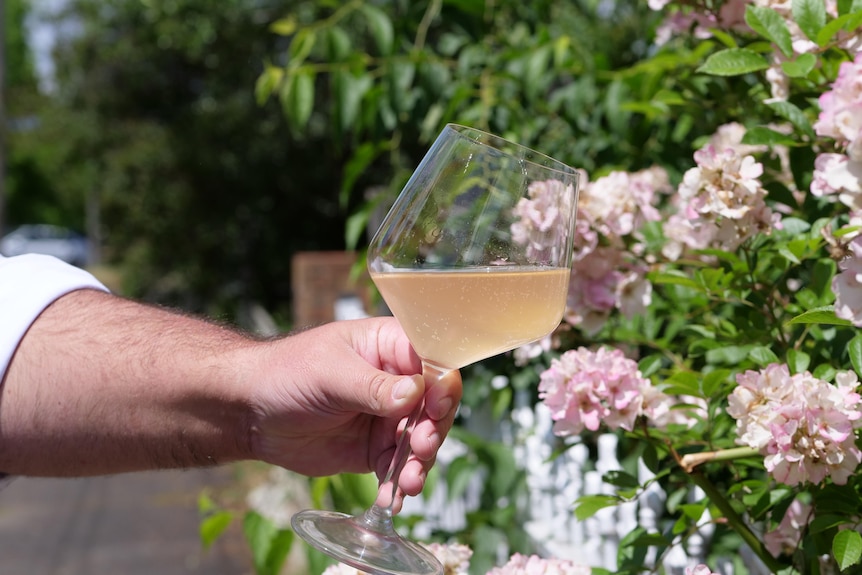
Organic wine consumption in Australia grew by 60 per cent between 2020 and 2024. (ABC Central West: Emily Middleton)
Mr Jessop said the farming practices had been around for decades, but the uptake from consumers took time.
“Just take a region like Orange, two of the biggest producers there, Seesaw and Tamburlaine … both of them are organic and have been for quite some time,” he said.
Becoming organic
In Australia, wine grape growers can become certified organic, meaning the entire process from vine to bottle meets strict standards that are regularly checked; however not all organic wines have this label.
Mr Statham’s operation was organically certified in 1998.
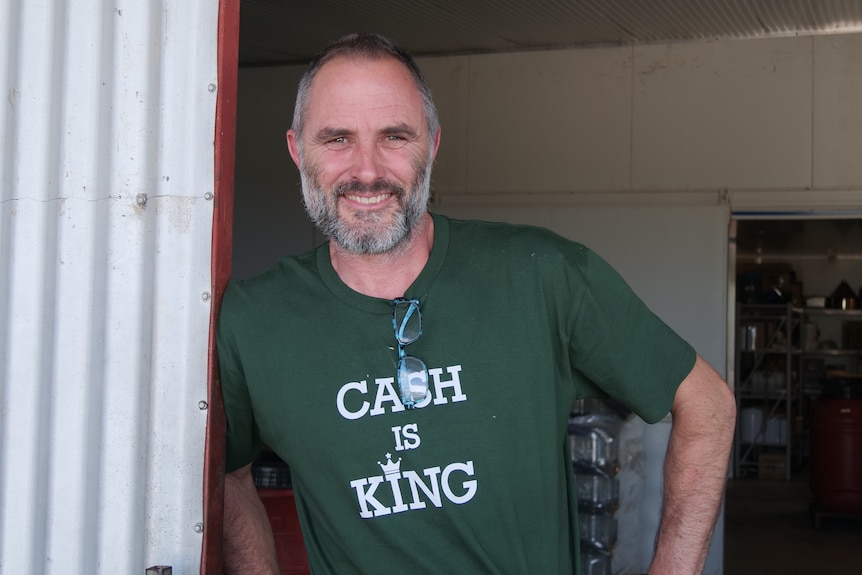
Sam Statham’s wines are certified as organic. (ABC Central West: Emily Middleton)
He said it was not so much about the final product being chemical-free, but rather the process and management plan.
“It’s about demonstrating that you actually have tools in your toolbox to deal with the problems that you’ve got, so they can feel assured that you’re not going to be tempted to reach for some pesticides, fungicides and herbicides,” he said.
“I don’t want to use chemicals … and I don’t want to be paying other people to use chemicals and be exposed to chemicals.”