
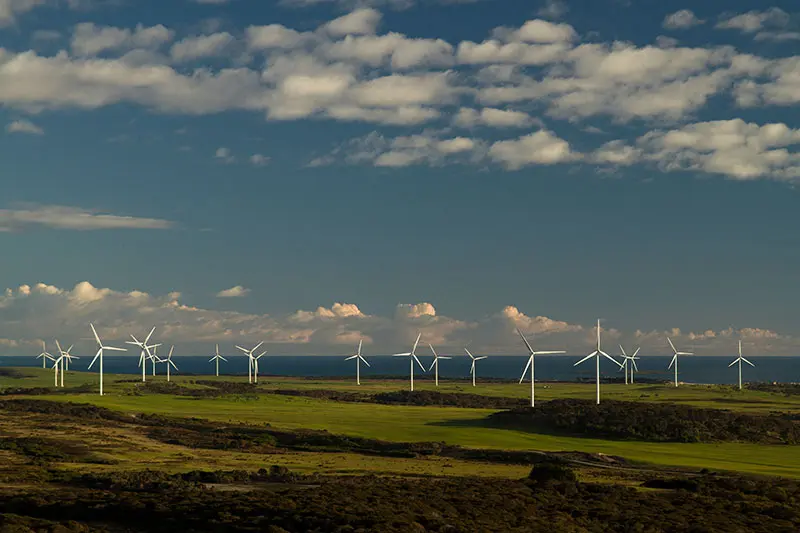
Hydro Tasmania is looking for around 1500 gigawatt hours (GWh) of extra wind and solar power a year and wants it soon, following the impact of several years of bad drought on its dams.
The state-owned power company says certainty around the interstate sub-sea interconnector Marinus Link – which will enable it to export surplus power – has provided enough confidence to start beefing up its electricity reserves.
It wants to sign commercial offstake agreements with projects that will be operational within the next six years. The 1,500 MWh translates into around 500 megawatts (MW) of new capacity, depending on the mix of wind and solar.
“Signing an offtake agreement with a credit-worthy party like Hydro Tasmania is an important step for wind and solar developers to secure attractive financing terms to progress their projects,” said Hydro Tasmania’s Vedran Kovac in a statement.
“It has to be commercial and stack up for Tasmanians, but working together, we can bring new energy online for the state.”
Hydro Tasmania says any excess power from the offtake agreements not needed in Tasmania will be available to trade with the mainland.
The state-owned hydro company has been afflicted by two years of record dry periods which has seen the state’s hydro dam levels sink perilously low.
It’s a situation that has CEO Rachel Watson saying the 750 megawatt (MW) interconnector Marinus is needed to provide energy security, both for exporting surplus power but also importing when needed.
Rainfall is notoriously difficult to predict but climate forecasts are suggesting Tasmania will see longer dry spells and heavier rains in between in future, a problem for a state heavily reliant on water for energy and for firming.
Furthermore, ramping up industrial electrification on the island is fraught: with only the Basslink interconnector currently in play, Tasmania can’t draw on much outside power to allow big industrial users, such as the Boyer pulp paper mill, to switch quickly from coal or gas to electricity.
The owners of the Boyer mill wanted to switch from coal to electrically-powered boilers. but in June was told by Hydro Tasmania there was not enough electricity available to do this. A stalemate broke in October with supplier Aurora Energy to enable the electrification project.
In a previous interview with Renew Economy, Watson said the balanced nature of the state’s energy supply means either paying higher prices for power, or electrifying more slowly.
“The extra energy is going to have to come from somewhere. And at the moment… extra energy is either going to come from more renewables being built in Victoria or more renewables being built on island,” she said on the sidelines of the All Energy conference in October.
“We’re not planning to build our own new wind farms [or] new solar farms, but we want to play a role in helping developers build new wind and solar farms in Tasmania, so that more energy is in the system, and then we can so then one more is available for people who want to grow their load.
“But then when more is available at times when prices might be low, we can then hold back our [hydro] generation and [roll] it out when prices rise.”
However, in saying that, the Australian Energy Market Operator (AEMO) also doesn’t foresee much growth in demand in Tasmania anyway in the years until 2055.
In its 2025 Electrical Statement of Opportunities, AEMO forecast a slight uptick but for demand to remain relatively flat over the 30 year period.
The current request for offtake is designed to “incentivise new renewable developments that can work in concert with hydropower to meet the state’s growing energy demands”, Hydro Tasmania said today.
Hydro Tasmania has signed other commercial offtake agreements in the past, including for the output of the 288 megawatt Northern Midlands solar farm once it’s operating around 2027.
* This article has been updated with comments from Hydro Tasmania.
If you would like to join more than 28,000 others and get the latest clean energy news delivered straight to your inbox, for free, please click here to subscribe to our free daily newsletter.

Rachel Williamson is a science and business journalist, who focuses on climate change-related health and environmental issues.