
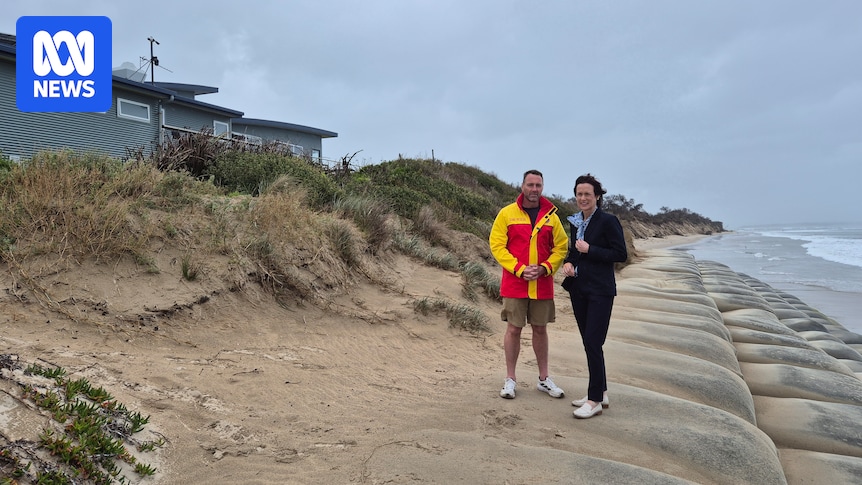
Standing outside Inverloch Surf Lifesaving Club, president Glenn Arnold watches with trepidation as a storm comes in.
The clubhouse sits on top of a bank of sandbags, installed to try to reduce the effects of ongoing erosion.
But the erosion is battering the bags, and the clubhouse is on the edge.
Mr Arnold said “significant” erosion meant local lifesavers had changed how they did things by shifting their beach access points for emergency responses.
Since 2012, more than 70 metres of foreshore at Inverloch surf beach has been lost to erosion.
“Our access points aren’t where they used to be, so we’ve got to travel further, [which has] delayed [response] times,” Mr Arnold said.
Sandbags have bought time for the clubhouse and the beach, but Mr Arnold said the town desperately needed a permanent solution to the erosion.
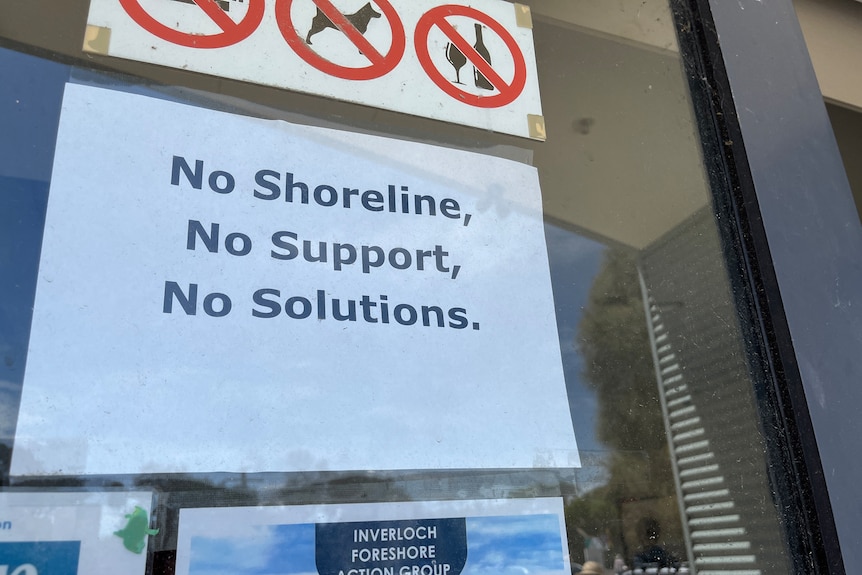
A sign seen at the Inverloch Surf Lifesaving Club this year. (ABC News: Danielle Kutchel)
‘Urgent’ works delayed
The Victorian Bass Coast town of Inverloch has been facing severe beach erosion for more than a decade, losing an average of about 10 metres of beach a year.
Documents released under Freedom of Information (FOI) reveal the Victorian government was aware of ”an urgent” need for erosion works at Inverloch’s surf beach three years ago.
The documents show the state government identified the risk of major erosion or inundation in 2022, and said there was a need for on ground works to begin “as soon as possible”.
The 2022 documents include an application for funding under the Federal Coastal and Estuarine Risk Mitigation Program for the Victorian Cape to Cape Resilience Project on-ground works.
The application was submitted by the Victorian Department of Environment, Land, Water and Planning, now the Department of Energy, Environment and Climate Action (DEECA).
The application said the works would “reduce disaster risk to critical infrastructure and services for the Inverloch township”.
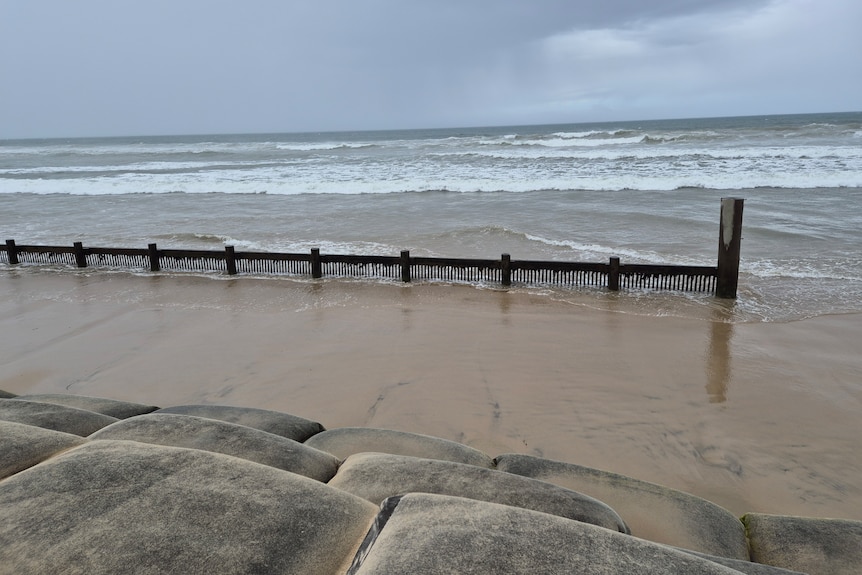
The view from the sandbags near the clubhouse at the Inverloch Surf Lifesaving Club. (ABC News: Danielle Kutchel)
The department applied for — and received — $3.3 million in federal funding for on-ground works “that will have significant disaster risk mitigation benefits”, the application says, such as dune management, beach renourishment, groynes and revetments.
But the money is yet to be spent.
The application identified the economic impact of the permanent erosion of Inverloch’s surf beach as between $2 million and $80 million in lost tourism expenditure per year.
The grant application was submitted in 2022.
It said on-ground works to mitigate erosion at the beach would need to take place within two years “to mitigate potential disaster risk if a major erosion/inundation event were to occur”.
The application also reveals that “state and local government and agency budget constraints” meant there was no funding available to begin the on-ground works within that timeframe.
‘Still waiting’
Mr Arnold said he felt the government had failed to act soon enough.
“It’s infuriating, quite frankly, that three years on we might see some work actually get done when this could have been resolved back when the work was requested,” he said.
He said the lifesaving club would “bend and compromise” to get the work done and ensure its survival.
But he added that any works on the beach would likely affect how the lifesavers ran upcoming summer programs, including the Nippers.
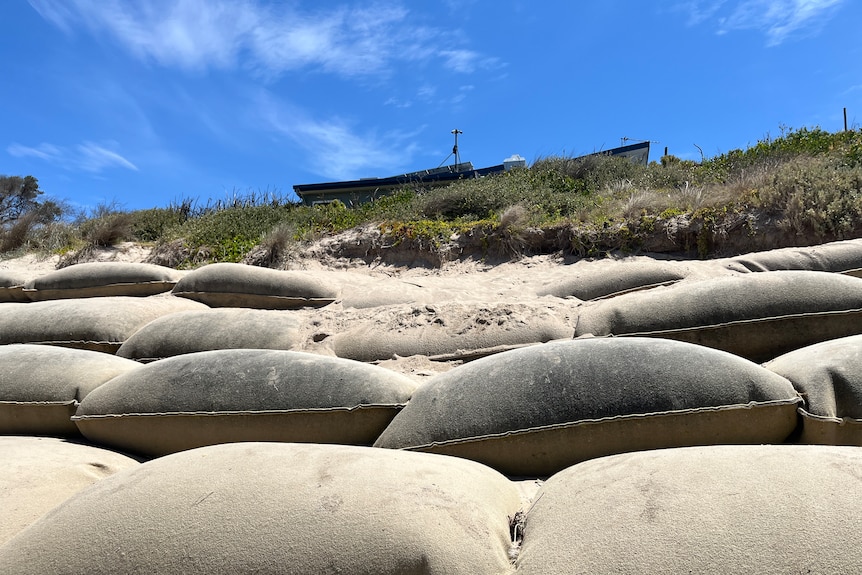
Glenn Arnold says the town is still waiting for a permanent erosion fix. (ABC News: Danielle Kutchel)
A gathering of locals in July saw overwhelming support for the installation of rock bags at the beach.
“There are solutions around not only Victoria but around the country that have worked, but they’re just not getting considered here,” Mr Arnold said.
“We’ve got businesses that rely on tourism, and they’re putting all of that at risk.
“Three years on, we’re still waiting and we shouldn’t be.”
Coastline in ‘imminent’ danger
The documents were obtained under Freedom of Information by Nationals MP for Eastern Victoria Melina Bath.
She has accused the state government of sitting on the $3.3 million in funding, to the detriment of the Inverloch beach.
“The federal government provided that [money], and since then we have seen delays and no work,” she said.
Ms Bath said the documents revealed the state government acknowledged that “the danger to this foreshore was imminent”.
Bass Coast Shire Council will begin extending the sandbag wall at the foot of the clubhouse at the end of this month.
The works are expected to take four to five weeks and have been funded by DEECA.
A spokesperson for the council said prior to the 2024-25 financial year, it had spent on average $61,000 a year at Inverloch Surf Beach on coastal protection measures, including installing the sandbag wall and ongoing sand renourishment.
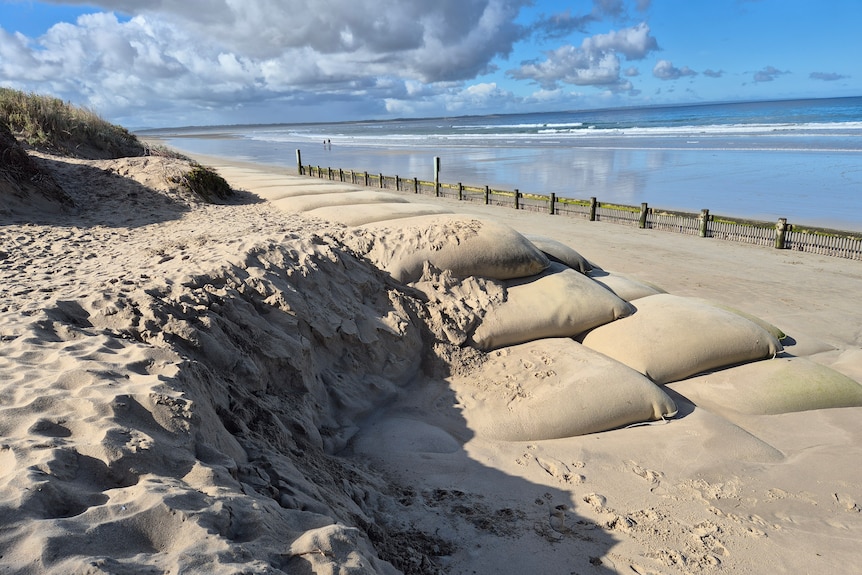
Bass Coast Shire Council will soon begin working on an extension of the sandbag wall. (ABC News: Danielle Kutchel)
The ABC sent a detailed list of questions to the premier for comment, but was referred to DEECA.
DEECA did not respond to the questions directly, but did outline actions it had taken to address erosion on background.
In September, DEECA announced that dune reconstruction works would begin at the beach in February 2026, including sand dredging and revegetation.
The project is the first to be completed under the Victorian government’s Cape to Cape Resilience Plan and will be funded by the $3.3 million federal grant.
The state government expects the works will protect the Inverloch foreshore for five to 10 years.
The Cape to Cape Resilience Plan is a long-term strategy to manage the coastline and impact of erosion between Cape Paterson and Cape Liptrap.
It is expected to be released before the end of the year.