
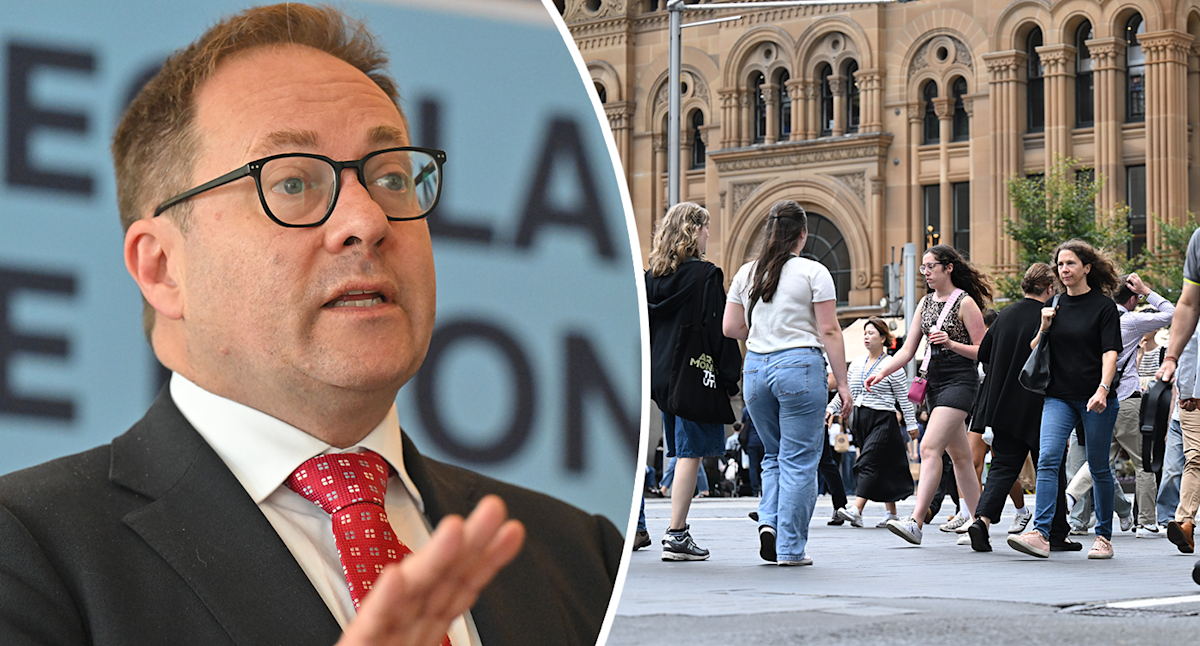
 Assistant Treasurer Daniel Mulino revealed the government was considering getting the super sector to contribute to the Compensation Scheme of Last Resort. (Source: AAP)
The superannuation industry has pushed back against plans to force the $4.3 trillion sector to contribute to a scheme to compensate victims of dodgy financial advice, such as those caught up in the Shield and First Guardian collapses. Groups have warned it would mean “everyday Australians” end up footing the bill for the losses.
Assistant Treasurer Daniel Mulino is currently reviewing the Compensation Scheme of Last Resort (CSLR) as claims and costs blow out. The scheme, which was set up two years ago, provides compensation of up to $150,000 to victims of financial misconduct.
It is currently funded by an annual levy on financial advisers, banks, other lenders, stock and mortgage brokers. However, Mulino revealed the government was considering forcing super funds to contribute to the scheme.
RELATED
The cap is $20 million per subsector, but the Minister has discretion to impose a special levy, which is anticipated to be required given the scale of the Shield and First Guardian collapses.
The CSLR revealed a total levy of $137.5 million would be needed for the 2027 financial year to cover an expected 912 claims. This marks a substantial increase from the revised $75.7 million figure for the prior financial year and does not include Shield and First Guardian complaints.
Super Members Council, who represents profit-to-member funds like Australian Retirement Trust and AustralianSuper, has argued APRA-regulated funds should not pay the special levy.
Do you have a story to share? Contact tamika.seeto@yahooinc.com
Super Members Council CEO Misha Schubert said it was ‘not fair’ to get everyday Aussies to pay for compensation. (Source: Eamon Gallagher)
It’s argued that spreading excess costs across “unrelated sub-sectors” would “embed and escalate moral hazard” and be likely to “escalate risky behaviour, weaken accountability, and make some consumers pay twice”.
It has called for stronger consumer protections across the system to ensure the bill doesn’t continue to mount.
“It’s crucial to close the door to stop consumer harms like these in the first place. Prevention is always better than clean up,” said Super Members Council CEO Misha Schubert.
“It’s just not fair to ask 12 million low- and middle-income Australians in the highly regulated super system to pay for compensation for other parts of the financial services system.”
The group said the government could consider alternative funding sources as a “short-term stopgap”, such as drawing on unclaimed money held by the Australian Taxation Office (ATO) where it has not been claimed after exhaustive efforts.
Story Continues
The ATO revealed there was $18.9 billion in lost and unclaimed super for just under 7.3 million accounts, an increase of $1.1 billion since 2024.
Super can become lost if your account is inactive and your fund can’t contact you. This could be the case if you’ve changed your details, changed jobs or moved address.
The Association of Superannuation Funds of Australia (ASFA) has also rejected suggestions the superannuation sector should contribute to the scheme, as has the Australian Council of Trade Unions.
The ACTU argued APRA has failed to recognise and respond to the threat presented by the First Guardian and Shield collapses, and said this could cost working people’s super savings through an increase in mandatory levies paid by all super funds.
“APRA’s abrogation of its responsibility to regulate for-profit platform trustees has robbed workers of tens of thousands of dollars of their life savings and could now end up costing them even more,” ACTU assistant secretary Joseph Mitchell said.
“Working people should not have to pay for APRA and ASIC’s failures.”
The Financial Advice Association of Australia has called on the levy to be spread across the “broadest possible range of sectors”, including super funds, so subsectors are not disproportionately burdened.
The Financial Services Council (FSC) has also called for a “diversified approach”. It wants the CSLR to be reformed to ensure it remains “genuinely ‘last resort’ and targeted towards those most in need” and said it opposed normalising the use of special levies.
FSC CEO Blake Briggs said $137.5 million estimate was “another blow to law abiding financial advice businesses”.
“The wider financial services sector is willing to do its part to meet the existing shortfall, provided the costs are distributed widely and fairly,” he said.
“A diversified approach avoids disproportionate impacts on individual subsectors and reduces the risk of cross-industry disputes.”
In September, Macquarie agreed to compensate victims of the Shield Master Fund collapse. The scheme will cover about 3,000 people who accessed the fund through Macquarie’s super platform between 2022 and 2023, with a further 2,800 not covered by the deal.
It comes after the Australian Financial Complaints Authority revealed Shield and First Guardian investors had lodged 1,559 complaints as of November 10.
Get the latest Yahoo Finance news – follow us on Facebook, LinkedIn and Instagram.