
Gerry Ryan has long been a benefactor of Australian sport and likes to joke he’s busy spending his children’s inheritance. Sponsoring the Jayco team since its inception in 2012 has cost him tens of millions of dollars. It might be fun but owning a pro cycling team is not lucrative.
So the arrival of Never Say Never and Stoneweg as partners to take over the Israel-Premiertech team looks unusual. They’re financial investors but how do they plan on getting a return? Maybe they don’t and it’s all for fun but that still makes it an interesting project as a World Tour team because if they don’t have pressing commercial imperative there’s space for rebranding and new ways to promote a team.
There’s not much to go on right now. Never Say Never’s website says the legal entity is actually called “INTERNATIONAL COMMERCIALIZATION OF SPORTS RIGHTS SPAIN, S.L” which ought to make things clearer. The company ID number supplied on the site links to a sports travel company, probably a copy-paste error from the website designers rather than an alarm bell as NSN has been around for a bit. Stoneweg is a Swiss real estate business founded by Spaniard Jaume Sabater.
The press release from Never Say Never, a sports marketing and event organiser, has some interesting lines to explore, especially as since it came out on Friday there’s been no carefully-placed interview from the new backers in any newspapers or online outlets over the weekend.
The international sports and entertainment company NSN (Never Say Never) and Stoneweg, a Swiss-Spanish investment platform, have entered into a joint venture in professional road cycling to take over a WorldTour and Development team structure
So it’s a takeover, this implies ownership is changing. Sylvan Adams appears not to be having a quieter role but stepping away.
the team’s current managerial and sporting organization, made up of around 170 people, who are guaranteed to compete over the next three years in UCI WorldTour calendar events such as the Tour de France, the Giro d’Italia, and La Vuelta a España
This assumes that the team has a World Tour licence for the next three years. The old IPT team met the sporting criteria. Hopefully NSN isn’t just expecting to be able to buy the team and get the right to start the Tour, as normally the UCI will want to vet the new owners but presumably this has been completed.
NSN and Stoneweg consider cycling a sport with strong global growth prospects in the coming years, one that represents values well aligned with the company. They also welcome the opportunity to strengthen the professional cycling landscape and to support a team committed to developing young talent.
Is this the rationale behind the deal? NSN and especially Stoneweg are financial investors so are they coming in expecting to make a profit? Because to be flippant, the growth story in the sport this decade has been in rider wages which have soared and account for most of the rise in team budgets. There’s not been anything like a corresponding growth in TV audiences or other qualitative metreics. And if there’s a growth story, it’s been in women’s cycling but this isn’t mentioned by NSN.
NSN are financial investors in football. They bought into a Danish football club. Many investors have tried this route: buy an unloved team, spend carefully to get promotion, tap into lucrative TV rights and the returns come. No such path exists in cycling. Another football ploy has been to buy young talent and hope to earn from transfers but this looks hard in cycling with only a nascent transfer market.
As we’ve seen from other teams, the price of a World Tour team these days is north of €20 million a year. Owners don’t have to fund all of this as bike sponsors and others will pay cash as well as supply material for free but it still leaves NSN and Stoneweg liable for maybe three-quarters of more of the team budget.
Some teams and their owners have tried be run as marketing companies providing a service to corporate sponsors. This model goes back to Cyrille Guimard in the 1980s. Car company Renault had owned its cycling team but when it decided to stop sponsorship Guimard hit on the idea of creating a team and then selling the naming rights on to a sponsor, at first supermarket Super U and then DIY store Castorama and this structure caught on.
What we call Lidl-Trek today goes back directly to 2011 and the creation of the Leopard-Trek cycling team. Leopard was branding and the team had support from Luxembourg real estate mogul Flavio Becca. The idea was that with the Schleck brothers, Fabian Cancellara and others this was a premium franchise and that it would be lucrative to sell naming rights. Only Becca was on the hook for the wage bill, corporate sponsors did not show up and two years later Trek bought the licence from a departing Becca.
Today many sponsors from Groupama to EF have taken ownership of their teams. One reason is it can be cheaper to do this direct rather than pay a service company which often has to put value-added-tax on top. For example past accounts show the Belgian state lottery paid the Lotto team about €7 million but the team only got €5.5 to spend as it had to cover VAT.
So if NSN want to sell naming rights and sponsorship they might have to charge tax on top, then add a margin as well if they want a return. Sponsors might prefer to deal direct but the tax charge can vary by jurisdiction. Perhaps it’s business and pleasure, the new owners keen to be involved in a sport for the fun of it.
Finances aside but the team needs an identity and a project. Rather than acquiring a blank canvas NSN has picked up a roster for 2026 that doesn’t look sizzling or too coherent. The team will have a Swiss flag but no Swiss riders, it’ll be based in Spain but has only one Spaniard. Joe Blackmore looks like a prospect and they can take wins here and there but no star power. Teams need an identity so it’ll be interesting to see where this goes, maybe it’ll try and steer away from any local identity and try something else.
Financially a game-changer here could be One Cycling. It was supposed to be launched several times this year but has gone nowhere. But it is more than a concept, it still exists as a project even if its ambitions have scaled back. However if member teams stand to gain a windfall at some point, it’s contingent both on it launching and then meeting the ambitious financial targets.
Conclusion
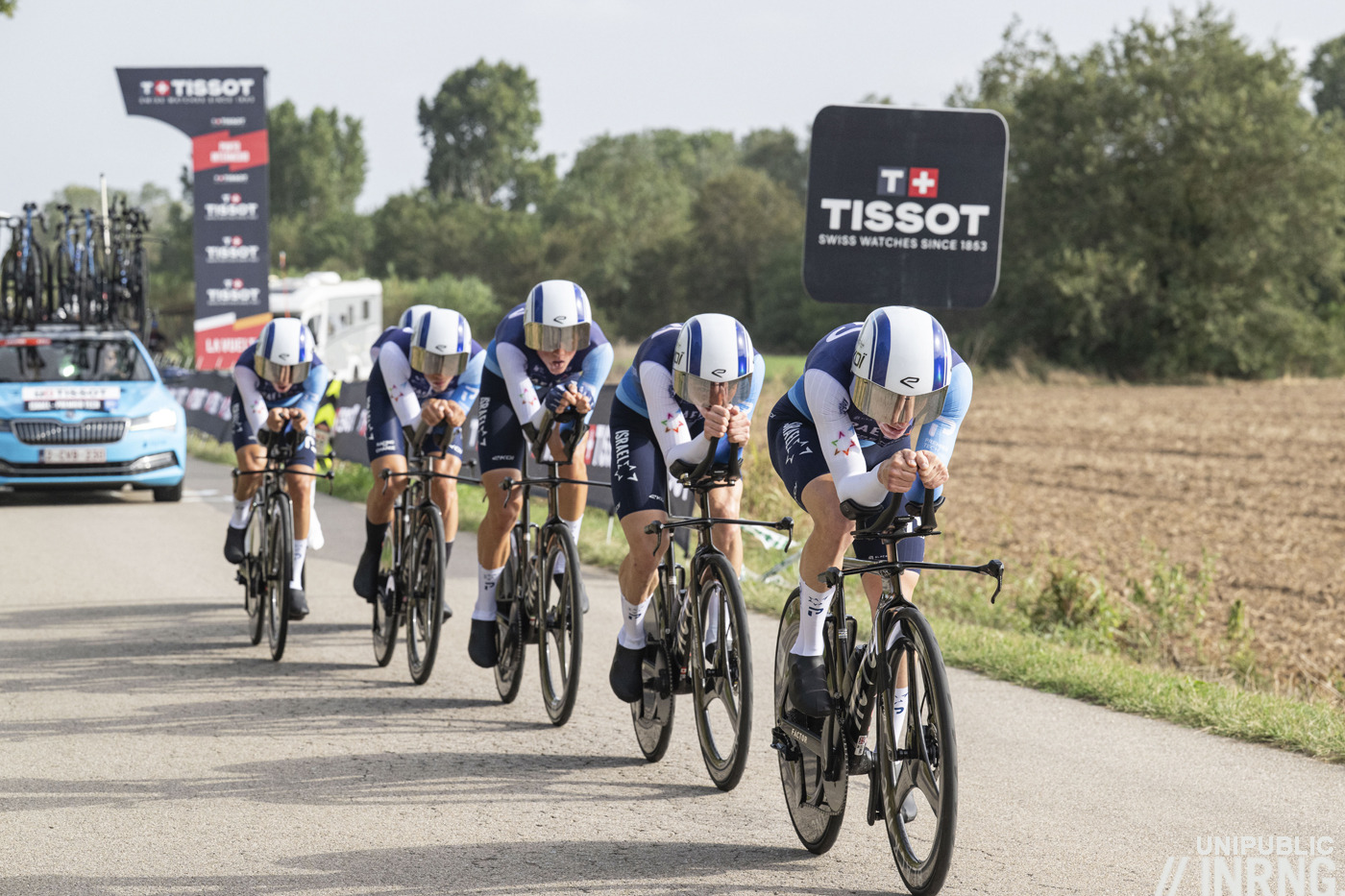
Under new ownership. NSN and Stoneweg have announced the takeover of the the team and assume it is all good for the World Tour, fingers crossed the UCI approves it all. The semi-Spanish identity ought to mean the team can start the 2026 Tour in Barcelona without incident.
But it’s what’s comes next that is interesting, to see where the team goes as a project. In the short term is Derek Gee along for the ride? What riders does it want to recruit. Will the Tour de Romandie or the Volta a Catalunya be its home race, or will it downplay local links. Its this that brings more open questions as the project might have a roster but beyond this there’s room to create and experiment. Will it keep NSN as a visual identity while bringing on sponsors, or will it cede to the lucrative value of naming rights and so at some point it becomes a version of Team Shampoo-Laminate Flooring like all the others… except the Rockets? One to watch and the team kit will be on its way to the factory soon given the Tour Down Under is eight weeks away.