
In Australia, we are rightly proud of our world-leading solar and wind resources, our abundance of land, our trusted trading relationships, and the huge capital reserves we have built up in our superannuation funds.
Given our wealth of natural resources, we have the potential to become a renewable energy superpower. But natural resources are not enough.
In China, one of the world’s leading solar manufacturing hubs, a construction site the size of the MCG, has been transformed into a polysilicon plant that will produce enough material for ten times Australia’s annual solar deployment.
From feasibility to financing, it took just six months to reach this point, with project completion achieved in under two years. This pace is made possible by coordinated planning, integrated supply chains and streamlined approvals. In Australia, securing the necessary agreements and permissions can often take longer than the entire construction period for a comparable facility overseas.
Elsewhere in our region, Singapore has rebuilt its regulatory and digital backbone to speed deployment. Automated approvals now take weeks instead of months, removing a major source of delay. Its grid “digital twin” is a virtual replica of the national grid with detailed asset and network models. It enables remote monitoring and real-time forecasting. This accelerates planning, optimises system performance and smooths the integration of distributed energy technologies. The result is a faster, more predictable rollout that cuts costs while strengthening grid reliability.
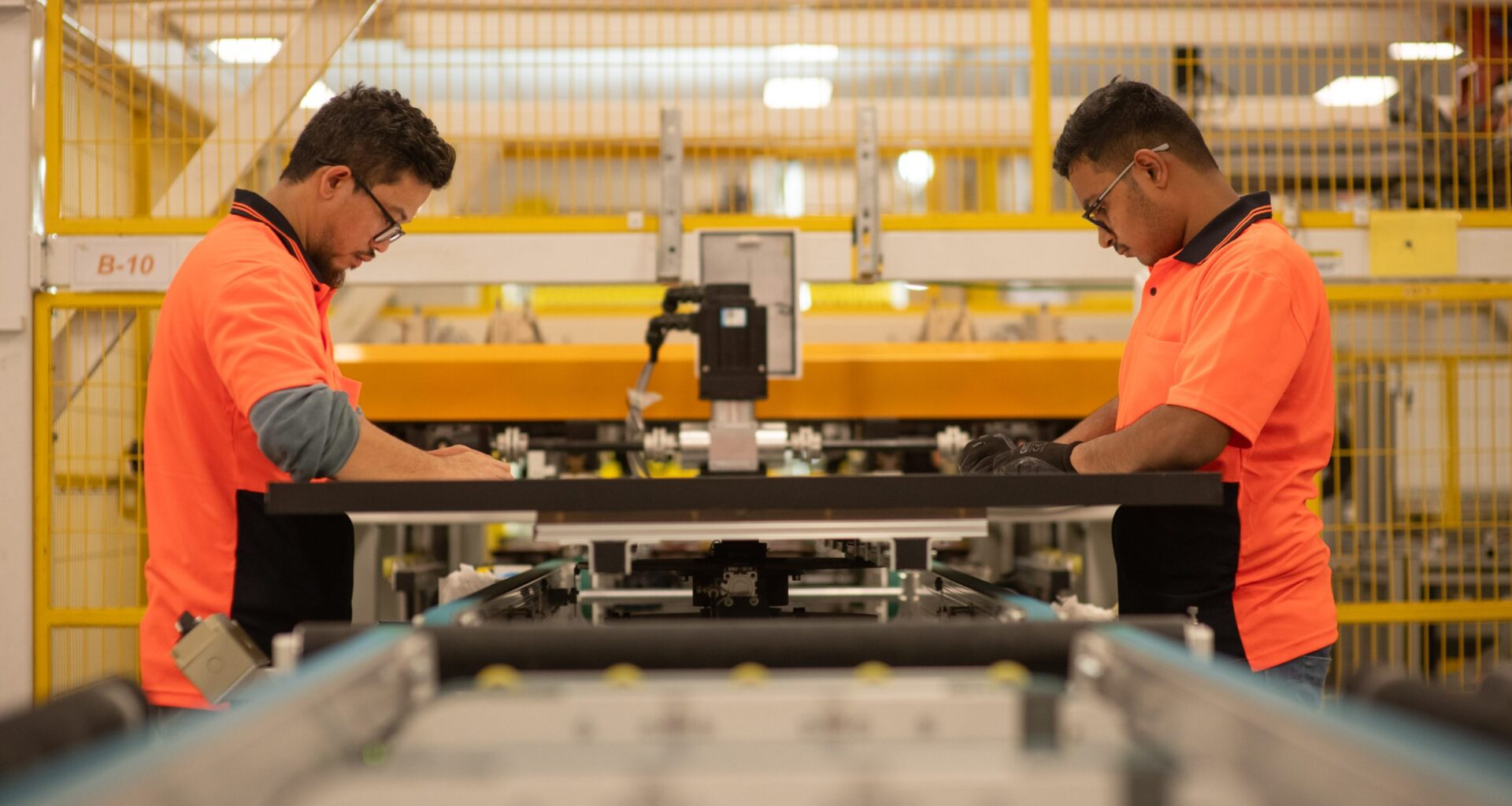
Meanwhile, South Korea has driven efficiency through scale and standardisation. Its renewable buildout is anchored in modular plant designs and robotic assembly, allowing it to add gigawatts of capacity each year with lower labour intensity. At the same time, integrated planning means new energy and storage projects are sequenced to minimise grid bottlenecks and stranded assets.
The common thread is clear: efficiency is designed into the system, from regulation to construction to operations. Unless Australia can match this speed and discipline, our natural advantages will be undercut by neighbours who are already mastering the playbook.
In Australia, we are rightly proud of our world-leading solar and wind resources, our abundance of land, our trusted trading relationships, and the huge capital reserves we have built up in our superannuation funds.
Given our wealth of natural resources, we have the potential to become a renewable energy superpower.
But natural resources are not enough. Australia is an expensive place to do business, with high labour costs, long approval timeframes, high capex costs and a small domestic market.
To compete, we must dramatically improve our whole-of-system efficiency.
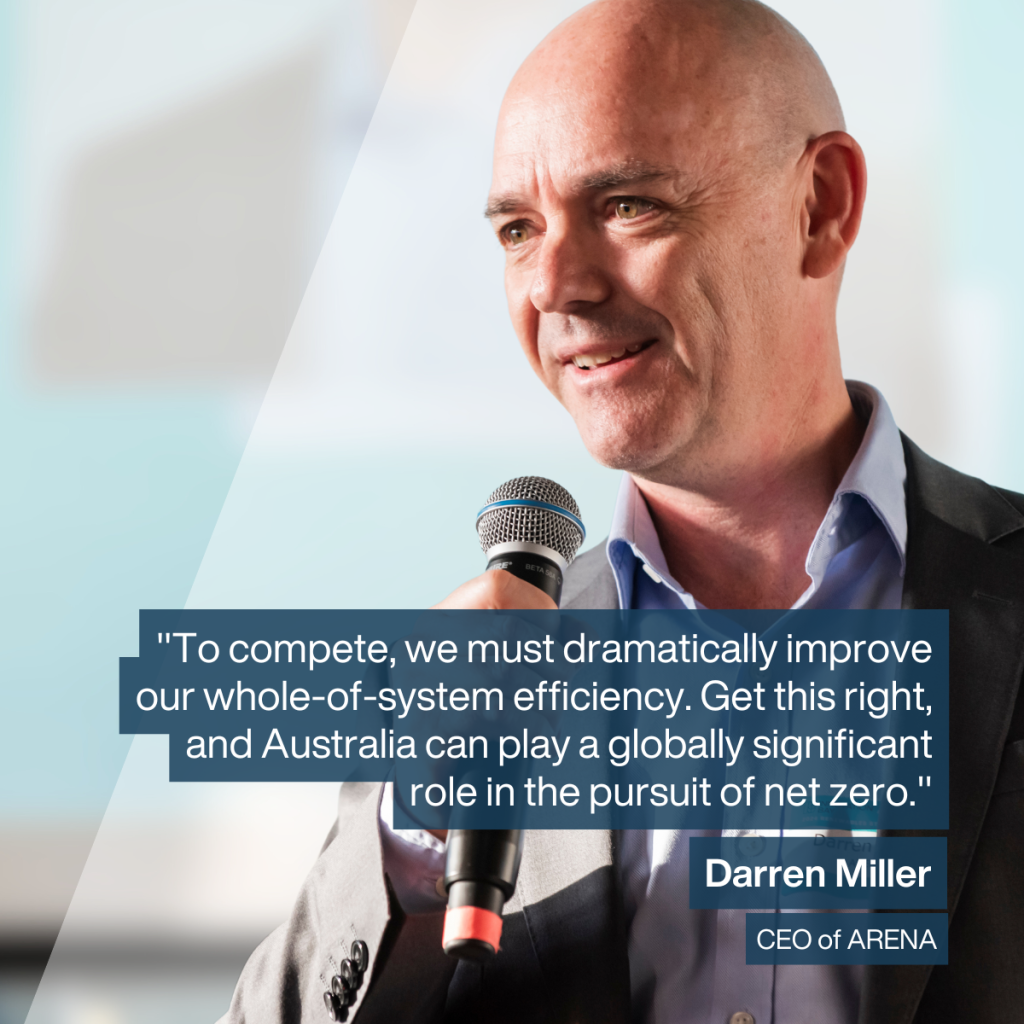 Darren Miller, CEO of ARENA
We must improve the speed, cost and productivity of the entire industrial process, from approvals and capital deployment to construction, operations and maintenance.
Only by doing so will we be able to maintain our place in the global economy and dramatically increase our wealth with the production and export of new high-value green products.
So, what would addressing this look like?
Whole‑of‑system efficiency demands a shift from bespoke, one‑off projects to proven, standardised designs and modular construction that can be deployed at speed and scale. It is about building on experience by keeping expert teams intact, so knowledge compounds and performance improves with every project.
It means unleashing the full potential of robotics, automation, AI and real‑time analytics to drive step‑change gains in productivity. And it requires streamlining of regulation so the path from planning to delivery is as fast and frictionless as possible.
Driving whole‑of‑system efficiency delivers faster, cheaper and more reliable infrastructure, unlocking investment and accelerating the transition to cleaner energy.
By reducing duplication and delays, we free up capital and skilled labour for more projects, multiplying economic and social benefits. Consistent designs and repeatable processes lower risk, improve safety and boost quality, while advanced technologies and stable teams lift productivity over the long term. Streamlined regulation ensures momentum is maintained, so Australia can compete globally and meet its energy and emissions targets on time.
If we remain inefficient, then it doesn’t matter how much better our sunshine and wind are, we will not be able to compete in the more complex downstream processing industries.
And with so much of our economy leveraged to our fossil fuel reserves and minerals, it is imperative that we carefully choose the areas where we are most likely to succeed and invest wisely over the long term.
If we want to be a renewable energy superpower, we must match the world’s best in whole-of-system efficiency.
There is a lot of talk about energy efficiency and our natural resources, but the conversation needs to be more than that. It is about the speed, cost and productivity of the entire industrial process, from approvals and capital deployment to plant construction, operations and maintenance.
The difference this makes is not academic. It is the deciding factor between building high‑value clean energy industries here in Australia or watching them take shape elsewhere.
ARENA is tackling this head on.
Our Ultra Low-cost Solar (ULCS) vision aims to deliver 30% solar module efficiency at 30 cents per watt by 2030, which will help us achieve a levelised cost of energy (LCOE) of $20/MWh. We’ve already seen significant progress with projects that improve cell and module efficiency, reduce balance of plant and deployment costs, and lower operations and maintenance costs.
We backed Calix’s ZESTY furnace technology, which can dramatically cut the hydrogen needed to produce green iron. Less hydrogen equals more efficiency as it means fewer electrolysers, less solar and wind required to make the hydrogen, less land and ultimately lower costs.
We also backed the NeoSmelt direct reduced iron-electric smelting furnace (DRI-ESF) large-scale pilot plant. It’s unique in that this project brought together major mining and steel companies in a first-of-its-kind collaborative joint venture to accelerate development and share expertise. By joining forces, these project partners are able to go faster at lower cost with risks shared by government and the partners. Collaboration, not competition, will be a key driving force of the renewable energy transition.
These examples share one thing. They focus on efficiency as the enabler of global competitiveness.
Until we address this, we simply won’t be able to compete. Instead, we’ll continue to ship raw materials offshore while other countries capture the high-value manufacturing and processing work.
Reforming the system as a whole, from planning and regulation to construction and operations, is the only way to unlock a competitive future. Get this right and Australia can secure a globally significant role in the pursuit of net zero, exporting high-value green products, creating thousands of skilled jobs and attracting billions in private investment.
If we fail to improve our efficiency, we risk becoming a country with the world’s best renewable resources, but without the capacity to turn them into competitive industries. Our competitors are already showing that whole-of-system efficiency is not optional – it is the source of advantage.
Whole-of-system efficiency is not just a technical concept. It is the key to whether Australia wins or watches from the sidelines.