
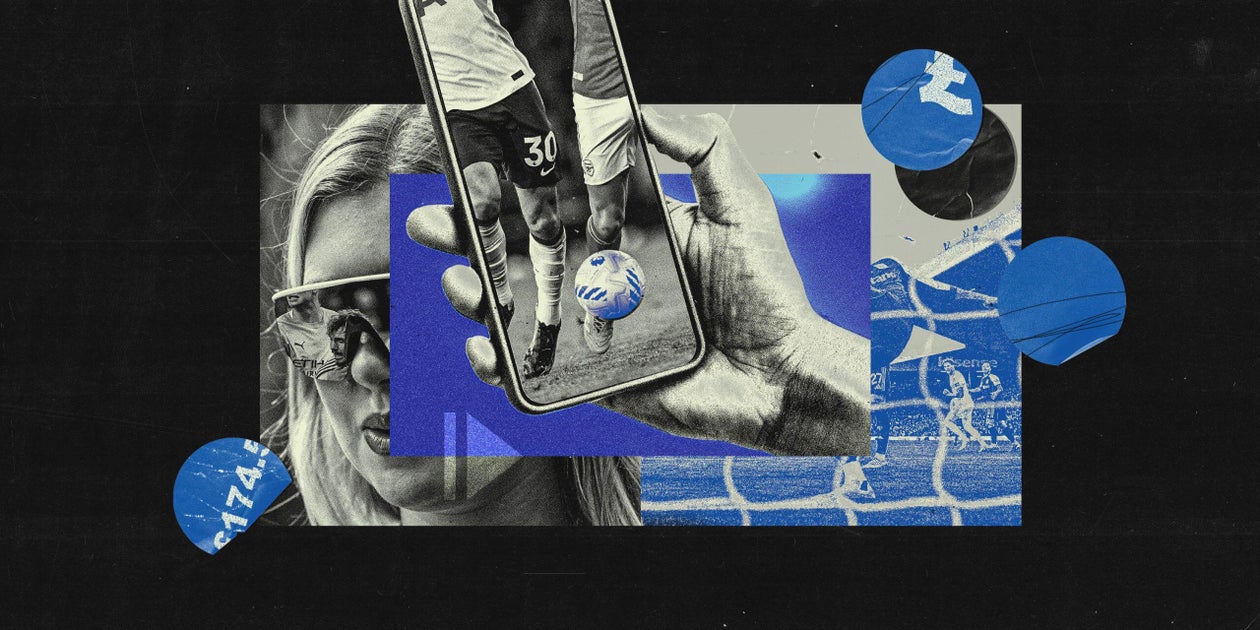
I am a lot like my dad. We enjoy similar things, we are the same shape, and we both grew too tall for our hair.
We also consume football in much the same way, in that we both watch games on the biggest TVs we can fit on the wall, listening to commentary the mainstream broadcaster has provided for our subscription money.
My children, however, do it very differently.
Sure, there are games they will still watch with me from start to finish, but not many, and they are often looking at their phones as much as the TV. And while I still want to hear what Roy Keane and co have to say at half time, my kids have their earbuds in and are listening to influencers I consider to be bad influences.
Is that it, then, for football on TV as we’ve known it? Are all our favourite sports just “highlights-based” products now, as NBA commissioner Adam Silver described his own league earlier this year?
“Watching while second-screening already feels completely normal for Gen Z,” says former EE and BT Sport technology director Matt Stagg, referring to the demographic cohort born between the late 1990s and early 2010s, and who cannot remember the pre-internet age.
“But I get annoyed when I hear that youngsters don’t have the attention span to watch anything all the way through. If they are interested, they’ll watch.”
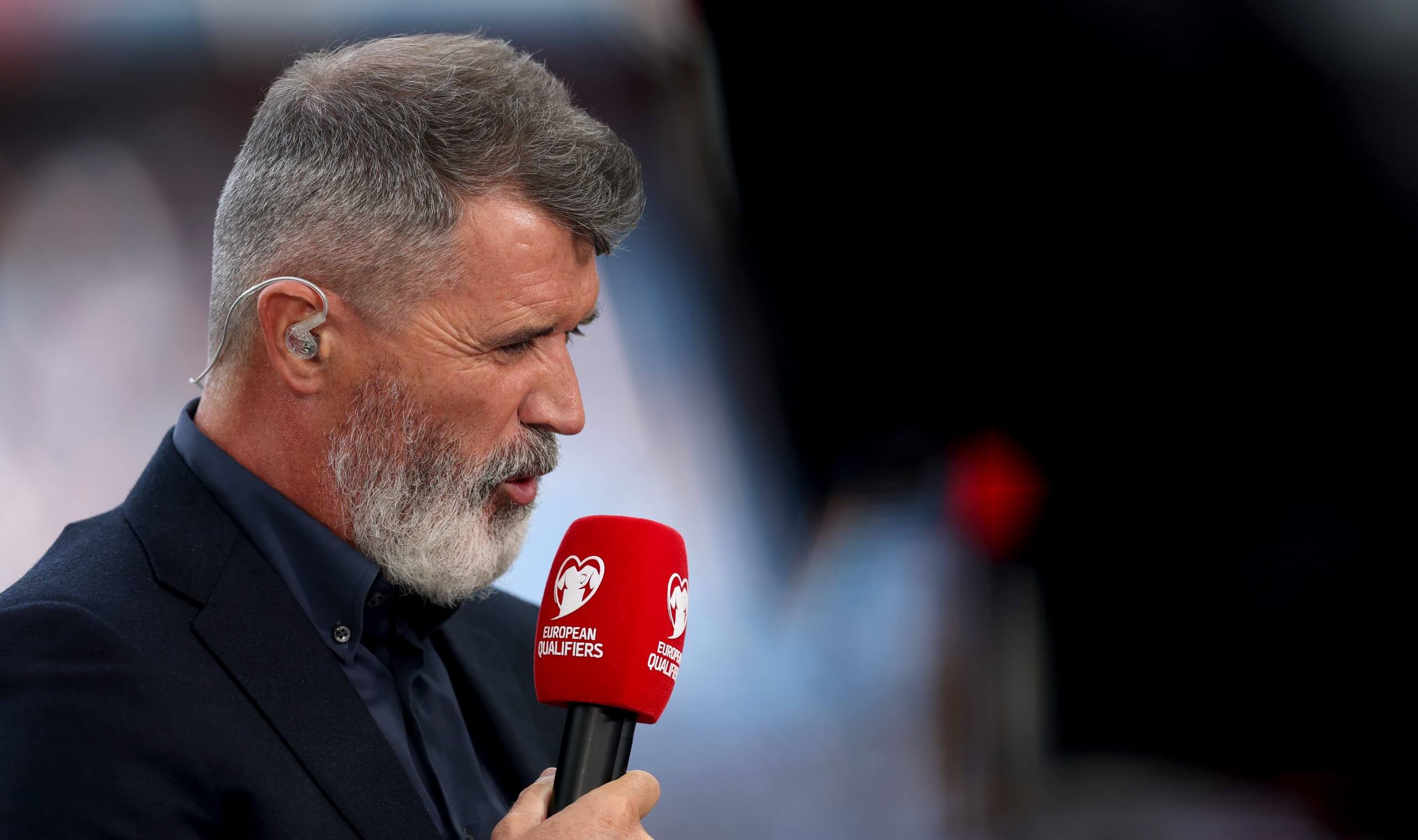
Do younger viewers care what Roy Keane has to say? (Carl Recine/Getty Images)
Fair point.
Peter Hutton, who has worked for established broadcasters such as the BBC, Eurosport and Sky and disruptors Meta and the Saudi Pro League, puts it like this.
“There is no one way of speaking to your audience anymore — you need different editorial voices across different platforms,” he explains. “It’s about accepting that it’s not always about the live game. Clips might be the most important offering. But when you boil it down, it’s pretty simple: you’ve got to get people to care.”
The risk with pieces like this is that you end up writing something that makes you look as daft as 1985 film Back to the Future’s predictions for the technology we would have by 2015 — all flying taxis, hoverboards and self-tying shoelaces.
Here, however, are six predictions for 2035 that I am confident in.
More, more, more
Let us start with the safest forecast of all: we will be able to watch more sport and sport-related content, in more places and more ways.
Just last week, Paramount+ won the rights to show Champions League football in the UK for the first time, displacing TNT Sports. But it is not just the platforms that are mushrooming: the volume is, too.
Two Circles, the international sports and entertainment marketing firm, believes global sports consumption will triple between 2014 and 2034, going from 1.3 trillion hours to four trillion hours in nine years’ time. Last year, it says, three trillion hours of sports video was consumed worldwide, with 40 per cent of that on digital platforms.
In the last week, I have watched live football from BBC Sport, TikTok and TNT, NFL on DAZN, school rugby on YouTube, and major World Cup news play out on X. All on my phone. But this was only a tiny fraction of what I could have watched.
“The last 15 years have been characterised by an exponential growth of content supply that is outstripping demand,” says Two Circles co-founder Gareth Balch. “In 2024, 114,000 years’ worth of new media was created, up from 15,000 in 2008. This trend will continue past 200,000 years’ worth of new media in a decade, driven by AI.”
Much of this content is being created by athletes, clubs and leagues themselves, as opposed to media companies, and it is pumped out via their own apps, social media channels and websites. But we are all creators now, too.
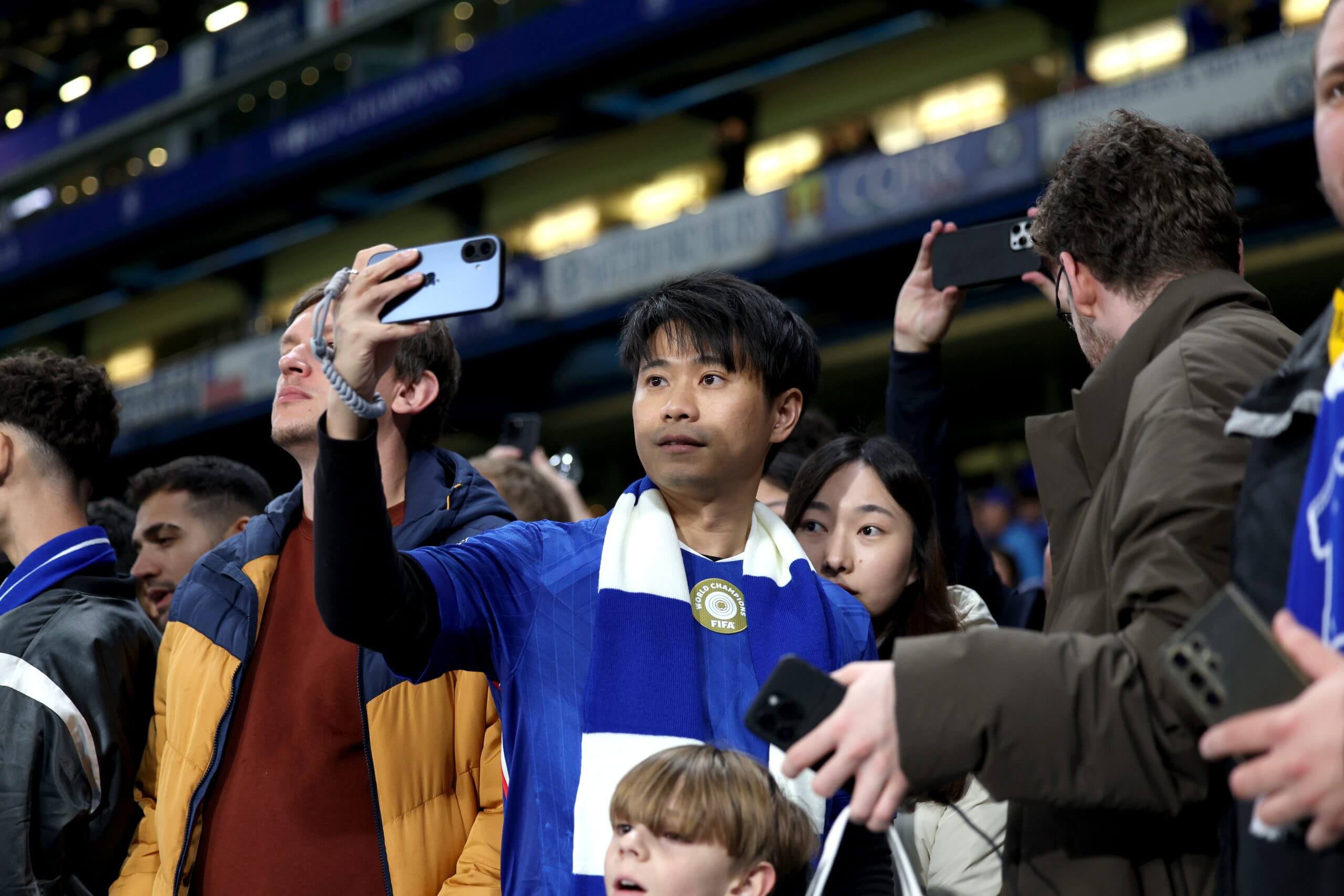
Many fans are also now content creators (Steve Bardens/Getty Images)
“We’re seeing a fundamental shift in fandom,” says Lewis Dean, TikTok’s European brand and reputation manager. “Fans are more active participants than they were in the past. They are creators, too, and they are always ready to engage.
“But it goes the other way, too. The whole ecosystem wants to connect with fans, wherever they are, and lots of them are on TikTok, which is great for us.”
Hutton, who was in charge of Meta’s sports partnerships between 2018 and 2023, believes we are going to get a lot more output from the stars of the show, and it will be their contributions that lead the post-match debate, not the likes of me or even the best pundits.
One of the companies Hutton works with now is Greenfly, a Santa Monica-based firm that uses AI to quickly scrape stills and videos of games and send them directly to athletes, or whoever runs their social media accounts, for them to post.
“When you’ve been to see a game, what is it that really resonates?” asks Hutton. “If a player has posted something about a game, it is much more powerful than if a broadcaster, club or league does.”
Balch sees the increase in the amount of content kicked out by clubs, leagues and stars as a reaction to the fierce battle for our attention.
“The greater choice provided by modern media means avid fans are likely to know and consume more, and casual fans are likely to do the opposite,” he says.
“Leagues, teams and athletes will need to double the amount of content they’re producing, and treble the genres they’re producing it in, to keep growing relevance.”
Hyper-personalisation
When actor Bill Murray filled in for the Chicago Cubs’ famous but ailing announcer Harry Caray for a game against the Montreal Expos in 1987, it was a hit. Despite being unashamedly biased to the Cubs and offering little in the way of insight, nobody cared, as it was funny and Caray would be back for the next game.
But what was once a one-off is already common.
When Amazon Prime Video started streaming Premier League games in 2019, one of the surprises it delivered was the option to turn off the commentary team and have “stadium atmosphere” instead. In 2021, children’s TV network Nickelodeon simulcast CBS’s coverage of the Chicago Bears-New Orleans Saints play-off game, but with added slime and SpongeBob SquarePants. There have been five more NFL games on Nickelodeon since then, with more planned.
Next month, ESPN2 and various Disney Channel options will simulcast a Monsters Inc.-themed version of ESPN’s Monday Night Football game between the Philadelphia Eagles and Los Angeles Chargers. You can decide if that is a sillier alternative than the iShowSpeed stream YouTube offered for its first NFL global exclusive, the season-opener in Sao Paulo between the Kansas City Chiefs and Chargers, or the Mark Goldbridge stream the Bundesliga is offering in the UK. The point is that we have options.
“The big trend is hyper-personalisation,” says Stagg, who now advises companies on their digital and fan engagement strategies. “I call it ‘skinning’ your content because it is similar to how gamers customise characters with skins they have bought or earned.
“A super fan might want a feed with loads of data, heat maps and xG. A more casual fan might want to watch along with their favourite YouTuber.”
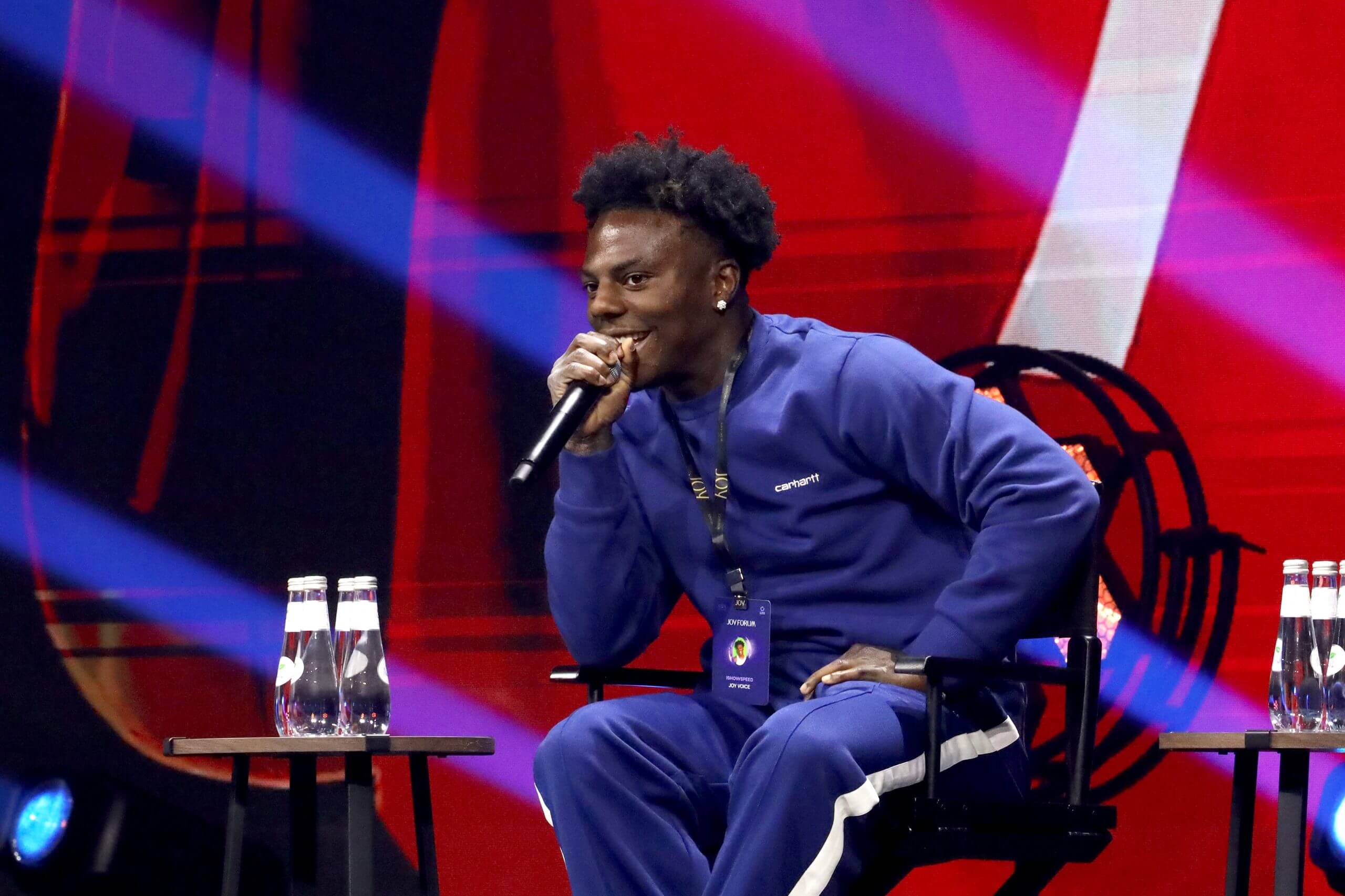
Influencers such as IShowSpeed are increasingly significant (Wed Al Shehri/Getty Images for GEA)
Hutton agrees.
“When you watch a game on linear TV in the traditional way, you are watching what the broadcaster thinks you want,” he says. “But the viewers of tomorrow will want to choose. NFL Multiview (four games on one screen) is already massive in the U.S, but some viewers will want a feed with the latest betting odds, others will prefer fantasy football updates. It’s all storytelling.”
For TikTok’s Dean, the trend is clear.
“We are already seeing broadcasters and streamers provide quick and easy access to data — ball-tracking, player speeds, distance travelled,” he says. “We are going to see all of that information go from the big screen to the palm of your hand.”
For many, it will be more expensive
If there is one thing we can be absolutely sure of, it is that the good stuff will not be getting any cheaper.
But while the super fans will get hit hardest, more casual ones are likely to find they can get all they need without paying much at all, or certainly no more than they already do.
This year, we have already seen DAZN, flush with new Saudi investment, stream FIFA’s expanded Club World Cup for free, while the BBC has started publishing the same highlights packages it uses in Match of the Day on its website, hours before the flagship TV highlights show runs. The Saudi Pro League has been sharing long highlights packages of its games on YouTube for two seasons.
And if all that is not premium enough for you, DAZN teamed up with TikTok last week to stream Southend United versus Carlisle United, with 70,000 unique viewers enjoying that clash of the titans free of charge.
Now, none of this is strictly free as Brits have to pay for a TV licence — £174.50 a year — to access BBC content, while all these other “freebies” are supported by advertising.
Casimiro Miguel is Brazil’s version of the aforementioned Goldbridge and the YouTube channel he has built, CazeTV, is big enough to sell its own advertising. This revenue has enabled the channel to buy the Brazilian rights to the 2022 World Cup, 2024 Paris Olympics, and this year’s Club World Cup. It also had the non-exclusive rights in Brazil to the Chiefs-Chargers NFL season curtain-raiser.
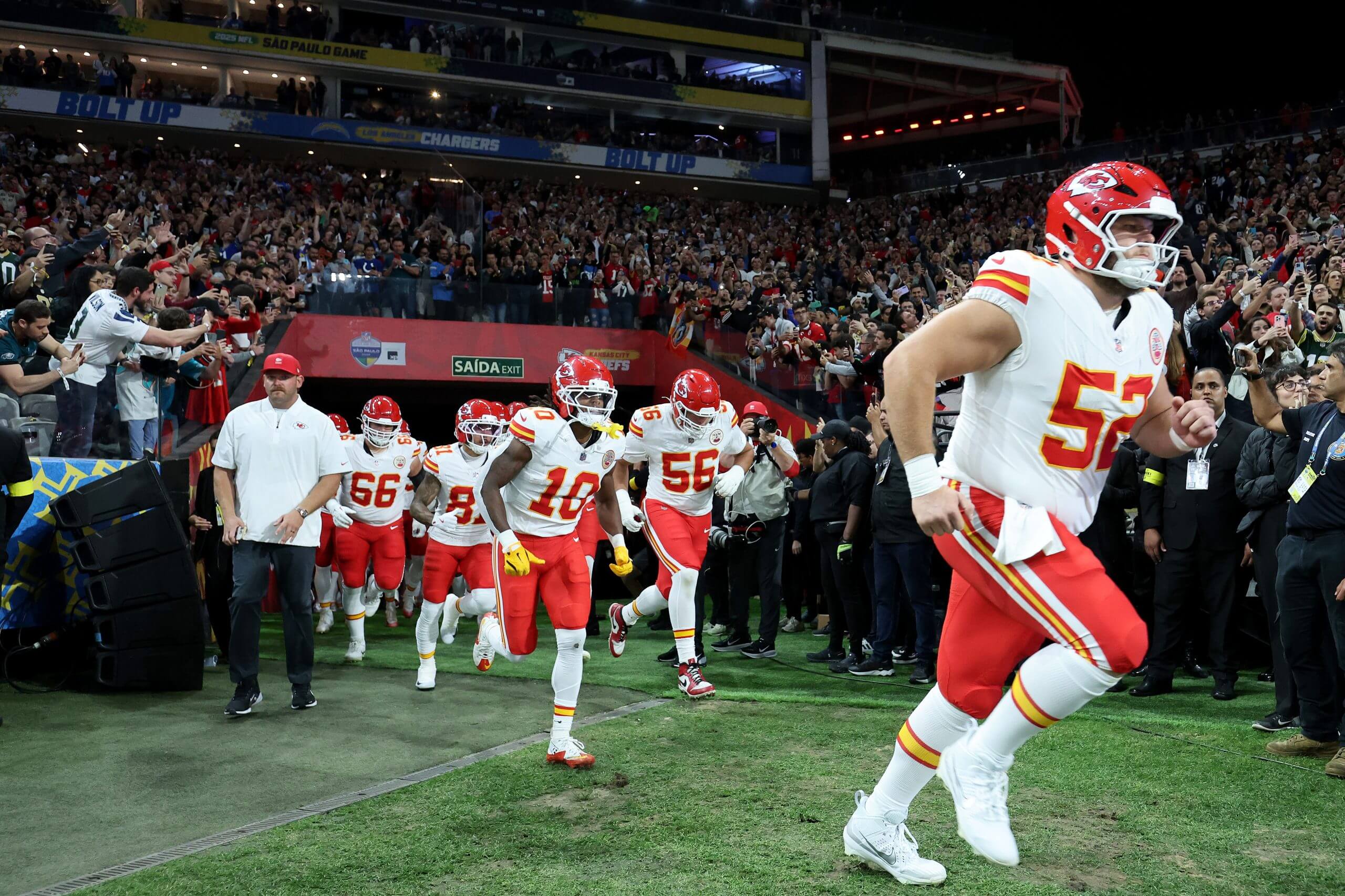
Kansas City Chiefs’ trip to Los Angeles Chargers was streamed live by a Brazilian YouTuber (Alexandre Schneider/Getty Images)
But while these are the ad-funded success stories sport is happy to publicise, Hutton raises another type of viewer that rights-holders are going to have to learn to accommodate.
“Pirate fans are valuable fans, too,” he says. “Sport will have to accept the reality of their existence and build in commercial content to monetise them.
“If you think about it, they are examples of fans who care, as they have sought out pirated content. So how do you bring them back into the fold so they contribute? Some leagues have started to put L-shaped advertising around live feeds, making the adverts part of the stolen content, so the pirates’ eyeballs are monetised.
“Another way to do it is to count them properly. Videocites is a firm that uses AI to track all usages of IP (intellectual property). It is helping the NBA count its total audience properly, which then helps it extract full value from its commercial partners.
“That data also helps the sports know which influencers and content creators are the best at telling their stories — they are the ones you want to work with.”
It will look like gaming
Electronic Arts, the company behind some of the most popular video games of the last 4o years, announced something during the NBC broadcast of the recent Detroit Lions-Philadelphia Eagles slugfest that would have gone over the heads of half of the TV audience.
It said this season’s edition of its EA Sports Madden NFL Cast, a collaboration with NBC’s streaming platform Peacock and data firm Genius Sports, is moving to primetime on Thanksgiving, when the Baltimore Ravens host the Cincinnati Bengals. It also said the main coverage angle will come from a “hi-sky camera located behind the quarterback, the view most familiar to Madden gamers, rather than television’s traditional sideline camera location”.
This live stream will have its own commentary team, a combo of former players and broadcast veterans, while a former NFL quarterback will use graphic overlays to discuss and predict play options. So, while most of the family will be semi-comatose on the sofa, trying to digest half a turkey, the gamers will be watching and playing the game at the same time.
Some of them will have already tried this quite recently, as five MLS games from the current season have been simulcast through EA Sports FC’s “in-game TV portal”.
The fact that Saudi Arabia’s Public Investment Fund — the ATM that has been subsidising boxing, football, golf, motorsport and tennis for the past few years — has just teamed up with private equity firm Silver Lake and Donald Trump’s son-in-law Jared Kushner to buy EA for $55billion suggests they think there are a few people who like the idea of single platform to play video games and watch live sport.
Smart glasses are the future
Whether these people will be wearing helmets or not might depend on where they live.
It feels like people have been saying that virtual-reality headsets will be this year’s must-have Christmas present for 30 years. Santa has not delivered one yet.
“You’re probably in the wrong country,” says Hutton. “One in 10 households in the U.S. have a headset and they are very popular with gamers.”
Some of these headsets are made by Meta, the company that owns Facebook, Instagram and WhatsApp, and you can use them to watch NBA games from a virtual “courtside” seat.
Hutton admits this is still a niche market, but there is real growth in smart glasses and AR (augmented reality) specs, as “they give you added info without having to look at a second screen”.
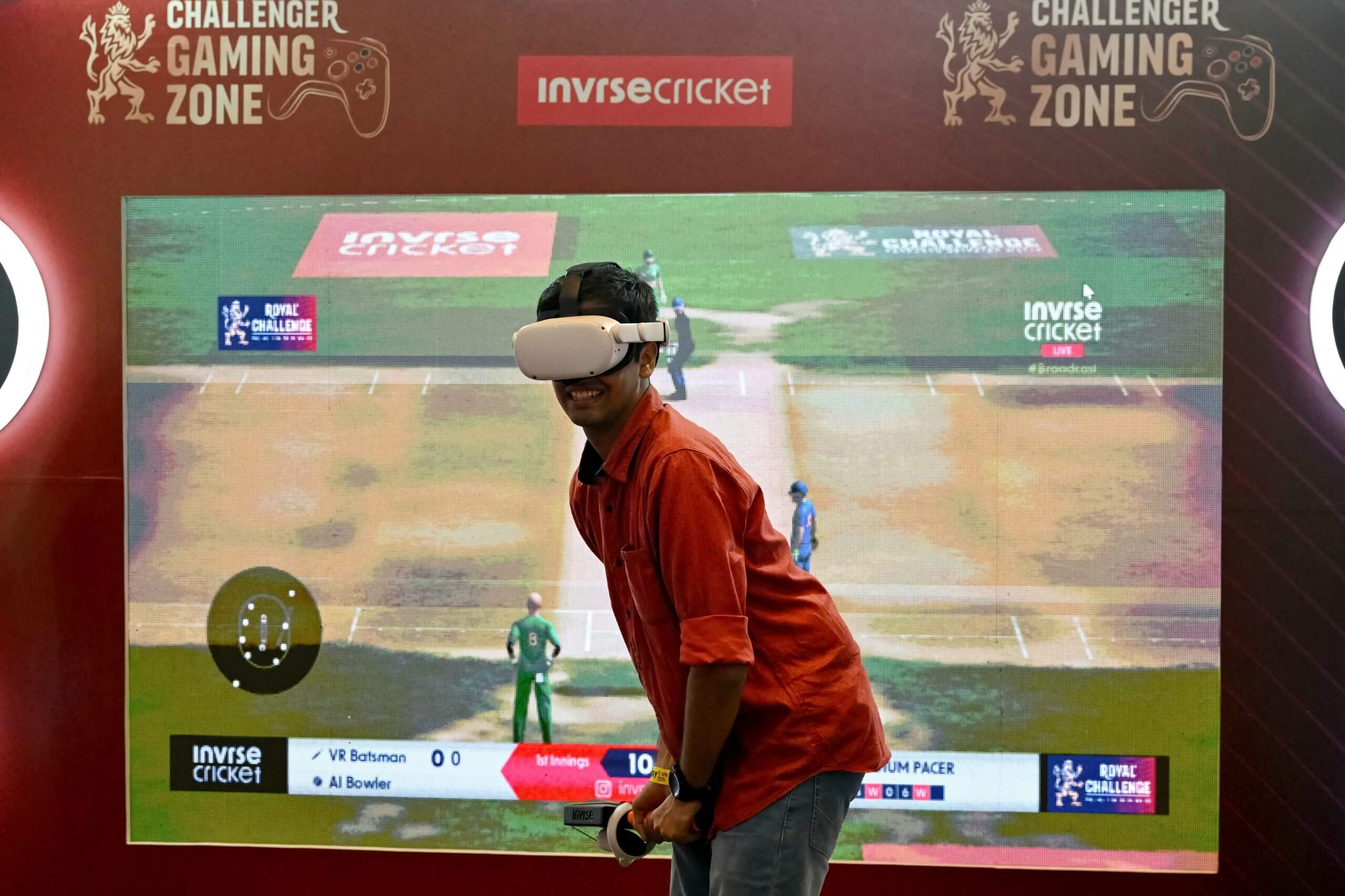
Will VR headsets ever be a mainstream way of watching sport? (Indranil Mukherjee/AFP via Getty Images)
Stagg, who spent a few years trying to persuade BT to really get behind 5G-enabled AR, VR and XR (extended reality) applications before it sold half of its sports streaming business to Warner Bros Discovery in 2022, is not sure about the headsets, but agrees on the smart glasses.
“Watching anything with a headset on just doesn’t feel like sports,” he says. “You want to be able to interact with other people. You can’t do that if you’re sitting there with an Oculus on. You’re cut off.
“That’s why the smart glasses are better — they keep that community vibe. They will eventually take off. They’ll be like AirPods. Everyone thought they were weird a few years ago, but nobody notices now. They augment your experience, not replace it.”
Meta, which has its fingers in several pies, has already teamed up with Oakley and Ray-Ban to make smart glasses that do not make you look like you work for NASA, and their prices are starting to come down. Other brands are available, of course.
… but the old ways won’t die completely
Two Circles’ view on these things is similar to mine.
“We don’t believe there will be any major platform shifts in the next decade that see mass adoption,” says Balch. “Even optimistic predictions on how VR and AR are being used in 10 years shouldn’t see a displacement of the continued growth of mobile and TV consumption.”
Like the other experts consulted here, Balch thinks the real innovation “will be in personalisation of broadcast feeds to more closely align with what audiences get on social media and better production of vertical video” (video shot in portrait mode, i.e., the way kids do it because that’s how TikTok, Insta Reels and YouTube Shorts want it).
But Balch also believes in something that cheers me up no end.
“We’re confident that live sports consumption will retain its value and position in the next decade,” he says. “Gen Z spends more time consuming sport than older groups, but much less watching TV or streaming. This will recalibrate, though. Data from the last decade and beyond has shown that younger audiences do grow into live consumption habits.”
Even Stagg, who predicts the spread of the IMAX-style venues, with table service, that have started to pop up in the U.S, thinks there is mileage in the old ways.
“Watching live sport is still a communal experience and, if you can’t be in the stadium, the next best place is with friends or family,” he says. “I suspect in 20 years’ time, when nobody is watching linear TV, the last thing we will all watch together on a flat screen, live, will be sport in the pub.”