
Thomas was referring to programmes like the free-meal initiative, whose 171 trillion rupiah (US$10.2 billion) budget is expected to double next year.
Prabowo’s administration is also working to set up more than 80,000 village cooperatives, provide free health checks to millions of Indonesians as well as build millions of affordable housing units for low-income families. These programmes are expected to cost Indonesian taxpayers billions of dollars every year.
The impact of Purbaya’s policies will be clearer in February when the Indonesian statistics bureau reveals its economic growth report for the final quarter of 2025.
DELIVERING ON THE PRESIDENT’S PLEDGE
In his inaugural State of the Nation address in August, Prabowo said his administration would work to narrow Indonesia’s budget deficit by boosting state revenue and cracking down on what he called adherents of “greednomics”: Corrupt officials, illegal miners and tax evaders.
The president said once these so-called “revenue leakages” are plugged, Indonesia’s budget could swing into surplus by 2027 or 2028.
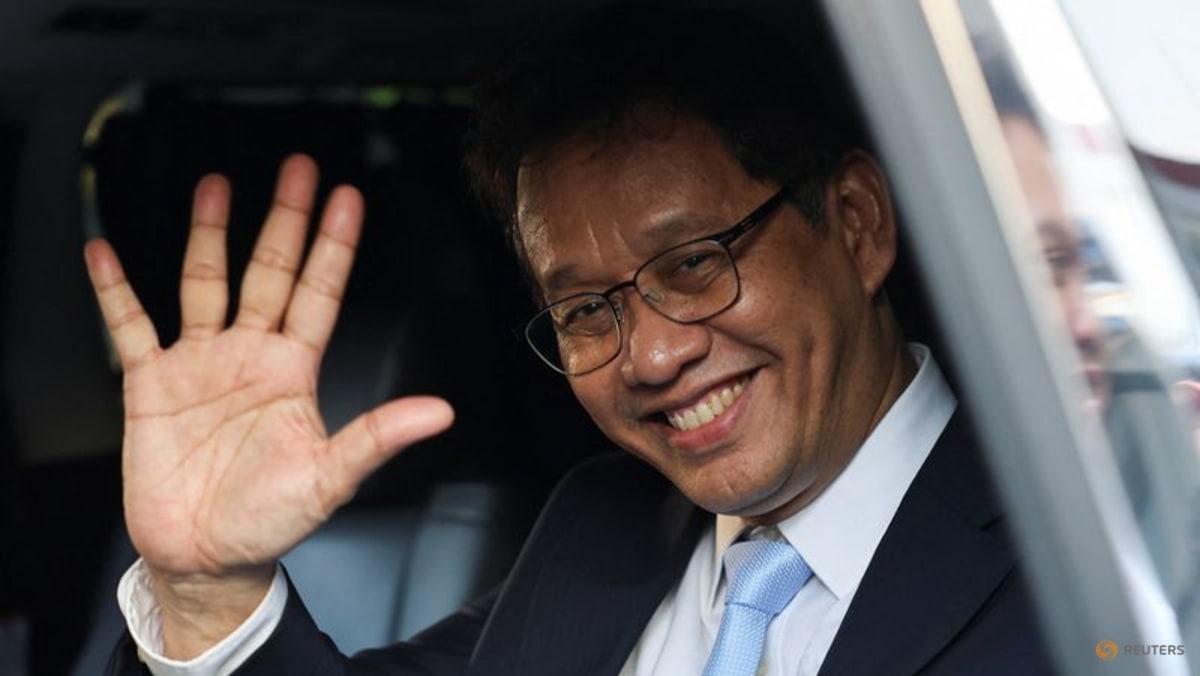
As finance minister, Purbaya has vowed to follow through on that pledge. He said his ministry is pursuing a list of the 200 biggest tax evaders who, together, owe the state about 60 trillion rupiah (US$3.7 billion).
“So far, 8 trillion rupiah has been collected. Some have agreed to pay in installments, and others we’re still chasing. They’d better not be playing games with us,” Purbaya said on Nov 14, as quoted by Kompas.
He also plans to clamp down on the smuggling of second-hand clothes from overseas, which he says threatens domestic manufacturers.
But experts remain sceptical, noting that similar pledges have been made before.
“Whenever there’s a scandal, there’s always a promise of reform. A few things get fixed, a few procedures are tightened — then slowly, everything returns to normal,” said Achmad Nur Hidayat, an economist at the National Development University Jakarta.
Achmad said Purbaya must close loopholes that enable such abuses and punish officials who aid tax evaders and smugglers.
Meanwhile, Purbaya’s decision to redirect part of the government’s surplus to inject capital into several state-owned banks has yet to produce results.
According to Bank Indonesia, credit growth in October stood at 7.36 per cent, down from 7.70 per cent in September.
But Purbaya appears undeterred.
“We won’t (review it),” he told reporters on Nov 20 when asked if his office was reconsidering the policy. “In fact, I’ll add more money (to the banks).”
Such remarks worry analysts.
“Credit growth is slowing because consumers are postponing big purchases and businesses are holding back expansion amid economic uncertainty, not because banks lack capital,” said Yusuf of CORE.
Experts say Purbaya must rely more on data and evidence before making bold fiscal moves, be willing to listen to criticism and adjust the course if his policies prove counterproductive.
“At the end of the day, a good finance minister isn’t judged by popularity in surveys,” said Bhima. “It’s about how well he delivers on promises of reform and economic growth.”
Editor’s note: The article previously wrongly stated Achmad Nur Hidayat as being from Syarif Hidayatullah Islamic University. He is from the National Development University Jakarta. We are sorry for the error.