
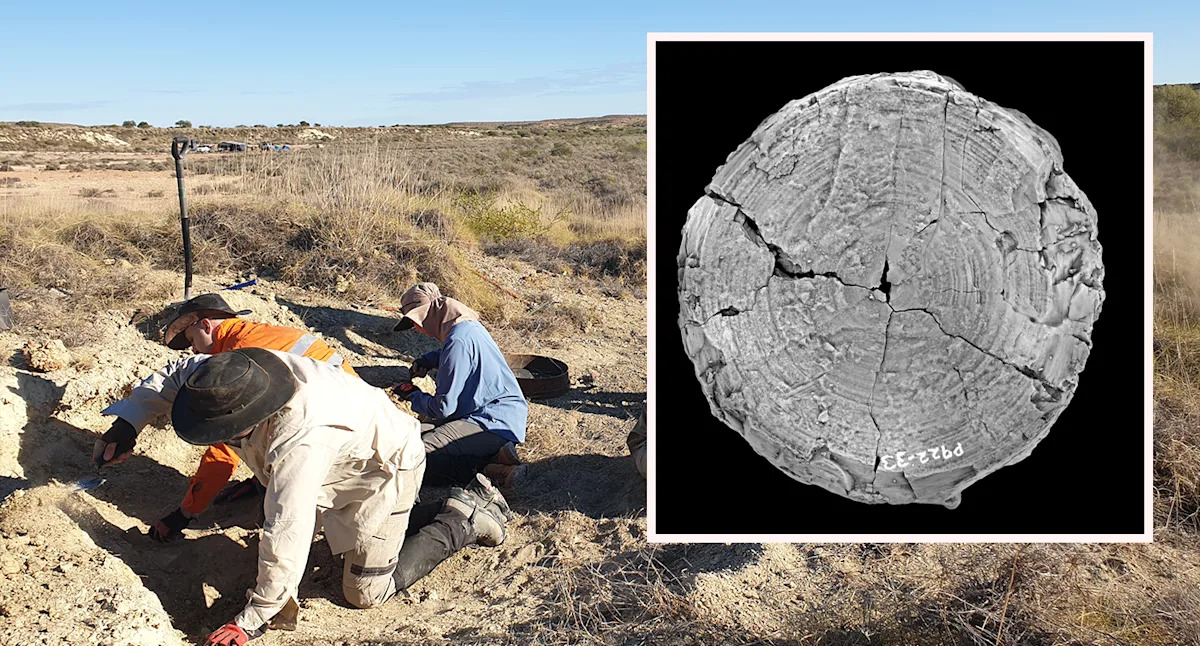
Longer than two cars, and weighing more than a hippopotamus, researchers have discovered that giant sharks roamed the shallow waters of Australia’s north coast 115 million years ago. The Western Australian Museum has declared the discovery “rewrites the timeline of shark evolution” and deepens our understanding of the nation’s history.
The research into these gigantic Cardabiodontids was led by its head of Earth and planetary sciences, Dr Mikael Siversson, who describes the extinct shark as “absolutely humongous”.
“They were 8 metres long, [while] a white shark maxes out at around 6 metres,” he told Yahoo News.
“These sharks were around 3 to 3.5 tons, and at that size, there’s not much you can’t eat.”
Even more incredibly, the creatures grew to this enormous size in a relatively short evolutionary timeframe – just 20 million years — leading them to become the dominant ocean predator.
Cardabiodontis were shaping marine ecosystems long before the arrival of the most famous prehistoric shark, the megalodon, which lived around 23 million years ago. Megalodons were much bigger, with an average size of 13 to 14 metres and the largest specimens measuring 24 metres long.
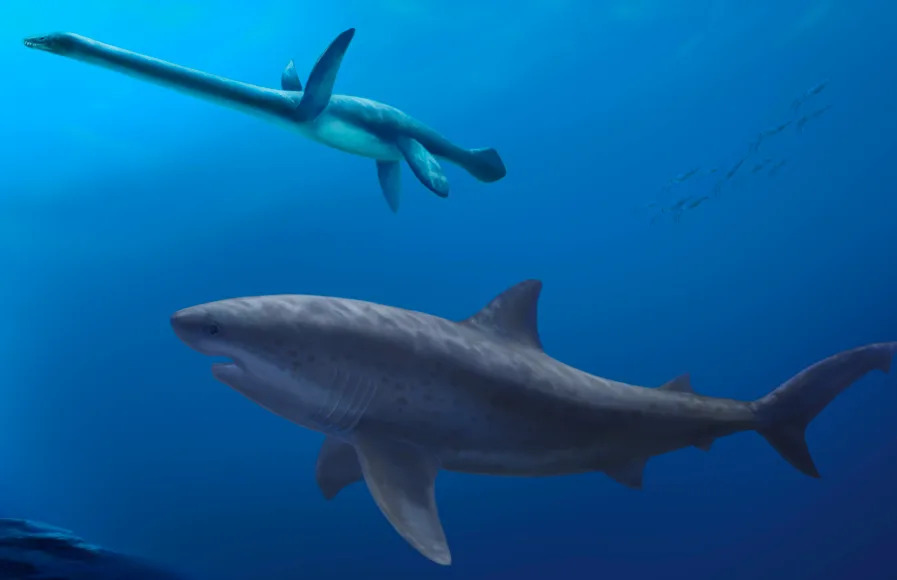
This drawing shows a Cardabiodontid shark stalking an elasmosaur. Source: Pollyanna von Knorring/Swedish Museum of Natural History
Why shark species was originally thought to be smaller
Cardabiodontis were first described by Siversson back in 1999, but he dramatically underestimated their size.
“I was the only one researching this new species of shark,” he said. “I had found isolated teeth that I suspected belonged to an unknown group of sharks and envisioned them being 3 or 4 metres long.”
The original description made by Siversson used teeth measurements to calculate their size, comparing them to modern sharks like great whites, because they’re from the same order, Lamniformes.
White sharks have around 50 functional teeth, but Cardabiodontids living at this time had around 75.
“We completely misinterpreted the ecosystem. We didn’t think there were any gigantic sharks at that time because we hadn’t found teeth that would match a white shark of that size,” he said.
Research rewrites history of Australia
While shark teeth are plentiful, the cartilage that makes up their skeletons is much rarer because it’s not as dense as bone.
But Siversson and his colleagues were lucky to access five fossilised vertebrae, which were unearthed at a northern Australian dig site called the Darwin Formation, and compared them to measurements from 2,000 modern individuals.
After dominating the coastline, these Cardabiodontids likely went extinct 92 million years ago,
Their research has been published in the prestigious journal Communications Biology.
Records suggest these large sharks emerged 115 million years ago, around 10 million years earlier than first thought.
To put the change in timeline in perspective, the earliest remains of Homo sapiens are just 315,000 years old, and human ancestors only evolved away from apes 7 million years ago.
Love Australia’s weird and wonderful environment? 🐊🦘😳 Get our new newsletter showcasing the week’s best stories.
