
Two major sectors have escaped the slowdown from the government-funded jobs boom, bucking the trend of a decline in jobs ads over the past 12 months.
A fresh report from employment site Seek has revealed job ads declined 0.4 per cent in October and are down 2.2 per cent year-on-year.
Meanwhile, applications per job rose 1.3 per cent in October.
The findings come as the unemployment rate sits at a near historic low after public spending helped drive employment in the wake of widespread disruption caused by the Covid pandemic.
Seek senior economist Blair Chapman said the labour market was slowing down from the fast pace it had experienced since the end of the pandemic.
“We should have been expecting this for a long time that the unemployment rate would trend up slightly like the RBA has been saying and employment would slow down and job ads are just reflecting that slowdown,” Mr Chapman told Business Now.
He also noted there were two industries which have thrived despite the general drop in job ads.
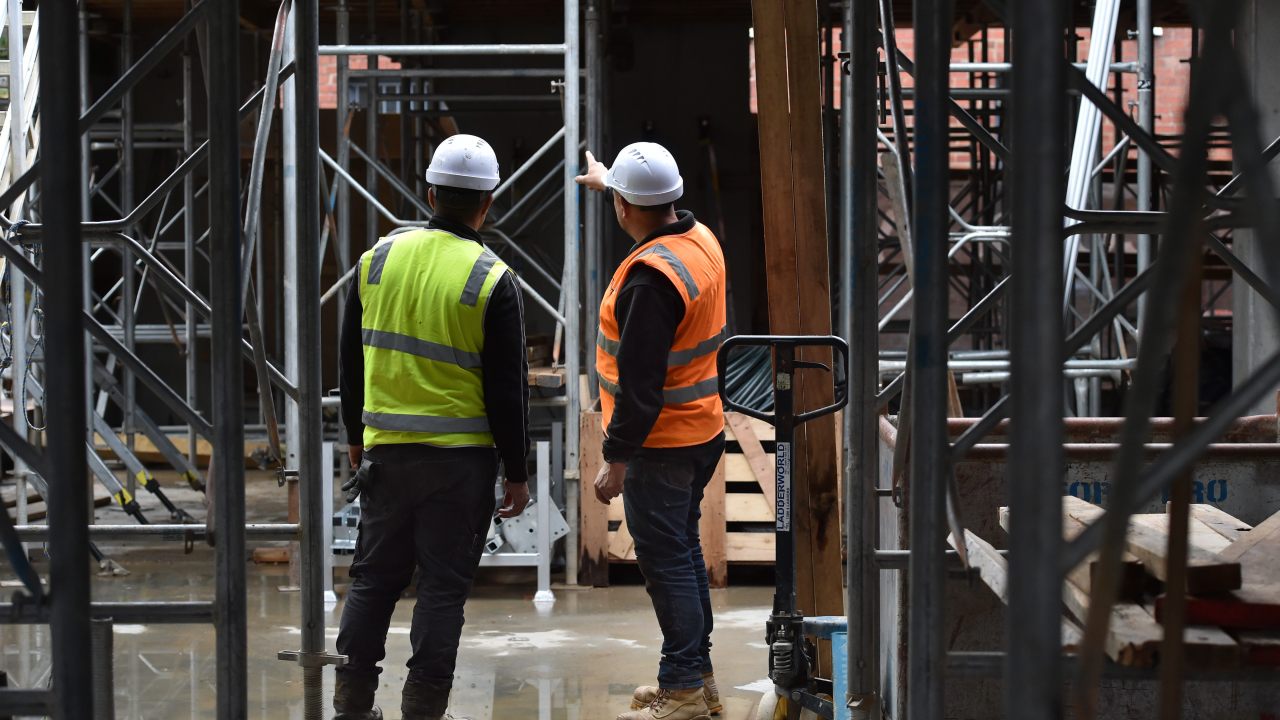
“I think the RBA cutting rates earlier in the year is really helping the construction sector and related activities,” Mr Chapman said.
“We’ve seen construction ads up this month. We’re also seeing real estate ads up this month as well – increasing pretty quickly.
“I think we had building approvals going up earlier in the year and now job ads are also going up in those sort of sectors.”
The Reserve Bank of Australia has cut the cash rate three times since the beginning of the year after it was hiked throughout 2022 and 2023 to stamp out post-pandemic inflation.
The easing has helped take pressure off an industry which was hit hard by soaring materials costs, labour shortages and falling private investment.
Many economists were forecasting more than three cuts, however, inflation rising again has effectively killed hopes of future easing and renewed fears about further business collapses across the sector.
Commonwealth Bank of Australia’s CEO Matt Comyn said he did not believe there would be any rate cuts next year, while ANZ is predicting one more cut this cycle at the RBA’s February meeting and NAB has scrapped its previous forecast of a rate cut in May 2026.
It follows the RBA earlier this month hiking its forecast for inflation.
It said inflation will peak at 3.7 per cent in mid-2026, higher than its previous forecast of 3.1 per cent, while trimmed mean inflation was revised to peak at 3.2 per cent next year.
This is more than half a per cent above its former 2.6 per cent estimate.
A fresh spike in inflation could again push up input costs for the construction sector, potentially acting as a handbrake on growth and activity.