
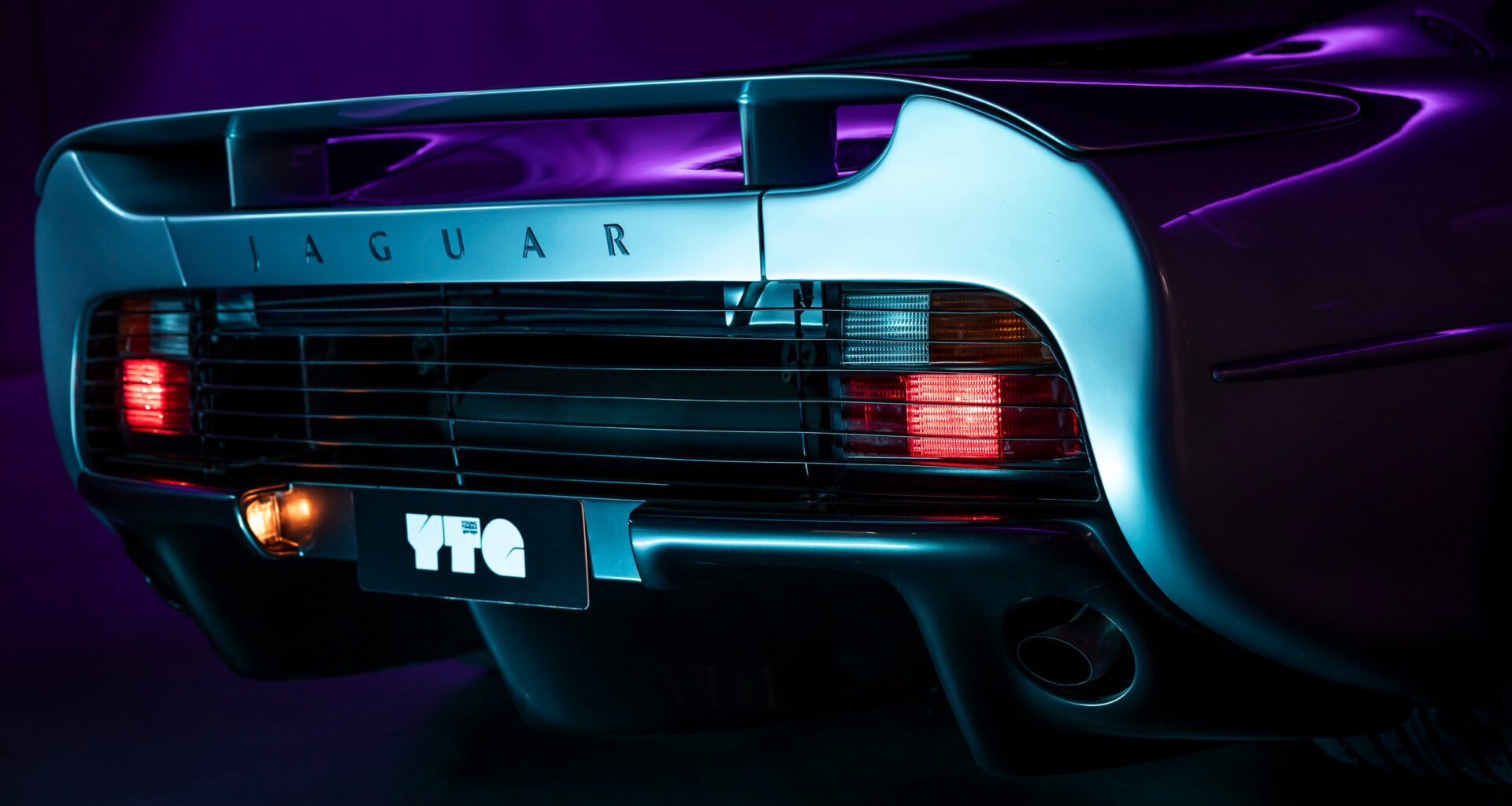
The global reveal of the Jaguar XJ220 was not proceeding to plan.
The sleek show car’s V12 engine had seized on Friday and the car had to be pushed onto the British motor show stand at 3am on Saturday, October 18, 1988 ahead of the event opening at 11am. Given that there were only five of the 48-valve 6.2-litre engines in existence, twenty per cent of the total supply of these motors had just been welded into an expensive paperweight.
Nevertheless, the car was a huge hit with show visitors. Ferrari’s new F40 was on display next to Jaguar’s stand, but few paid much attention to the Italian car. An attractive model appeared on the Ferrari stand, shedding clothes in the hope that the throngs of people would migrate from the Jaguar display.
3
It seems strange to think now, but after the launch of the techno-fest Porsche 959, the F40 was viewed as a hastily cobbled-together and somewhat cynical cash-in on the company’s 40th birthday. What a gift hindsight is. It was thoroughly overshadowed by the behemoth Jaguar, despite the fact that the XJ220 never turned a wheel under V12 power, either before or after the event. Despite stories of blank cheques being handed to Jaguar staff, there were no plans to put the vehicle into production. It was a concept loosely based on how Jaguar might go racing within the framework of the FIA Group B rule set. Cynics might call it motor show fluff. And then it wasn’t.
But before we get into the whys and wherefores of that, a brief rewind on how the XJ220 had arrived under the spotlights at the NEC. The story is, for the most part, fairly well known. TWR had been handling Jaguar’s motorsport entries, winning the 1983 European Touring Car Championship in 1983 with the XJS and the 1988 24 Hours of Le Mans and World Sports Car Championship with the XJR-9. However, that car’s V12 engine was set to run afoul of new motorsport emissions rules and the company had earmarked its successor, the XJR-10, to use a version of the Austin Rover V64V engine, a V6 powerplant that had been developed for the MG Metro 6R4 rally car, itself left high and dry by a change in the rallying rule set. It was, it should be noted, a powerplant that TWR had acquired the rights to use, when it was clear that it would no longer be used in the 6R4.
1
Enter Kim Randle, Jaguar’s Director of Engineering. In order to win on Sunday and sell on Monday, Randle reasoned that the cars representing Jaguar on track ought to look like the cars in showrooms. Over the Christmas break in 1987, Randle built what he describes as a CAD model – “cardboard assisted design” – in quarter scale of a potential Group B racer. This rough mock-up of the chassis and hard points was taken into the design studio where two designs were generated. The first, the work of Cliff Ruddell, looked more like a typical endurance sports car and was rejected. The other, by Keith Helfet, had far more Jaguar in its genes.
Using Helfet’s body design, Randle assembled a team of 12 volunteers, the so-called Saturday Club, to create a concept, guided by Group B regulations. It featured the mid-mounted 48v V12, four-wheel steering, all-wheel drive and a targeted top speed of 220mph (350kmh), and was thus named XJ220. Randle approached FF Developments to engineer a four-wheel drive system, something which Jaguar had no in-house expertise with. A clever system ran power from the rear transaxle through the V of the engine using a quill drive, whereupon it would join an inverted front differential. The chassis was built from bonded aluminium, with a wheelbase of 2845mm and the entire vehicle tipped the scales at 1560kg, some 200kg lighter than the lowest-spec XJS.
2
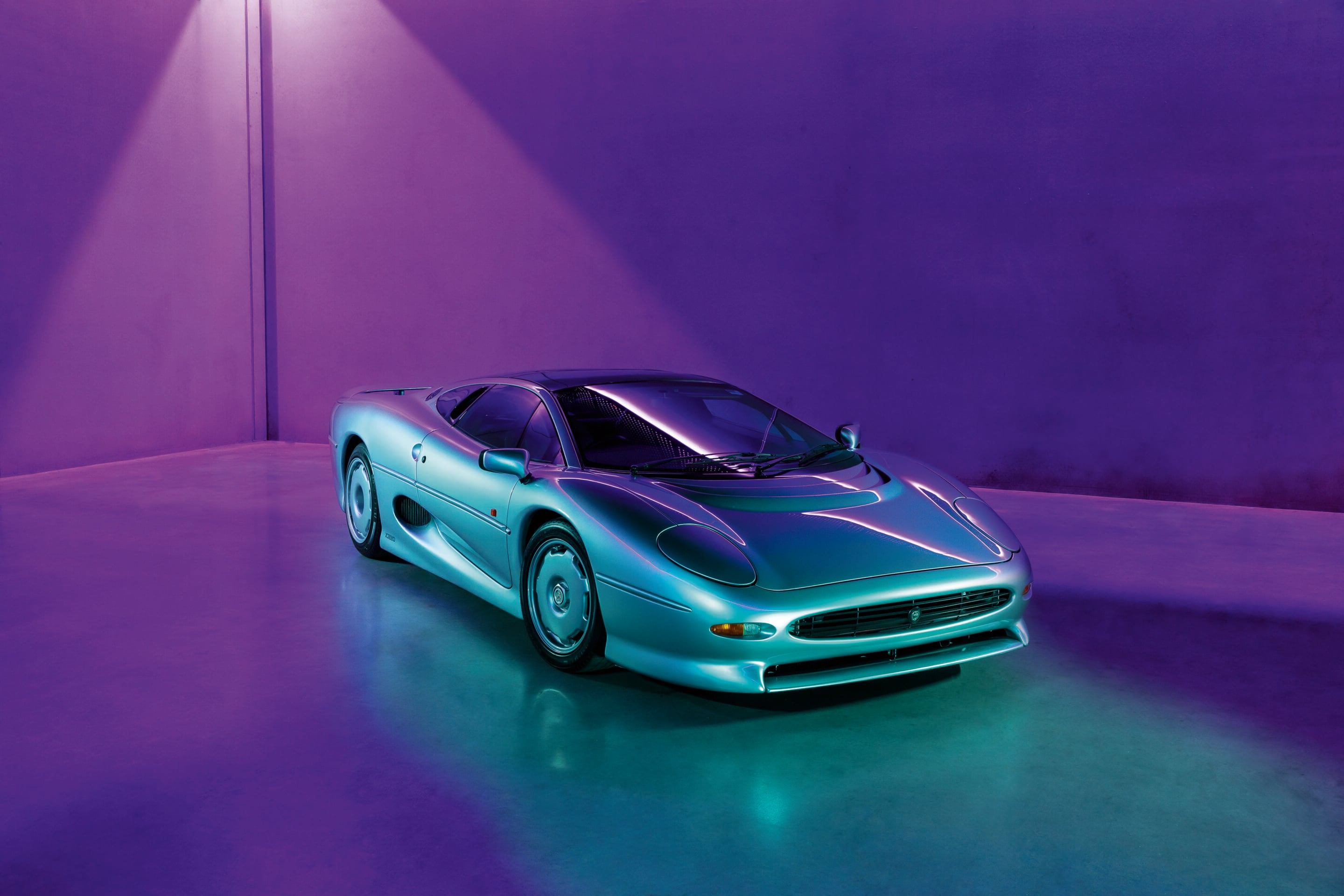
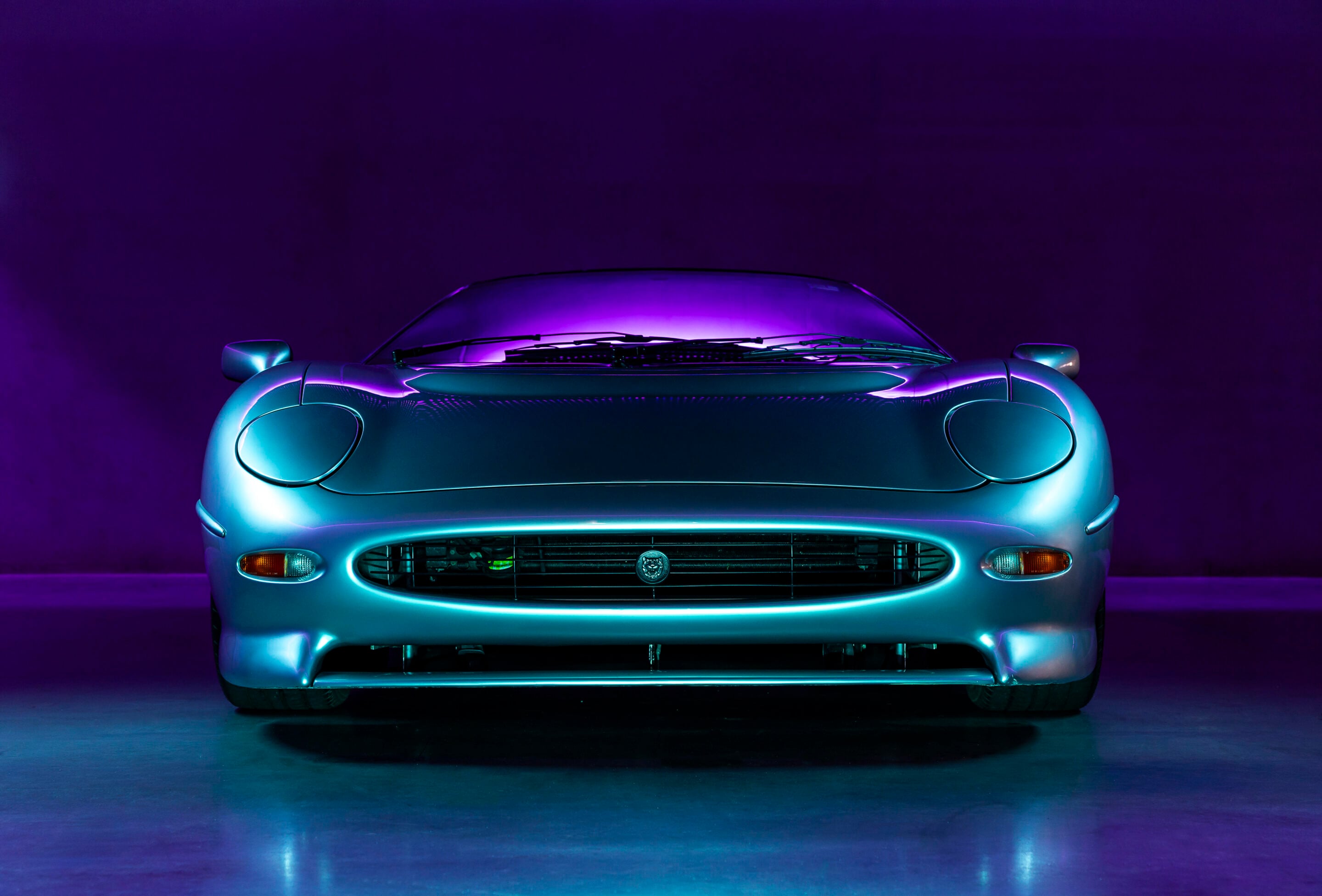
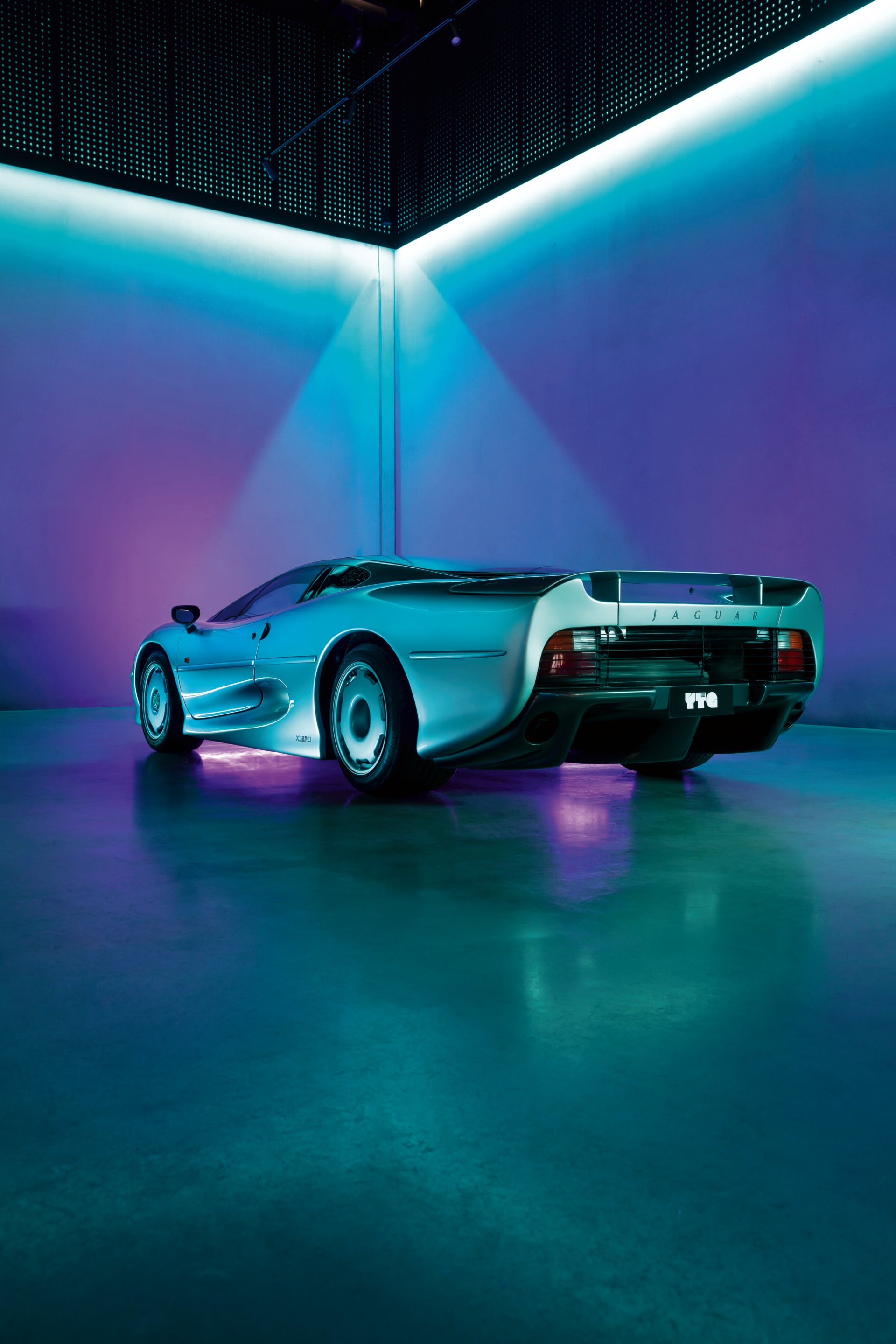
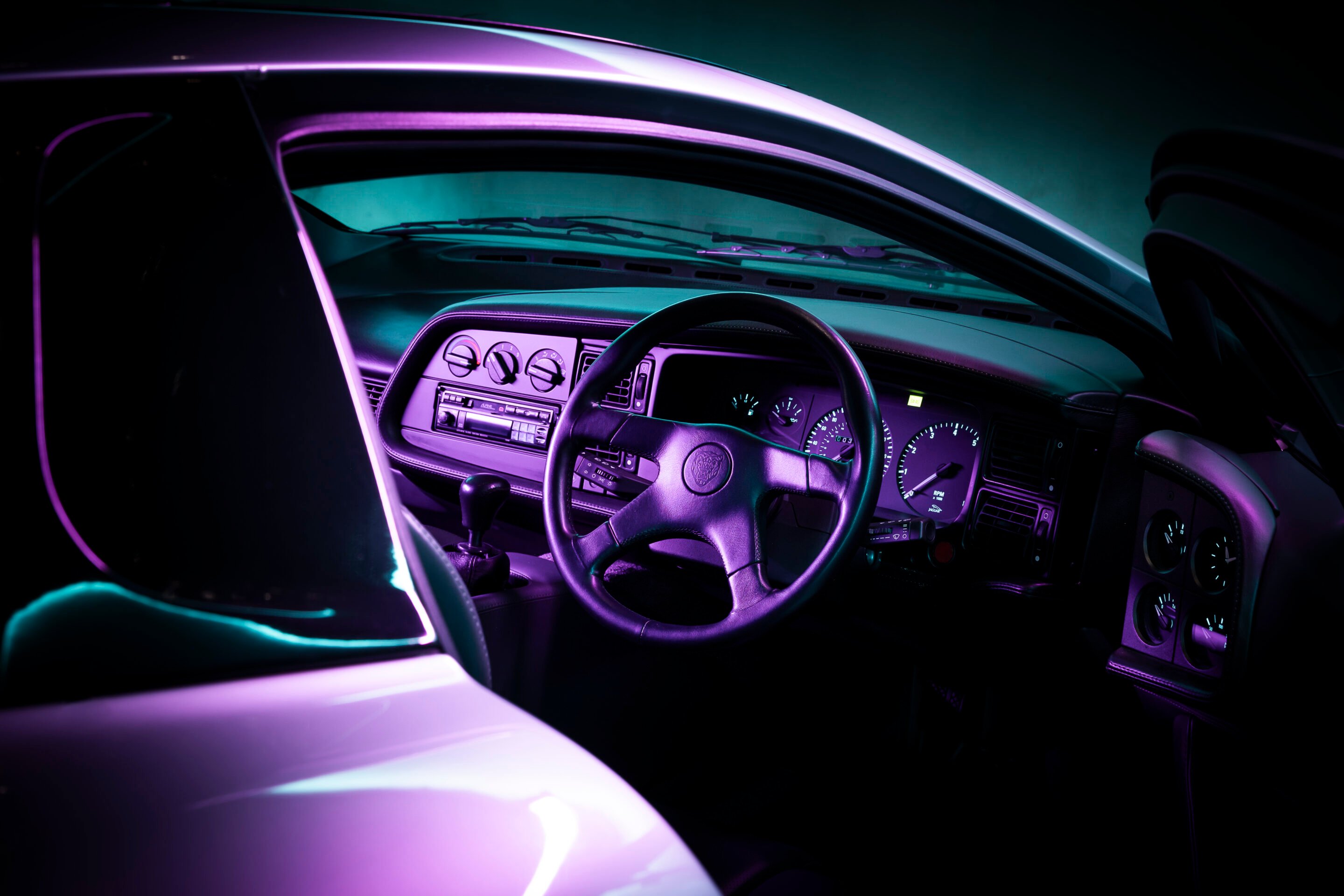
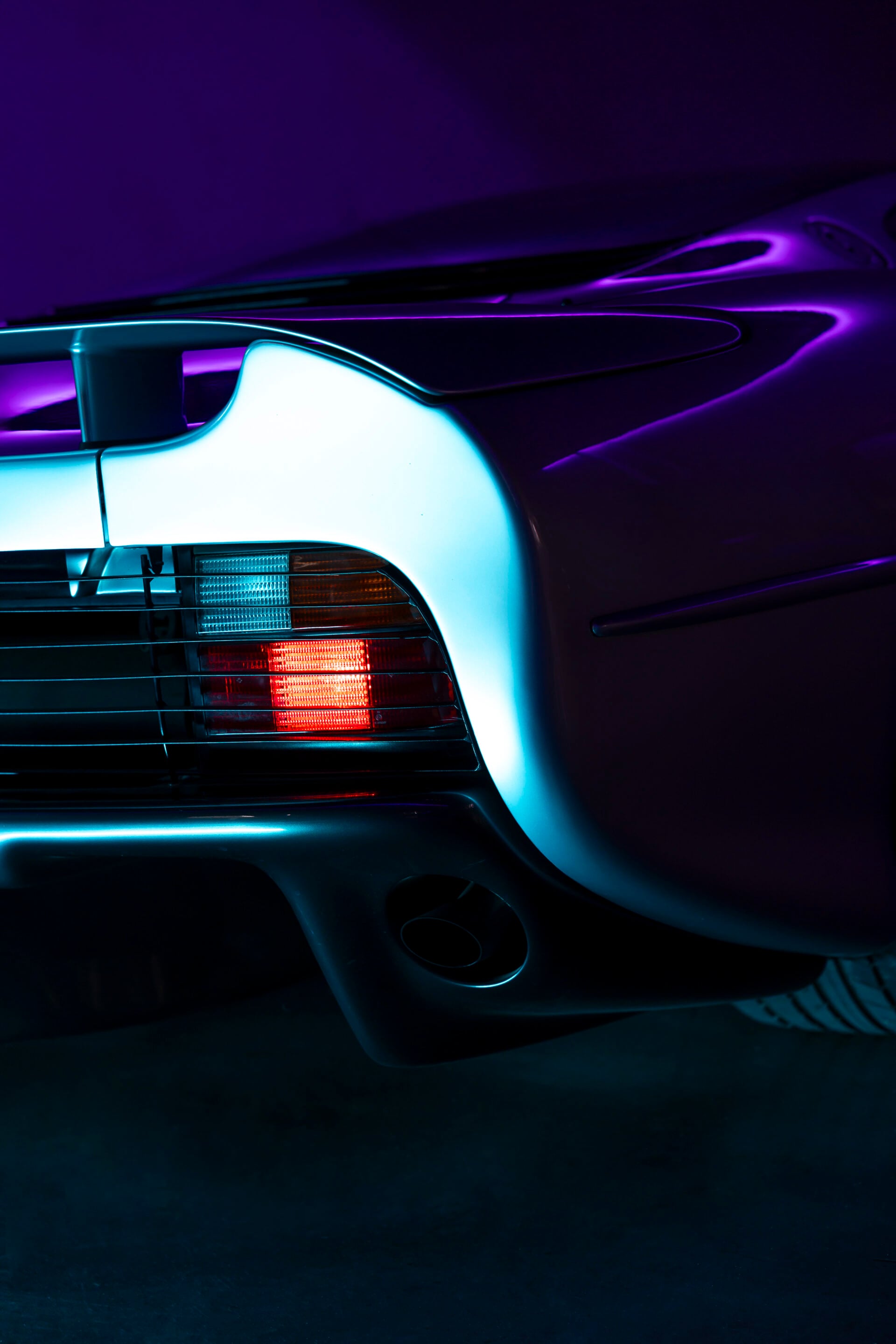
Looking back now, it’s easy to see why the XJ220 show car monopolised the public’s attention. It was an incredible looking thing, long and low, with a glass roof and rear deck displaying the engine’s dozen trumpets. The Connolly leather-trimmed cabin looked production-ready and the sleek silver bodywork looked sculpted by air, testament to the hours of work the team had spent in the wind tunnel at MIRA.
Such was the reception to the car that Jaguar became intrigued as to whether the XJ220 could be offered as a production car. It didn’t take the company long to come to the conclusion that they didn’t have the in-house resources to build the XJ220. An existing alliance with TWR, called JaguarSport, would be the best solution, with JaguarSport then spinning off a separate company called Project XJ220 Ltd. In mid-1989, TWR appointed Mike Moreton to run the project. An ex-Ford Motorsport man, who had helped head up both the Sierra RS500 Cosworth and RS200 projects, Moreton’s first job was to establish what the project costs would be and from there Jaguar could assess whether there was a viable business case for XJ220 production.
It was clear that the writing was on the wall for the V12. The XJ220 needed to shed both weight and complexity, and its two key rivals, the Porsche 959 and the Ferrari F40, had both opted for downsized (sub-3.0-litre) turbocharged engines. Of course, this decision was in no way influenced by TWR owning the rights to the ex-Metro 6R4 powerplant which just so happened to fit the bill. Out went the proposed height-adjustable suspension, the scissor doors and the rear-steering along with the active aerodynamics. Because of the physically shorter engine, the wheelbase could be reduced by a hefty 205mm and the body shrunken somewhat, cutting weight and boosting agility.
2
It’s suggested that there was a bit of empire building when it came to the decision to ditch the all-wheel drive system. With FF Developments out of the picture, TWR had control of the project. In truth, Moreton realised that developing this novel four-wheel drive system to a production specification would have pushed the project timeline way beyond what Jaguar would accept. FF Developments were contracted in any case to work on the gearbox and rear axle.
The V64V engine would need a bit of help in order to make the power required to propel the XJ220 to its target top speed. As it stood, it was a naturally-aspirated 90-degree V6 with four valves per cylinder, displacing 2991cc. The decision for the Metro 6R4 to do without the turbochargers adopted by its Group B rivals sacrificed top-end power for low-end tractability and response, but it wouldn’t suffice for the XJ220. The engine was bored and stroked to 3498cc and fitted with two Garrett T03 turbochargers. Given that it had changed quite so markedly, Jaguar gave the engine its own designation, the JRV-6 unit.
A rather persistent urban myth that seems to have developed around this engine was that it originated from a cut-down Rover V8 powerplant. This stemmed from the fact that a six-cylinder version of the Rover V8 was used in the very first 6R4 test mules merely to assess packaging requirements. Instead, the actual V64V engine was a custom build, with a block designed by ex-Cosworth engineer David Wood, while Cosworth was largely responsible for the top end build.
Early iterations of Jaguar’s version, the JRV-6 unit, were tested using an otherwise plain-bodied Ford Transit van, a vehicle that subsequently gained fame when it was wheeled out for the Goodwood Festival of Speed. It’s now owned by the Goodwood trust and still draws the crowds each year at the festival.
Next we have to kill another enduring XJ220 myth, and it’s probably the one that’s been most damaging to this car’s legacy. Buyers signed up for a car with a V12 engine and all-wheel drive and got something with a V6 and rear-wheel drive. As a result, there was a huge legal stoush as many attempted to cancel their orders. It’s a great story but it’s not even close to being true.
3
When Jaguar greenlit production of the XJ220 in December 1989, buyer contracts stipulated very clearly that this would be a rear-drive car powered by a V6 engine. Jaguar asked for a deposit of £50,000 (A$102,312) + VAT, and nested within the contract was an important, but innocuous-looking clause. The price of the car would be index-linked, which would see the invoice raise from the mooted £290,000 (A$593,414) at the time of contract signing, to £361,000 (A$738 698) by February 1990 and then up to a massive £403,000 (A$824,640) when the first production-ready cars were available in June 1992.
Jaguar attempted to make good on the 220mph (354km/h) top speed claim. Chassis 004 had already achieved a top speed of 212.3mph (341.7km/h) at Fort Stockton, Texas in early 1991, driven by Andy Wallace, but Jaguar felt more was to come. Martin Brundle was enlisted to drive chassis 009 in June 1992 at the Nardo ring in Italy, and achieved exactly the same top speed, with Brundle noting that there was nothing left to give. The XJ220 was running into its 7400rpm rev limit.
The engineers reprogrammed the Zytek ECU to allow for a 7900rpm rev limit and gutted the catalytic converters, the exhaust modification alone liberating around 38kW. Brundle went foot to the boards again, recording a top speed of 217.1mph (386.4km/h), which made the XJ220 the world’s fastest production car, a record that stood for almost four years, finally beaten by the 240.1mph (386.4kmh) of the McLaren F1 in March 1998. Given that tyre scrub on the outside lane of the Nardo banking at 300km/h accounts for 10km/h of top speed, that particular XJ220 would have been a 220mph car on the straight. Whether that counts for anything versus a customer-spec car is open to question.
Jaguar also took the XJ220 to the Nürburgring Nordschleife for high-speed track testing. It’s worth noting that this was five years before the Nissan Skyline R33 GT-R set its ‘legendary’ 7m59.88s lap of the track with Dirk Schoysman at the wheel. Jaguar believed that the quickest mark at that point was an 8m14s lap set by a Honda NSX. In October 1991, Le Mans winner John Nielsen piloted an XJ220 to a 7m46.37s lap time, a record for a production car that would stand for eight years. In a not entirely uncommon incident of foot-shooting, Jaguar didn’t realise the promotional gold that this achievement represented. It took Nissan’s marketing department to create the idea that the Nürburgring lap time was the gold standard of sports car capability and that its Skyline was the record holder.
Then macroeconomics happened. The Soviet Union collapsed, oil prices soared, US credit was squeezed and the whole bubble that surrounded speculation on supercars burst, and burst far quicker than anyone expected. Between 1991 and 1993, the UK felt the bite of the early 1990s recession. The XJ220 deposit holders realised that they were about to realise a stack of negative equity; their new cars instantly worth about half what they were about to pay. Some customers tried to wriggle out of their contracts, prompting a legal challenge, which Jaguar easily won. It should be noted that Jaguar weren’t the only ones in this predicament.
The mooted production run of 350 cars was never realised, the company finding just 281 buyers for the XJ220. That’s still an 80 per cent fulfilment rate, which was far better than the 71 McLaren F1s that were sold against its intended production run of 300 (for a 24 per cent fulfilment rate). Again, hindsight.
It’s fair to say that the XJ220 had a traumatic birth, then. The production car was built at the Bloxham plant, meeting the body-in-white which was constructed at Abbey Panels in Coventry. The production-spec car was first displayed at the 1991 Tokyo Show and Tom Walkinshaw insisted on waiting until the first 10 cars were with owners before okaying press drives.
1
We had to wait until September 1992 for the XJ220 to grace the cover of Wheels, with a cover line that would prove to be a favourite of Wheels subeditors down the years; ‘Off The Clock’. Mark Fogarty became the first Aussie journo to drive the XJ220, in this case both on road and at the Salzburgring circuit.
“The physical effort needed to steer and stop the XJ220 is the closest you’ll ever come to the exertion of racing a Group C sports car,” he said. It’s clear he was no great fan of the way the car sounded though. “Aurally, this engine is no masterpiece. It clatters and rattles into life, at idle sounding very coarse and primitive. Once under way, the note improves, taking on a low, guttural growl. But even at full noise in fifth, there’s no spine-tingling scream or yowl, nothing remotely sonorous. It’s a purposeful roar, much like the muted Le Mans turbo racer from which the motor is derived.”
If Fogarty was unimpressed by the soundtrack, there was very little cause for complaint about the potency of the V6 engine. “The figures suggest it would bend bitumen: 404kW at 7200rpm and 644Nm at 4500 revs. And when you press the pedal, you get instant, constant go,” he noted. “No discernible turbo lag, no sudden explosion of power. From first to fifth gear, the acceleration is relentless, gathering force and still surging at 225km/h, a maximum dictated by the road conditions,” he said, and it was clear from the figures that the XJ220 had the legs on both the Ferrari F40 and the new Lamborghini Diablo.
“The engine is blessed with a brilliant chassis,” he continued. “The combination of a taut body, compliant yet uncompromising equal length wishbone suspension, tenacious tyres and ground effects aerodynamics glues all that grunt to the ground. And it rides with a suppleness that is remarkable in itself, all the more so because it has been achieved in concert with race car-like handling and roadholding… It’s as close to a neutral handler as you can get, with some understeer setting in at the limit.”
That opinion contrasted quite markedly with the next XJ220 drive we featured in Wheels. Taking place on the cold, wet Castle Combe circuit in the UK, journalist Mark Gillies emerged wide eyed and chastened. “The thing feels bloody fast and its performance is memorable,” he said. “The handling is too, but for all the wrong reasons. If there’s a more evil device on our roads, I wouldn’t like to find it – the 220 suffers from immense initial understeer followed by violent, snappy, pendulous oversteer. There is a momentary point of neutrality…. but house-trained the Jag is not. You’re unlikely to find this out on the road because your bravery runs out before the gumball Bridgestones yield to the laws of physics, but there’s only so much that tyre technology can mask in the wet.” Sounds like a case of choosing your moments.
And timing was what scuppered the XJ220 from a commercial perspective. After building 282 cars, production wrapped up at Bloxham in April 1994, the facility being transferred to Aston Martin to handle assembly of the DB7. Some of the production run had yet to find owners, with the final handful of unsold XJ220s offered at £127,550 (A$260,999) plus VAT in 1997. In another developmental oversight, Jaguar had never homologated the car for sale in the US, potentially its biggest market, and the vehicle was only approved under the restrictive Show or Display exemption in 2001. It wasn’t because the car was exclusively right-hand drive. In fact, there are more left-hand drive cars than right-hookers, with just 69 cars having their steering wheel on the right. Jaguar just didn’t have the resource to allocate to US type approval during development.
Our final test in the XJ220 came in the March 1995 issue and it was a test that seemed tailor-made for the big Jag. It lined up on Kemble runway against the Porsche 911 Turbo, the Lotus Esprit S4S, the Ferrari F40, the Ferrari F512M, the Aston Martin Vantage and the Dodge Viper. Andrew Frankel was the man tasked with sinking the slipper and the results were eye-opening. Rather predictably, it came down to a shootout between the XJ220 and the F40. The Ferrari logged a terminal speed at the mile marker of 286.1km/h yet the Jaguar squeaked ahead at 290.1km/h, its superior aerodynamics meaning that it overcame a power-to-weight deficit against the Ferrari (276kW/tonne versus 324kW/tonne). One notable absentee was the McLaren F1, and Frankel claimed that from previous performance data he possessed, the F1’s terminal speed over the mile would have been a mighty 317km/h, but doubted whether there would have been enough runway left for it to stop safely thereafter.
2
The 1994 McLaren F1 subsequently eclipsed the XJ220’s performance in almost every regard. The McLaren was worthy of the superlatives then, plaudits that have meant that these cars are now worth somewhere in the region of $50m. The Jaguar never scaled those lofty heights of acclaim and that reflects in prices today. Due to its rarity and troubled genesis, the XJ220 is a tricky car to value, but prices have been firming of late, with good US cars now starting to climb above USD$600,000. That said, auction prices will fluctuate significantly based on mileage, provenance and condition. Aussie cars are a far rarer proposition, and the one that features here, for sale by Young Timers Garage in Melbourne, ought to hover somewhere around seven figures. That’s still less than a quarter of the price of the Ferrari F40 which, as well as being slower, is also more than four times more commonplace, with 1311 units built. There’s probably a great MBA dissertation on the supply and demand affecting these two cars.
Fast, flawed and undoubtedly fascinating, the Jaguar XJ220 achieved so much. It was the fastest production car in the world, the quickest car around the Nürburgring, and even to this day is possessed of the sort of road presence that has escaped many so-called hypercars. Love it or hate it, the XJ220 is never anything less than an event. It offered a blend of qualities that has never quite been replicated and, as the years pass, perhaps collectors will come to realise quite what a rare and beautiful thing it is. It celebrated a moment for Jaguar that we may never see again; one of giddy and limitless possibility. Its time will no doubt come.
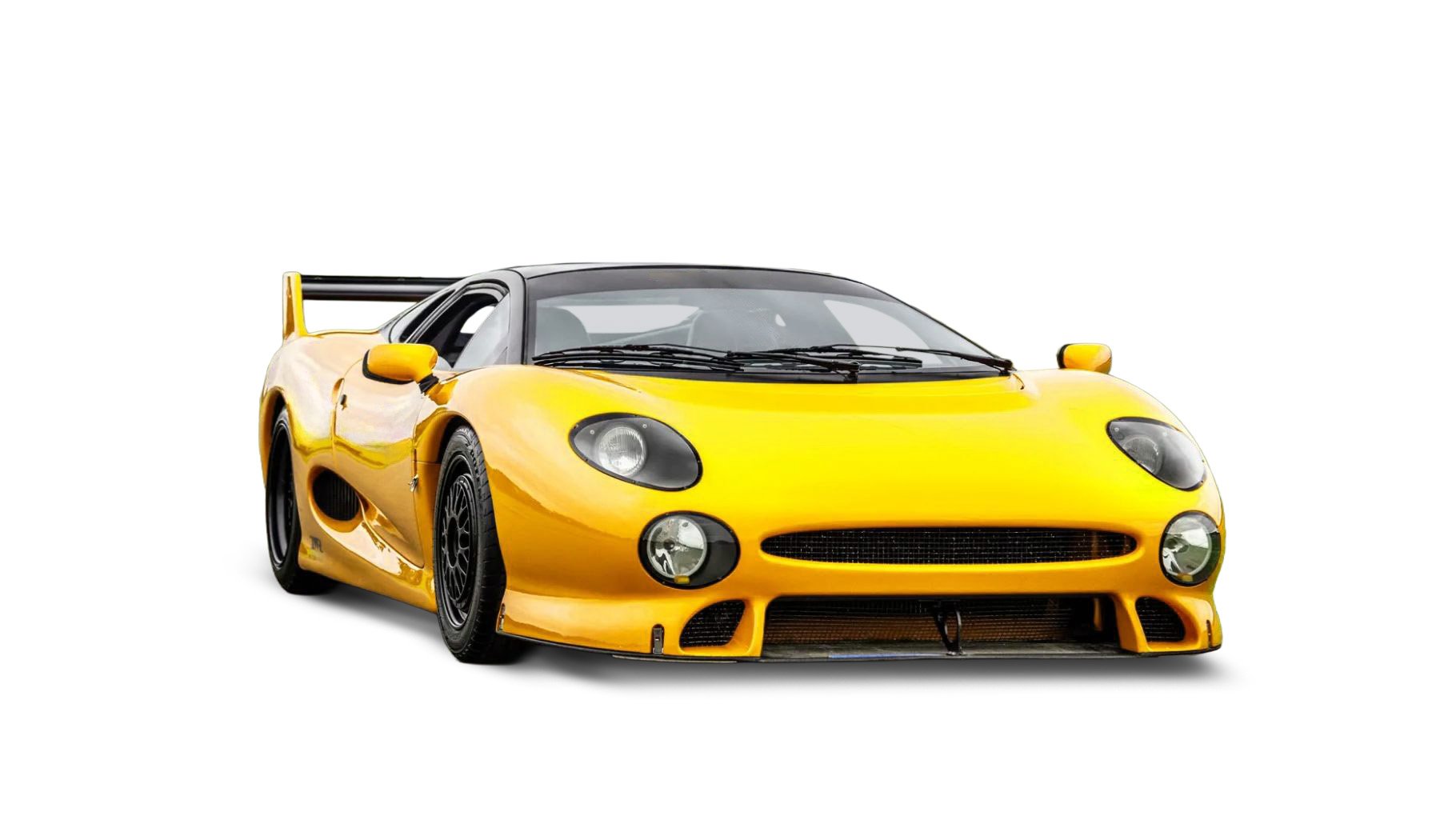
The even rarer XJ220S
1
Jaguar built six roadgoing XJ220S models, in effect a road-legal version of the XJ220-C racer which won the Grand Touring class at Le Mans in 1993 before having the win stripped due to not running catalytic converters. It features a composite body, fixed headlights and a stripped out cabin featuring Kevlar bucket seats. Power stepped up from 404kW to a hefty 507kW and weight dropped from 1470kg to 1151kg. Just as it looked as if Jaguar had a world-beating competition car on its hands, the McLaren F1 GTR happened.
SpecsModelJaguar XJ220Engine6222cc V12, DOHC, twin-turboPower405kW@7000rpmTorque644Nm@4500rpmTransmissionFive-speed manualPower to weight276kW/tonneL/W/H/WB4930/2009/1150/2640mmWeight1470kg0-100km/h3.6secTop speedc.352km/hPrice now$800k-$1.2m
Features
Modern Classic: Lancia Delta HF Integrale, the ultimate rally car
It was never officially sold in Australia but as it’s the basis for the most successful rally car of all time, the Delta Integrale more than earns a pass as a Wheels’ Modern Classic.
October 24, 2025
The article originally appeared in the December 2025 issue of Wheels. Subscribe here and gain access to 12 issues for $109 plus online access to every Wheels issue since 1953.