
The trend of capital inflows and the migration of super wealthy to the UAE is not a short-term phenomenon and is here to stay for another decade, a senior Citi Private Bank executive has said.
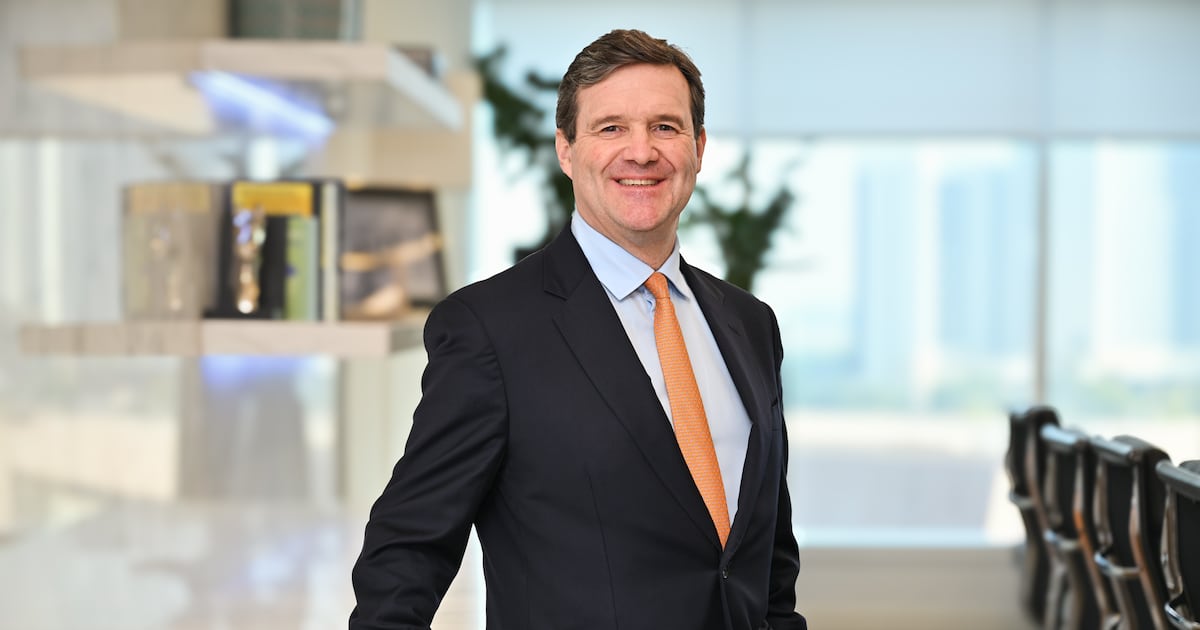
The country ticks most boxes for institutions, ultra-high net worth individuals as well as family offices, and there is ample incentive for them to relocate to the Arab world’s second largest economy, James Holder, head of Citi Private Bank for UK, Europe, the Middle East and Africa, told The National.
“It’s absolutely a crossroads of capital,” Mr Holder said. “From the UAE perspective, we think about this as a 10-year plus cycle.”
Deciding to move wealth or part of an enterprise from one country to another “takes a lot of unwinding”, he explained, making it a long-term commitment.
The stability of the Emirates and the security it provides in a fast-growing economic environment make it appealing for global investors who manage risk, Mr Holder said.
Investors are able to run their business, manage their capital and their family office operations from anywhere, meaning “the idea that capital is not mobile, I’m afraid, is for the fairies”, Mr Holder said. “Capital is more mobile than it has ever been before. The UAE has been a significant beneficiary of that over the past two to three years.”
Capital is flowing to the Emirates from across Citi Private Bank’s client segments. “For the UAE, both for Dubai and Abu Dhabi, the amazing thing is that the interest and engagement is absolutely universal,” Mr Holder said.
“We see a broad range of Europeans choosing to move here for the safety, the security and the fiscal certainty. And we see Asian capital flowing here as well, so it is really broad-based.”

Dubai’s millionaires double as London drops down wealth list
Reshaping the wealth map
The UAE, in particular, and the broader oil-rich Gulf region, is reshaping the global wealth map. Over the past few years, high-net-worth individuals, family offices and institutions have moved their assets from more established global money centres in Europe and Asia to the UAE.
The exodus of capital from the UK has been more pronounced and in the public eye. Revolut co-founder Nikolai Stronsky’s recent change of tax residency from the UK to the UAE is a recent example.
Earlier this month, technology entrepreneur Herman Narula said he intends to relocate to Dubai due to the UK’s higher taxes, the end of its non-dom regime and general regulatory uncertainty. Mr Narula, the UK’s richest self-made millionaire under the age of 40, has said he will be moving due to the government’s “anti-entrepreneur” policies.
Some of the other prominent leavers reportedly include steel tycoon Lakshmi Mittal; Egyptian businessman Nassef Sawiris; Indian businessman Shravin Mittal; Norwegian-Cypriot shipping magnate John Fredriksen; Richard Gnodde, the South African-born vice president of Goldman Sachs; and former England and Manchester United footballer Rio Ferdinand.
Although London remains a place where Citi’s clients want to do business, “if the reality is that you want long-term certainty and stability over the way you’re managing your fiscal exposure, then you are going to look for jurisdictions that give you that”, Mr Holder said.
Growing pie
With a rapidly growing wealth management pie in the UAE and the broader Gulf region, Citi is planning to increase its number of UAE-based private bankers to grab a larger slice of the business.
The lender has recorded year-to-date growth in the “mid-teens” across its Middle East assets. It has a team of 50 wealth bankers serving ultra-high net worth individuals and family offices across its priority markets, including Saudi Arabia.
Citi is the latest of a host of private banks and asset management companies that have either set up a base in the UAE or have invested in boosting their presence in the country.
HSBC, Europe’s biggest bank by assets and a Citi rival, in September launched a dedicated wealth centre for affluent clients in Dubai. Standard Chartered is investing heavily in its Middle East wealth business as part of its global growth push, chief executive Bill Winters told The National in Riyadh last month.
JP Morgan Chase, the biggest US bank, is also building its team of private bankers, while trillion-dollar asset managers, including New York-based BlackRock, PGIM, and Chicago investment firm Nuveen have also chosen Abu Dhabi as their regional base.
The expansion has been driven by a rapid creation of wealth and an influx of millionaires. The UAE is expected to attract a record 9,800 millionaires this year, drawn by regulatory reforms and a tax-free lifestyle, the Wealth Migration Report 2025 by advisory Henley & Partners and wealth intelligence firm New World Wealth found. In 2024, Dubai had an estimated 81,200 millionaires and 20 billionaires.
All these factors “make us think that this is a 10-year-plus structural opportunity” for growth, and Citi is contemplating expanding into Egypt and the Levant region, Mr Holder said.
“I operate the region as five separate businesses and I’d be happy to say that the Middle East is the largest of those” in Europe, the Middle East and Africa (Emea), he said. “You don’t need to pay a consultant a lot of money to work out that this is where we should be investing some dollars.”
The Emea region, Mr Holder said, accounts for about 25 per cent to 30 per cent of Citi Private Bank’s global clients, which makes the broader region a “significant contributor” to growth.
Investment themes
Cryptocurrencies, private credit and the potential AI bubble in equity markets are the overriding themes coming up in conversation with uber-rich clients, Mr Holder said. AI, in particular, has garnered a lot of attention.
“If you’ve been exposed to that concentrated group of US tech stocks that are driving this AI revolution for a long time, I think you’re going to be very comfortable with 10-15 per cent volatility, because you’ve ridden an extraordinary movement of value creation,” Mr Holder said.
These companies have been a significant driver of US earnings growth and their “story is very real”, unlike the 1999 dot.com bubble. “We feel really comfortable that clients should continue to maintain exposure to the sector,” he said.
The broader US equity market, he said, tends to perform well in a falling interest environment. There are also “real pockets of value” outside the US, including in Europe and China.
In terms of recent question marks about the health of the $1.7 trillion private credit market and the risk of the industry introducing new layers of complexity to the broader financial system, Mr Holder said the leading players have a “high quality” underwriting process.
“Within that kind of exposure, we still feel reasonably comfortable,” he said. “However, if we do enter a more recessionary environment, those at the fringe that have been operating with lower underwriting standards are going to be more exposed.”
Client conversations on cryptocurrency as an asset class have been happening “not just for weeks and months, but for a very long time”, Mr Holder added. He said there’s real interest in investing in that sector.
However, Citi’s wealth management unit has been “very cautious around how we think about servicing clients around the asset class”.
The asset manager recently created some index-based exposure for its clients globally because, Mr Holder said, it is difficult to establish the value of crypto assets in isolation.
“What I would say is that crypto is a factor, a function and a vector being driven by what’s happening in the macro economy,” he explained. “And the only way I can rationalise what happens to crypto prices is thinking about it as a play relative to US rates and relative to the dollar debasement story.”
What can victims do?
Always use only regulated platforms
Stop all transactions and communication on suspicion
Save all evidence (screenshots, chat logs, transaction IDs)
Report to local authorities
Warn others to prevent further harm
Courtesy: Crystal Intelligence
Indoor cricket in a nutshellIndoor Cricket World Cup – Sep 16-20, Insportz, Dubai
16 Indoor cricket matches are 16 overs per side
8 There are eight players per team
9 There have been nine Indoor Cricket World Cups for men. Australia have won every one.
5 Five runs are deducted from the score when a wickets falls
4 Batsmen bat in pairs, facing four overs per partnership
Scoring In indoor cricket, runs are scored by way of both physical and bonus runs. Physical runs are scored by both batsmen completing a run from one crease to the other. Bonus runs are scored when the ball hits a net in different zones, but only when at least one physical run is score.
Zones
A Front net, behind the striker and wicketkeeper: 0 runs
B Side nets, between the striker and halfway down the pitch: 1 run
C Side nets between halfway and the bowlers end: 2 runs
D Back net: 4 runs on the bounce, 6 runs on the full
About Karol Nawrocki
• Supports military aid for Ukraine, unlike other eurosceptic leaders, but he will oppose its membership in western alliances.
• A nationalist, his campaign slogan was Poland First. “Let’s help others, but let’s take care of our own citizens first,” he said on social media in April.
• Cultivates tough-guy image, posting videos of himself at shooting ranges and in boxing rings.
• Met Donald Trump at the White House and received his backing.
More on Quran memorisation:10 tips for entry-level job seekers
Have an up-to-date, professional LinkedIn profile. If you don’t have a LinkedIn account, set one up today. Avoid poor-quality profile pictures with distracting backgrounds. Include a professional summary and begin to grow your network.
Keep track of the job trends in your sector through the news. Apply for job alerts at your dream organisations and the types of jobs you want – LinkedIn uses AI to share similar relevant jobs based on your selections.
Double check that you’ve highlighted relevant skills on your resume and LinkedIn profile.
For most entry-level jobs, your resume will first be filtered by an applicant tracking system for keywords. Look closely at the description of the job you are applying for and mirror the language as much as possible (while being honest and accurate about your skills and experience).
Keep your CV professional and in a simple format – make sure you tailor your cover letter and application to the company and role.
Go online and look for details on job specifications for your target position. Make a list of skills required and set yourself some learning goals to tick off all the necessary skills one by one.
Don’t be afraid to reach outside your immediate friends and family to other acquaintances and let them know you are looking for new opportunities.
Make sure you’ve set your LinkedIn profile to signal that you are “open to opportunities”. Also be sure to use LinkedIn to search for people who are still actively hiring by searching for those that have the headline “I’m hiring” or “We’re hiring” in their profile.
Prepare for online interviews using mock interview tools. Even before landing interviews, it can be useful to start practising.
Be professional and patient. Always be professional with whoever you are interacting with throughout your search process, this will be remembered. You need to be patient, dedicated and not give up on your search. Candidates need to make sure they are following up appropriately for roles they have applied.
Arda Atalay, head of Mena private sector at LinkedIn Talent Solutions, Rudy Bier, managing partner of Kinetic Business Solutions and Ben Kinerman Daltrey, co-founder of KinFitz
Business Insights
As per the document, there are six filing options, including choosing to report on a realisation basis and transitional rules for pre-tax period gains or losses.
SMEs with revenue below Dh3 million per annum can opt for transitional relief until 2026, treating them as having no taxable income.
Larger entities have specific provisions for asset and liability movements, business restructuring, and handling foreign permanent establishments.
The five pillars of IslamIn-demand jobs and monthly salaries
Technology expert in robotics and automation: Dh20,000 to Dh40,000
Energy engineer: Dh25,000 to Dh30,000
Production engineer: Dh30,000 to Dh40,000
Data-driven supply chain management professional: Dh30,000 to Dh50,000
HR leader: Dh40,000 to Dh60,000
Engineering leader: Dh30,000 to Dh55,000
Project manager: Dh55,000 to Dh65,000
Senior reservoir engineer: Dh40,000 to Dh55,000
Senior drilling engineer: Dh38,000 to Dh46,000
Senior process engineer: Dh28,000 to Dh38,000
Senior maintenance engineer: Dh22,000 to Dh34,000
Field engineer: Dh6,500 to Dh7,500
Field supervisor: Dh9,000 to Dh12,000
Field operator: Dh5,000 to Dh7,000
What is a robo-adviser?
Robo-advisers use an online sign-up process to gauge an investor’s risk tolerance by feeding information such as their age, income, saving goals and investment history into an algorithm, which then assigns them an investment portfolio, ranging from more conservative to higher risk ones.
These portfolios are made up of exchange traded funds (ETFs) with exposure to indices such as US and global equities, fixed-income products like bonds, though exposure to real estate, commodity ETFs or gold is also possible.
Investing in ETFs allows robo-advisers to offer fees far lower than traditional investments, such as actively managed mutual funds bought through a bank or broker. Investors can buy ETFs directly via a brokerage, but with robo-advisers they benefit from investment portfolios matched to their risk tolerance as well as being user friendly.
Many robo-advisers charge what are called wrap fees, meaning there are no additional fees such as subscription or withdrawal fees, success fees or fees for rebalancing.
COMPANY%20PROFILE
%3Cp%3E%3Cstrong%3ECompany%20name%3A%3C%2Fstrong%3E%203S%20Money%3Cbr%3E%3Cstrong%3EStarted%3A%3C%2Fstrong%3E%202018%3Cbr%3E%3Cstrong%3EBased%3A%3C%2Fstrong%3E%20London%3Cbr%3E%3Cstrong%3EFounders%3A%3C%2Fstrong%3E%20Ivan%20Zhiznevsky%2C%20Eugene%20Dugaev%20and%20Andrei%20Dikouchine%3Cbr%3E%3Cstrong%3ESector%3A%3C%2Fstrong%3E%20FinTech%3Cbr%3E%3Cstrong%3EInvestment%20stage%3A%3C%2Fstrong%3E%20%245.6%20million%20raised%20in%20total%3C%2Fp%3E%0A
City’s slump
L – Juventus, 2-0
D – C Palace, 2-2
W – N Forest, 3-0
L – Liverpool, 2-0
D – Feyenoord, 3-3
L – Tottenham, 4-0
L – Brighton, 2-1
L – Sporting, 4-1
L – Bournemouth, 2-1
L – Tottenham, 2-1
Our legal consultant
Name: Hassan Mohsen Elhais
Position: legal consultant with Al Rowaad Advocates and Legal Consultants.
UAE squad
Esha Oza (captain), Al Maseera Jahangir, Emily Thomas, Heena Hotchandani, Indhuja Nandakumar, Katie Thompson, Lavanya Keny, Mehak Thakur, Michelle Botha, Rinitha Rajith, Samaira Dharnidharka, Siya Gokhale, Sashikala Silva, Suraksha Kotte, Theertha Satish (wicketkeeper) Udeni Kuruppuarachchige, Vaishnave Mahesh.
UAE tour of Zimbabwe
All matches in Bulawayo
Friday, Sept 26 – First ODI
Sunday, Sept 28 – Second ODI
Tuesday, Sept 30 – Third ODI
Thursday, Oct 2 – Fourth ODI
Sunday, Oct 5 – First T20I
Monday, Oct 6 – Second T20I
COMPANY%20PROFILE%20
%3Cp%3EName%3A%20DarDoc%3Cbr%3EBased%3A%20Abu%20Dhabi%3Cbr%3EFounders%3A%20Samer%20Masri%2C%20Keswin%20Suresh%3Cbr%3ESector%3A%20HealthTech%3Cbr%3ETotal%20funding%3A%20%24800%2C000%3Cbr%3EInvestors%3A%20Flat6Labs%2C%20angel%20investors%20%2B%20Incubated%20by%20Hub71%2C%20Abu%20Dhabi’s%20Department%20of%20Health%3Cbr%3ENumber%20of%20employees%3A%2010%3C%2Fp%3E%0A