
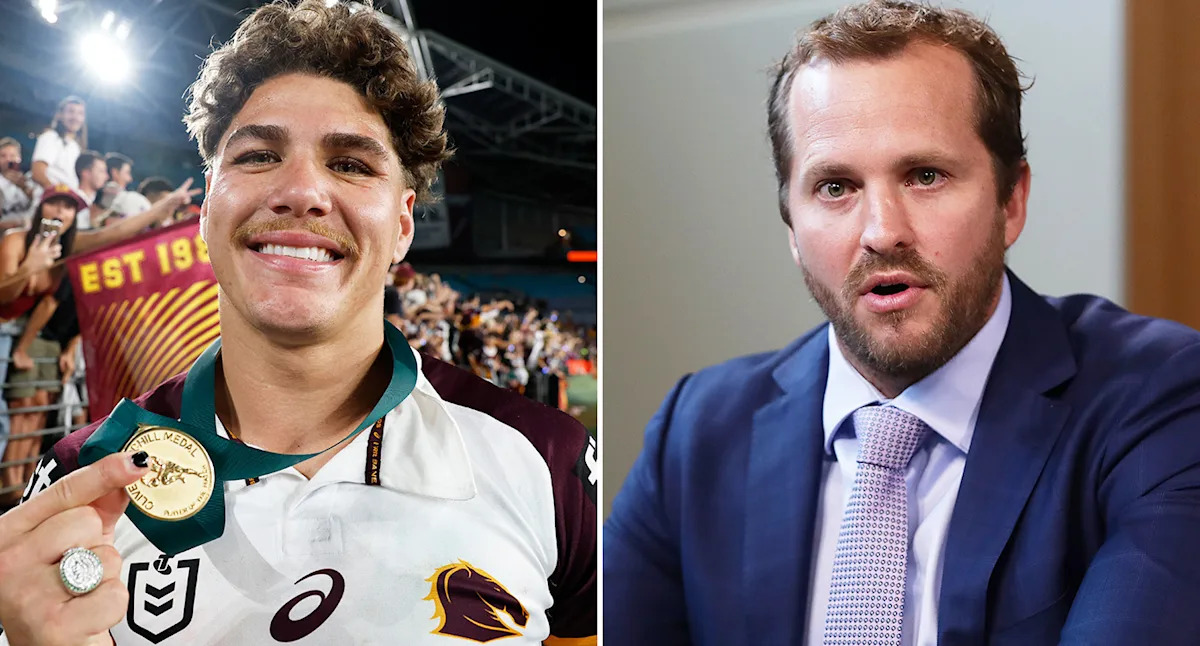
R ugby League Players’ Association (RLPA) boss Clint Newton says the outrage around Reece Walsh‘s Brisbane calendar no-show is ‘wide of the mark’ and unfair. And the head of the NRL players’ union has moved to clarify the situation after the Broncos fullback copped criticism for deciding not to be included in the team’s 2026 calendar.
Walsh appeared on the front cover of this year’s edition alongside Brisbane stars Pat Carrigan, Adam Reynolds and Kotoni Staggs. The superstar fullback was the Broncos’ face of April but he’s nowhere to be seen in the 2026 version, which is sure to come as a blow for fans looking to pop the $20 calendar into their Christmas stockings.
RLPA boss Clint Newton has defended Reece Walsh’s decision to opt out of Brisbane’s 2026 team calendar after criticism aimed at the Broncos star. Pic: Getty
The Broncos were happy for Walsh to be included in the NRL-licensed calendar but issues around his intellectual property and the amount of royalties he would receive were behind the decision from the player’s management. Brisbane’s stars receive less than 5 cents per calendar sold and RLPA boss Newton insists it’s well within Walsh’s right to opt out in line with the NRL’s collective bargaining agreement (CBA).
“I think it’s a really important one to clear up that the players are paid from the NRL’s revenue, not from the club’s sponsors,” Newton told SEN radio. “So the clubs keep every dollar they make from sponsors who use their player images. So the outrage around the calendar is off the mark.”
Walsh’s star hit new heights this year after winning the Clive Churchill Medal in Brisbane’s premiership triumph. And the 23-year-old’s starring role in the Kangaroos’ Ashes series triumph saw him become a global phenomenon and the biggest name in the sport.
But Walsh’s decision not to be part of Brisbane’s calendar has sparked suggestions that he’s become too big for his boots. As Newton points out though, the Broncos star has done more than most players to promote rugby league around Australia and the world, through his massive social media presence and engagement with fans.
RELATED:
RLPA boss defends Reece Walsh after calendar backlash
“If you look at Reece he’s almost become an international global brand,” he added. “And if you look at his following, he’s got more followers than the whole Brisbane Broncos by himself.” The RLPA boss pointed out the obvious advantage it presents to Brisbane’s major sponsors such as Kia, when Walsh posts images wearing that branding to his hundreds of thousands of social media followers.
“That’s free advertising that Reece is happy to do. But I think the criticism of Reece (in this instance) is just off the mark,” he added. “The bloke does so much work for the community but on this occasion he’s decided to opt out, which he has the right to do.”
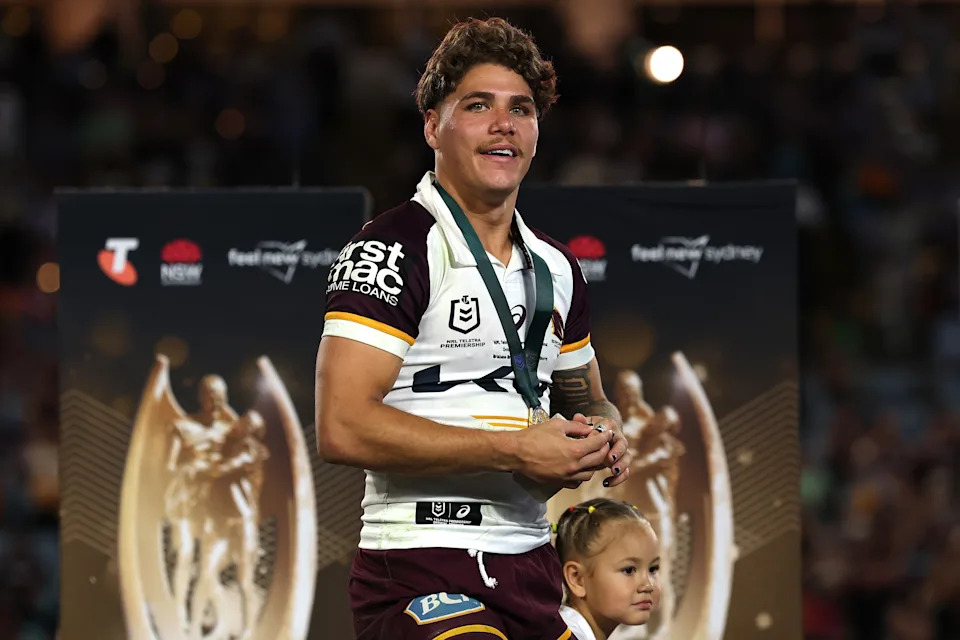
Brisbane Broncos grand final hero Reece Walsh is a controversial no-show on the club’s 2026 team calendar. Pic: Getty
Newton says the current CBA gives NRL clubs the ability to use three or more of their stars for advertising or marketing purposes, which the players don’t receive any money from. He used the Tradie commercials featuring Cameron Munster, Ryan Papenhuyzen and Jahrome Hughes as an example of how the Melbourne Storm have used their players to market the club.
The RLPA boss explained the other two facets of the CBA where players get a percentage of money from commercial ventures where the NRL has licensed their image for products such as merchandise. The third facet relates to the player’s value in terms of their reach on social media, with Walsh comfortably the most marketable NRL star.
“Players are very protective of their IP now, I think there’s been a massive shift, and the game needs to move with the times in that player property is very important,” Newton added. “But I go back to the point… clubs retain 100% of the revenue they generate from their sponsors but that money is not used to pay the players via the salary cap.
“That’s often a misconception from the public and the fans that they think the money they’re generating is paying the players. It doesn’t, it helps service them, it helps invest if the club chooses in pathways or fan engagement, membership or merchandise but it doesn’t go towards paying the players.”