
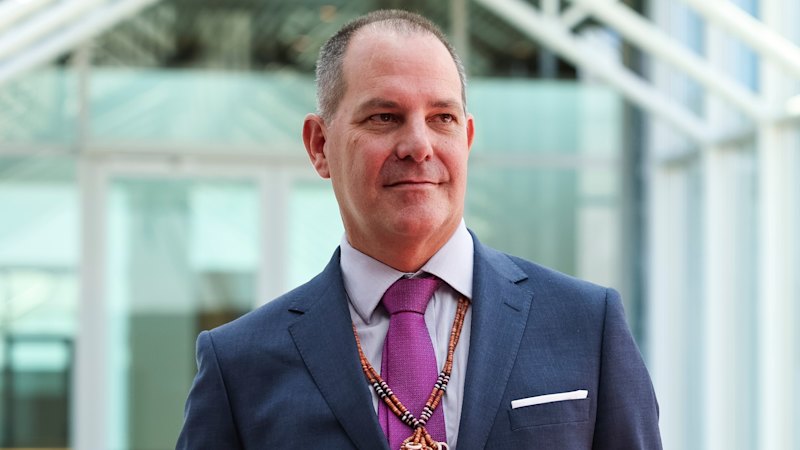
“When I saw the final cost I had the same reaction as most Australians: disbelief,” Flint told this masthead. “There are 30 years of research on weather interfaces. You don’t need to reinvent anything.

Ben Flint, founder of Melbourne-based Supernormal Systems. “When I saw the final cost I had the same reaction as most Australians: disbelief.”
“That kind of budget should buy you something users actually like; that’s easier to use than what it replaced, not harder. If I delivered a project 23 times the quoted price, my reputation would be ruined.”
Geo George, co-founder of Mayfly Ventures and a product designer who has previously delivered a $21 million government project, said even accounting for the full scope of a back-end rebuild, the cost did not add up.
“Even with five to 10 years of work, 30 to 60 specialists, infrastructure, security, testing, cloud, compliance and procurement overhead, a serious rebuild of a web plus API platform should land in the low to mid-tens of millions,” George said.
Loading
“$96 million is far beyond that. It suggests scope creep, gold plating, inefficient vendor delivery and governance models that reward process over outcomes.”
George said the project appeared to have become “a machine built to justify itself instead of a product built to serve people”.
A spokeswoman for the bureau said the website redevelopment was “part of a large program of work to improve the long-term security, stability and resilience of critical Bureau services.”
“A complete rebuild was necessary to ensure the website meets modern security, usability and accessibility requirements for the millions of Australians who rely on it each day,” she said.
“The website is supported by a network of technology infrastructure, security controls, data integrations, geospatial viewers and content management systems. This foundation ensures the website is secure and allows it to draw in huge amounts of data.”
She said the re-design of the Bureau website cost $4.1 million, while the primary channels platform and website build (writing and testing the data integrations and software based on the re-design) cost $79.8 million.
“Additional features, security testing and preparedness for website launch cost $12.6 million. This includes the build, test and deployment of feature releases, and performance and load testing to ensure the website can accommodate peak volumes of traffic we see during severe weather.”
Jasmin Hyde, a corporate communications expert and director of Hyde & Seek Communications, said the redesign appeared to have prioritised the wrong things.
“For a national organisation like BoM, intuitive and user-friendly navigation should always come before complex features,” Ms Hyde said. “When people are checking weather warnings, they’re seeking clarity, not bells and whistles.
“Large digital builds often disappoint when they optimise for internal stakeholders instead of real users. Big budgets don’t guarantee strong outcomes if scope is not tightly controlled.”
Cust said the user experience failures reflected a fundamental misunderstanding of how people use the site.
“People don’t go to BoM for a content experience – they go for instant, high-trust decisions. Can I hang washing? Is it safe to swim? Will my wedding be rained out?” he said. “The old site wasn’t pretty, but it respected user intent. The new one appears to prioritise internal stakeholder wishes over real-world user behaviour.”
Mick Owar, a veteran web developer, said there was nothing about the new website that warranted the price tag.

Environment Minister Murray Watt at Parliament House on Monday.Credit: Alex Ellinghausen
“What Australians are looking at is a standard weather dashboard – functional enough, but technologically unremarkable,” Owar said. “A build like this in the private sector would cost a fraction of the price.”
The $4.1 million figure initially disclosed by the bureau covered only the front-end redesign. It did not include a $78 million contract with consulting firm Accenture, which grew across nine extensions – what Flint described as the classic playbook of “underquoting to win the work, then expanding scope until you’ve built a dependency that’s impossible to unwind”.
Cust said government agencies were structurally vulnerable to such blowouts.
“In private companies, the person approving spend feels the commercial pain personally. In government, the risk and cost are usually absorbed by the system, not the individual decision-maker,” he said. “That makes government agencies extremely attractive to large consultancies because long timelines, changing scope and unclear accountability are easier to maintain.”
New chief executive Stuart Minchin, who has been in the role for just two weeks, said the bulk of the spending was required to secure the bureau’s systems following a 2015 cyberattack linked to state-sponsored hackers.
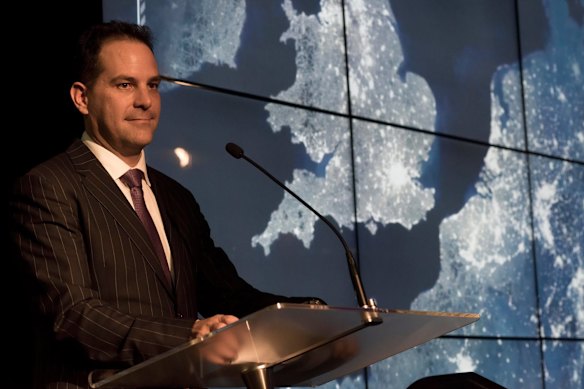
Dr Stuart Minchin started as the Bureau of Meteorology’s chief executive on October 3.Credit: Bureau of Meteorology
Loading
The bureau said the website now runs on a more secure platform replacing an unencrypted HTTP version that proved vulnerable. Minchin warned that without the upgrade, hackers could have locked up bureau data in a ransomware attack, leaving Australia without weather forecasts “for an extended period of time”.
Environment Minister Murray Watt has asked Minchin to examine the procurement process and report on how costs escalated.
Nationals Leader David Littleproud said the bureau’s business model “is to fail and ask the taxpayer for more money”.
A scheduled update addressing user complaints was postponed last week due to Severe Tropical Cyclone Fina.
The Market Recap newsletter is a wrap of the day’s trading. Get it each weekday afternoon.