
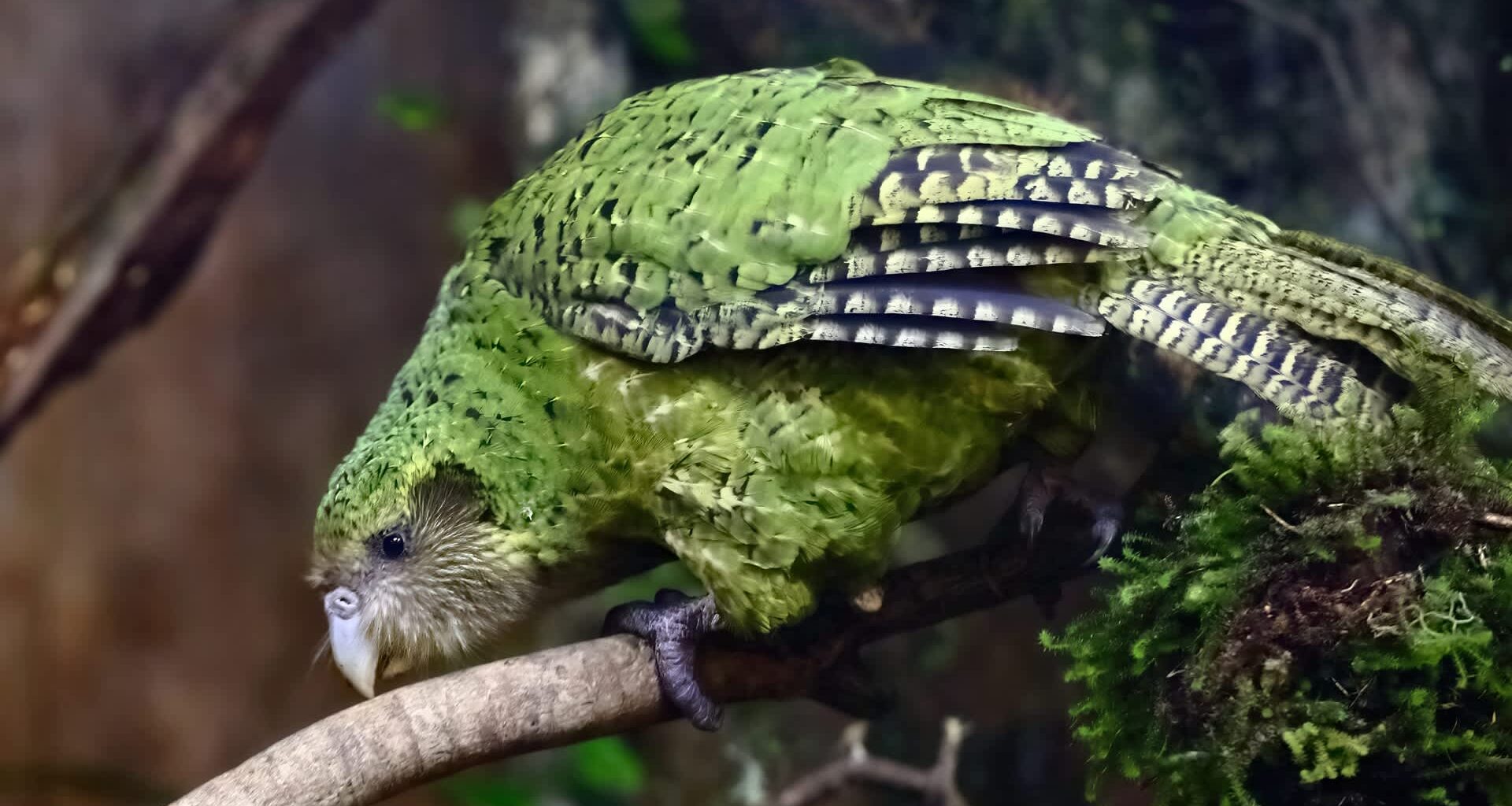
To protect critically endangered birds from invasive predators, conservationists in New Zealand are turning to cutting-edge technology.
People reported that officials in New Zealand are harnessing the often-derided power of artificial intelligence in a more purely positive way to rid the country entirely of invasive species by 2050. The lofty goal is to undo the enormous ecological damage caused by animals introduced by settlers in the 1800s.
New Zealand has over 80,000 native species. Its isolation from larger landmasses for millions of years means that many of its natives are found exclusively in New Zealand. Unfortunately, this makes it uniquely vulnerable to invasive species.
Flightless birds had little to fear from predators before colonization, but the ill-conceived decision to introduce stoats had catastrophic consequences.
The takahē, a stocky black swamphen, was thought to be extinct by 1898, but a small surviving population was found 50 years later. The Kākāpō, another flightless bird species unique to New Zealand, is similarly threatened by predation.
A stoat can take down prey over five times its size with either a quick bite to the neck or by exhausting it over time. In their native habitats, they are crucial in maintaining the balance of the food web, but in New Zealand, they’re a plague.

TYPEBEA is the performance-led haircare brand known for its clinically proven and paraben-free haircare — and it just announced its biggest sale of the year.
For a limited time, get 25% off TYPEBEA’s most-loved formulas, including the award-winning scalp serum and the intense repair leave-in treatment, which is clinically proven to reduce breakage by 80% after one use.
Officials have established high-security ecosanctuaries throughout the country to protect endangered birds. However, so long as stoats remain, they’ll never truly be safe.
Wiping out an invasive species is an extraordinarily difficult endeavor, but officials are hoping AI can tip the odds in their favor.
While AI as an industry takes a lot of heat for its high energy requirements that lead to high carbon dioxide pollution and clean drinking water usage, that criticism is primarily aimed at its more frivolous uses, such as its unsolicited appearance in basic search queries or, more troublingly, its use to make artificial images and videos that paid artists would ordinarily create. Here, AI is being used for good.
Traps are being fitted with AI-integrated sensors to ensure only targeted species are captured and to allow them to reset and place bait automatically, allowing for a system that would be impossible, or at least nearly impossible to afford, with solely human operation. Officials hope this will streamline the process, and even if it falls short of the 2050 goal, it’s still worth the effort.
Predator Free 2050 program manager Brent Beaven said, per People, the insights gained to make local efforts more effective mean “there is no loss to this.” He hopes to incorporate AI technology for “completely step-changing the way we approach conservation in New Zealand.”
💰Get TCD’s free newsletters for easy tips to save more, waste less, and make smarter choices — and earn up to $5,000 toward clean upgrades in TCD’s exclusive Rewards Club.
