
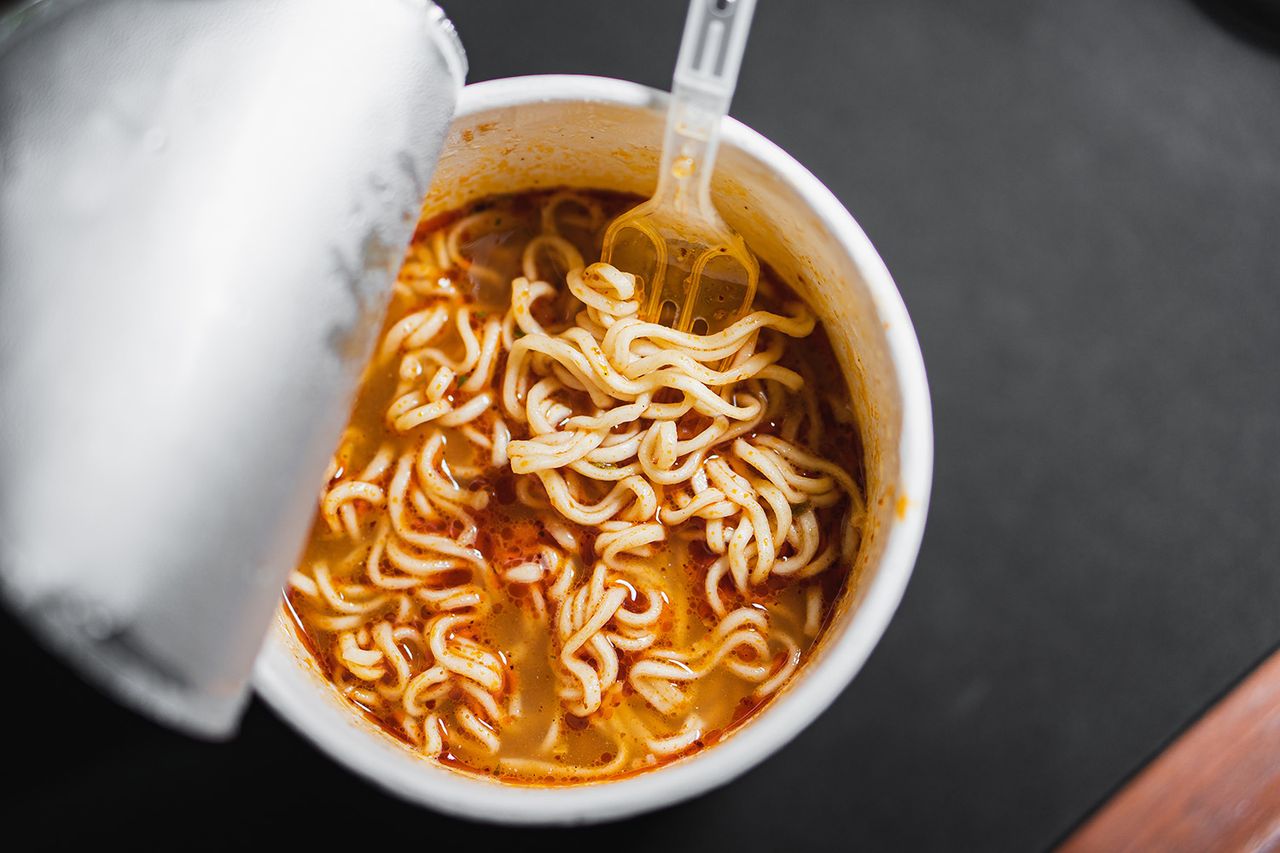
For many of us, instant noodles are a staple of student life. They’re cheap, convenient and endlessly customisable.
The ABC recently published an article exploring the upward trend in instant noodle sales over the past few years (thanks, TikTok) and how, while undoubtedly quick, easy and delicious, they may not have the best effect on our overall health.
Instant noodles are usually really high in salt, as well as being low in both fibre and protein, and while they’re fine as part of a balanced diet, there is some cause for concern if they’re part of your daily meal rotation.
So, what actually happens when they become a daily meal? And is there a healthier way to eat on a student budget without abandoning the humble noodle cup?
What’s actually in a packet of instant noodles?
According to the ABC, most varieties are made from wheat flour noodles, flavour enhancers and sometimes a sprinkle of freeze-dried veg. It doesn’t sound too bad, really, but at a closer look, those flavour enhancers tend to have up to 1500mg of sodium per serve (the recommended daily average is less than 2000mg per day). Too much sodium in your diet can lead to kidney and heart problems down the line. Because of their highly processed nature, they’re also stripped of any of the fibre and protein that typically exists in whole grains.
What are the health concerns?
Please don’t panic – eating the occasional bowl of instant ramen isn’t going to cause you long-term harm, especially if you add your own high-protein/fibre ingredients to bulk it out. But if you’re planning to eat daily noodles with no extra additions, here’s what you should know.
High sodium has been linked directly to an increased risk of heart disease, stroke and high blood pressure. Noodles themselves have also been linked to higher rates of metabolic syndrome (categorised as a group of symptoms that together can increase your risk of the above illnesses).
Low fibre diets are often linked with bowel disease and cancer, an increased risk of type 2 diabetes and overall poor gut health.
Lacking colourful foods like fruits, vegetables, leafy greens and legumes often means missing out on essential nutrients that just can’t be found in overly processed foods.
The ‘student food’ stereotype
Instant noodles are so entrenched in campus life that they’ve become shorthand for ‘student food’. This stereotype exists for good reasons: students are often on a budget, stressed, time-poor and working with limited kitchen facilities. A packet of noodles for $1 seems like a perfect solution.
But the stereotype comes with downsides. It normalises a pattern of eating where convenience outweighs nutrition, reinforcing the idea that healthy food must be expensive or inaccessible. This can widen health gaps, particularly for students already dealing with financial pressure. It also overlooks the many creative, nutritious and affordable meals that people around the world already make every day.
How to ‘healthify’ your student foods
If you’re set on your daily ramen, try boosting it with fresh or frozen vegetables (broccoli, carrot, or zucchini are all delicious) and a cheap protein source. With a few additions, it can become a quick, nutritious and still very budget-friendly meal.
When you have the space, keep a few versatile ingredients on hand to level up noodles or even basics like beans on toast. Frozen vegetables, dried whole grains, nuts, seeds and even freeze-dried veg powders are all pretty affordable in Australian supermarkets and add an easy nutrient boost.
For protein, opt for inexpensive, long-lasting options such as tinned beans and lentils, textured vegetable protein (TVP), or tofu – simple staples that turn cheap meals into balanced ones.