
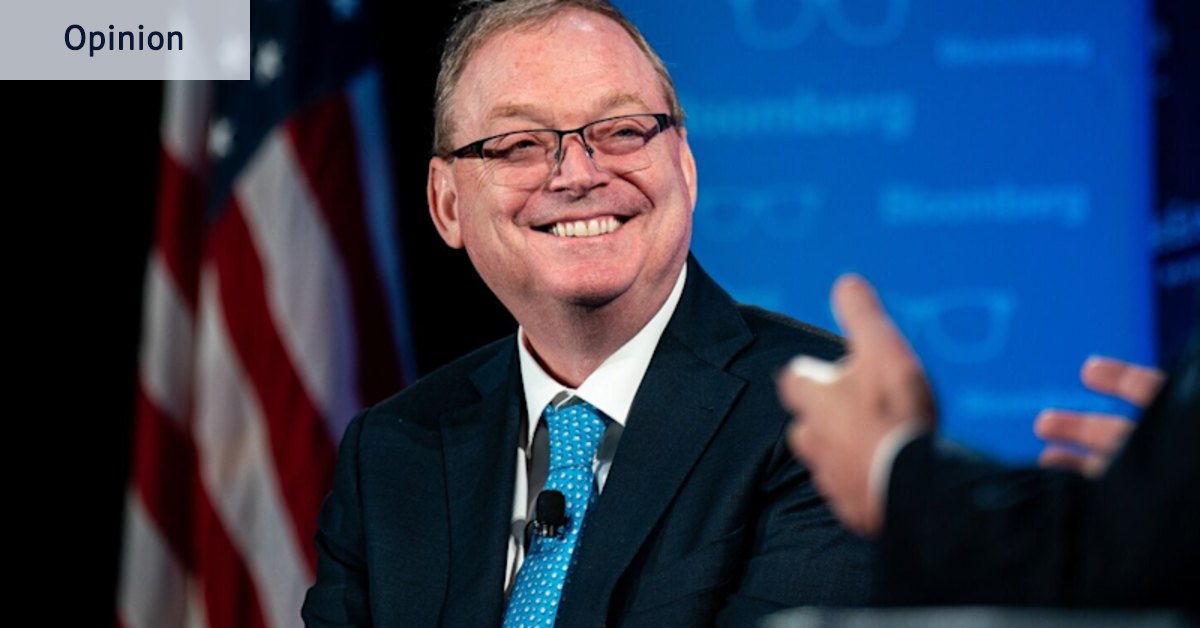
Where once Hassett, then regarded as a mainstream economist, advocated a carbon tax on coal and petrol and was pro-immigration and anti-protectionism, now he echoes Trump’s aversion to “green” policies (he, too, lambasts wind turbines for killing birds), is an enthusiastic supporter of the administration’s harsh treatment of immigrants and of Trump’s tariffs.
Like Bessent, he says an economic bonanza from the whirlwind of the administration’s policies, particularly the tariffs and Trump’s One Big Beautiful Bill, with its tax cuts for the wealthy and cuts to health and other services for the not-so-wealthy, is just over the horizon.
US government deficits and debt, Hassett has claimed, are declining because of Trump’s tariffs.
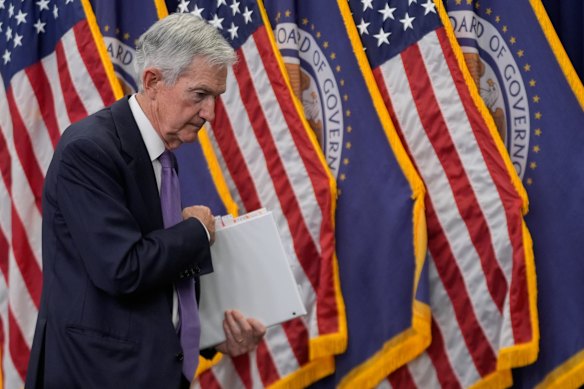
Jerome Powell may make life difficult for Trump by staying on the Fed’s board after his term as chair ends. Credit: AP
The deficit has reduced, from $US1.82 trillion ($2.8 trillion) in the 2023-24 financial year under Joe Biden, to $US1.8 trillion. Government debt, however, has risen from $US36.2 trillion at the end of last year to $US38.1 trillion this year and is still climbing, despite the tariff revenues. The administration never lets the facts get in the way of the story.
Loading
Hassett fits Trump’s bill for the next chair of the Fed better than any of the other candidates and it will be Trump who makes the final call on who is presented to the Senate for confirmation.
That he is favoured by betting markets and Fed watchers and those closest to the administration doesn’t mean his appointment is inevitable, however.
As White House spokesperson Karoline Leavitt said this week: “No one really knows what President Trump is going to do until he does it.”
What we do know is that the next Fed chair will only be chosen if they agree to do what Trump wants, which means he’ll expect them to get the Fed to slash interest rates. He will also want them to shake up the Fed and its processes, which most of the candidates have signalled they would.
Whether they’d be prepared to do to the Fed what the administration has done to other key US agencies like the Department of Justice – purging the existing staff, replacing them with MAGA people and making it subservient to Trump’s whims – is a more open question, although Hassett, the closest of the candidates to Trump and the Trumpist agenda, might be more willing to pursue that objective than the others.
Powell’s term as the Fed’s chair doesn’t end until next May, but his preferred successor will be nominated well before then – Bessent has signalled that it will be before the end of the year – because the administration believes the confirmation process for such a powerful and sensitive position could be protracted.
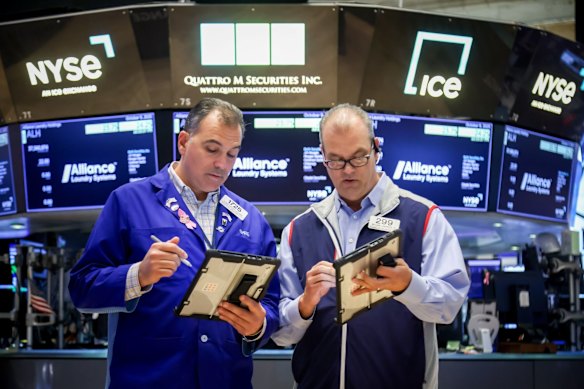
Sharemarkets would welcome Hassett’s appointment but bond investors wouldn’t be quite as enthusiastic. Credit: Bloomberg
A chairman-elect, waiting in the wings, could also put pressure on the Fed’s board and members of the 12-person committee that actually sets US monetary policy, the Federal Open Market Committee (FOMC), to fall more into line with Trump’s wishes.
Hassett, if he is Trump’s choice, would, of course, be only one of seven Fed governors, albeit the first among equals, and only one of the 12 FOMC’s voting members. (There are another seven regional Fed bank presidents who attend and participate in meetings, but don’t vote.)
Those FOMC members have, unusually for an institution that has generally been consensus-driven, shown increasingly divergent views this year. There is no guarantee that they will fall into line with the new chair’s wishes.
Loading
It is also possible that the FOMC members might break with the tradition of appointing the Fed’s chair as chair of their committee. They appoint their chair from within their ranks and could vote for someone else, perhaps even Powell.
While Powell’s term as chair ends in May, his term as a governor doesn’t end until 2028. His predecessors have tended to quit the Fed entirely once they have completed their terms at the head of the boardroom table, but there’s no requirement that they do so.
Powell hasn’t provided any indication of his intentions but, if he were to hang on, not only would he deny Trump the opportunity to appoint another governor – the new chair would have to be slotted into the seat being kept warm until February by another Trump loyalist, Stephen Miran – but there would potentially be a countervailing influence within the Fed and FOMC to Trump’s chair.
There’s another potential source of opposition.
What we do know is that the next Fed chair will only be chosen if they agree to do what Trump wants, which means he’ll expect them to get the Fed to slash interest rates.
Sharemarket and crypto investors and the artificial intelligence companies investing increasingly expensive trillions of dollars of capital would love Hassett to be appointed.
Lower interest rates are supportive of equity and crypto values. Rates as low as those Trump wants would potentially turbocharge risk assets, boost near-term economic growth and (which is another reason for Trump’s advocacy of slashing rates) significantly lower the interest costs of the US government’s debt.
Investors in bonds wouldn’t be quite as enthusiastic. Inflation is their bete noir and slashing rates while the US inflation rate (3 per cent and edging up as the effects of Trump’s tariffs are starting to show up) is well above the Fed’s 2 per cent target is a recipe for accelerating inflation.
A federal funds rate of 1.75 per cent or less might push down bond yields at the shorter end of the yield curve, but the yields on longer-term bonds – the interest rates that actually establish interest costs for companies and households – would inevitably spike.
Loading
There’d be a loss of confidence in the Fed’s independence and credibility and foreign investors would want increased risk premiums to reflect the perceived politicisation of the world’s key central bank. The US dollar would also almost certainly weaken even more that it already has.
Not even the Trump White House could prevail against the bond vigilantes, which is probably a good thing in the longer term for the Fed, the United States and the rest of us, although the bond market as Trump’s opposition could make for some volatile and painful moments before then.
The Business Briefing newsletter delivers major stories, exclusive coverage and expert opinion. Sign up to get it every weekday morning.