

Australia is preparing to build more renewable infrastructure in the next decade than in the previous three combined.
But while political battles continue over where turbines or transmission lines should go, a quieter but equally urgent challenge is emerging: where will the thousands of construction workers actually live?
A new report from RE-Alliance argues that the temporary construction phase of the energy transition is a critical — and currently overlooked — opportunity to address Australia’s worsening regional housing crisis.
Unless developers rethink how they house their workforces, the report warns, they risk deepening shortages in towns already under extreme pressure.
Andrew Bray, RE-Alliance’s national director, told the SwitchedOn Australia podcast that the warning signs are already flashing. Housing shortages, he says, are “really pressing” in regional areas where renewable projects are underway.
“There’s a housing crisis all across the country… but it’s absolutely real in regional communities and so anytime anyone in a regional community looks at a new development… one of the first things they’ll think about is, where are we going to put all the workers?”
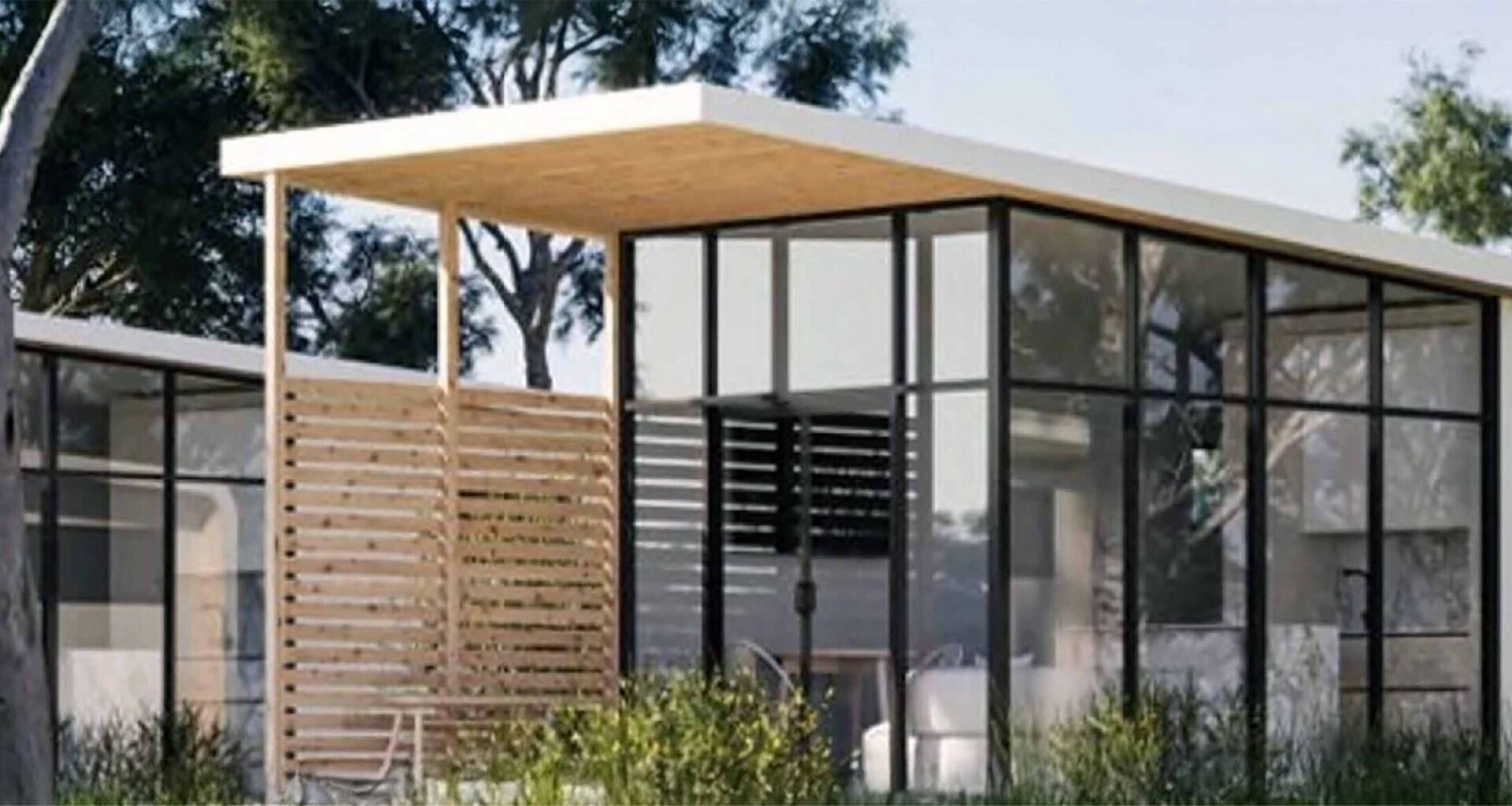
Rather than defaulting to temporary workers’ camps that vanish once the blades start spinning, the RE-Alliance report shows how the construction-intense phase of the energy transition can help create new homes, new neighbourhoods and long-term community assets — leaving regional towns better off than when the renewables arrived.
Drawing on examples from NSW, Victoria and Queensland, the report highlights communities, councils and developers who are already experimenting with approaches that treat the housing of workers as a platform for long-term benefit rather than a short-term cost centre.
The cost and waste of temporary camps
The standard model for large construction projects is fly-in, fly-out workers housed in temporary camps — expensive to build, expensive to service, and dismantled when construction ends.
“You might have to put in services – electricity, water, sewerage – just on a temporary basis. Then you put up the dongers … and then you run it for a couple of years,” Bray says.
“It’s quite an expensive undertaking. And then you pull it all down and it’s gone so it’s no use to anyone.”
He estimates a typical camp costs around $20 million, a figure echoed by a CSIRO analysis showing that roughly 6% of a project budget is allocated to construction housing.
If workers instead spill into local motels or rental homes, the impact can be severe: rental spikes, families pushed out, tourism evaporating and vulnerable residents losing access to the already limited housing stock.
Converting construction housing into permanent homes
Some renewable developers are already rethinking the model. In central Queensland, companies are planning worker accommodation that will transition into permanent housing once construction ends.
Energy Estate and the Hinman Group have formed a joint venture — Accommodation Solutions Australia — to deliver 953 prefabricated, high-quality homes able to shift from single-room worker layouts to family housing.
The project targets housing shortages in Rockhampton and Gracemere, where rents jumped 27% in 2024 and vacancy sits at just 0.8%.
“It delivers on the sort of things that the community would like to see, which is an increase in housing over the longer term,” Bray says.
For a region long shaped by boom-bust mining cycles, the goal is to break the pattern — and to encourage workers to participate in local life, something Bray argues is crucial to building trust in renewable developments.
Councils getting ahead of the curve
In NSW’s New England region, more than 5 GW of renewable projects are in the pipeline — enough to power two million homes. With a population of just 6,000, Uralla Shire Council isn’t waiting to see what happens. It is leveraging the construction phase to steer long-term development.
With funding from EnergyCo, the state-owned corporation overseeing the rollout of transmission and clean-energy infrastructure, the council has produced a housing strategy to help developers link their short-term workforce needs with long-term community supply.
It identifies how councils across the Renewable Energy Zones can prepare for pressures on roads, planning, permitting — and, critically, housing.
In Dubbo, one renewable proponent is working with council to rezone and service several hectares of land for worker accommodation that will later become a fully functioning residential estate.
“It’s a number of hectares… and that will be paid for as part of the worker accommodation that the proponent needs, but it will be left behind for the council to let out for real estate development,” Bray says.
Re-using what already exists
In Wellington, within the Central-West Orana Renewable Energy Zone — where rental vacancy is near zero and almost one-third of residents are First Nations — a disused aged-care home has become the centrepiece of a new model.
When Squadron Energy needed housing for its Uungula Wind Farm workforce, it refurbished the Bellhaven aged-care facility, closed since 2018.
The company negotiated a five-year lease, paid for building upgrades, and engaged local First Nations contractors to do the work. When construction ends, the facility will remain available for future projects or community use.
“It helps me to be able to keep work in town,” First Nations electrical contractor Jake Newman said in the report. “I was born and raised here… Since starting on the project, I’ve brought on a first-year apprentice. It’s been a good opportunity.”
Deep listening, not token gestures
Other innovative examples come from communities where developers have gone beyond superficial consultation.
In Mortlake, in Victoria’s Wimmera region, the developer of the Dundonnell Wind Farm learned through deep engagement that the community didn’t want branded sporting jumpers as part of its community benefits package — it needed emergency accommodation for women and children escaping violence.
Temporary workers’ housing can displace existing crisis accommodation unless developers deliberately address it. In this case, the company funded additional emergency housing outside the region to free up local beds.
“It wasn’t just the loudest voices that you might hear,” Bray says of the consultation process. “It was all the different parts of the fabric of that town.”
Opportunity — or risk?
Bray argues that renewable developers who engage early, listen carefully and integrate housing into project planning will build stronger relationships with host communities — and avoid delays.
“If you don’t do this stuff, you will not be welcomed into town and that has a real material cost on development. We can see it when engagement is not done well… [communities] dig in against projects, and that’s absolutely slowing down the energy transition.”
Conversely, when workers live locally, join clubs, support businesses and become part of the social fabric, communities see projects differently.
Bray stresses that solving housing is “a massive challenge” requiring serious state and federal investment. But renewables can play a catalytic role — helping unlock land, revive unused buildings and fund infrastructure that outlasts the construction workforce.
You can hear the full interview with Andrew Bray on the SwitchedOn Australia podcast.

Anne Delaney is the host of the SwitchedOn podcast and our Electrification Editor. She has had a successful career in journalism (the ABC and SBS), as a documentary film maker, and as an artist and sculptor.