
While much of Europe trains under grey skies and winter rain, elite athletes look southward in search of light, stability, and calm. In the Canary Islands, they find it all
The Spanish rugby sevens team, runners-up in last season’s World Cup, have also discovered why this Atlantic archipelago has become one of Europe’s most coveted training destinations.
In November, when half of Europe’s fields are frozen over, the temperature in the Canary Islands hovers around 22 degrees Celsius, daylight lasts more than ten hours, and the Atlantic air maintains a constant temperature. For teams fine-tuning their training ahead of the HSBC SVNS 2026 in Dubai, that kind of reliability is pure gold.
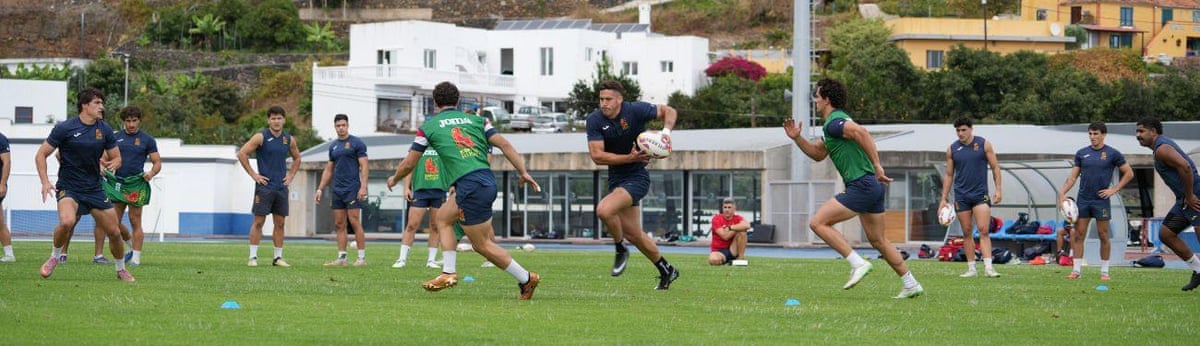
Spain’s rugby sevens team during their training camp on La Palma, Canary Islands. Photograph: Turismo Islas Canarias
A meticulous plan
When Paco Hernández, Spain’s head coach, designed the pre-season plan, the list of requirements was precise: warm weather, stable conditions, first-class facilities, and an environment where the team could concentrate without any distractions. The answer was a four-hour flight from London: La Palma, an island where volcanic landscapes come together with ideal training conditions.
“The climate here is very similar to Dubai, just a bit milder,” explains Hernández. “It helps us adapt better to what we’ll encounter at the start of the Series. What’s more, La Palma is a very peaceful island: training, resting, and eating well are the keys to good performance.”
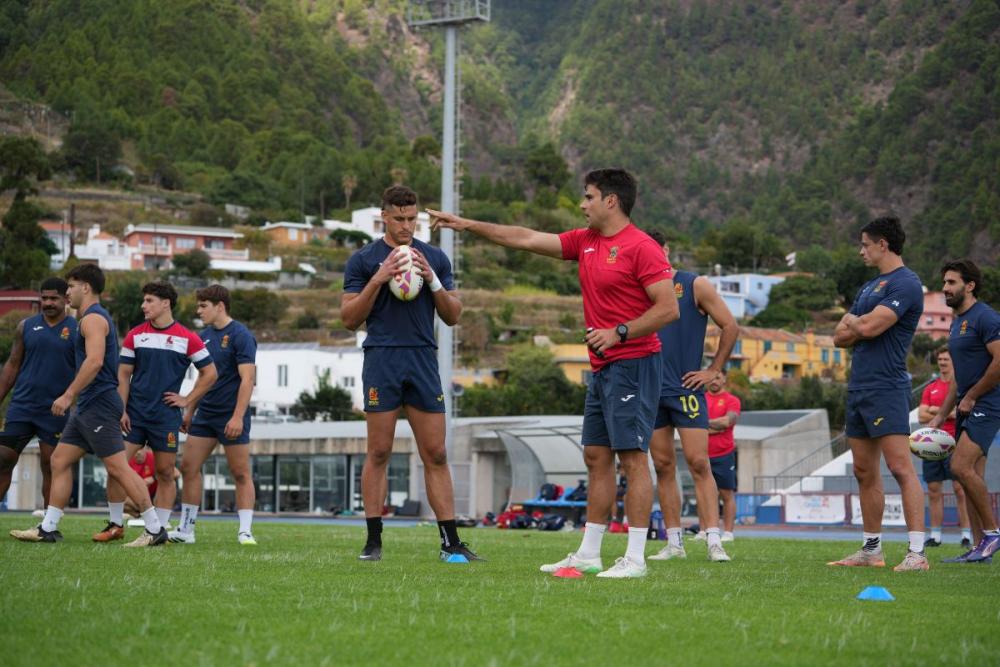
For two weeks, the Leones sevens alternate between training sessions in the sun, strength training in the gym, and active recovery in the laurel forests and on the black sand beaches. It’s scientifically planned. “In many countries where we compete, we have to modify the plan because of the weather or the facilities,” explains physical trainer Manu García Sillero. “Here, we can complete 100% of the programme.”
Why location matters
Spain’s leap from missing out on the Olympic Games to reaching the World Cup final in Los Angeles has become part of modern history in rugby sevens. But staying among the elites demands more than just talent when competing against rivals such as Argentina, France, Great Britain, South Africa, Australia, Fiji, and New Zealand: it requires meticulous preparation, the right environment, and emotional management. That is why these types of training grounds, far from the cold and in controlled environments, have become a strategic tool. “Training in a place like this keeps the players happy, and when they’re happy, they perform better,” summarises García Sillero.
For a team that constantly travels between extreme climates, finding a base with continuity and consistent conditions is an advantage. “There’s nothing like it in Europe,” assures Captain Juan Ramos. “Here, we have everything we need to make it to Dubai in the best possible condition.”
Sun, science, and recovery
Beyond the climate, there is something about the Canary Islands that athletes particularly hold dear: the quality of their recovery. “The competition is extremely tough, both physically and mentally,” comments Jeremy Trevithick, a player of British descent. “Training in an environment where everything flows, where your body and mind can rest, is a huge advantage. Everything is close by here, everything works, and that keeps stress down.”
The balance between effort and rest is part of the plan. The La Palma Training Camp facilities are integrated into a natural environment that promotes regeneration: trails through humid forests, black sand beaches, and a relaxed pace that makes it easy to concentrate.
Beyond the sun and excellent facilities, this choice is also backed by science. Natural light regulates circadian rhythms, improves rest, and optimises vitamin D production. Atmospheric stability reduces physiological stress, and the landscape provides a mental health component that is difficult to replicate in a conventional sports centre.
That is why the archipelago has established itself as a leading destination for Europeans who seek high-performance training. Cyclists, boat racers, track and field specialists, triathletes, and swimmers already know this well. Now, rugby sevens players have also discovered it.

Members of Spain’s rugby sevens team explore La Palma’s natural landscapes in the Canary Islands during a break from training. Photograph: Turismo Islas Canarias
First stop: Dubai
On 29 November, Spain will make its debut in the HSBC SVNS 2026 against Great Britain, Australia, and New Zealand. They will arrive with the confidence of those who have worked tirelessly under the Atlantic sun and with their heads clear.
In elite sport, success rarely begins in the first match; it usually starts much earlier, on the training grounds. And there is no other place in Europe like the Canary Islands, a natural laboratory where science, light, and sporting performance all come together.
Discover more at: hellocanaryislands.com/professional-sports-training/

This content is paid for and supplied by the advertiser. Find out more with our