
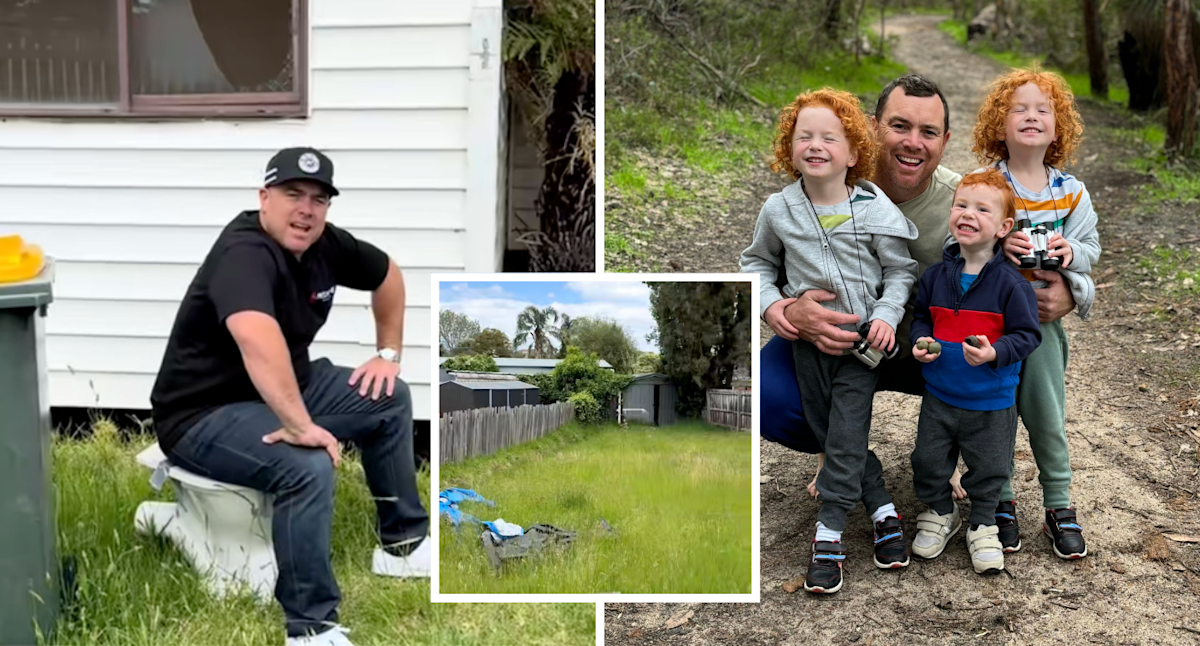
 Graham Whitfield believes the dream of owning your own home has become harder for young Australians. (Source: TikTok/Supplied/Graham Whitfield)
Graham Whitfield has a $13 million property portfolio under his belt, but even he believes it has become a lot harder for young Australians to buy their own home. The property flipper believes the game has completely changed for young people and you now have to think outside of the box to get onto the ladder.
Whitfield quit his $150,000 a year FIFO job back in 2021 to become a full-time property flipper. He has flipped about 24 properties and made a profit of $2 million, but he is still currently a renter and doesn’t own the property he lives in.
“The great Australian dream of owning your own home, I think, it’s a reality for very few, unless you want to have the handcuffs on,” Whitfield told Yahoo Finance.
That’s the idea of being “handcuffed” to your mortgage, where you are spending a high proportion of your income and your mortgage repayments.
RELATED
“That’s why you hear about mortgage stress because it’s just too much,” Whitfield said.
“First-home buyers spending $1 million, even if there’s two incomes, they’re on average incomes, then they’ve got a $1 million debt.
“It’s just ridiculous. And then what will happen if they decide to have a child and they go down to one income, it’s not a great place to be.”
Do you have a story to share? Contact tamika.seeto@yahooinc.com
Graham Whitfield quit his FIFO job back in 2021 to do property flipping full-time and not teaches others how to follow in his footsteps. (Source: Supplied/Graham Whitfield)
Whitfield said it was a common complaint online from young people that Baby Boomers had it “a lot easier”.
“The reality is, what they’re saying is true. It certainly was a lot easier than what it is now,” he said.
“But I just think that the game’s changed, and you’ve just got to know how to play the game now.”
Whitfield shared a video on his social media this week showing a $530,000 house one of his students bought in Melbourne’s Frankston.
Whitfield said the house had been “completely trashed” and was a home most buyers would turn their back on. But there was “opportunity” for people if they were willing to do the renovations.
“That one needs everything. It’ll be a full gut sort of thing. It’ll be strip out the kitchen and bathroom, obviously sand the flooring and painting,” he said.
“So basically pretty much everything that one. That one also needs landscaping and fencing as well.”
Whitfield expects his student will spend between $60,000 to $80,000 on a renovation of the property, which he will then seek to sell for a profit.
Story Continues
Whitfield said it was still possible to find houses around the $500,000, but you’d have to make trade-offs whether that be looking regionally, looking for a smaller property or being prepared to do renovations.
“They could settle for something smaller. But if they’re buying for that low $500,000 they’re just going to have to put in work for that property,” Whitfield said.
Whitfield said there were similar opportunities available in Melbourne at the moment that his students had flipped, including around Frankston and Melton.
One house in Melton was purchased for $465,000, with $70,000 spent on a renovation. It sold for $670,000, with the flipper pocketing a $70,000 profit,
Another house in Melton South was purchased for $510,000 and also underwent a $70,000 renovation. It sold for $700,000, with a profit of $65,000.
Whitfield noted it was possible to do affordable renovations, with flat-pack kitchens available for $15,000. If you manage the trades yourself, this will also help cut down on costs. It’s worth noting first-home buyers may face challenges around bank lending.
‘Rentvesting’ is another option for Aussies hoping to get onto the property ladder, Whitfield said. This is where you buy a property where you can afford, generally in a regional location, and continue to rent in the area you want to live.
Whitfield currently rentvests, with his family renting a home in the Margaret River region. He has purchased a property with a rental business attached to it and plans to renovate this and potentially move in in the future.
“In my opinion, first-home buyers it’s a bad idea to be looking to be buying your own home because a lot of them such a big portion of their income is going towards paying their mortgage where they could be targeting hotspots and rentvesting where they can get some growth,” he said.
It’s a trend that has been growing in popularity amongst younger Australians, with new research from Resolve Finance finding 16 per cent of renters aged 18 to 24 were planning to buy an investment property as their first purchase. This was up from 7 per cent a year ago.
The average budget for first home buyers nationally is $613,000, which is blow the average budget for the owner occupier hopefuls at $670,000.
“For many young Australians, rent-vesting is a way to get their foot in the market sooner. They’re prepared to rent where they want to live and buy where they can afford, and the budgets reflect this as they are spending less to get on the property ladder,” Resolve Finance managing director Don Crellin said.
“It’s a pragmatic strategy that reflects both the reality of today’s housing market and the determination of this generation to build wealth.”
Get the latest Yahoo Finance news – follow us on Facebook, LinkedIn and Instagram.