
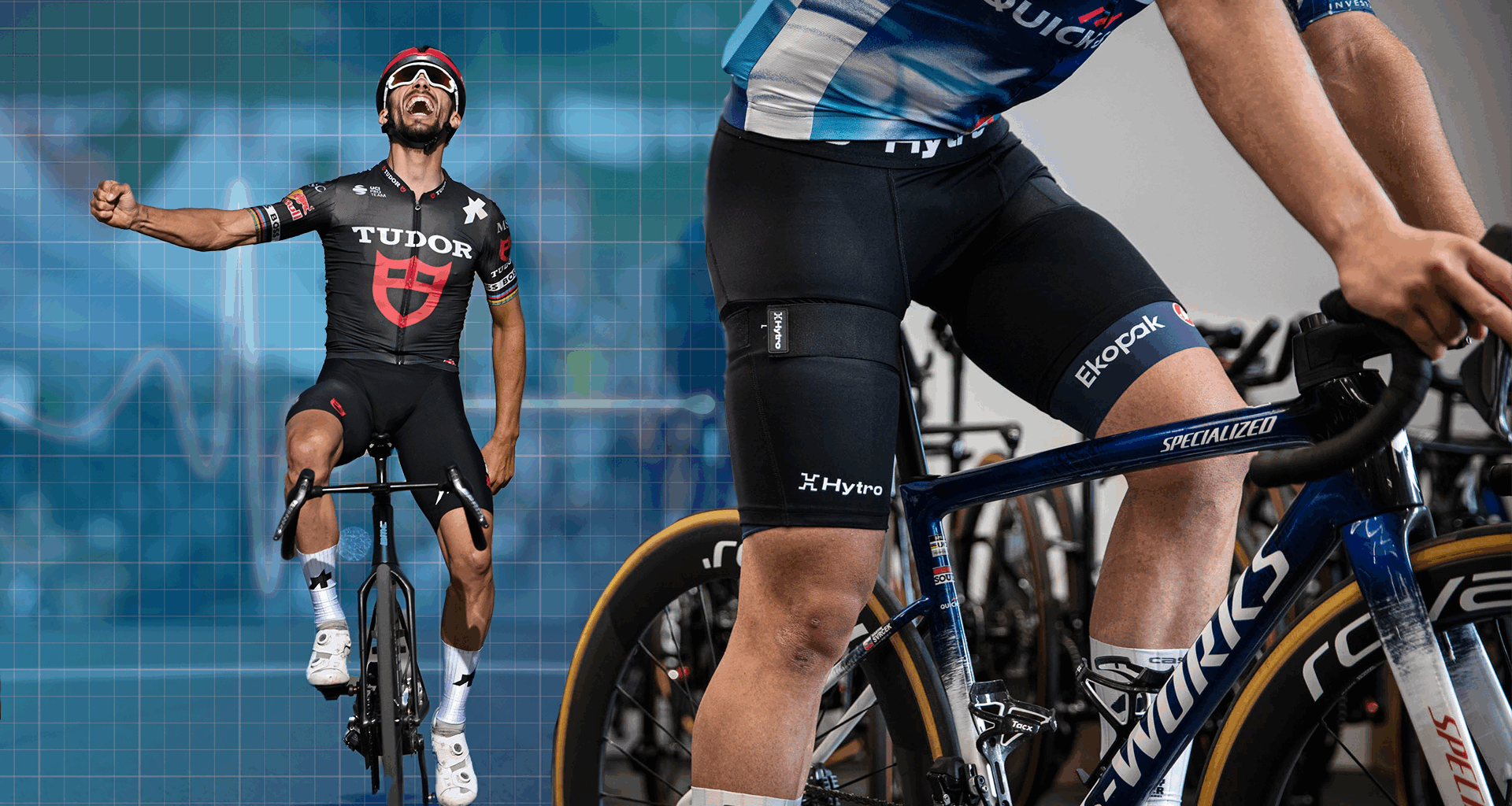
In 2025, Soudal-QuickStep and Tudor Pro Cycling announced partnerships with UK company Hytro, signalling that blood flow restriction (BFR) training – long used in rehabilitation rooms – has officially entered the WorldTour conversation. But what exactly is the rationale behind compression apparel that’s been cranked up to 11? Is it really the perfect all-rounder that delivers benefits not only when overcoming injury, but also in search of stronger performance and faster recovery? And will it benefit amateurs as well as the likes of Tim Merlier and Julian Alaphilippe?
2025 has been a pivotal year for Hytro. They’re now partnering with over 300 elite teams, spanning football, rugby, NFL, NBA, Formula One, athletics and, of course, cycling. Beyond sport, Hytro wearables are being tested by NASA and SpaceX as part of research into maintaining muscle and bone health in zero gravity.
Hytro is the brainchild of Dr Warren Bradley, who trained at Liverpool John Moores University, England, which is fast becoming an exercise physiology hotbed for cycling practitioners.
Bradley came across the idea of blood flow restriction (BFR) training when working in rugby and football, as the technique has been used for decades, albeit ostensibly when an athlete is returning from injury. But, he says, teams were using expensive and impractical cuffs (which we’ll elaborate on shortly). He also discovered that BFR’s benefits stretched to performance and recovery, and set about designing the first commercially approved BFR wearable.
“The idea is pretty simple,” Bradley explains. “We’ve integrated BFR technology into shorts and t-shirts. Each features a strap that offers different levels of restriction. They’re easy to use and, unlike cuffs, can be used without supervision. Which is one reason why an increasing amount of individuals and teams are using them.”
And using them for myriad uses, from warming up, to travel and even in ice baths. “But in cycling, we’ve spent time with Tudor and Soudal-QuickStep and can see that one of their main uses is recovery straight after a race,” says Bradley. “That’s especially true during a multi-stage event like the Tour de France, where you’re aiming to be at your optimum day after day.
“We know recovery is impacted by a rider’s schedule after a stage, what with media and transfer commitments. With these shorts, you simply slip into them, conduct your interviews, return to the team bus and consume your food. You can even wear them in the shower. There are, of course, other recovery methods, but these are far more practical than recovery boots. And I don’t think many teams have an ice bath in their team bus!”
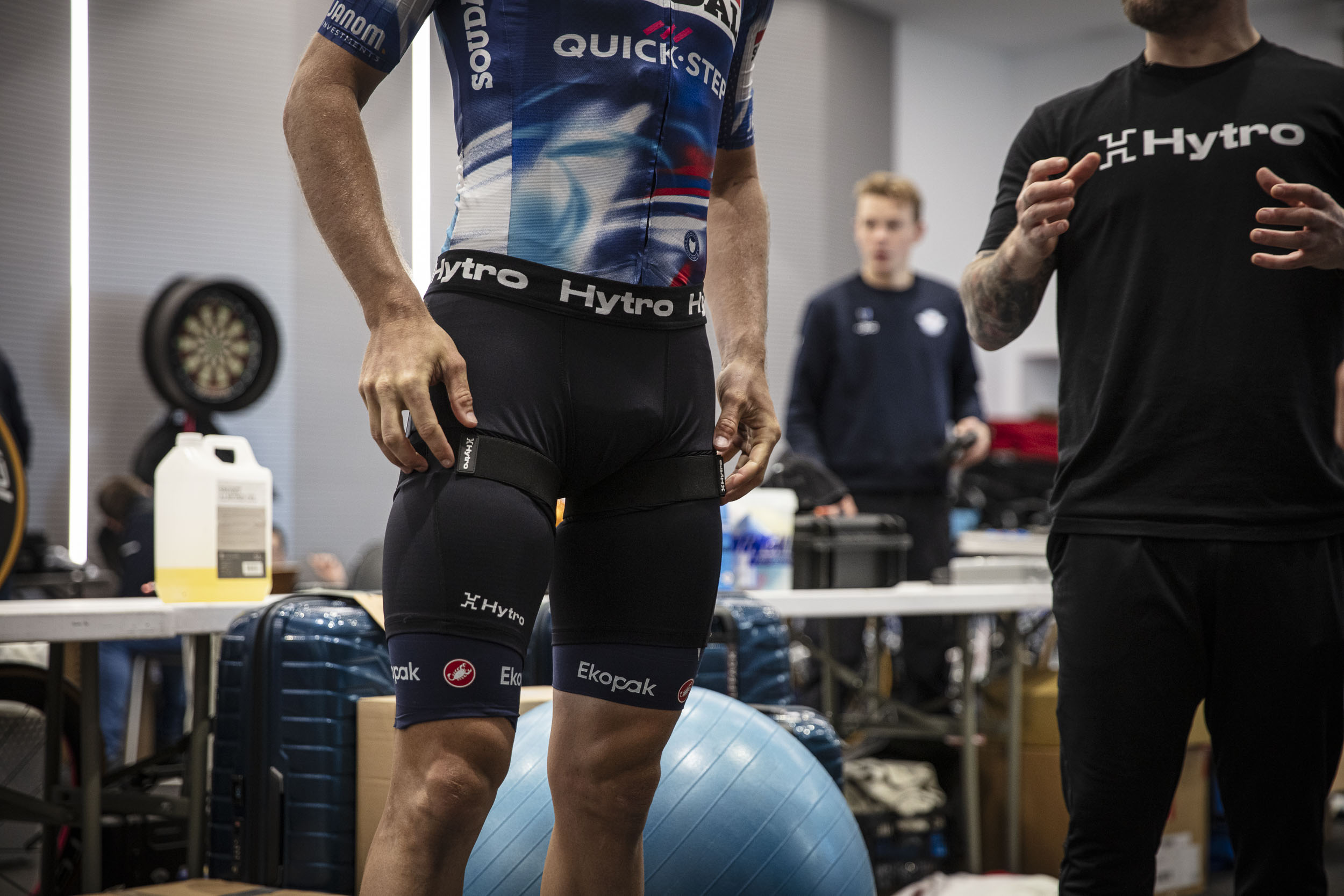
The Hytro shorts help to restrict blood flow to the limbs (Image credit: Hytro)
The BFR Yoda
Bradley’s physiological background is exemplary. But clearly, he has a vested interest in a product he’s invested his energy and money into. Which is why we tapped up a long-term and independent BFR researcher, whom we came across at this year’s Science & Cycling Conference in Lille, which takes place annually in the host city of the Tour de France’s Grand Depart during build-up week.
Dr Richard Ferguson is a reader in human and exercise physiology at Loughborough University, England, and has been researching the use of BFR training in endurance sport for over 10 years. He’s racked up numerous peer-reviewed papers on the subject and is uniquely placed to explain the physiological rationale behind BFR use.
“Essentially, you place a restriction around the limb, be it your upper leg in cycling or upper arm in swimming,” he says. “In the case of my work, these are inflatable cuffs around 5cm in width. You then inflate that cuff to a pressure level that isn’t totally occluding – completely shuts off the blood flow – but partially restricts it.
“That means you’re effectively reducing the amount of blood flowing to working muscles. In turn, you’re increasing the amount of metabolites, like lactate, that are trapped inside the muscle. Oxygen is also reduced, resulting in hypoxia. These stresses are the physiological stimulus that’s responsible for adaptation.”
These stresses are thought to drive signalling pathways that are important for angiogenesis, which is the growth of blood vessels, and mitochondrial biogenesis, which is the growth of mitochondrial mass. As your blood vessels deliver nutrients to your working muscles and mitochondria are the energy powerhouses of your cells, a boost in both clearly has the potential to crank up your cycling.
Learning about recovery
Historically, BFR cuffs have commonly been used in rehabilitation for musculoskeletal injuries, with research suggesting they preserve quadricep strength and muscle mass after surgery. It allows athletes to train without training, avoiding atrophy (muscle shrinkage) that’s common during long spells off the bike.
But, as Bradley suggested, WorldTour teams have been tempted by its potential to accelerate recovery from hard days in the saddle. Upon announcing their partnership with Hytro, Manu Wemel, physiotherapist at Soudal-QuickStep, commented, “I’ve known about BFR for a while, but implementing it practically with our riders hasn’t been easy, until now.
“We’ve found that Hytro provides the easiest and most effective way to integrate BFR into our recovery strategies. With only a small window for recovery, Hytro will play a key role in our strategy, both on and off the bike, helping improve strength and recovery.”
According to Hytro, “BFR increases the amount of recovery hormones produced, creating a flushing effect that forces waste products such as lactic acid away from the muscles, and drives fresh blood and nutrients into the tissues, leading to reduced muscle soreness by 47%, joint pain by 38% and fatigue by 39%.” You can also wear the shorts if following an ice-bath regime. Hytro says that “accelerates recovery by 10%, 12% less muscle soreness and a 23% increase in energy” compared to ice baths without BFR.
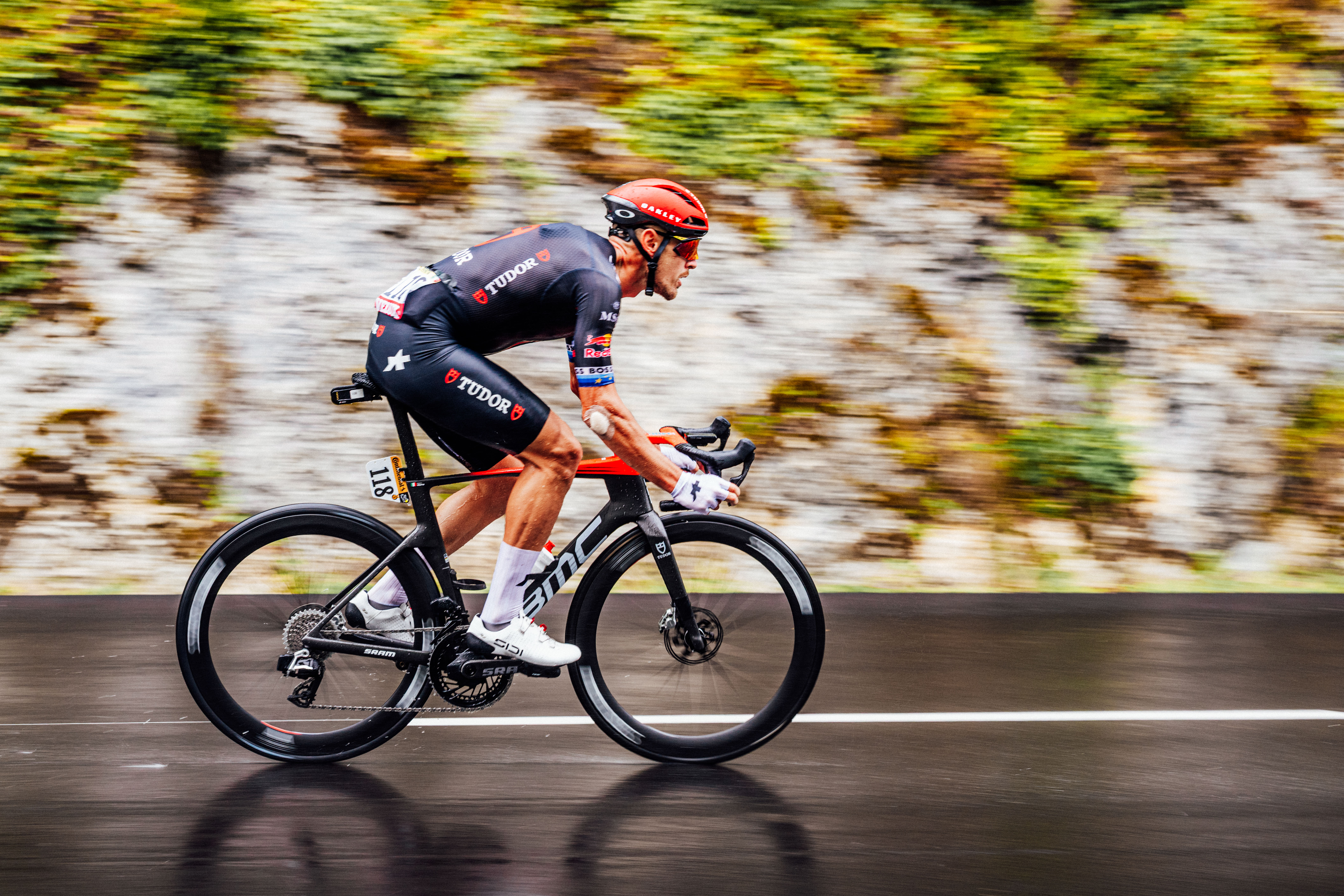
Hytro claims to reduce fatigue by 39%, a valuable boost in three-week stage races like the Tour de France (Image credit: Russ Ellis/Tudor Pro Cycling)
Despite the figures, Ferguson says the evidence is less clear-cut about its use for recovery. “But it is something I’m curious about.”
Indeed, a 2024 study reviewed the literature on BFR as a post-exercise recovery strategy and concluded that “some studies showed beneficial effects while others found no positive or detrimental effects of BFR as a post-exercise recovery strategy in comparison with the control groups.” So, inconclusive, though the researchers stressed limited studies in this area, plus a lack of consistency across BFR protocols. No studies used the Hytro products.
According to high-performance outfit Sportsmith, the typical recovery regime consists of alternating periods of occlusion and relaxation, using a pattern of five minutes of BFR followed by a two-minute break, repeating this cycle three times. That gives the athlete a total of 15 minutes of occlusion within a 21-minute session. This recovery can be passive (sitting down) or active (a gentle bike ride).
Sprint, restrict, sprint…
While the evidence remains equivocal about BFR’s use for recovery, there’s greater research into BFR’s use within training. This is where much of Ferguson’s work has taken place.
“We’re still learning, but the evidence is positive and accumulating,” he says. “There are different ways of applying BFR in a training environment, but the session shouldn’t be too long because there are risks involved, and you certainly shouldn’t try BFR if you have any existing cardiac or vascular issues.
“But we’ve seen very good results with intervals. So, you might ride, say, six 30-second sprint intervals where you work really hard but with the restricted cuff deflated. Then, during two-minute active recoveries, you inflate the cuff. You’ve delivered a really hard effort, which is the stimulus, but then you’ve added to that stimulus by reducing the potential to recover.”
Research from a team including Ferguson and Conor Taylor, formerly of Ineos Grenadiers, showed that the subjects’ VO2 max values rose by an average of 5.9% when augmenting sprint training with BFR compared to zero VO2 max improvement in the group training without BFR.
Taylor’s PhD focused on BFR use for endurance athletes. Within it, he stressed that BFR is particularly beneficial for elite riders whose training history means that they often need different, or greater, stimuli to keep progressing and improving.
Both Taylor and Ferguson employed BFR cuffs, with the “large, cumbersome” Hokanson system for experimental work in the laboratory. For applied studies in the field, Suji’s were the inflatable cuffs of choice, where you can inflate and deflate via an app-based control device, useful for BFR and training purposes.
Neither is as practical or as affordable as Hytro’s shorts (£249.99 for men, £199.99 for women), but their newness again means independent verification of their training benefits is minimal. That said, a 2025 study involving 20 male ice hockey players and Hytro shorts concluded that BFR must be individualised to optimise any potential benefit.
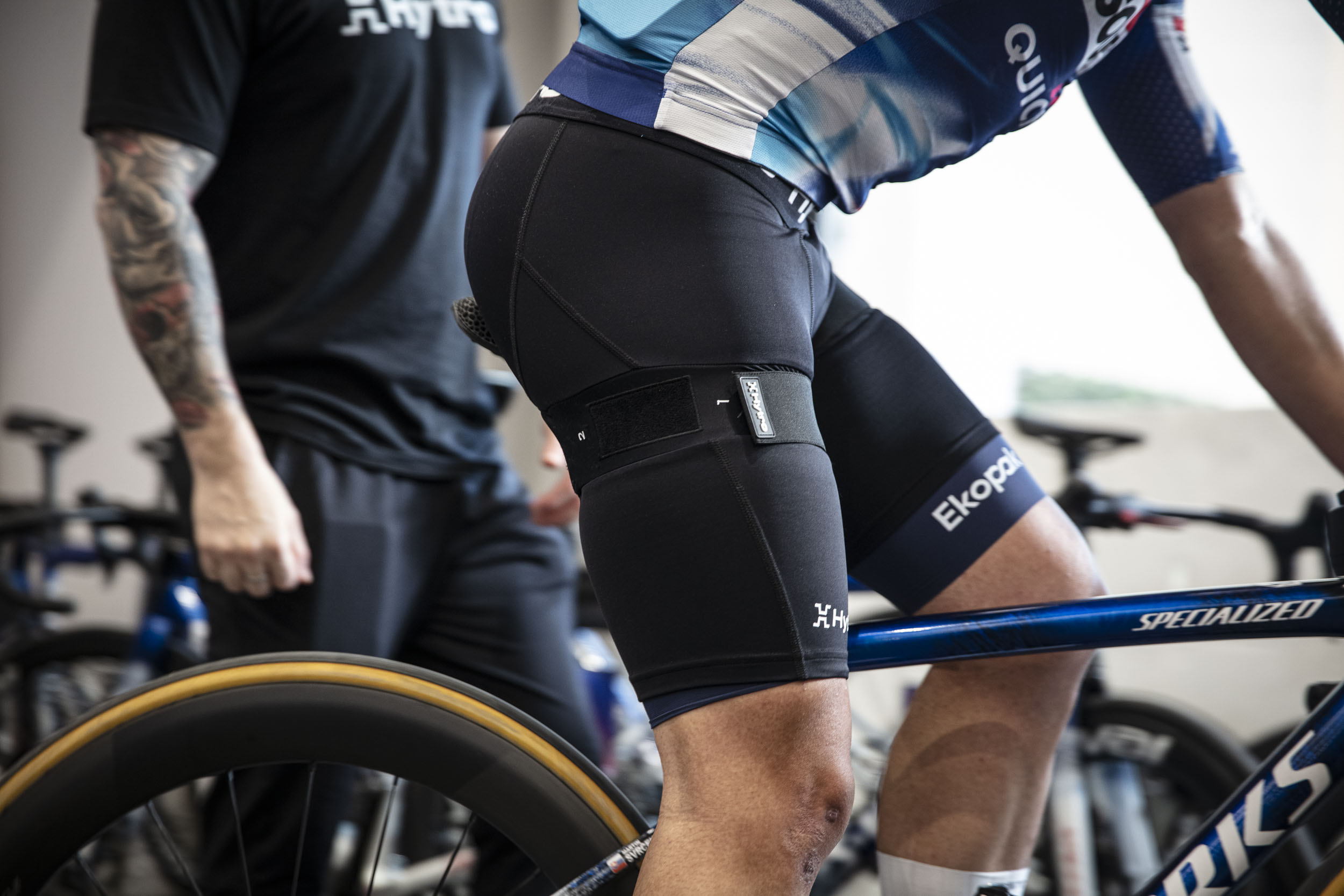
Hytro, one of the brands in the BFR space, has partnerships with Soudal-QuickStep and Tudor Pro Cycling (Image credit: Hytro)
Acclimatise to the tingle
Hytro’s four levels of restriction are potentially limiting, albeit there are rumours that Hytro is working on an upgrade where, like inflatable cuffs, you can gauge restriction pressure for a more precise fit. But whatever the measurer and ideas about optimisation, one factor remains constant: an initial sense of woe.
“When you use BFR for the first time, you don’t know what to expect,” says Ferguson. “You think, ‘Christ, my leg’s going to fall off.’ But you quickly get used to that restricted sensation.”
Still, if you are to shadow the likes of Tudor and Soudal-QuickStep, start conservatively. In the unlikely event of using cuffs, the expert should – and would – apply the lowest pressure. It’s the same with Hytro: start on level ‘1’ and gradually increase to ‘4’.
As for how BFR would integrate into your training plan, back to Ferguson. “In one study, we quickly progressed to three BFR sessions a week. That was tough, and I wouldn’t recommend it. Instead, use it once a week and treat it as one of your tough interval sessions. Do that and, whether it’s FTP [functional threshold of power] or VO2 max, you should see dramatic improvements in performance. That said, I must stress we are constantly learning about the benefits of BFR and best practice.”
Which presumably is what the supporting scientific teams at Tudor and Soudal-QuickStep are working through with their riders. Or, perhaps more accurately, their under-23 and development teams, respectively, as is often the integration pathway for new performance strategies at WorldTour-level.
Is BFR here to stay? According to Ferguson, it’s set to flourish. “I think this form of training is finally finding traction. The next five years will be very exciting.”
The idea of blood-flow restriction has certainly travelled a long road from clinical rehab rooms in the 1960s to WorldTour team buses, and while products like Hytro’s have made it more accessible, the science – especially around recovery – remains in its adolescence. Evidence for performance benefits is stronger, particularly when BFR is paired judiciously with high-intensity intervals, but both researchers and practitioners stress the need for individualisation, caution and progressive use.
What’s clear is that cycling’s performance thinkers, from Tudor to QuickStep and from Liverpool to Loughborough, are increasingly curious about where BFR fits within the modern training ecosystem. Whether it becomes another marginal gain or a transformative stimulus remains to be seen, but the next few years should determine whether restricted blood flow becomes a mainstream tool for unrestricted performance.