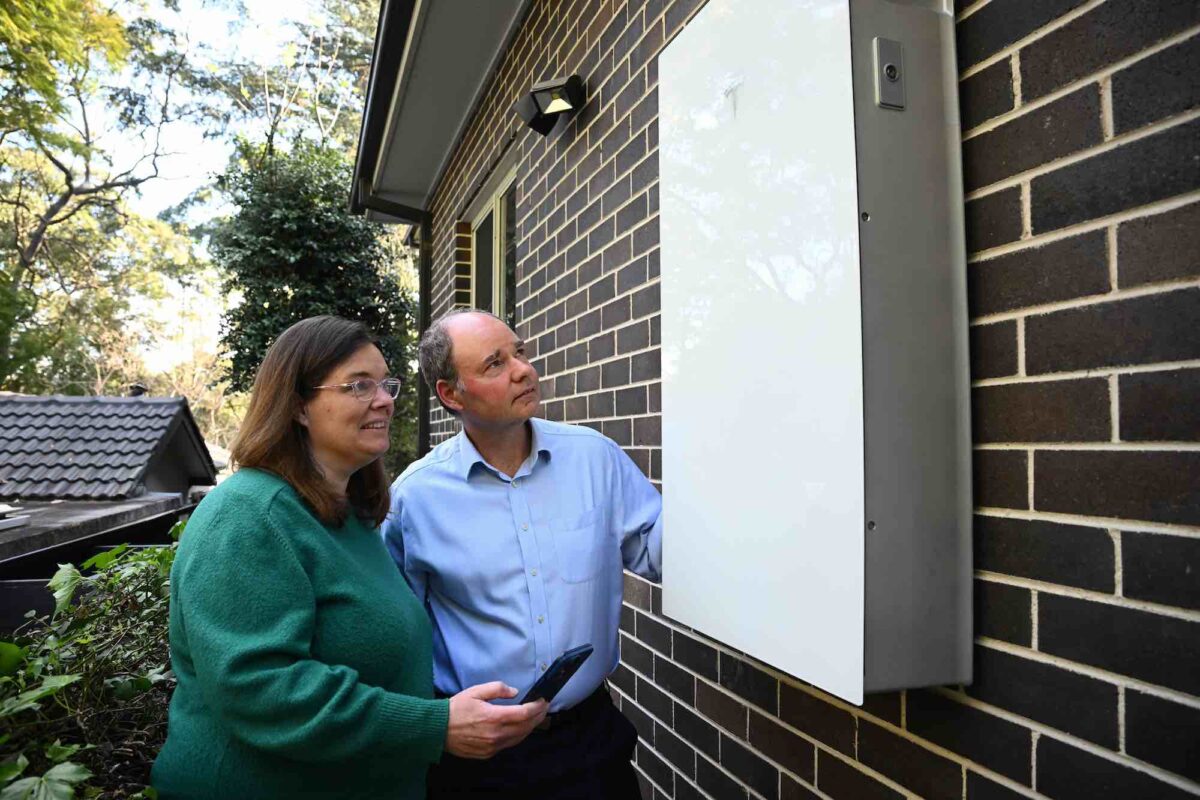
The extraordinary numbers continue to flow from the Federal Labor’s Cheaper Home Batteries rebate, with the scheme expected to have received a whopping 175,000 valid applications by the end of the 2025, according to new data.
The stunning success of the home battery rebate has seen it rocket past a series of milestones since its July 01 launch, the latest being the 100,000 installation mark in October, which was marked by federal energy minister Chris Bowen roughly one month ago.
Earlier this week, Bowen told ABC TV’s 730 program that another nearly 40,000 had been added to that number.
“As we speak today, 138,000 households have put in Cheaper Home Batteries… 138,000 … since 1 July, an extraordinary figure,” the minister said on Wednesday.
And now, the latest quarterly report from the Clean Energy Regulator (CER), which administers the rebate through the Small-scale Renewable Energy Scheme (SRES), says it expects to receive around 175,000 valid battery applications by the end of 2025.
“Looking at both the pending and approved applications, more than 124,000 batteries representing 2.7 GWh [gigawatt-hours] of capacity were installed by 14 November 2025,” the report says.
“Based on the success of the program to date, we anticipate around 175,000 valid batteries to be installed by the end of 2025, representing around 3.9 GWh of useable capacity.
“To put this in context,” it says, “this is more capacity than the five biggest utility-sized batteries currently operational in the National Electricity Market (NEM) – and all that capacity installed in just six months.
“Around 6 GWh of storage capacity could be installed under the scheme by the end of the 2025-26 financial year,” the CER report adds.
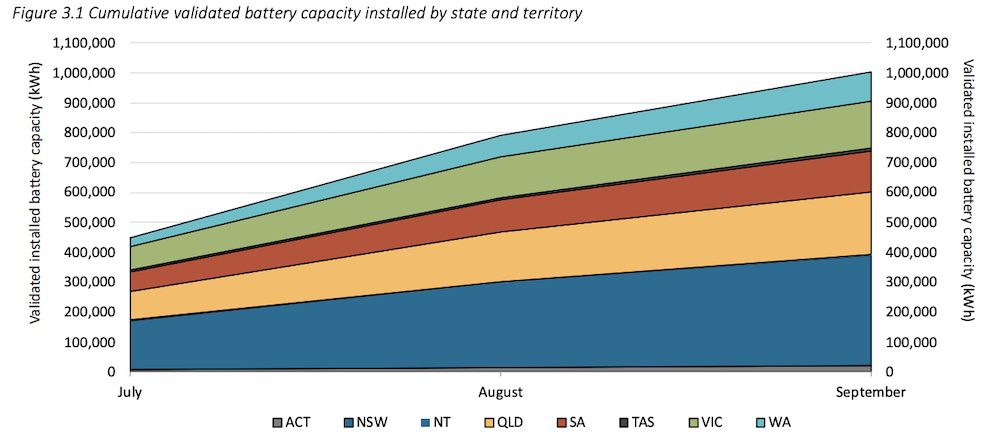
Image: Clean Energy Regulator
Of course, the huge success of the home battery rebate has not come without some hiccups and concerns, the latest being that the $2.3 billion budget for the Cheaper Home Batteries rebate will be exhausted by mid 2026, when it was intended to underpin the program for four years, until mid-2029.
Origin Energy has been the latest to express this concern, off the back of announcing a suite of new home battery retail energy and electrification offers earlier this week.
“[The rebate] will probably run out by the middle of next year on this kind of run rate,” Origin’s general manager of Electrify and New Connections, Chris Zondanos told AAP.
This prediction by Origin – which also expects 1 million households to fully electrify by 2030 – looks to be on the money.
Using the CER forecasts and some pretty conservative assumptions – average size of battery being installed under the rebate being between 18-20 kWh, and therefore the average rebate being a little more than $6,000 (18 kWh (usable capacity) × $344 per kWh = $6,192) – more than $1 billion is likely to have been accounted for by the end of the year.
Other questions Renew Economy hears are being asked “all the time” by industry stakeholders and consumers alike are, how long will the scheme actually run in its current form, and are its metrics likely to be adjusted – maximum and minimum battery size, for example?
Renew Economy has asked Bowen’s office about the implications of the rebate’s budget running out so soon, and whether there is an option to tip more funding into the scheme in the coming 2026-27 budget. We will update the story with a response.
Another concern emerging from the rebate’s huge success is the growing installation backlogs as industry struggles to keep up with an average of 1,500 applications a week.
“The capacity of our industry is just about full,” the executive general manager of the CER’s scheme operations division, Carl Binning, told the 2025 All-Energy Australia conference in Melbourne last month.
“We’re starting to see an increased backlog in orders. So if you haven’t got your order in yet, I think, start moving. Wait times are at least three months.”
Another concern has been safety; whether all relevant rules, regulations and specific manufacturer specifications are being followed in the rush to keep up with battery demand.
A compliance update issued in October warned that the regulator had found minor installation issues mostly involving non-compliant labelling in around half of the roughly 100 solar battery systems they had inspected. But other than that, the feeling was ‘so far, so good.’
“Four months in, we’ve had no reports of any harm to people or property as a result of the program,” Binning told All Energy a month ago. “And that’s really quite extraordinary.
“That volume adjustable electrical work you would expect there to be incidents and hazards and those sorts of things starting to be reported back to us.”
Last week, however, Signenergy – the China-based home battery brand that in Australia has seized a majority market share over the course of 2025 – issued a product recall following reports of overheating inverter components and melted plugs.
The electrical safety recall was issued by Sigenergy for the SigenStor single phase 8/10/12 kW energy controllers with quick connect AC plug. The ACCC says Sigenergy has had reports of issues with a “small proportion” of recalled products, with around 100 inverters affected, so far.
Sigenergy has suggested that the problem could be linked with installer error and has warned that installations not matching manual instructions would not be covered by product warranties.
“Since safety and reliability are our top priorities, we’re taking proactive steps to ensure our installers are fully informed of the correct installation process,” the company has said.
If you would like to join more than 28,000 others and get the latest clean energy news delivered straight to your inbox, for free, please click here to subscribe to our free daily newsletter.