
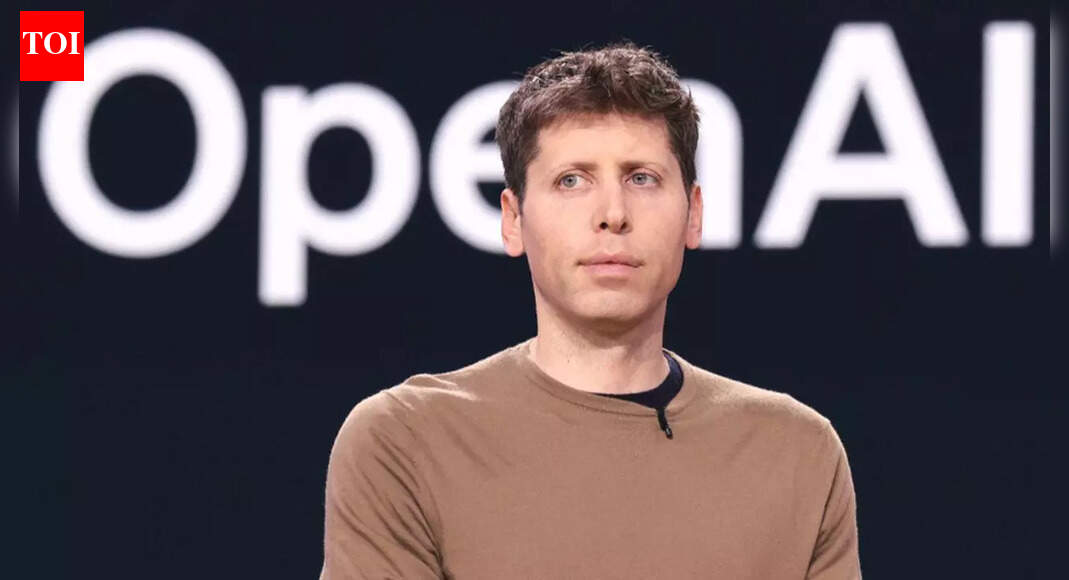
 OpenAI CEO Sam Altman is apparently tired of people fretting over how much money the company spends to run ChatGPT. When asked about the enormous expenses on a recent podcast, he gave a brief, frustrated answer: “Enough.” That was in response to repeated questions from the financial world about how OpenAI could make money when the underlying technology costs so much to run. Now, investment bank HSBC has predicted that, though AI is a major trend, its research indicates OpenAI will still not be making a profit in 2030 as it will need to spend at least another $207 billion on computing power just to keep growing.When investor Brad Gerstner questioned OpenAI’s spending on a podcast earlier in the month, Altman sprang straight to the company’s defence. He replied, “Brad, if you want to sell your shares, I’ll find you a buyer. I just, enough,” suggesting that several people still believe in the AI company.
OpenAI’s Master Plan for India
“I think there’s a lot of people who would love to buy OpenAI shares. I think people who talk with a lot of breathless concern about our compute stuff or whatever, that would be thrilled to buy shares,” Altman said on the podcast. Satya Nadella, the CEO of Microsoft, the AI company’s most prominent partner and a major investor in it, was also on the podcast. He laughed during this defensive exchange between Altman and Gerstner.What HSBC predicted about OpenAI’s profitsAccording to a Fortune report, HSBC noted that it still views AI as a “megacycle” and that its predictions “indicate a leading position for OpenAI from a revenue standpoint.” However, the bank has calculated that the ChatGPT maker faces a substantial financial challenge to achieve its goals.HSBC Global Investment Research expects that OpenAI won’t make a profit by 2030, even though its user base will grow to 44% of the world’s adult population by then, up from 10% in 2025.The investment bank’s semiconductor research team, headed by Nicolas Cote-Colisson, updated their OpenAI predictions for the first time since mid-October. The forecast included the company’s recent long-term cloud computing agreements, including a $250 billion deal with Microsoft and a $38 billion contract with Amazon. These deals happened without any new money being invested. Moreover, OpenAI aims for 36 gigawatts of AI compute power by 2030.HSBC predicts OpenAI’s total free cash flow by 2030 will remain negative, creating a $207 billion funding gap that must be filled through additional debt, equity, or improved revenue generation. The bank’s analysts estimate that OpenAI’s cloud and AI infrastructure costs will total $792 billion over the period from late 2025 to 2030, while its total compute commitments will reach $1.4 trillion by 2033. Meanwhile, the company faces a $620 billion data centre rental bill alone.HSBC predicts that OpenAI’s projected revenues will grow to over $213 billion in 2030, but it won’t be enough to close the gap. The bank notes that increasing paid subscribers from 10% to 20% could add $194 billion in revenue. However, even with these positive scenarios, OpenAI would still need fresh capital beyond 2030.HSBC suggests that raising more debt would be “possibly the most challenging avenue in the current market conditions” for OpenAI.