
A drug already approved for cancer treatment could now help treat a deadly childhood cancer, Australian research has revealed.
Neuroblastoma is a tumour that develops from nerve cells glands above the kidneys, or along the spine, chest and abdomen; it occurs commonly in children, and is deadly in nine out of 10 cases when children relapse.
This is most common in high-risk neuroblastoma, where 15 per cent of children do not respond to treatment, and half of those who do respond initially will see their cancer return.
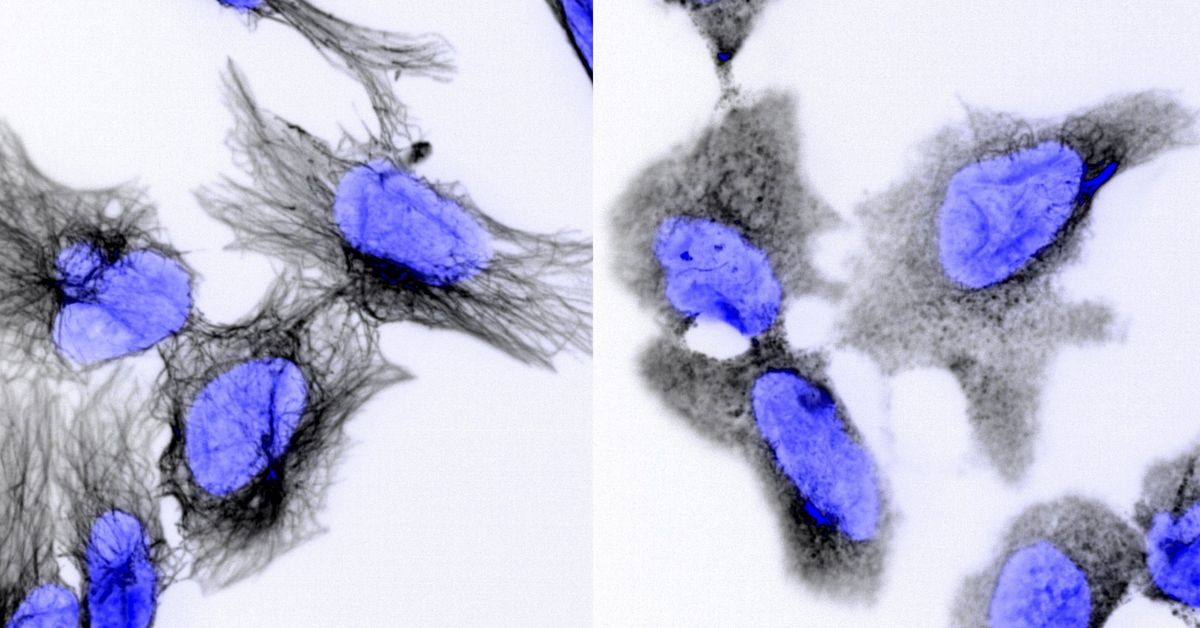
 Neuroblastoma is a deadly cancer that can affect children as young as two-years-old. (Garvan Institute)
This is because standard drugs used in chemotherapy rely on the same cellular switch, called the JNK pathway, to kill the cancer cells.
In relapsed tumours, the JNK cells can stop working, making treatments ineffective and causing the tumours to spread with deadly consequences.
“The statistics once patients get to that point are devastating for families,” Associate Professor David Croucher said.
However, researchers at the Garvan Institute have found a drug called romidepsin can help reduce tumour growth and the chances of the deadly cancer returning, helping more children survive.
The drug is already approved to treat other cancers like lymphomas, and the result of the study published in Science Advances is promising, according to researchers.
“This represents a big step forward,” Croucher said.
“By finding drugs that don’t depend on the JNK pathway, we can still trigger cancer cell death even when this usual route is blocked.”
The trials were conducted on animal models, and the next step is to use clinical trials.
Crocuher insists the benefits will be of the families who could be helped fight the devastating disease.
“Behind every statistic is someone’s loved one,” Croucher said. “Understanding these molecular mechanisms gives us hope we can develop more effective treatments for patients and their families who currently face limited options – and that’s what drives us every day.”