
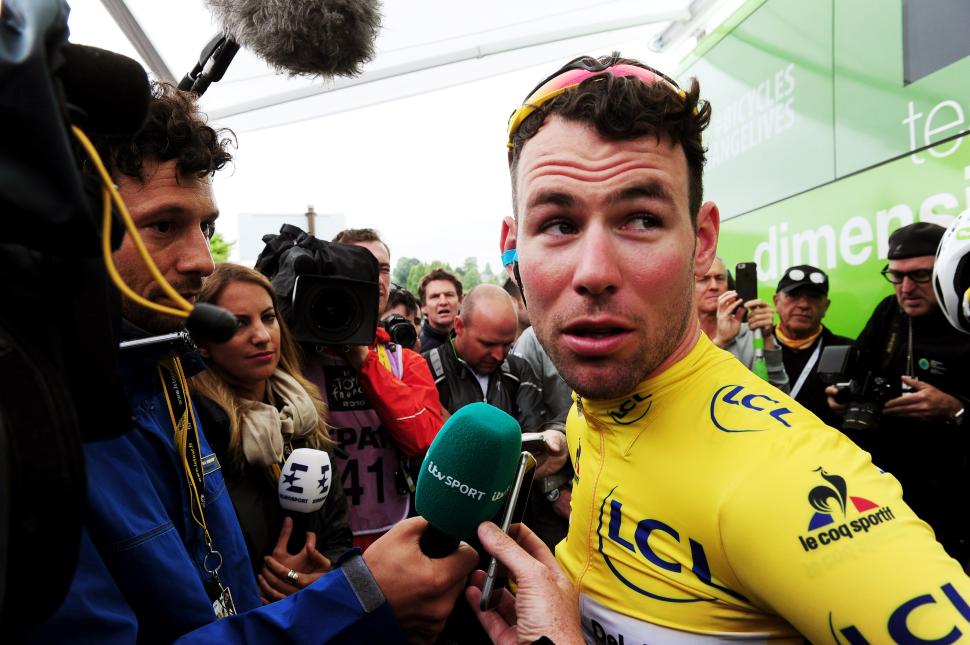
Is Mark Cavendish gearing up to start his own cycling team? In a recent interview published this week, the Manx Missile hinted that he would “love” to run a squad in the future, one he says that would be organised “more along the lines of other sports”.
The former world champion also criticised cycling’s current business model, which he argues is failing to “properly” utilise a number of potential revenue streams, while implying that many current pros aren’t doing enough to make money in their own right.
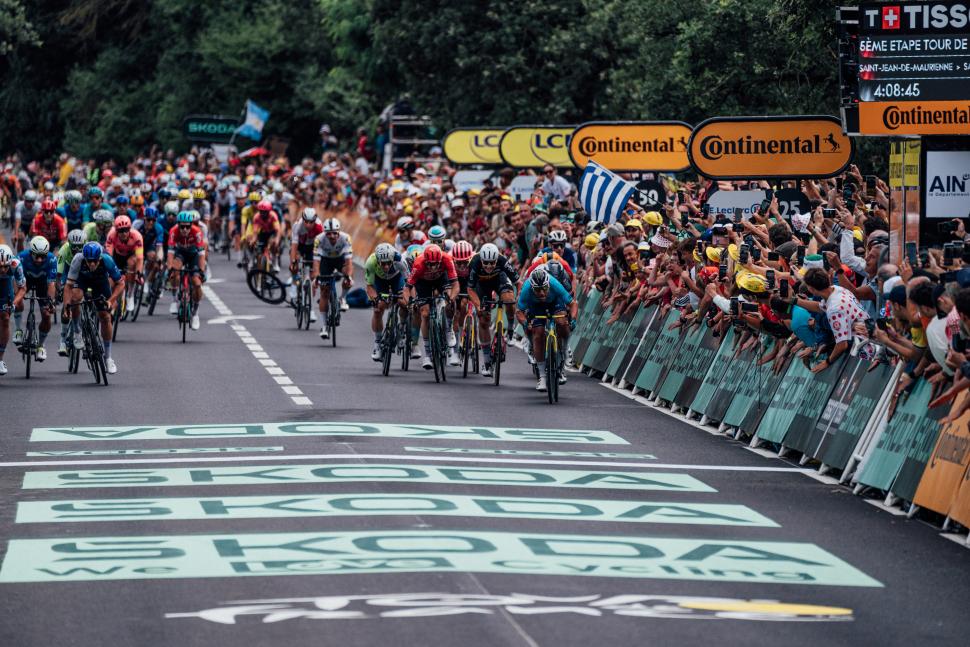 Mark Cavendish wins record 35th Tour de France stage, 2024 Tour de France, stage 5 (credit: Zac Williams/SWpix.com)
Of course, the campaign to reform professional cycling’s apparently flawed business model has been raging for almost as long as that business model has been in existence. Or at least it feels that way sometimes.
For the past century, cycling’s financial foundations, regardless of the sport’s growth and globalisation attempts in the interim, have remained stubbornly intact. Riders, just like they were in the 1950s, are essentially pedalling billboards, their teams reliant on money provided by sponsors from outside the sport – who could walk away at any moment.
From enterprising team bosses like Jonathan Vaughters to ambitious breakaway leagues like World Series Cycling, the Hammer Series, and most recently the secretive Saudi-backed One Cycling project, every so often someone pipes up with a bright new idea that they reckon will rip up the old ‘unsustainable’ model, one dominated by flaky external sponsors and all-powerful race organisers.
Over the past few years, we’ve seen a number of attempts, serious or otherwise, to streamline the sport’s archaic, anarchic calendar into something new fans can better understand, introduce new racing formats, change how racing is presented to fans, or, most importantly, to refashion how cycling’s wealth is distributed.
Last year, for example, One Cycling, a project spearheaded by Visma-Lease a Bike boss Richard Plugge, backed by the Saudi Arabian SURJ Sports Investment fund, and including several teams and race organisers, produced a document outlining its vision for cycling’s future.
This included expanding VIP hospitality at races, potentially introducing ticketed areas, and developing digital technology and modern marketing techniques to monetise race rights, new platforms, merchandise, membership, gamification, and betting.
Of course, One Cycling’s revolution may have stalled somewhat over the past year, but many of its plans continue to gain traction, evident in the debate ignited this month by former pro Jérôme Pineau’s suggestion that a section of Alpe d’Huez should be “privatised” at next year’s Tour de France and fans made to buy tickets to watch from the roadside (a suggestion subsequently shut down by ASO).
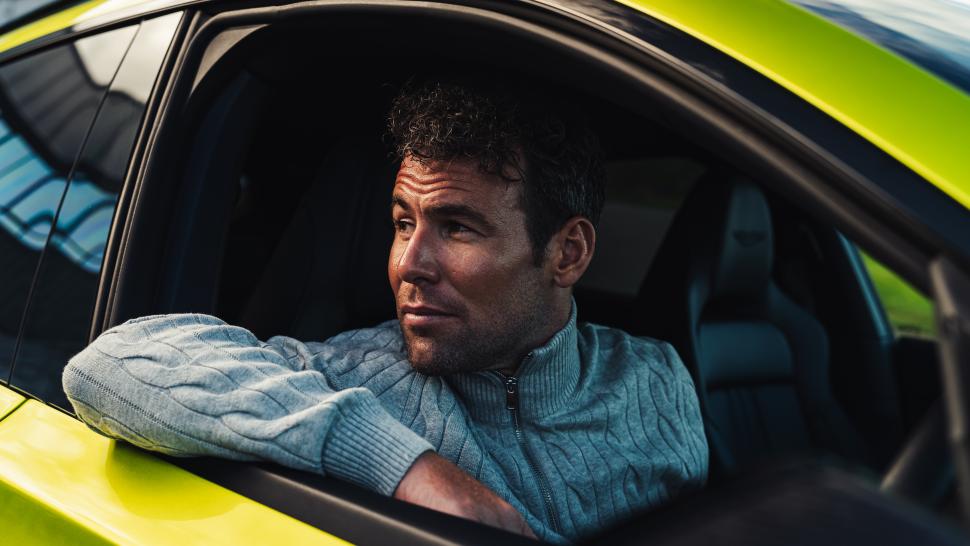 Mark Cavendish named Aston Martin High Performance Ambassador (credit: Aston Martin)
And now, in an in-depth interview with the Australian Financial review, published on Friday, Mark Cavendish joined the chorus of voices calling for reform of cycling’s financial structure.
When asked about his future plans, the 40-year-old, who retired last year after winning his record-breaking 35th Tour de France stage win, remained coy, but made it clear that he has been thinking about how the sport is structured from a monetary standpoint.
“Something I never really understood with cycling is that you were more likely to get a contract based on quite subjective decisions,” he told the publication.
“Sport is run 100 per cent on media spend. So even though I was winning as I got older, I couldn’t get contracts because I don’t think any team wanted the risk of me not winning.
“I don’t mean this arrogantly but that didn’t make sense because I was always valuable to a sponsor. There were a lot more people making a benefit from sweat in my last years than I was.”
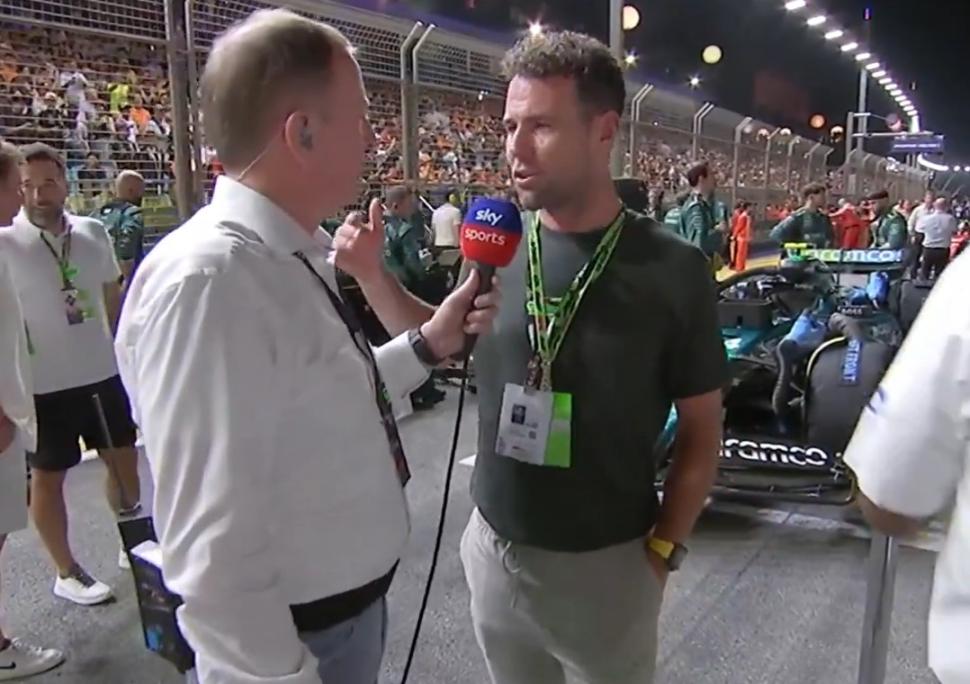 Mark Cavendish and Martin Brundle, 2024 Singapore Grand Prix (credit: Sky Sports)
Cavendish, who during his career followed in the footsteps of other sporting superstars by signing deals with a number of “non-endemic” sponsors such as Nike and Aston Martin, added that he believes cycling could improve by following some of the methods seen in Formula One, a sport the retired sprinter says he enjoys as much for its business sensibilities as the action on the track.
He also implied, without naming names, that he thinks many current pro cyclists “aren’t doing enough to make money in their own right”.
“I’m not moaning,” Cavendish says. “I’m just objectively stating there is a gap in the market to fill and I’d love to have a team in the future that is a lot more along the lines of other sports.
“Obviously with cycling there are differences – you don’t own a stadium. But there are revenue streams that aren’t being properly utilised.”
While it remains to be seen whether Cavendish will take over the reins at a top team, or create a status quo-upsetting one from scratch, when asked about how he sees the next 40 years unfolding, the legendary sprinter simply said: “I’ll never stop. Peta [his wife] is a mother who has looked after the kids a lot on her own. She can decide to go to sleep.
“I can’t sleep until both ends of the candle are burnt. Then I crash. Bang. The best thing about cycling is it made me tired. I’ll never stop.”