
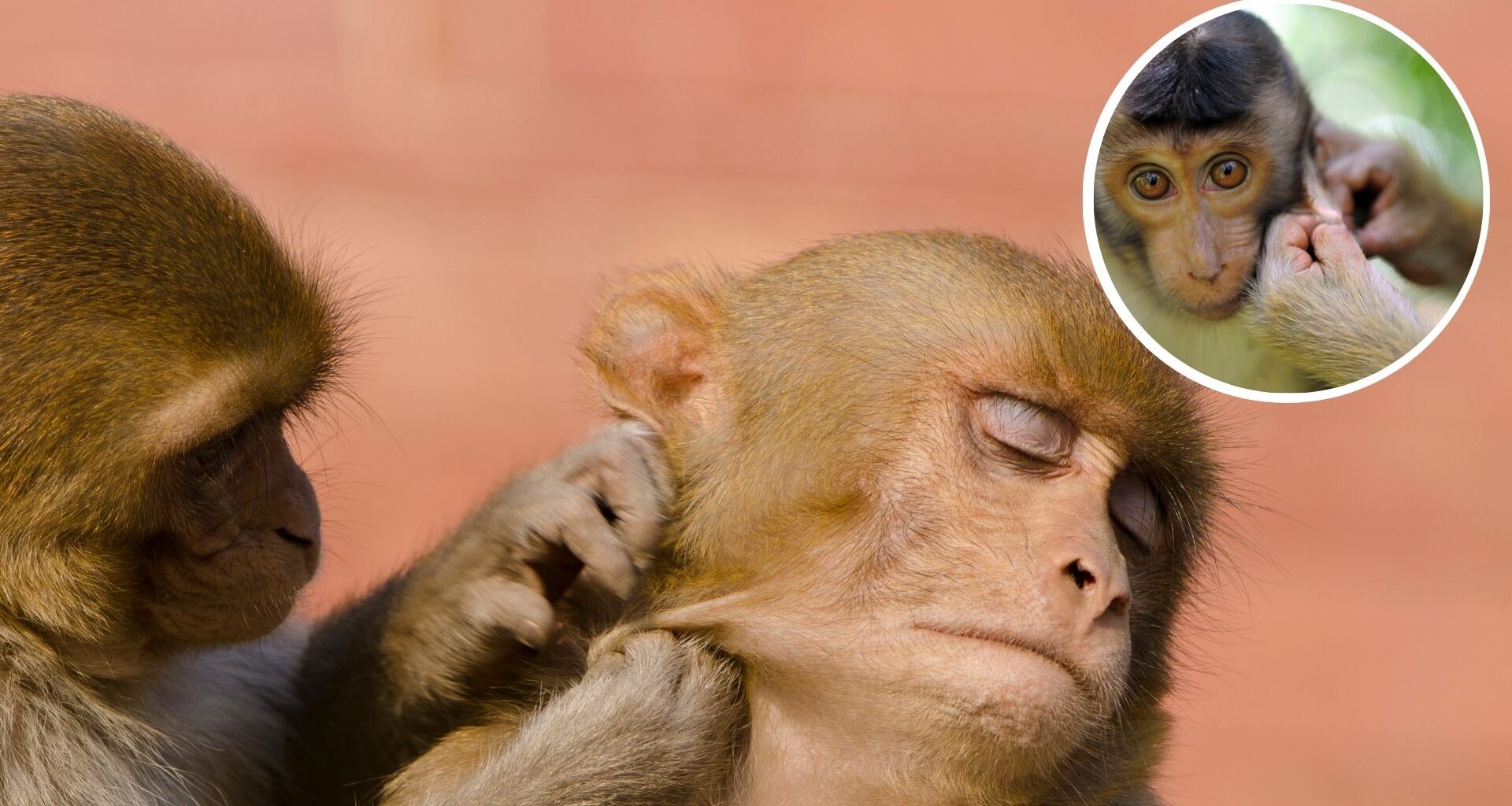
Researchers have found that macaques can tap along to a musical beat and it upends the assumption that only animals with vocal-learning abilities can find and move to a groove.
The research team also claimed that outside of humans, the ability to synchronize movement to rhythm – isochronicity – is strikingly rare in the animal kingdom.
It is a skill that develops early in life and requires complex pattern recognition, prediction, and motor coordination.
Monkeys were presented with a song
The research team also revealed that this behavior was observed even when the monkeys were presented with a song they had not yet heard before and when they were no longer rewarded for tapping to the beat.
The findings suggest that, although monkeys do not experience music as fully as humans do and require substantial training, beat perception may span a broader evolutionary continuum than previously believed; it is not just restricted to vocal-learning species.
The discovery offers fresh insights that suggest the roots of rhythm may run far deeper in our evolutionary past than previously believed. Humans have a unique ability to perceive and move in time to a steady musical beat, according to a press release.
Ability to synchronize movement to rhythm
Outside of humans, the ability to synchronize movement to rhythm – isochronicity – is strikingly rare in the animal kingdom and has only been observed in some birds and exceptional individuals of other species, leaving a gap in our understanding of its evolutionary and neurobiological roots. One powerful leading theory, the vocal-learning hypothesis, suggests that rhythmic synchronization depends on specialized brain circuits that tightly link hearing and movement, which evolved to support complex vocal learning.
Vani Rajendran and colleagues investigated whether macaques trained to synchronize their taps with metronome beats could extend their metronome-tapping skills to real music in all its acoustic complexity.
The study has shown that musicality and especially moving to a beat—i.e., dancing—is a fundamental human trait. The team also found that very few other species have been found to do this, and all of these species are vocal learners, leading to the conclusion that such a tendency is reserved for species with this ability.
Published in the journal Science, the study reveals that synchronizing movements to music is a hallmark of human culture, but its evolutionary and neurobiological origins remain unknown. This ability requires extracting a steady rhythmic pulse, or beat, out of continuous sounds, projecting this pattern forward in time, and timing motor commands to anticipate future beats.
The work demonstrates that macaques can synchronize to a subjective beat in real music and even spontaneously do so over alternative strategies. This contradicts the influential “vocal-learning hypothesis” that musical beat synchronization is privileged to species with complex learned vocalizations.