
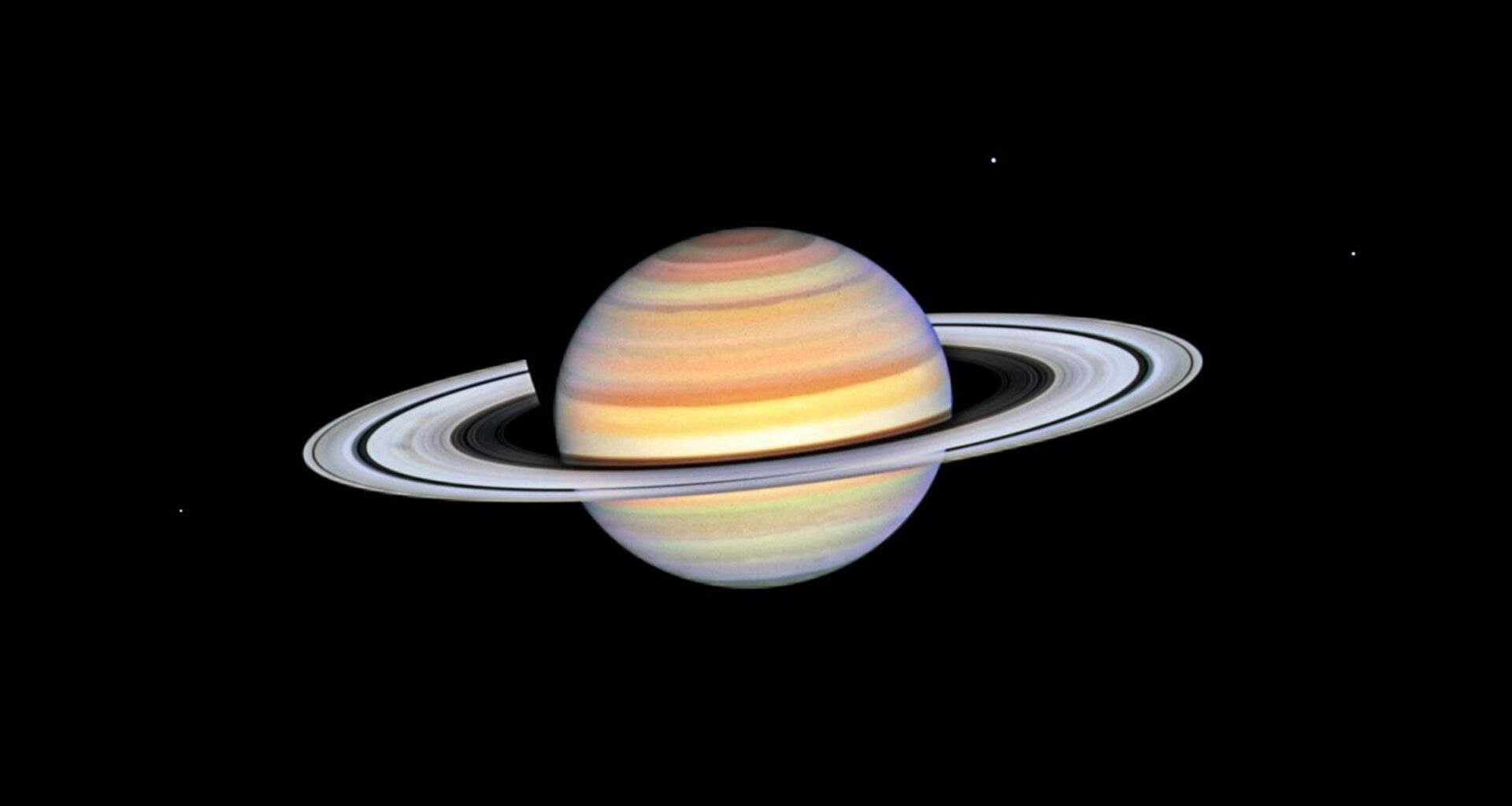
Ask anyone interested in the night sky what first got them hooked, and you’ll hear the same answer time and again — the sight of Saturn’s rings through a telescope. It may play second fiddle, but Jupiter’s cloud bands and Great Red Spot through a telescope are almost as spectacular and easily seal the deal. But when are the planets at their best? Read on, or skip to my recommendations for telescopes you can buy to see Saturn and Jupiter where you can also save money on current Black Friday/Cyber Monday deals.
When To Observe Saturn And Jupiter
How To Observe Saturn And Jupiter
If you’re wondering what kind of telescope you need to see Saturn and Jupiter, you’re halfway to the answer. Although either of the two main types of telescope — refractors and reflectors — can be used, it’s refractors that tend to give the sharpest, most contrasty images, particularly if you’ve got a small budget.
Best picks for you
As a bare minimum you’ll need at least a 50mm/2-inch aperture refractor and a 25mm eyepiece to see Saturn’s rings and Jupiter’s cloud bands, but it’s worth aiming for an aperture of 102mm/4-inch or even 125mm/5-inch for enough detail to impress. That way, you may see the Cassini Division (a dark gap) in Saturn’s rings and Jupiter’s Great Red Spot.
The Celestron Inspire 100AZ, a 4-inch refractor, will do a good job with planets, as will as 5-inch reflector like the Celestron StarSense Explorer DX 130AZ. For more advanced, higher-budget views, choose pricier catadioptric telescopes — such as Maksutov-Cassegrain and Schmidt-Cassegrain models — which gather more light, have longer focal lengths and support eyepieces offering 150x magnification. A good choice would be the Celestron NexStar 6SE, which will increase magnification and, crucially, detail.
A lot of telescopes are sold purely on the magnification number, with bigger = better in the minds of many buyers. It’s not that simple. Choose a telescope with the largest possible aperture (expressed in inches and millimeters) and a long focal length. That way, it will be able to take eyepieces with a higher magnification (higher power). The focal length of a telescope is the distance from the objective lens to the focal point. To calculate the all-important usable magnification, divide the focal length of the telescope by the focal length of the eyepiece. For example, a telescope with 660mm focal length and a 10mm eyepiece will have a magnification of 66x.
Also read: Best telescopes for seeing planets in 2025
My recommendations for telescopes to see Saturn and JupiterWhat about Uranus and Neptune?
If your stargazing journey takes you to Jupiter and Saturn, it won’t be long until you want to see Uranus and Neptune, too. This is where it gets tricky. The seventh planet, Uranus, is about twice as far from the sun as Saturn and almost four times as far as Jupiter, while the eighth planet, Neptune, is about three times as far as Saturn and almost six times as far as Jupiter. That’s why you’ll need a 200mm/8-inch aperture telescope to get any kind of view of either; a Barlow lens — an optical device that doubles the magnification possible with existing eyepieces — on a smaller scope will merely show you a slightly larger blurred dot. Since Neptune and Uranus can be difficult to locate in the night sky, a motorized GoTo mount is useful.