

When Adriana moved from Brazil to Australia three years ago she was sold: a world-class education, nice weather, good pay and a prosperous life.
Adriana is among the more than 315,000 international students living in NSW to undertake vocational or tertiary study.
But since arriving she has been unable to secure purpose built student accommodation (PBSA) due to high costs and overwhelming waiting lists, and has also been rejected for more than 50 private rentals.
Her situation pushed her towards ShareSorted, one of four major furnished accommodation providers which operate within a housing “grey area” using a head tenant model where renters sign occupancy agreements.
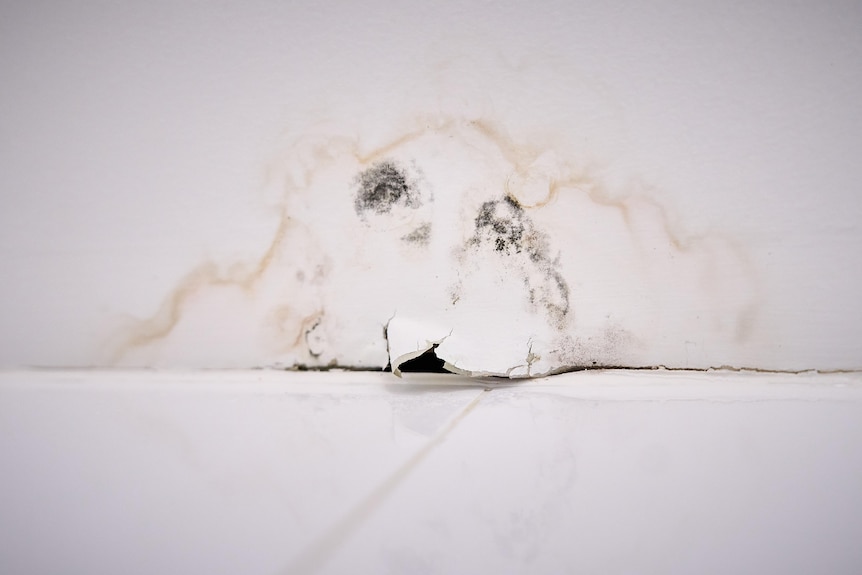
Adriana reported mould issues and peeling paint. (ABC News: Timothy Ailwood)
Under these agreements, renters sign away a majority of their rights putting them at risk of sudden eviction or having their bonds withheld.
For some it is a trade-off they are willing to accept to secure housing, but Adriana is so desperate to leave her predicament that she has turned to Facebook Marketplace to take over a two-month sublet while the tenant is on holiday.
Adriana, who requested her name be withheld so her prospects of finding housing in the future was not compromised, was renting one of 16 self-contained studios at a ShareSorted property in Sydney’s inner west for $450 per week.
“About 90 per cent of people living in this property are all international people, limited rental history drives us to these settings where you need to take risks because you’re desperate to secure a place to live in,” she said.
The company promised regular cleaning and maintenance services, but throughout her stay she’s encountered multiple problems such as leaks, mould, electrical issues and broken smoke alarms.
The ABC contacted ShareSorted for comment but received no response by the given deadline.
ShareSorted’s founder Chris Ellsmore has previously told the ABC wait times for maintenance and the company remained committed to improving response times and providing better service.
He said weekly rents were consistent with comparable co-living and boarding-house accommodation for properties that were furnished and inclusive of utilities.
The company is at the centre of growing NSW fair trading complaints, related to end-of-lease disputes, concerns around property maintenance and withheld security deposits.
Do you know more?
If you have any information about the story, contact Miriah Davis or share your experience below.
She said she and many other international students who come to Australia to study were “absolutely” unprepared for Australia’s housing situation.
“Everyone thinks you come here pursuing a certain lifestyle, you’re going to live close to the beach, you’re gonna have one of the highest wages,” Adriana said.
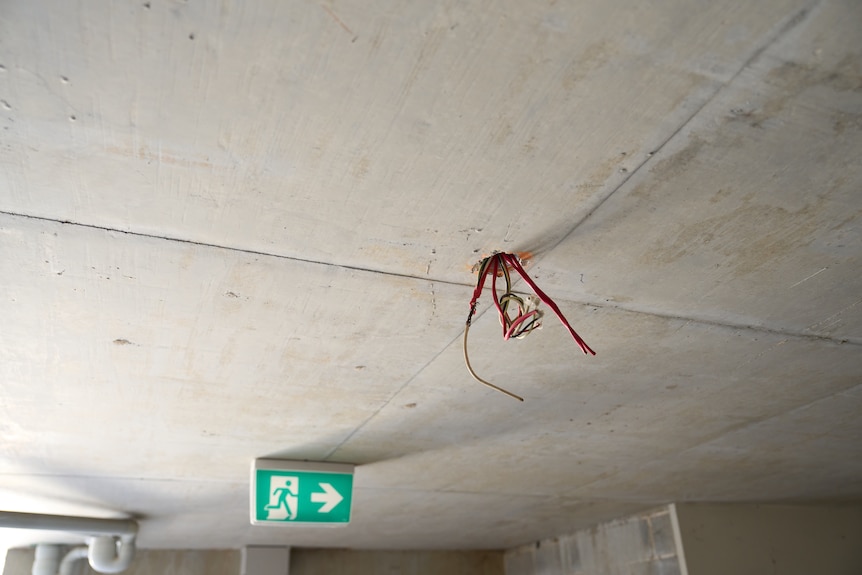
She claims throughout her stay she’s encountered multiple problems such as leaks, mould, broken smoke alarms and other maintenance issues. (ABC News: Timothy Ailwood)
According to new research from the Australian Housing and Urban Research Institute (AHURI), students arriving from overseas often gravitate to boarding houses or shared accommodation because PBSA is limited and expensive.
Private shared housing can leave students exposed to exploitation and make them financially vulnerable, as they are often asked to sign agreements that provide them limited rights or protections compared to residential tenancies.
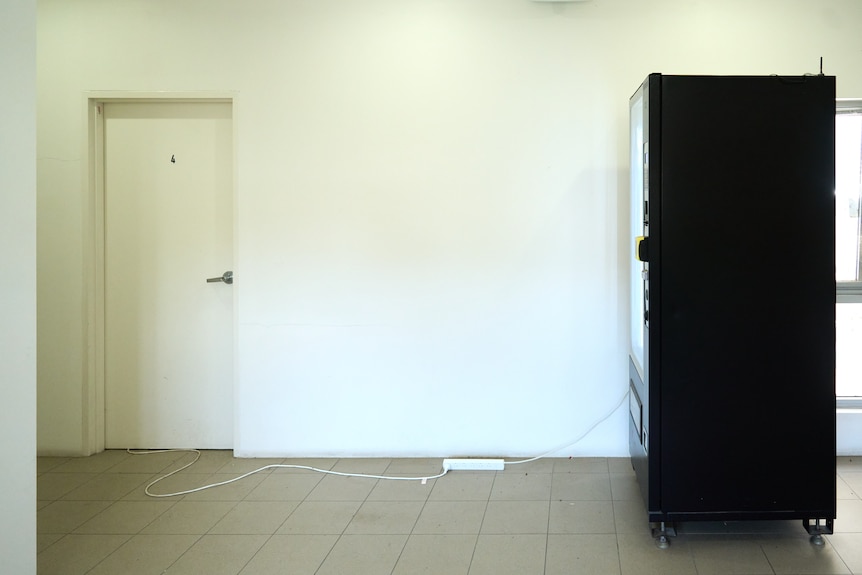
An extension cord appears to run outside a unit. (ABC News: Timothy Ailwood)
Renters signing ‘unconscionable and unjust’ contracts
Sean Stimson, a senior solicitor at the Redfern Legal Centre’s International Student Legal Service, said these agreements can include elements of multiple pieces of legislation that essentially allows landlords or proprietors to “contract themselves out of their legal obligations”.
He said he quite often has students come to him with contract terms that are “unconscionable and unjust”.
“It’s a vicious cycle, in order to get a tenancy you need to have a renting history, in order to have a renting history you need to be a certain type of person, which unfortunately most students aren’t,” he said.
“The mindset in the broader community is that an international student is well-funded, that’s not the case.”
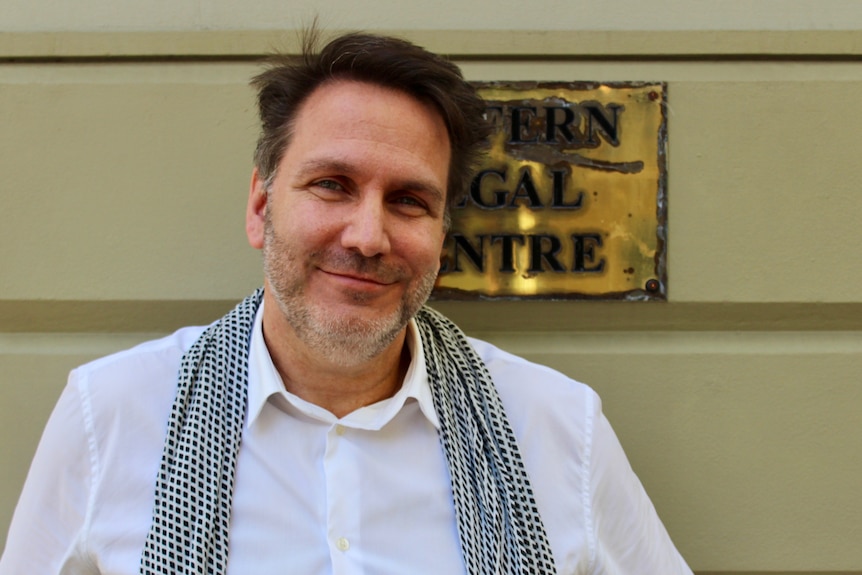
Solicitor Sean Stimson says students often come to him with contract terms that are “unconscionable and unjust”. (Supplied)
He said more than half of international students were left with very few housing options and for that reason they become the most marginalised.
“Even if you know your [rental] rights, a person might not try to enforce them because there’s still that fear of being evicted,” he said.
“When you don’t have somewhere else to go they tend to stay in that situation because they need that basic human right, that roof over their head.”Trading rights for shelter
International Students Representative Council of Australia (ISRC) president Weihong Liang told the ABC he generally heard complaints from students who were misled about property conditions.
He said in some cases they had been asked to pay six to 10 months of rent up-front, which made recovering the funds when vacating due to poor property conditions almost impossible.
“Most students are aware of the trade-off — they choose these options because affordability has become the deciding factor,” Mr Weihong said.
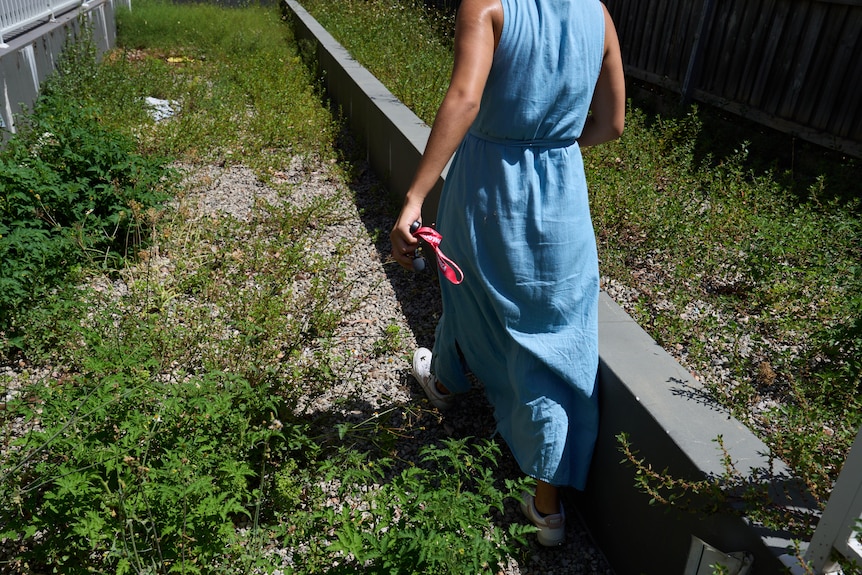
Adriana believes she was misinformed about the true scale of Australia’s housing crisis. (ABC News: Timothy Ailwood)
He said the issue that required regulation was not the head tenant model itself, but operators that engaged in deceptive conduct.
“For many, these arrangements are a last-resort solution that has nevertheless kept them housed when the market otherwise would not,” he said.
AHURI conducted focus groups that reported some students spent their savings on temporary accommodation, such as Airbnbs, within weeks of arriving when they could not find housing or work quickly.
It also found that prospective students who relied on advice provided to them by international education agents could be misled about the housing situation in Australia.
Adriana, who went through an education and migration agency for her studies, said she was misinformed about the true scale of the housing crisis.
“The agency works for the university, the university pays the agent a fee every time they bring in a new student,” she said.
“They say there’s a million pathways to skilled immigrants as long as you work hard and you’re well intentioned, then you can stay and live a prosperous life — that’s what they sell.”
Despite accounting for 38 per cent of Australia’s international student intake, NSW had one bed in PBSA for every eight students – the lowest ratio in the country.
PBSAs can be desirable to international students due to their proximity to campus and modern amenities, but rents can be 13 per cent higher than similarly located housing.
According to industry analysis by IBISWorld, undersupply, high occupancy rates, dynamic pricing strategies and a chronic undersupply of student beds are driving the profitability of PBSA.
These privately owned student accommodation providers hold 60 per cent of the market share, generating around $264 million in revenue, the report states.
However, that figure is not inclusive of rental income and the profit margins for Australia’s top three PBSA providers; UniLodge, Scape and Iglu, are not publicly available.

Scape student accommodation is one of Australia’s biggest PBSA providers. (ABC News: ABC News: Adriane Reardon)
Universities void of duty of care
Alan Morris from the University of Technology Sydney’s Institute for Public Policy and Governance said the privatisation of university accommodation had relinquished the institutions of any duty of care.
“It eliminates any possibility of the university helping extremely vulnerable students,” Professor Morris said.
“[Universities] They take their fees… and that’s it.”
He said that while construction of additional university-owned housing was underway in NSW, the proportion of beds available to students who could afford them would be “minuscule”.
“There should be some emergency housing accommodation from the universities or the government,” he said.
“There should be a standard compulsory notification that we send to all international students explaining to them what their rights are as tenants.
“I think that’s something that can be easily done.”
Loading…